Waymo Expands Full-Time Curbside Service at Phoenix Sky Harbor Airport

Alphabet’s self-driving vehicle division, Waymo, has begun offering full-day, curbside pickups and drop-offs at Phoenix Sky Harbor International Airport in Arizona. Although the announcement was made quietly via a post on X, it marks a significant step forward in the progress of autonomous vehicle technology. After years of delays, self-driving vehicles seem to be on track to enter the mainstream.

According to Mike Ramsey, an automotive analyst at Gartner, this move is crucial for Waymo’s business. “Airports are a key destination for mobility services—whether it’s a cab, shuttle bus, or an autonomous vehicle,” he explains. Almost a decade ago, Uber and Lyft battled to gain access to airports, recognizing their importance for travelers who need convenient rides and wish to avoid airport parking fees.

Continue reading… “Waymo Expands Full-Time Curbside Service at Phoenix Sky Harbor Airport”

The Revival of Smart Glasses: AI-Driven Technology Poised for a Comeback

After the 2014 failure of Google Glass, smart glasses seemed doomed to obscurity. However, a resurgence may be on the horizon, as companies like Meta and Google invest heavily in a new generation of smart glasses that blend fashion, functionality, and generative AI, according to Gene Munster, managing partner at Deepwater Asset Management.

Writing on the firm’s website, Munster explained the renewed optimism in smart glasses, stating that consumers are drawn to easy-to-use technology, and the advancements in generative AI are transforming these devices into a more attractive option. “Gen AI is paving the way toward complex wearable ambient computing,” he noted. This next iteration of smart glasses aims to look and feel like “normal glasses,” while incorporating generative AI, voice activation, cameras, and sensors for a seamless user experience.

Continue reading… “The Revival of Smart Glasses: AI-Driven Technology Poised for a Comeback”

Injectable Cardiac Stimulator Offers New Hope for Emergency Heart Arrhythmia Treatment

Researchers have developed a groundbreaking injectable cardiac stimulator designed to self-assemble and correct heart arrhythmia in emergency situations, using an external power source for activation. This innovative solution involves injecting nanoparticles around the heart to stabilize irregular heart rhythms, offering a potentially life-saving treatment in critical moments.

Heart arrhythmia, a condition that causes irregular heartbeats, can pose a significant health risk if left untreated. Now, researchers from Lund University in Sweden have tested a new injectable cardiac stimulator on animals, showing promising results. The stimulator, which uses a nanoparticle solution, integrates with heart tissue to regulate its rhythm and facilitate electrocardiogram (ECG) measurements. The system has demonstrated conductive functionality for five consecutive days, with no observed toxicity at the organism, organ, or cellular levels, according to the study published in Nature.

Continue reading… “Injectable Cardiac Stimulator Offers New Hope for Emergency Heart Arrhythmia Treatment”

Revolutionizing Healthcare: Google’s AI Predicts Illnesses Through Sound

In a groundbreaking advancement in artificial intelligence, Google is leveraging audio signals to detect the early symptoms of illness. Using 300 million audio samples—ranging from coughs to labored breathing—Google has trained its AI foundation model to recognize signs of diseases like tuberculosis. In collaboration with Salcit Technologies, an AI startup in India focused on respiratory healthcare, Google is working to integrate this technology into smartphones. This innovation has the potential to transform healthcare in high-risk, underserved communities by offering more accessible diagnostic tools.

Google has a history of digitizing human senses, and its venture into bioacoustics is an extension of that. Bioacoustics, which merges biology and acoustics, uses AI to interpret sounds made by humans and animals to gain medical insights. In this field, Google’s new AI model, HeAR (Health Acoustic Representations), stands at the forefront. This model utilizes sound signals to detect early signs of illness, offering a promising tool for early diagnosis.

Continue reading… “Revolutionizing Healthcare: Google’s AI Predicts Illnesses Through Sound”

Revolutionizing Computer Simulations: Sandia and Brown University Researchers Unveil a Groundbreaking Accelerator

Researchers at Sandia National Laboratories and Brown University have developed a transformative method to accelerate computer simulations, significantly speeding up scientific research across multiple fields. This new approach, recently published in npj Computational Materials, has the potential to enhance the performance of nearly any type of simulation—from drug discovery to space exploration.

“What’s remarkable is that, from the user’s perspective, there’s no difference in how you run your simulation,” said Rémi Dingreville, a Sandia researcher. “The difference lies in the time it takes to get your results—it’s dramatically faster.”

Continue reading… “Revolutionizing Computer Simulations: Sandia and Brown University Researchers Unveil a Groundbreaking Accelerator”

Revolutionizing Biological Research: Parallel Bio’s Vision for Automation and Organoid Technology

Ari Gesher, the new Head of Technology at Parallel Bio, may be a newcomer to biotech, but he’s already making waves with his ambitious vision for disrupting biological research. The startup is banking on a combination of automation and organoid technology to streamline experiments, making them faster, more efficient, and highly reliable. The aim? Freeing scientists to focus on designing innovative experiments while robots handle the repetitive tasks.

Gesher believes this approach could solve the longstanding biotech dilemma of having to choose between speed, quality, and cost. “There’s this old adage: cheaper, faster, better—pick two,” he said. “Our approach asks, why not have all three?”

Continue reading… “Revolutionizing Biological Research: Parallel Bio’s Vision for Automation and Organoid Technology”

Revolutionary Drone Swarm Tackles Wildfires with AI Technology

A team of researchers has developed a swarm of self-coordinating drones designed to act as first responders in combating wildfires. This innovative solution, which combines cutting-edge AI, thermal, and optical imaging technology, was created by the University of Sheffield’s School of Electrical and Electronic Engineering to enhance early mitigation strategies for wildfires.

These AI-powered drones can autonomously detect, investigate, and relay information about fires to firefighting teams. By utilizing swarm technology developed at the University of Bristol, the drones can intelligently coordinate with one another to deploy fire retardants, monitor fire progression, and safely return to base. Dr. Lyudmila Mihaylova, Professor of Signal Processing and Control at the University of Sheffield, emphasized the importance of this breakthrough, saying, “Autonomous wildfire detection and localization, especially in remote and large geographic areas with hot weather, is a challenging task that current technology has not fully addressed.”

Continue reading… “Revolutionary Drone Swarm Tackles Wildfires with AI Technology”

Turning Plastic Waste into Graphene: A Groundbreaking Solution to Microplastic Pollution

Plastic waste is an escalating environmental crisis, and scientists are exploring innovative ways to tackle it. A team of researchers has developed a revolutionary method to transform microplastics into graphene—a material even harder than diamond—with potential applications across various industries. This environmentally friendly technique not only offers a sustainable approach to recycling plastic but also holds promise for fields like water purification, sensor manufacturing, and chemical absorption.

The process, spearheaded by researchers at James Cook University, involves converting microplastics into graphene through a method called Atmospheric Pressure Microwave Plasma (APMP) synthesis. Dr. Adeel Zafar, a key researcher, highlighted the method’s efficiency, stating, “Approximately 30 mg of microplastics produced nearly 5 mg of graphene in just one minute. This is significantly faster and more efficient than previous methods, offering a simpler and greener solution to plastic waste.”

Continue reading… “Turning Plastic Waste into Graphene: A Groundbreaking Solution to Microplastic Pollution”

The Rise of Biohybrid Robots: Blurring the Line Between Machine and Life

In 2014, researchers at the University of Illinois achieved a groundbreaking feat by creating a microscopic swimming robot, but what truly set it apart was its composition—cardiac muscle cells derived from rats. This innovation was among the first “biohybrid robots,” blending biological components with mechanical systems, challenging the traditional notion of robots as non-living, metal-based entities.

Two years later, Harvard researchers expanded on this concept, creating a 16-millimeter biohybrid “animal” resembling a stingray. With an elastomer body, a gold skeleton, and rat muscle cells, this creature glided through water, powered and guided by light. Since then, biohybrid robots have evolved, with recent advancements including a robot that walks with a human-like gait and a robotic hand equipped with biological neural networks.

Continue reading… “The Rise of Biohybrid Robots: Blurring the Line Between Machine and Life”

Revolutionary Nanocatalyst Transforms Wastewater Treatment

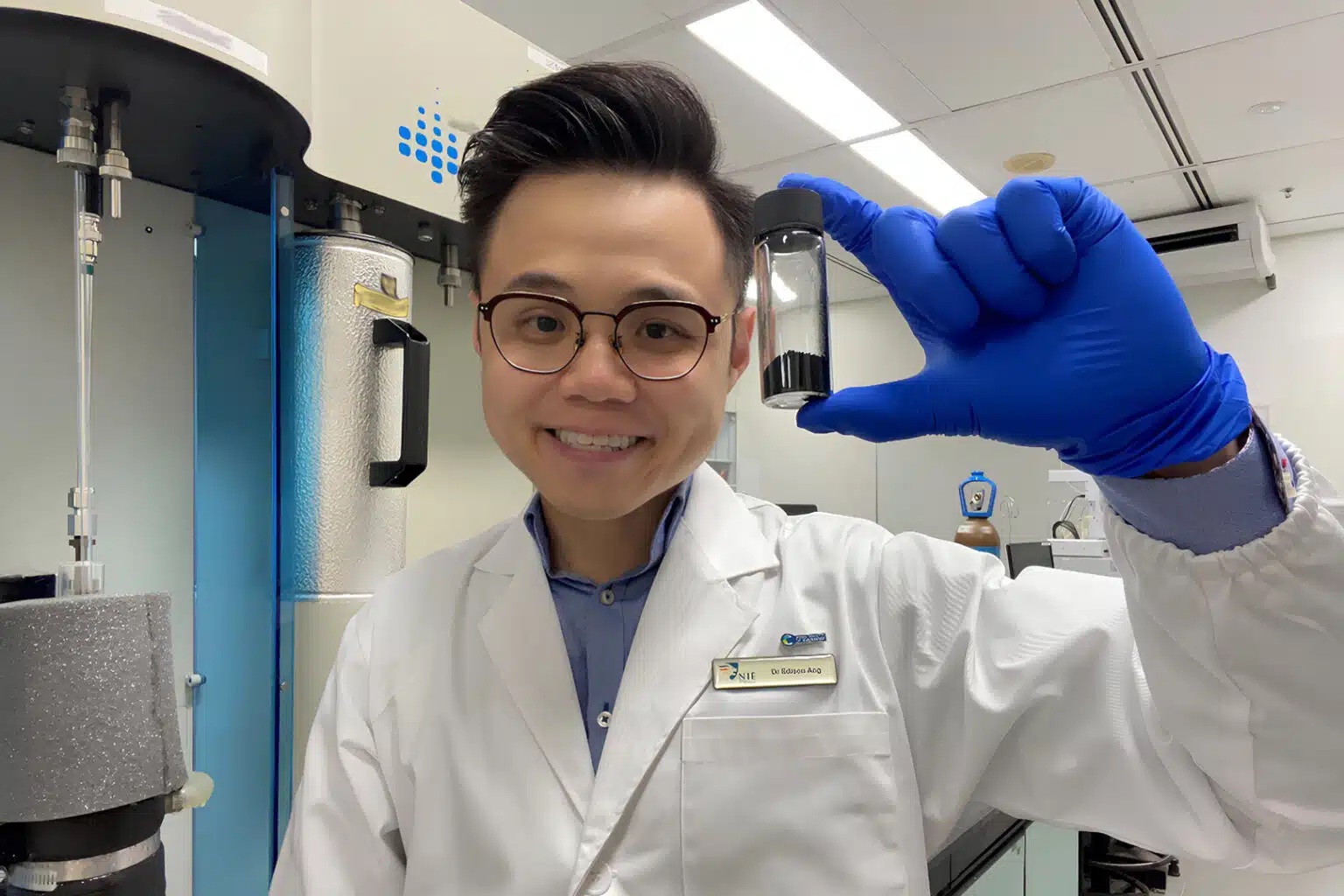
A research team led by Assistant Professor Edison Ang Huixiang from the National Institute of Education/Nanyang Technological University (NIE/NTU) Singapore has developed a groundbreaking nanocatalyst that could revolutionize wastewater treatment and pollutant elimination. Their innovative approach, detailed in a recent study published in Materials Horizons and featured in the Emerging Investigator series, introduces a more efficient method for cleaning wastewater.

The researchers engineered a novel catalyst by combining cobalt with manganese oxide nanorods (MnO@Co/C-600). They enhanced its performance by coating the catalyst with carbon, significantly improving its ability to attract and degrade harmful pollutants.

Continue reading… “Revolutionary Nanocatalyst Transforms Wastewater Treatment”

Richtech Robotics Introduces AI Bartender ADAM at Globe Life Field

Richtech Robotics, a leader in AI-driven service robots, has launched its latest ADAM robot bartender at Globe Life Field, home of the Texas Rangers. This installation marks the 10th deployment of ADAM, reflecting the Paradise, Nevada-based company’s commitment to enhancing personalized hospitality experiences.

“ADAM has seen a surge in popularity following the successful debut of its advanced AI features at CES 2024,” said Matt Casella, president of Richtech Robotics. “We’re thrilled to bring ADAM to the iconic Globe Life Field, continuing our mission to deliver exceptional, engaging, and fluid interactions across various industries. We’re eager to see how fans at the stadium interact with our leading robot.”

Continue reading… “Richtech Robotics Introduces AI Bartender ADAM at Globe Life Field”

Microbial Allies: How Bacteria Are Revolutionizing Green Tech Recycling

In an innovative approach to combating climate change, scientists have formed an unexpected alliance with bacteria to extract rare metals crucial for green technology. Without the aid of these microbes, the world could soon face a shortage of raw materials needed to build essential components like turbines, electric cars, and solar panels.

Leading this groundbreaking work is a team from the University of Edinburgh, which is focusing on harnessing bacteria to extract valuable metals such as lithium, cobalt, and manganese from discarded batteries and electronic waste. These scarce and costly metals are essential for producing electric cars and other green technologies, a fact emphasized by Professor Louise Horsfall, chair of sustainable biotechnology at Edinburgh.

Continue reading… “Microbial Allies: How Bacteria Are Revolutionizing Green Tech Recycling”
Discover the Hidden Patterns of Tomorrow with Futurist Thomas Frey
Unlock Your Potential, Ignite Your Success.

By delving into the futuring techniques of Futurist Thomas Frey, you’ll embark on an enlightening journey.

Learn More about this exciting program.