Breakthrough in Brain-Machine Interfaces: EPFL Develops Miniaturized Brain-to-Text Technology

Researchers from EPFL have developed a groundbreaking miniaturized brain-machine interface (BMI) capable of translating brain activity into text on tiny silicon chips. This next-generation technology, known as the Miniaturized Brain-Machine Interface (MiBMI), promises to revolutionize communication for individuals with severe motor impairments.

Brain-machine interfaces have long held the potential to restore communication and control to people with conditions such as amyotrophic lateral sclerosis (ALS) and spinal cord injuries. However, traditional BMIs have been bulky, power-hungry, and limited in practical applications. The new MiBMI, developed by EPFL’s Integrated Neurotechnologies Laboratory (INL), overcomes these challenges by offering a compact, low-power, and highly accurate solution.

Continue reading… “Breakthrough in Brain-Machine Interfaces: EPFL Develops Miniaturized Brain-to-Text Technology”

Revisiting the Drake Equation: New Factors Shed Light on the Rarity of Advanced Civilizations

In 1961, astronomer Frank Drake introduced his famous equation to estimate the number of civilizations in the Milky Way capable of communicating with us. However, our understanding of planetary science has evolved considerably since then. Now, a team of scientists has proposed crucial adjustments to the equation that might explain the Great Silence—the puzzling lack of contact with extraterrestrial civilizations.

The Drake Equation, while popular and intuitive, has faced criticism for its broad assumptions and ambiguous parameters. It often produces an overly optimistic estimate for the value of N—the number of civilizations in our galaxy with which we might communicate. This has fueled the Fermi Paradox: If intelligent life is common, why haven’t we found evidence of it? Recent research published in Scientific Reports offers a potential solution by introducing two new factors into the equation.

Continue reading… “Revisiting the Drake Equation: New Factors Shed Light on the Rarity of Advanced Civilizations”

Remote Work’s Impact on U.S. Urban Transportation Patterns

The widespread shift to remote work following the Covid-19 pandemic has dramatically altered urban transportation trends across the United States, according to a recent study by MIT researchers.

The study reveals a marked difference in the impact of remote work on vehicle miles traveled (VMT) and mass-transit usage across the country.

“A 1 percent decrease in onsite workers correlates with a roughly 1 percent reduction in automobile miles driven, but a 2.3 percent drop in mass transit ridership,” says Yunhan Zheng SM ’21, PhD ’24, an MIT postdoctoral researcher and co-author of the study.

“This is among the first studies to establish the causal relationship between remote work and its effects on vehicle miles traveled and transit ridership across the U.S.,” adds Jinhua Zhao, an MIT professor and another co-author.

Continue reading… “Remote Work’s Impact on U.S. Urban Transportation Patterns”

World’s Largest Soccer Stadium: The Grand Stade Hassan II to Rise in Morocco

Stadium experts Populous and architects Oualalou + Choi have teamed up to design an extraordinary new stadium in the form of a massive tent. Named the Grand Stade Hassan II, this architectural marvel will be situated near Casablanca, Morocco, and is set to become the largest soccer stadium in the world.

The stadium is being developed for Morocco’s role in co-hosting the 2030 FIFA World Cup alongside Portugal and Spain. Drawing inspiration from a traditional Moroccan gathering known as a Moussem, the design echoes the Bedouin-inspired stadium in Qatar, creating a cultural and historical connection.

Continue reading… “World’s Largest Soccer Stadium: The Grand Stade Hassan II to Rise in Morocco”

Breakthrough in Brain-Computer Interfaces: Restoring Communication for ALS Patients

A brain-computer interface (BCI) surgically implanted in a 45-year-old man with amyotrophic lateral sclerosis (ALS) and severe dysarthria has demonstrated remarkable success in restoring conversational communication, according to findings from the BrainGate2 trial.

On the first day of use, just 25 days after surgery, the BCI achieved an impressive 99.6% accuracy with a 50-word vocabulary. By the second day, it reached 90.2% accuracy using a vocabulary based on a 125,000-word dictionary, reported David Brandman, MD, PhD, from the University of California Davis, and his colleagues in the New England Journal of Medicine.

Continue reading… “Breakthrough in Brain-Computer Interfaces: Restoring Communication for ALS Patients”

Eggshells: The Future of Bone and Cartilage Implants

Eggshells, primarily composed of calcium carbonate, have long been used in various areas such as feed supplements and garden pest control. Now, groundbreaking research is revealing an innovative application: growing tissue for implants that can replace damaged or diseased bone and cartilage. This pioneering approach could revolutionize the field of medicine.

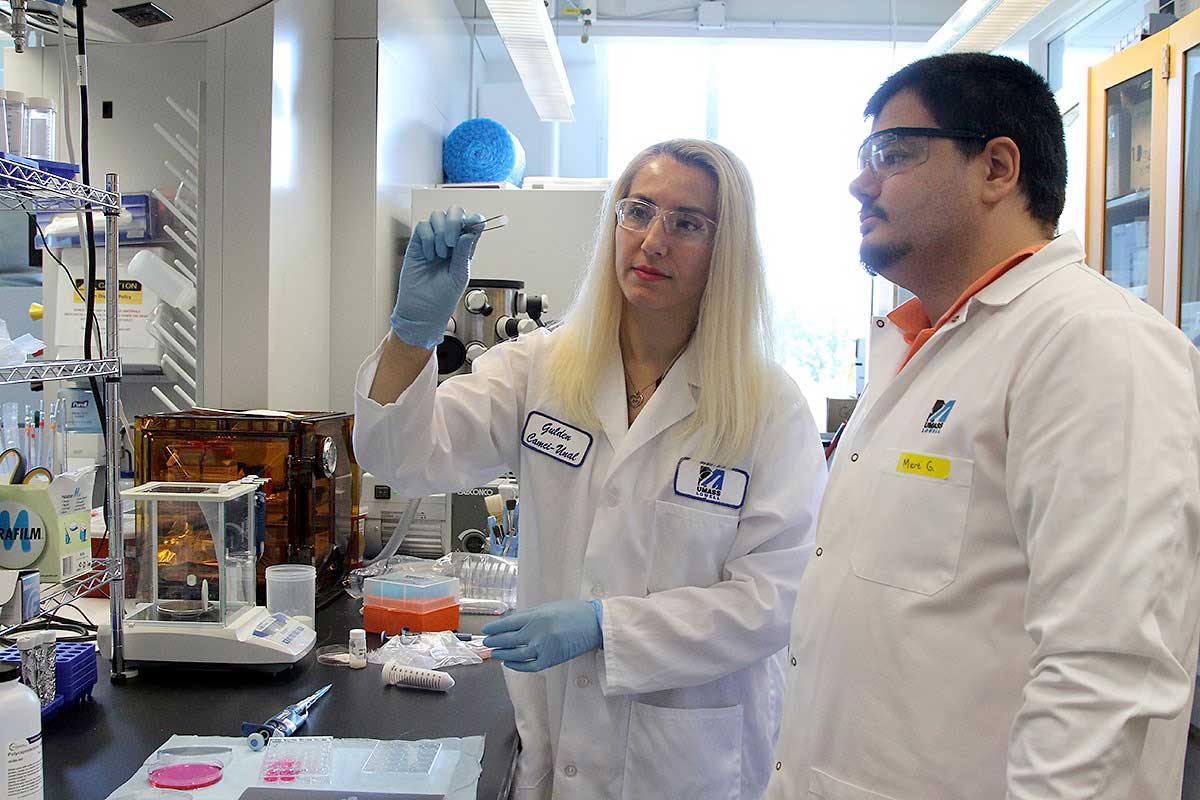
The research, led by Prof. Dr. Gulden Camci-Unal from the Department of Chemical Engineering at the University of Massachusetts Lowell, explores a novel method of repurposing eggshells. Despite their widespread use in other industries, their potential in medicine has been largely untapped until now. Since 2016, Camci-Unal and her team have been dedicated to utilizing finely crushed eggshells to create tiny 3D structures, known as scaffolds, where bone cells can grow and multiply.

Continue reading… “Eggshells: The Future of Bone and Cartilage Implants”

Chinese Researchers Develop Energy-Efficient AI Model Inspired by Human Brain Neurons

Chinese researchers have unveiled a groundbreaking AI model that mimics the behavior of neurons in the human brain, potentially revolutionizing the future of artificial intelligence. This new model, developed by a team from the Chinese Academy of Sciences’ Institute of Automation and Peking University, promises to deliver powerful computational abilities without the high energy consumption associated with traditional silicon-based processors.

The research team aimed to bridge the gap between the complex workings of large AI models and the intricate, yet energy-efficient, operations of the human brain. While AI systems have rapidly expanded in capability, their increasing demand for energy has become a growing concern. In contrast, the human brain, which is far more complex than any existing AI model, operates on a mere fraction of the energy.

Continue reading… “Chinese Researchers Develop Energy-Efficient AI Model Inspired by Human Brain Neurons”

Novel CART Neuropeptide Shows Promise in Weight Loss and Alzheimer’s Protection

A newly modified CART neuropeptide has demonstrated remarkable stability, appetite reduction, and brain protection against harmful tau proteins linked to Alzheimer’s disease. This breakthrough research, recently published in the European Journal of Pharmacology, has shown promising results in both cellular and animal tests.

In experiments, the modified compound led to significant weight loss in higher-weight mice and reduced the presence of tau protein in their brains—a key marker associated with Alzheimer’s. The success of this compound lies in its modification with fatty acids, which enhance its ability to cross the blood-brain barrier. This improved delivery allows the neuropeptide to effectively reduce appetite and offer neuroprotective benefits, making it a potential candidate for treating or preventing neurodegenerative diseases, according to researcher Vilém Charvát.

Continue reading… “Novel CART Neuropeptide Shows Promise in Weight Loss and Alzheimer’s Protection”

Revolutionary 3D Printing System Safely Assembles Living Organisms in Real-Time

Researchers at the University of Minnesota have developed a groundbreaking adaptive 3D printing system that can autonomously recognize and position randomly distributed organisms with precision. This innovative technology, a first of its kind, offers substantial benefits in fields such as bioimaging, cybernetics, cryopreservation, and the integration of living organisms into technical devices. The research findings, recently published in Advanced Science, have already led to a pending patent for the technology.

How the System Works

The system operates by detecting organisms, whether they are stationary, enclosed in droplets, or in motion, and accurately positioning them in designated locations. It employs a pick-and-place method that leverages real-time visual and spatial data to identify and safely place the organisms. This level of precision and adaptability is a significant improvement over traditional methods, which require manual intervention. Manual handling is not only time-consuming but can also result in inconsistent outcomes. The new system streamlines this process, reducing the time required for these tasks while ensuring consistent and reliable results.

Continue reading… “Revolutionary 3D Printing System Safely Assembles Living Organisms in Real-Time”

Breakthrough in Cellular Agriculture: Continuous Manufacturing Method Could Make Cultivated Meat Affordable and Scalable

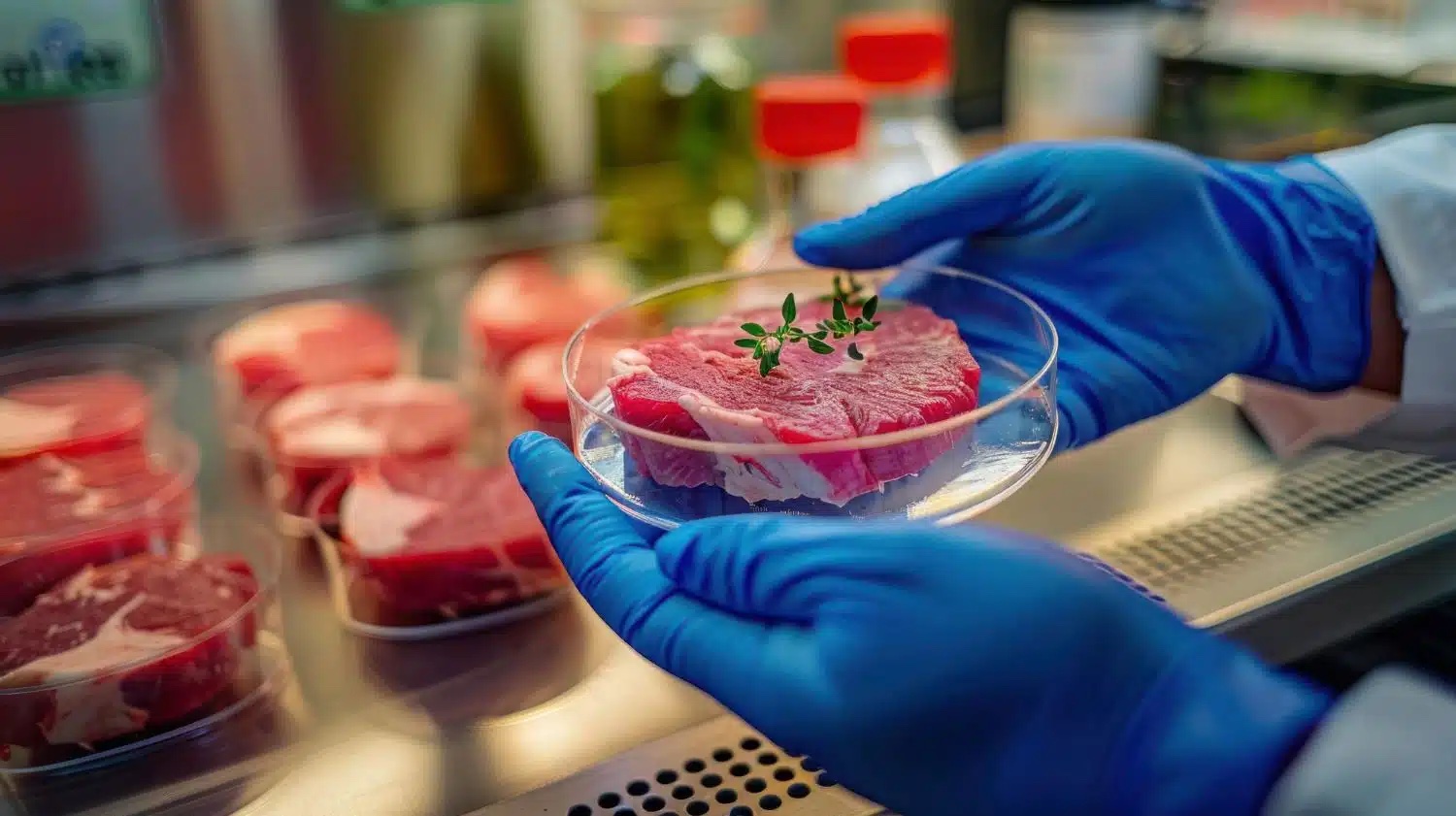
As the demand for animal products continues to rise, cellular agriculture offers a promising solution. However, current production technologies for cultivated meat face significant challenges, particularly in achieving scalability and cost-effectiveness. A groundbreaking study from the Hebrew University of Jerusalem, in collaboration with the cultivated meat industry, has introduced an innovative continuous manufacturing process that could overcome these hurdles, potentially making cultivated meat accessible to everyday consumers and contributing to a more sustainable and ethical food system.

Innovative Production Method

The researchers employed tangential flow filtration (TFF) to continuously produce cultivated meat, achieving an impressive biomass density of up to 130 billion cells per liter and a yield of 43% weight per volume. This process was maintained over a 20-day period, allowing for daily biomass harvests. Crucially, the study also developed a growth medium free of animal components, costing just $0.63 per liter. This medium is specifically designed to support the high-density, long-term culture of chicken cells, making the process both more affordable and scalable.

Continue reading… “Breakthrough in Cellular Agriculture: Continuous Manufacturing Method Could Make Cultivated Meat Affordable and Scalable”

Korean Researchers Engineer Bacteria to Produce Biodegradable Plastics with Enhanced Properties

Researchers in Korea have made a groundbreaking advancement in the quest to develop eco-friendly plastics by engineering bacteria to produce polymers with ring-like structures. These structures significantly enhance the rigidity and thermal stability of the resulting plastics, offering a promising alternative to traditional petroleum-based plastics.

Senior author Sang Yup Lee emphasized the potential impact of this innovation, stating, “I think biomanufacturing will be key to mitigating climate change and addressing the global plastic crisis.”

Continue reading… “Korean Researchers Engineer Bacteria to Produce Biodegradable Plastics with Enhanced Properties”

Stanford’s Electrified Reactor: A Game-Changer for Reducing Industrial Carbon Emissions

Researchers at Stanford have developed a groundbreaking reactor that uses electricity instead of fossil fuels to generate the high temperatures needed for industrial processes. This innovation offers a cleaner, more efficient alternative to traditional methods, with the potential to significantly reduce carbon emissions.

Industrial activities in the United States account for about one-third of the nation’s carbon dioxide emissions, surpassing the combined emissions from all passenger vehicles, trucks, and airplanes. Decarbonizing this sector is essential for mitigating climate change, but it has proven to be a complex challenge.

Continue reading… “Stanford’s Electrified Reactor: A Game-Changer for Reducing Industrial Carbon Emissions”
Discover the Hidden Patterns of Tomorrow with Futurist Thomas Frey
Unlock Your Potential, Ignite Your Success.

By delving into the futuring techniques of Futurist Thomas Frey, you’ll embark on an enlightening journey.

Learn More about this exciting program.