Revolutionary 3D Quantitative Phase Imaging: A New Approach Using Wavelength-Multiplexed Diffractive Optical Processors

As light waves propagate through a medium, they experience a temporal delay, revealing vital information about the structural and compositional characteristics of the material. Quantitative Phase Imaging (QPI) is an advanced optical technique that captures variations in optical path length as light passes through biological samples, materials, and other transparent structures. Unlike traditional imaging methods that rely on staining or labeling, QPI allows researchers to visualize and quantify phase variations, generating high-contrast images for noninvasive investigations essential in fields such as biology, materials science, and engineering.

In a groundbreaking study published on July 25 in Advanced Photonics, researchers at the University of California, Los Angeles (UCLA) have introduced an innovative approach to 3D QPI using a wavelength-multiplexed diffractive optical processor. This new method addresses the limitations of traditional 3D QPI techniques, which are often time-consuming and computationally demanding.

Continue reading… “Revolutionary 3D Quantitative Phase Imaging: A New Approach Using Wavelength-Multiplexed Diffractive Optical Processors”

Breakthrough in Battery Technology: Enhanced Cathode Design Boosts Performance of All-Solid-State Lithium Batteries

Researchers at the Qingdao Institute of Bioenergy and Bioprocess Technology (QIBEBT) in China have developed a groundbreaking modification to the cathode for all-solid-state lithium batteries (ASLB), significantly enhancing their energy density and life cycle.

According to a press release from the institute, this research marks a major step forward in the development of next-generation high-performance batteries.

As the world shifts away from fossil fuels and towards electrifying transportation, the role of batteries becomes increasingly critical. Although batteries have been used for centuries, lithium-ion batteries have achieved the highest energy densities to date. However, with the rapid expansion of solar and wind power and the growing demand for electric vehicles, lithium battery technology is nearing its limits, potentially becoming a bottleneck in the transition to greener energy solutions.

Continue reading… “Breakthrough in Battery Technology: Enhanced Cathode Design Boosts Performance of All-Solid-State Lithium Batteries”

Breakthrough in Energy Storage: Twisted Carbon Nanotubes Outperform Lithium-Ion Batteries

A collaboration of researchers from Japan and the US has demonstrated how twisted carbon nanotubes can store up to three times more energy than standard lithium-ion batteries. This groundbreaking research could pave the way for new-age implants and sensors that are lightweight, compact, and, more importantly, safe.

Carbon nanotubes are nanometer-sized structures typically made out of a single layer of carbon atoms. Also referred to as graphene, these carbon sheets are extremely light yet stronger than steel. The material’s superior properties have helped scientists deploy it for several futuristic applications. As a researcher at Japan’s Shinshu University, Sanjeev Kumar Ujjain wanted to know if carbon nanotubes could also be used to store energy. In 2022, he moved from Japan to the University of Maryland Baltimore County (UMBC), where he continued his research and found that twisting carbon nanotubes improves their energy storage efficiency.

Continue reading… “Breakthrough in Energy Storage: Twisted Carbon Nanotubes Outperform Lithium-Ion Batteries”

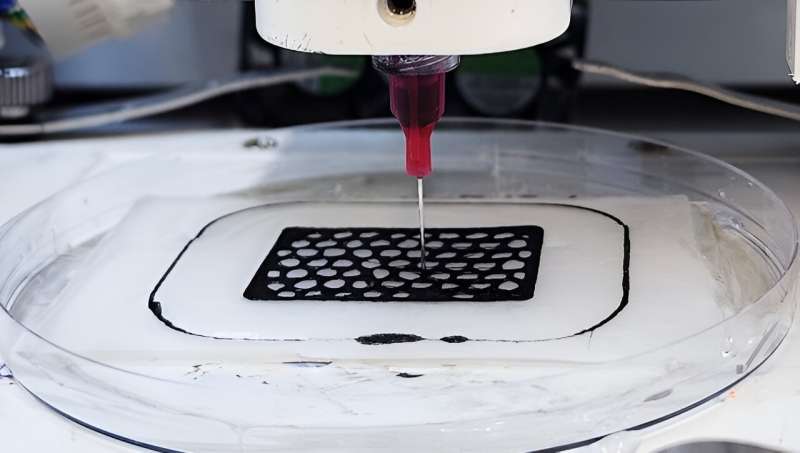
Breakthrough in Lung Disease Research: 3D-Printed Lung Tissue Using Mucus-Based Bioink

Lung diseases claim millions of lives globally each year, with limited treatment options and inadequate animal models for research. Now, researchers have made a significant advancement by developing a mucus-based bioink for 3D printing lung tissue, as detailed in a study published in ACS Applied Bio Materials. This innovation holds promise for better understanding and treating chronic lung conditions.

While lung transplants offer a lifeline to some, the shortage of donor organs limits this option. Medications and treatments can manage symptoms of diseases like chronic obstructive pulmonary disease (COPD) and cystic fibrosis, but no cure exists. Traditional research methods using rodents often fall short in accurately replicating human pulmonary diseases and predicting drug safety and efficacy. In response, bioengineers are turning to lab-grown lung tissue, aiming to create more precise models or potential implant materials.

Continue reading… “Breakthrough in Lung Disease Research: 3D-Printed Lung Tissue Using Mucus-Based Bioink”

MIT CSAIL Develops Real-to-Sim-to-Real Model for Versatile Robot Training

Researchers at MIT’s Computer Science and Artificial Intelligence Laboratory (CSAIL) have developed an innovative Real-to-Sim-to-Real model to enhance robotic learning in diverse real-world conditions. This model, named RialTo, is designed to train robots to perform everyday tasks efficiently in specific environments.

While the goal of many developers is to create robots that can operate universally under all conditions, MIT CSAIL’s team focused on making robots adept at functioning in particular settings. The RialTo method improves robot policies by 67% compared to traditional imitation learning, even with the same number of demonstrations. This approach allows robots to handle tasks such as opening toasters, placing books on shelves, and opening drawers and cabinets.

Continue reading… “MIT CSAIL Develops Real-to-Sim-to-Real Model for Versatile Robot Training”

Revolutionary 3D Printing Method Uses Salt Water to Create Sustainable Structures

Engineers at the University of California, San Diego have developed an innovative 3D printing method that utilizes a polymer ink and a salt water solution to create solid structures, offering a more sustainable and environmentally friendly approach to materials manufacturing. Published in Nature Communications, this breakthrough process simplifies 3D printing and reduces its environmental impact.

The method employs a liquid polymer solution known as poly(N-isopropylacrylamide), or PNIPAM. When extruded through a needle into a calcium chloride salt solution, the PNIPAM ink instantly solidifies upon contact. This rapid solidification is driven by the salting-out effect, where salt ions attract water molecules from the polymer solution. This attraction causes the hydrophobic polymer chains in the PNIPAM ink to aggregate densely, forming a solid structure.

Continue reading… “Revolutionary 3D Printing Method Uses Salt Water to Create Sustainable Structures”

Advancing Marine Monitoring with Self-Powered ‘Bug’ Robots

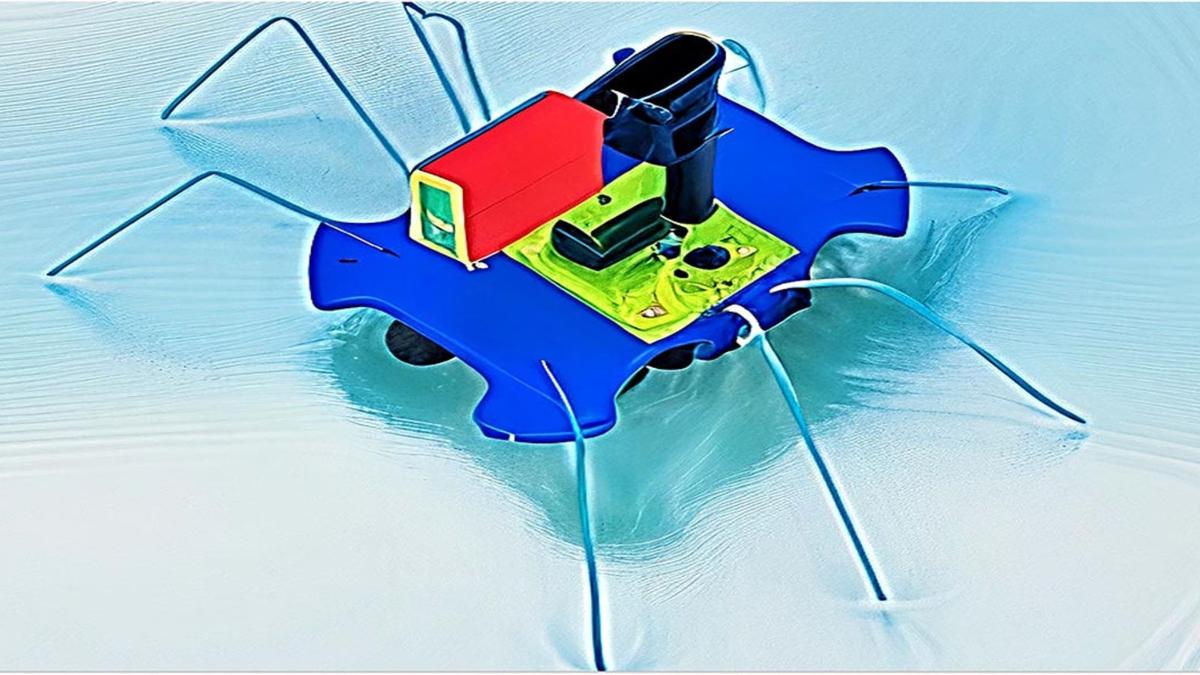
Scientists have made significant strides in innovation, transitioning from bid-like drones to self-powered “bug” robots. Researchers from Binghamton University, the State University of New York, have developed a tiny, bug-like robot designed to explore the Ocean Internet of Things (IoT), potentially transforming marine monitoring.

Inspired by biological digestion, these advanced robots are equipped with a self-sustained energy system. Futurists predict that by 2035, over one trillion autonomous devices will be integrated into all aspects of human life as part of the IoT. Most of these objects, regardless of size, will likely collect and transmit data to a central database without human intervention.

Continue reading… “Advancing Marine Monitoring with Self-Powered ‘Bug’ Robots”

ORNL Achieves Breakthrough with 270-kW Wireless EV Charging Technology

Researchers at Oak Ridge National Laboratory (ORNL) have achieved a significant milestone by demonstrating the first 270-kW wireless electric vehicle (EV) charging technology. This development follows their earlier record-setting achievement of a 100-kW wireless charger demonstrated in March.

In partnership with the Volkswagen Group, the team showcased the wireless power transfer of 270 kW on a Porsche Taycan EV. This compact high-power system addresses the challenges faced by light-duty passenger vehicles, such as space, weight, and volume constraints, which complicate the accommodation of large and heavy conventional wireless power transfer systems.

Continue reading… “ORNL Achieves Breakthrough with 270-kW Wireless EV Charging Technology”

NVIDIA Unveils New Advances in Robotics and AI at SIGGRAPH

At SIGGRAPH in Denver, NVIDIA Corporation introduced groundbreaking research and innovations in simulation, generative artificial intelligence, and robotics. The company announced a comprehensive suite of services, models, and computing platforms designed to empower robotics and AI developers to “develop, train, and build the next generation of humanoid robotics.”

“The next wave of AI is robotics, and one of the most exciting developments is humanoid robots,” stated Jensen Huang, founder and CEO of NVIDIA. “We’re advancing the entire NVIDIA robotics stack, opening access for worldwide humanoid robotics developers and companies to use the platforms, acceleration libraries, and AI models best suited for their needs.”

Continue reading… “NVIDIA Unveils New Advances in Robotics and AI at SIGGRAPH”

Transforming Quantum Technologies with Microstructured Optical Fibers

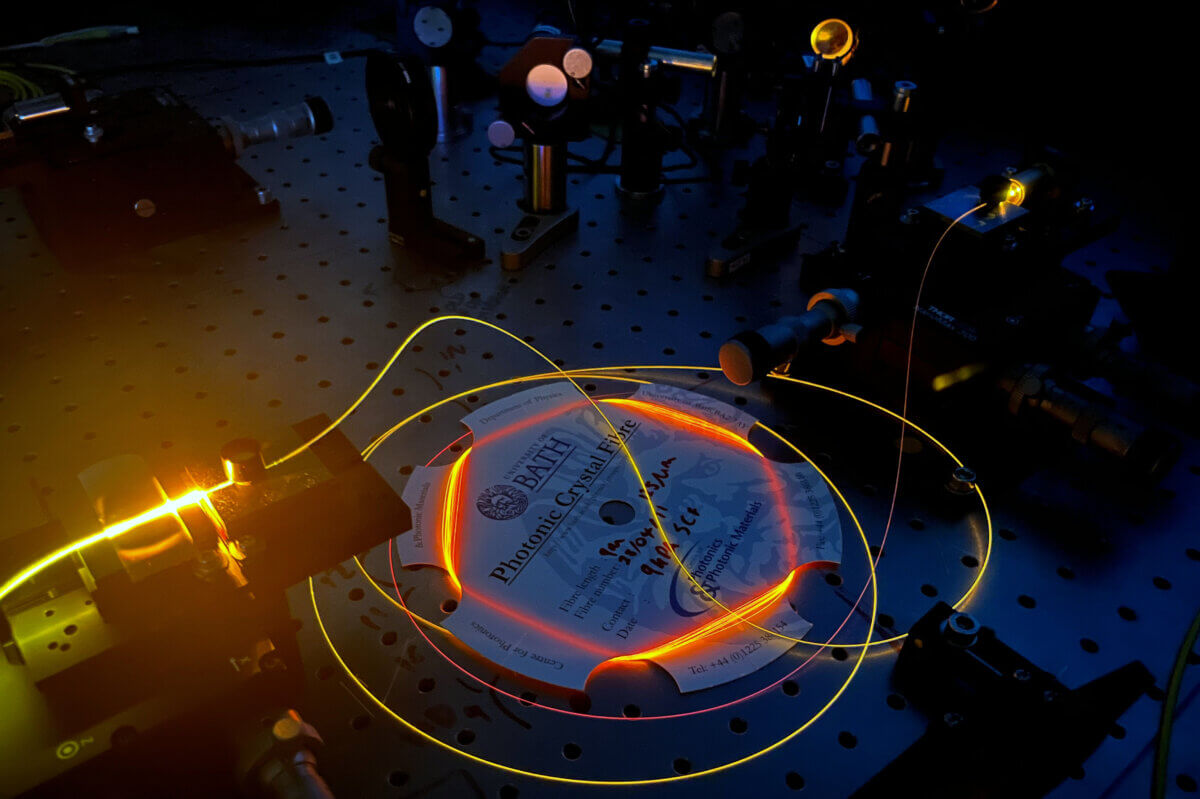
“The conventional optical fibers that form the backbone of today’s telecommunications networks transmit light at wavelengths determined by the losses of silica glass,” says Dr. Kristina Rusimova from the Department of Physics at the University of Bath. “However, these wavelengths are incompatible with the operational wavelengths of single-photon sources, qubits, and active optical components essential for light-based quantum technologies.”

Enter the microstructured optical fiber. Unlike traditional optical fibers with solid glass cores, these new fibers feature a complex pattern of air pockets running along their entire length. This seemingly simple change unlocks a myriad of possibilities for controlling and manipulating light in ways crucial for quantum technologies. One of the most exciting applications of these fibers is in creating the building blocks of a quantum internet. By carefully designing the structure of these fibers, researchers can generate pairs of entangled photons—particles of light that remain inextricably linked regardless of the distance between them. This quantum entanglement is the essential ingredient that enables many quantum technologies.

Continue reading… “Transforming Quantum Technologies with Microstructured Optical Fibers”

Embraer Introduces World’s First Automatic Takeoff System for Commercial Jets

In a groundbreaking development for the aviation industry, Embraer has introduced the first automatic takeoff system on one of its commercial jets. The Embraer Enhanced Takeoff System (E2TS) is designed to provide its E2 passenger aircraft with an optimal profile and automated takeoff, increasing fuel capacity, extending range, and boosting onboard payload.

Unveiled on July 23 at the Farnborough International Airshow in the United Kingdom, the Brazilian manufacturer claims that the E2TS improves rotation and trajectory, reduces field length, and lessens pilot workload without requiring any aircraft modifications beyond a software update.

Continue reading… “Embraer Introduces World’s First Automatic Takeoff System for Commercial Jets”

Tsinghua University Demonstrates Safety of World’s First Commercial Pebble-Bed Nuclear Reactor

China’s Tsinghua University has achieved a groundbreaking milestone by demonstrating the inherent safety of the first operating commercial pebble-bed nuclear reactor. By shutting off the power and allowing the passive systems to maintain control of the reactor core, the university showcased the advanced safety features of this next-generation technology.

Older nuclear reactors, such as Pressurized Water Reactors (PWR), have a significant design drawback—they require active measures to shut down in an emergency, and their safety systems depend on an external power source to run coolant pumps. These systems can fail catastrophically if the power source is compromised, as seen in the Fukushima disaster of 2011. The plant, based on an outdated 1970s design, was hit by an earthquake and a tsunami that knocked out its backup diesel generators. The resulting chaos prevented emergency crews from intervening in time, leading to a hydrogen explosion and reactor core meltdown.

Continue reading… “Tsinghua University Demonstrates Safety of World’s First Commercial Pebble-Bed Nuclear Reactor”
Discover the Hidden Patterns of Tomorrow with Futurist Thomas Frey
Unlock Your Potential, Ignite Your Success.

By delving into the futuring techniques of Futurist Thomas Frey, you’ll embark on an enlightening journey.

Learn More about this exciting program.