By Futurist Thomas Frey
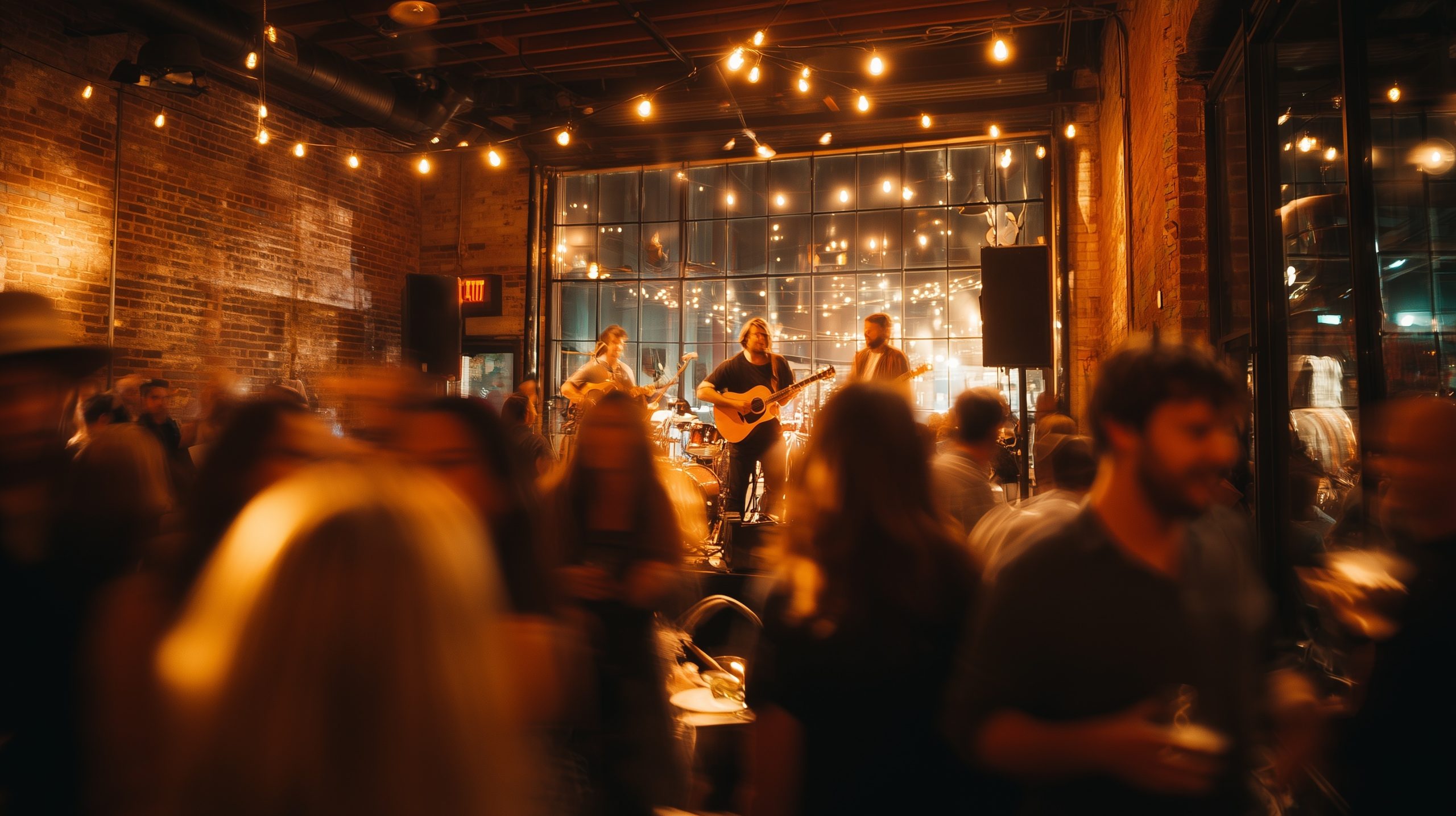
By 2040, the global music industry has flipped itself inside out. The future of live music isn’t in megastadiums or nightclubs—it’s in living rooms, rooftops, garages, and backyards. The era of “micro-venues” has arrived, and with it, a revolution in how we experience performance, intimacy, and community. Across the planet, every home has the potential to become a concert hall, every dinner party a stage, and every neighborhood a stop on someone’s world tour.
The concept took off in the late 2020s as artists began experimenting with direct-to-fan experiences after the pandemic’s digital saturation. By 2035, the global micro-venue network—run by AI-driven platforms—had turned living rooms into high-end listening spaces. Homeowners list their available space on apps similar to Airbnb, and musicians “bid” for the chance to play. Guests reserve tickets for $30–$80 per seat, and within hours, your apartment transforms into a professional concert venue with portable lighting, sound engineering drones, and digital payment integration.
For the artist, the economics are revolutionary. Touring—once the financial grind of the music business—became efficient, personalized, and profitable. Instead of crisscrossing continents in buses and planes, mid-tier musicians now route tours through city clusters. AI algorithms schedule 5–7 shows per week in local homes, minimizing travel costs and maximizing connection. The average independent performer in 2040 earns between $100,000 and $300,000 annually by playing to small audiences who value proximity and authenticity over spectacle.
The intimacy is unlike anything traditional concerts could offer. There’s no jumbotron, no barrier, no security pit—just music, shared breath, and human connection. Fans describe the experience as transcendent: you don’t attend a concert—you become part of it. Artists remember faces instead of crowd noise. Conversations happen before and after the performance. Each show is a one-of-one, defined by the people in the room. The concert isn’t something you consume—it’s something you co-create.
By 2040, more than 50,000 registered micro-venues exist in the United States alone, with millions worldwide. Some hosts operate casually, hosting one or two events a month, while others have turned it into a lucrative side hustle, earning $2,000–$5,000 monthly by curating small, recurring shows. The result is a decentralized music economy where the power has shifted from labels and promoters to musicians and local communities. Artists own their relationships with fans. Hosts earn income from culture. Cities rediscover live music as a neighborhood experience rather than a commercial event.
Stadium tours still exist—but they’ve become cultural relics reserved for the elite 0.1% of global superstars who can fill 80,000 seats. Everyone else has found a better model: smaller crowds, higher satisfaction, and stronger financial sustainability. Audiences pay more for proximity because intimacy has become the new luxury. In an age of infinite digital noise, the rarity of being there, physically present, has become priceless.
Technological advancements make it seamless. Sound optimization AI adapts to each home’s acoustics. Virtual production assistants handle lighting design. Holographic screens project lyric translations and real-time visuals. Payment systems instantly split revenue between artist, host, and platform. And safety tech ensures transparency: identity verification, crowd-size limits, and digital insurance for property and performers.
Sociologically, micro-venues have redefined how communities form. Strangers become friends over shared music. Neighborhoods create local calendars. Retirees host folk nights. Gen Z hosts experimental AI jam sessions. Apartment complexes share spaces for touring acts. Music has returned to what it was always meant to be—a social glue, not a spectacle.
The industry metrics tell the story. Between 2030 and 2040, small-venue revenue rose 230%, while arena tours declined by 45%. The number of independent touring artists doubled, and 67% of fans now attend at least one micro-concert per year. The live music market didn’t shrink—it multiplied. Instead of a few massive events, millions of micro-events now pulse across the globe every night.
Final Thoughts
Micro-venues have democratized not just the music business, but human connection itself. They’ve dismantled the hierarchy of celebrity and replaced it with community. Every city block now hums with the sound of rediscovered humanity—artists and audiences meeting eye-to-eye, ear-to-ear, heart-to-heart. The living room is no longer private space—it’s public culture, alive again in its most ancient form: people gathering to share sound, story, and soul. In the end, the future of music isn’t louder—it’s closer.
Original Article: Micro-Venues Explode—Every Living Room Becomes a Concert Hall
Related Reading:
- The Rise of AI-Powered Musicians and the New Era of Direct-to-Fan Music
- How Technology Is Reviving Local Music Scenes Worldwide