Artedrone Develops Autonomous Robotic System to Expand Access to Stroke Treatment

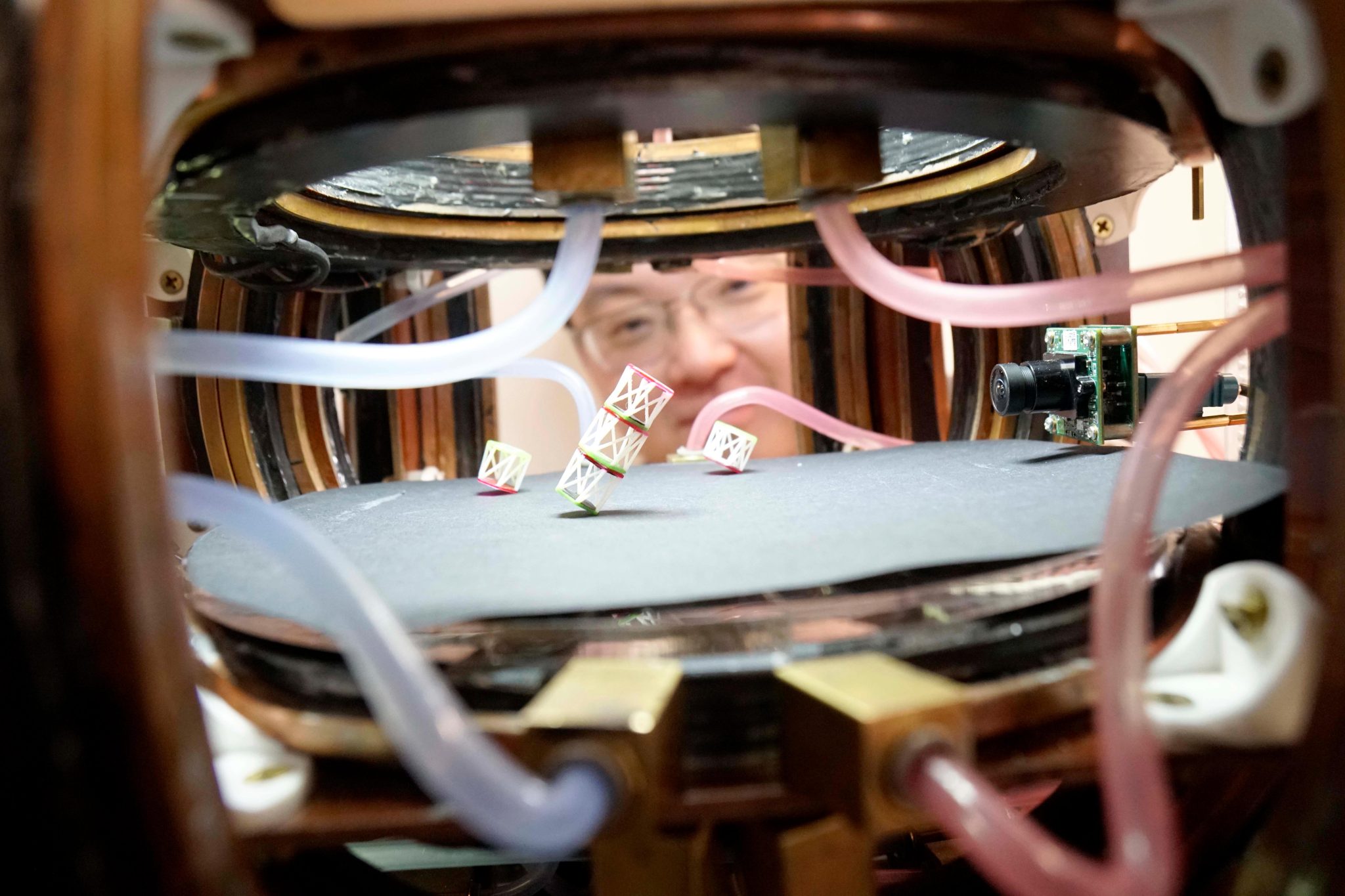
Paris-based medtech startup Artedrone is advancing a groundbreaking microrobotic system designed to autonomously navigate the brain’s vasculature and remove blood clots, offering a new approach to stroke care with the potential to dramatically expand access beyond specialized treatment centers. Known as the Sasha system, the technology combines robotic catheterization, magnetic guidance, advanced imaging, and artificial intelligence to perform mechanical thrombectomy procedures with minimal operator intervention. Currently in preclinical development, Artedrone has submitted initial findings for publication and is targeting a first-in-human trial by 2027.

The Sasha system operates by using CT or MRI imaging to create a digital twin of the patient’s brain vasculature. This model is used to pre-map a path to the clot. During the procedure, an interventionalist accesses the patient’s arterial system through the groin and guides the catheter up to the carotid artery. From that point—referred to as the “base camp”—the microrobot takes over, propelled passively by blood flow. As it encounters bifurcations in the vessels, magnetic fields from an external device are used to steer the catheter by pulling or pushing a magnetic component on the device in the desired direction. This step-by-step advancement continues until the device reaches the target site.

Continue reading… “Artedrone Develops Autonomous Robotic System to Expand Access to Stroke Treatment”

Bio-Inspired Smart Façade Revolutionizes Building Design with Shape-Shifting Climate Control

Scientists in Germany have developed a groundbreaking smart façade system that dynamically changes shape in response to weather conditions, paving the way for a new generation of energy-efficient, adaptive building technologies.

Called FlectoLine, this innovative 83.5-square-meter (898-square-foot) façade adapts in real time to environmental changes to optimize indoor comfort and minimize energy use. The system was recently awarded the Special Prize by the MVV Foundation for the Future at the inaugural Award for Bio-Inspired Innovations Baden-Württemberg—a testament to its visionary design, which blends engineering with lessons from nature.

Continue reading… “Bio-Inspired Smart Façade Revolutionizes Building Design with Shape-Shifting Climate Control”

Johns Hopkins APL Unveils Breakthrough Thermoelectric Cooling Tech Twice as Efficient as Current Materials

Researchers at the Johns Hopkins Applied Physics Laboratory (APL) in Laurel, Maryland, have developed a revolutionary solid-state thermoelectric refrigeration technology that significantly outperforms current systems. Using nano-engineered materials called Controlled Hierarchically Engineered Superlattice Structures (CHESS), the team has achieved twice the efficiency of traditional bulk thermoelectric materials—offering a scalable, energy-efficient alternative to conventional compressor-based cooling systems.

As the global demand for compact, reliable, and eco-friendly refrigeration solutions increases—driven by population growth, urbanization, and expanding digital infrastructure—this advancement could redefine the cooling industry.

Continue reading… “Johns Hopkins APL Unveils Breakthrough Thermoelectric Cooling Tech Twice as Efficient as Current Materials”

Breakthrough in Green Chemistry: Artificial Photosynthesis Used to Produce Ammonia from Sunlight, Water, and Air

Researchers at the University of Tokyo have achieved a significant breakthrough in sustainable chemistry by developing a method to synthesize ammonia using only sunlight, atmospheric nitrogen, and water. This innovative process mimics the natural nitrogen-fixation methods employed by cyanobacteria in symbiotic relationships with plants. According to a university press release, this development opens the door to ammonia production with dramatically lower energy requirements and environmental impact.

Ammonia is a cornerstone of global agriculture, primarily used in the production of urea-based fertilizers essential for large-scale crop cultivation. With approximately 200 million tonnes of ammonia produced annually—over 80 percent of which is used in agriculture—finding a cleaner production method is critical. Currently, ammonia is synthesized through the Haber-Bosch process, which requires high temperatures and pressures, making it energy-intensive and responsible for about 2% of global carbon emissions.

Continue reading… “Breakthrough in Green Chemistry: Artificial Photosynthesis Used to Produce Ammonia from Sunlight, Water, and Air”

New Infrared-Enabled Contact Lenses Give Humans “Super-Vision” Without Power Source

In a remarkable technological leap, neuroscientists and materials scientists have developed infrared-enabled contact lenses that allow both humans and mice to see infrared light—without the need for a power source. Published in the journal Cell, the innovation represents a major step toward noninvasive, wearable “super-vision” devices that could transform security, communication, medical diagnostics, and more.

Unlike bulky infrared night vision goggles, these transparent contact lenses convert invisible near-infrared light (wavelengths between 800 and 1600 nanometers) into visible light detectable by the naked eye. Even more striking, wearers can simultaneously perceive both visible and infrared light, with enhanced infrared clarity when their eyes are closed.

Continue reading… “New Infrared-Enabled Contact Lenses Give Humans “Super-Vision” Without Power Source”

ZEUS Laser Fires Historic 2-Petawatt Pulse, Ushering in a New Era of High-Field Science

The ZEUS laser facility at the University of Michigan has officially entered the record books, firing its first-ever 2-petawatt pulse—making it the most powerful laser in the United States. This staggering burst of energy, equal to twice the peak power of any other laser in the country, lasts a fleeting 25 quintillionths of a second (25 femtoseconds), but its implications could be long-lasting and transformative across numerous scientific fields.

“This milestone marks the dawn of a new era for American high-field science,” said Karl Krushelnick, director of the Gérard Mourou Center for Ultrafast Optical Science, which houses ZEUS. Designed to probe the most extreme conditions in nature, the laser is poised to fuel breakthroughs in astrophysics, quantum physics, national defense, and medical technologies.

Continue reading… “ZEUS Laser Fires Historic 2-Petawatt Pulse, Ushering in a New Era of High-Field Science”

Korean Scientists Pioneer Eco-Friendly Solar Hydrogen Production Using World’s Smallest Quantum Semiconductor

In a groundbreaking achievement, Korean researchers have successfully produced eco-friendly solar hydrogen using an ultrasmall quantum semiconductor nanocluster—marking the first time in history this has been accomplished. This novel material, comprised of just 26 atoms, is now considered the smallest inorganic semiconductor ever used as a photocatalyst.

The research was conducted through a collaboration between Daegu Gyeongbuk Institute of Science and Technology (DGIST), Hanyang University, and Korea University. The team utilized a cadmium selenide ((CdSe)₁₃) nanocluster, measuring less than one nanometer, to drive hydrogen production from water under sunlight. As part of the II-VI group semiconductors, cadmium selenide is known for its high reactivity but has long faced challenges due to its instability and poor conductivity—issues that this team has now addressed.

Continue reading… “Korean Scientists Pioneer Eco-Friendly Solar Hydrogen Production Using World’s Smallest Quantum Semiconductor”

Underwater Control Without Contact: New Metamaterial Uses Sound to Move Objects Remotely

Sound isn’t just for music or communication — it’s becoming a tool for precision manipulation in underwater environments. Researchers have developed a novel metamaterial that allows objects to be moved, rotated, and positioned underwater without any physical contact, using only carefully controlled sound waves.

This breakthrough comes from Dajun Zhang, a doctoral student at the University of Wisconsin-Madison. He presented his findings on May 20 at the 188th Meeting of the Acoustical Society of America and the 25th International Congress on Acoustics.

Continue reading… “Underwater Control Without Contact: New Metamaterial Uses Sound to Move Objects Remotely”

SonoTextiles: The Next Frontier in Wearable Tech Uses Sound, Not Electronics

Wearable technology is undergoing a transformation — and this time, it’s not driven by electronics. Researchers at ETH Zurich have developed a new class of smart textiles that rely on sound waves rather than wires and sensors to monitor motion, touch, and even breathing. Their groundbreaking innovation, called SonoTextiles, turns everyday fabrics into responsive, data-collecting tools through the use of acoustic waves transmitted via glass fibers.

The research team, led by Professor Daniel Ahmed, has successfully integrated glass microfibers into fabric to create garments capable of sensing movement and pressure. Each glass fiber acts as a sensor: a tiny transmitter sends ultrasonic sound waves (around 100 kHz) down the fiber, while a receiver on the opposite end measures any changes in those waves.

Continue reading… “SonoTextiles: The Next Frontier in Wearable Tech Uses Sound, Not Electronics”

Horizon Aircraft Achieves Breakthrough in eVTOL Flight with Cavorite X7 Hybrid Prototype

Canada-based aerospace engineering firm Horizon Aircraft has reached a groundbreaking milestone, becoming the first electric vertical takeoff and landing (eVTOL) developer to successfully complete a stable wing-borne flight transitionusing a large-scale prototype aircraft featuring a fan-in-wing design. The milestone was achieved with its innovative demonstrator, the Cavorite X7, marking a major step forward in hybrid aviation technology.

The Cavorite X7 is not a conventional eVTOL. While most competitors rely solely on distributed electric propulsion, Horizon’s aircraft combines vertical lift capabilities with the performance and range of a traditional fixed-wing aircraft. Designed for real-world utility, it uses 14 lift fans embedded within the aircraft—five in each wing and two in each forward canard—to enable vertical takeoff and landing, similar to a helicopter.

Continue reading… “Horizon Aircraft Achieves Breakthrough in eVTOL Flight with Cavorite X7 Hybrid Prototype”

Sound-Powered Recycling: Ultrasound Breakthrough Revolutionizes Fuel Cell Recovery

A new recycling technique developed at the University of Leicester uses sound waves to efficiently separate materials in fuel cells, offering a cleaner and faster method to recover valuable components and prevent environmental contamination.

The method specifically targets catalyst-coated membranes (CCMs), which are used in hydrogen-powered technologies like fuel cells and water electrolyzers. These membranes typically combine precious platinum group metals with fluorinated polymer membranes, known as PFAS — substances that pose serious environmental and health risks due to their persistence in ecosystems.

Continue reading… “Sound-Powered Recycling: Ultrasound Breakthrough Revolutionizes Fuel Cell Recovery”

Shape-Shifting Metabot: Princeton Engineers Create Magnetic Origami-Inspired Material

In a groundbreaking advancement that merges robotics, materials science, and origami, engineers at Princeton University have developed a shape-shifting material capable of moving, expanding, and responding to electromagnetic commands — all without motors or internal gears. This new class of metamaterial can be remotely controlled, functioning almost like a robot, yet is constructed entirely from passive components.

The research, published in Nature, introduces a metamaterial dubbed the “metabot,” which derives its unique capabilities from its structure rather than its chemical composition. Drawing inspiration from the traditional art of origami, the team designed the metabot to change shape and behavior in response to external magnetic fields.

Continue reading… “Shape-Shifting Metabot: Princeton Engineers Create Magnetic Origami-Inspired Material”
Discover the Hidden Patterns of Tomorrow with Futurist Thomas Frey
Unlock Your Potential, Ignite Your Success.

By delving into the futuring techniques of Futurist Thomas Frey, you’ll embark on an enlightening journey.

Learn More about this exciting program.