By Futurist Thomas Frey
How Elon Musk’s transportation masterplan — twenty years in the making — is finally arriving at the inflection point that reshapes American life
This Isn’t a Car. It’s a Systems Shift.
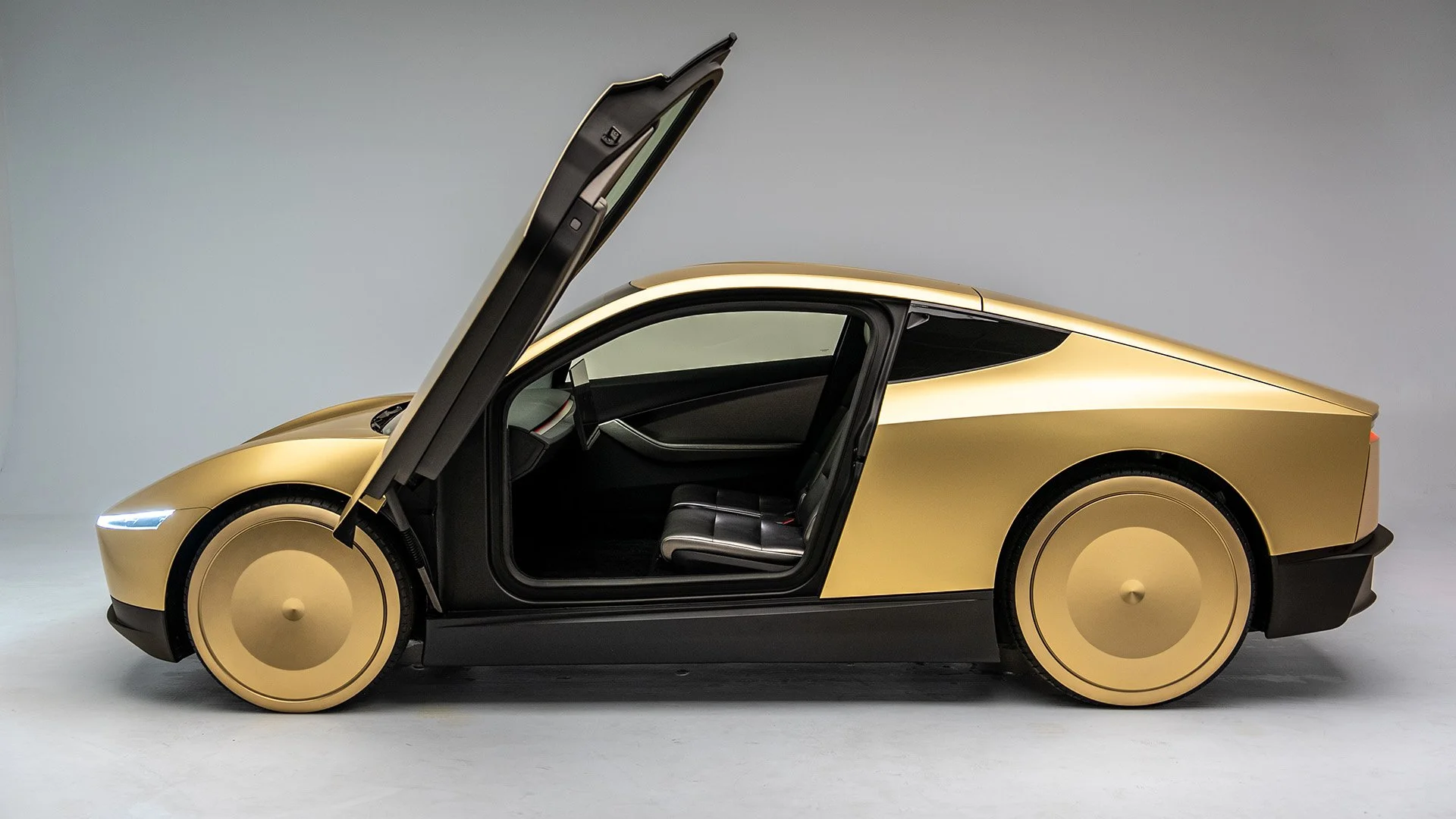
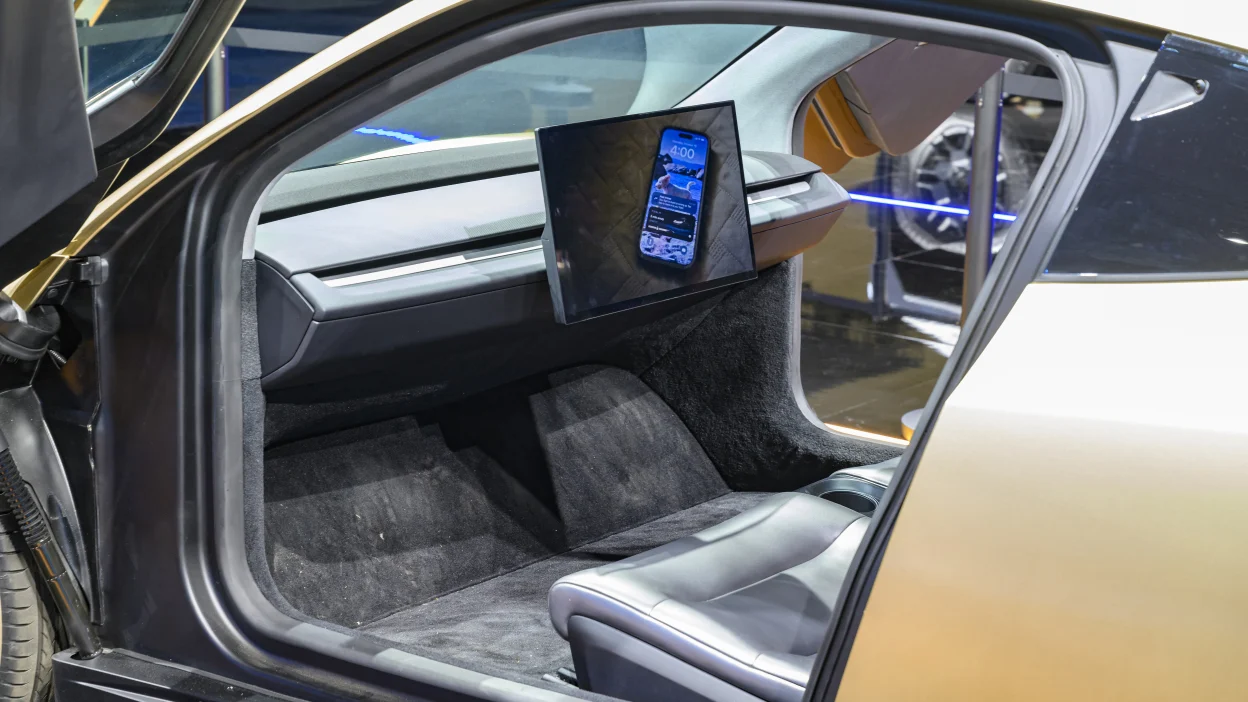
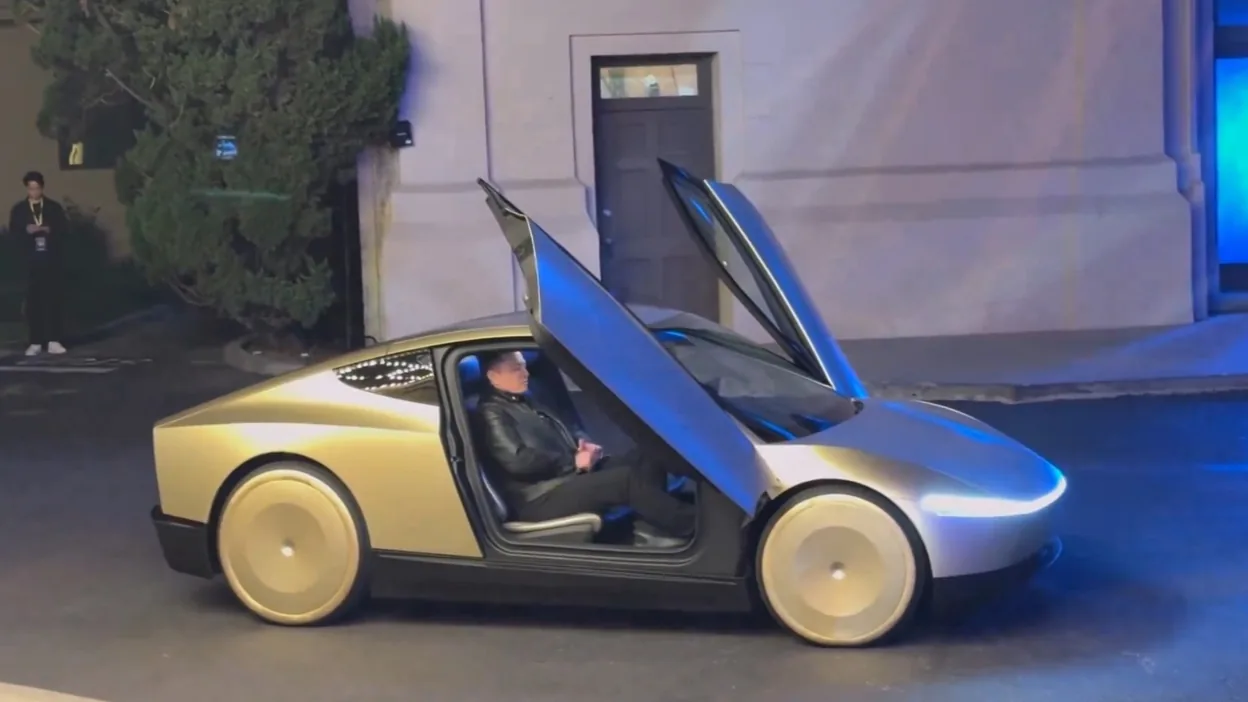
When Tesla unveiled the Cybercab at Warner Bros. Studios in October 2024, most coverage focused on what was missing: no steering wheel, no pedals, butterfly doors that open automatically, a 20.5-inch screen where a dashboard used to be. Clean lines, futuristic design, two seats.
What most coverage missed was the bigger picture. The Cybercab isn’t a car product. It’s the hardware layer of a transportation operating system that Elon Musk has been architecting — piece by piece, decade by decade — since the first Tesla Roadster rolled out in 2008. Production began at Gigafactory Texas in February 2026. Full volume ramp starts this April.
To understand why this moment matters, you have to trace the full arc of the bet Musk has been making. Because each move in the sequence was necessary for the one that followed — and the Cybercab is where the sequence culminates.
The Architecture of a Twenty-Year Strategy
In 2006, Musk published Tesla’s “Secret Master Plan.” The logic was deceptively simple: start with an expensive electric sports car to prove the technology, use the profits to build a more affordable sedan, use those to build a mass-market vehicle, and then use the fleet as the foundation for autonomous ride-hailing. It read like a futurist’s manifesto. It was actually a systems blueprint.
The Roadster proved EVs could be desirable. The Model S proved they could be premium. The Model 3 proved they could be mass-market. The Model Y became the best-selling vehicle in the world. Each step funded and validated the next. Each vehicle added to a global fleet instrumented with cameras, neural networks, and billions of driving miles feeding back into Tesla’s training data. The Cybertruck demonstrated manufacturing at extreme complexity. The Semi demonstrated long-haul electric viability.
The Cybercab is the product the entire portfolio was building toward. Purpose-built for autonomy. Designed for scale. Manufactured using a new “Unboxed” process Musk describes as closer to consumer electronics than traditional automotive assembly — targeting a unit every ten seconds at full rate. That’s not a car factory. That’s a replication engine.
What Is Already Operating Right Now
The Cybercab’s story doesn’t start in April. It started in Austin, Texas, on June 22, 2025, when Tesla launched the first commercial robotaxi rides using modified Model Y vehicles at a flat $4.20 fare — a deliberate Musk nod. By January 2026, Tesla reported its combined Austin and Bay Area fleet at approximately 500 vehicles, having logged over 650,000 total miles since launch. As of March 2026, the fully driverless service — no safety monitor, no one in the front seat — is operating and expanding to daily customer use.
Tesla has filed to expand to seven additional U.S. cities in the first half of 2026, including Phoenix, Miami, and Las Vegas. The operational reality is no longer theoretical. A fully autonomous, revenue-generating ride service exists. The Cybercab enters this operational context not as an experiment but as the production vehicle for a service that already has customers, data, and infrastructure in place.
The Cost Numbers — and Why They Change Everything
This is where the story becomes genuinely disruptive to every existing transportation business model, so it’s worth being precise about the numbers.
A typical Uber or Lyft ride in a major U.S. city currently runs $2 to $3 per mile. Waymo’s rides in the San Francisco Bay Area averaged $19.69 for a typical trip in a January 2026 survey — roughly $1.36 to $1.43 per mile fully burdened, according to Morgan Stanley’s analysis. Tesla’s current Model Y robotaxi in Austin is operating at approximately $0.81 per mile on the same fully-burdened basis — already 40% cheaper than Waymo’s system, and well below what any human-driven service can sustainably deliver.
The Cybercab is purpose-designed to push that cost lower still. Musk has stated an operating cost target of approximately $0.20 per mile at scale. Morgan Stanley projects the Cybercab at around $0.30 to $0.40 per mile in near-term deployment. For context: the average American spends roughly $0.72 per mile owning and operating a personal vehicle when you include depreciation, insurance, fuel, and maintenance. A Cybercab at $0.30 per mile isn’t just cheaper than a taxi. It’s cheaper than owning a car.
McKinsey’s analysis projects that robotaxi cost per mile will drop by more than 50 percent between 2025 and 2030, driven by declining chip costs, operational scale, and reduced empty miles. The Cybercab’s structure — 35 kWh battery, inductive wireless charging that eliminates the need for a driver to plug in, no steering column, no pedal assembly, designed for maximum uptime — is engineered specifically to accelerate that curve. At current pricing, a 5-mile Austin trip costs riders $8.25 (the $3.25 base fare plus $1 per mile). That’s still cheaper than a comparable Waymo ride and competitive with Uber. As the fleet scales and unit economics improve, the rider price will continue to fall.
Fleet Size in 2026 and 2027: What the Numbers Actually Say
Here’s where honest analysis requires separating what’s likely from what’s been promised — because those are different things with Tesla, and investors and planners need to understand the distinction.
Morgan Stanley, in a December 2025 research note, projected Tesla’s robotaxi fleet growing to approximately 1,000 vehicles on U.S. roads by end of 2026, expanding from the current 500 vehicles across Austin and the Bay Area. That’s the conservative institutional estimate from one of the more credible Tesla analysts. ARK Invest is more aggressive, projecting the fleet could surpass Waymo’s approximately 3,000-vehicle national fleet within roughly three months of the production ramp beginning — if Tesla doubles the fleet monthly as Musk has stated. Tesla’s own internal target, per Q4 2025 earnings commentary, is serving 25 to 50 percent of the U.S. population by year-end 2026, pending regulatory approvals. That target should be read as aspiration, not commitment.
The most plausible 2026 scenario, in my assessment: Tesla ends the year with 1,000 to 3,000 operational robotaxi vehicles, operating commercially in 7 to 15 U.S. cities, including Austin, Phoenix, Miami, Las Vegas, and parts of the Bay Area. Cybercab units begin entering the fleet in the second half of the year as production ramps and city-by-city regulatory approvals come through. This would represent the most significant scaling of commercial autonomous transport the U.S. has seen — but it would still be modest compared to the long-term vision.
For 2027, the trajectory accelerates sharply — if the regulatory path cooperates. Tesla has stated an annual production goal of 2 million Cybercabs per year once multiple factories reach full capacity. Morgan Stanley’s long-range model points toward tens of thousands of vehicles in active commercial service by end of 2027, operating in 30 or more cities. By 2032, their model projects autonomous vehicles logging close to 16 billion miles per year in the U.S. — roughly 30 percent of all rideshare miles nationwide. Tesla and Waymo together are expected to capture nearly 70 percent of that market.
The long horizon projection: Morgan Stanley sees 1 million Tesla robotaxis on U.S. roads by 2035. That’s the number that transforms the company from the world’s most valuable automaker into something closer to a national transportation utility.
The Data Moat and the Competitive Landscape
The core difference between Tesla’s autonomous program and every competitor is the training dataset. Tesla has accumulated 6.9 billion miles of driving data from its global fleet operating under supervised Full Self-Driving. No other autonomous vehicle company has anything approaching this scale of real-world, diverse driving data. As the Cybercab fleet scales, that advantage compounds.
Waymo, which uses LiDAR and has been operating commercially since 2020, currently completes over 250,000 rides per week and targets 1 million weekly rides by end of 2026 across roughly 10 metro areas. It has a significant operational head start and a demonstrably safer track record in its markets. The two companies are pursuing fundamentally different architectures — Waymo’s multi-sensor approach costs more per vehicle but provides redundancy; Tesla’s vision-only approach is cheaper to manufacture and scale but places greater demands on software quality. Both paths are viable. The market is large enough for both to succeed. But the economics of the Cybercab — priced under $30,000 to purchase, at $0.30 to $0.40 per mile to operate — give Tesla a structural cost advantage that Waymo will struggle to match until its own next-generation hardware scales in 2027.
The Three Waves of Disruption That Follow
The Cybercab isn’t just a transportation product. It’s the trigger for a cascade of disruptions across industries that have been stable for decades.
The first wave hits ride-hailing. Uber and Lyft are built on human labor economics. Their entire cost structure — their only real asset — is the driver. A robotaxi that operates 22 hours a day, never demands a wage, and costs $0.30 per mile to run is not a competitor they can absorb. It is a structural replacement. Morgan Stanley projects Uber retaining about 22 percent of U.S. autonomous trips by 2032 through platform integration — they survive by becoming a marketplace for fleets they don’t own. That’s a very different business than the one they’re operating today.
The second wave hits car ownership itself. When a reliable robotaxi is available within minutes anywhere in a city at a cost lower than owning a personal vehicle, the economic case for individual car ownership weakens materially. Parking structures, auto insurance, car loans, dealerships — all downstream of the assumption that most adults must own and operate their own vehicle. That assumption is not permanent.
The third wave is geographic. When transportation becomes cheap, reliable, and autonomous, where people choose to live changes. The commute stops being a tax on distance. Suburban and exurban real estate demand shifts in ways urban planners are only beginning to model.
The Honest Assessment
Tesla’s Austin launch in June 2025 drew immediate scrutiny — early incidents included driving on the wrong side of the road, phantom braking, and dropping passengers in intersections. Federal regulators opened investigations. These are real data points, not PR problems. The NHTSA is watching every mile.
The regulatory path for a vehicle with no steering wheel — where a safety driver cannot intervene even in principle — remains genuinely uncertain outside Texas. And Musk’s timeline credibility carries real baggage: he predicted a million robotaxis by end of 2020. The commercial service launched in 2025.
What has changed is that the operational reality now exists. There are paying customers in autonomous Tesla vehicles today. The Cybercab is in production. The cost economics are demonstrably superior to every human-driven alternative. The fleet size in 2026 will be measured in the thousands rather than the hundreds. And by 2027, if the regulatory path moves as the industry now expects, we will look back at this moment as the point where the driverless transition stopped being a prediction and became a fact. The steering wheel removed from the Cybercab isn’t just a design choice. It’s a declaration about who’s in charge of the road ahead — and the answer, increasingly, is nobody. Which is exactly the point.
The Road to Affordable Autonomous Mobility
McKinsey — How robotaxi cost-per-mile drops 50%+ by 2030 and what it means for the whole mobility market
Autonomous Driving’s Future: Convenient and Connected
McKinsey Center for Future Mobility — The economics and industry structure of the driverless transition
Tesla Cybercab — Full Technical and Production Overview
Wikipedia — Specifications, timeline, regulatory status, and production details through March 2026