We complain 879 million times/year (and Facebook is our top target)
We complain about brands an astonishing 879 million times a year on Twitter, Facebook, and other social media networks. A full 10 percent of us find something to be angry about publicly every single day.
Apple’s splash into home automation with addition of HomeKit to iOS 8 is expected to have a huge impact on sales of smart home devices in 2015 according to a Park Associates report that found 37% of U.S. Households plan to purchase one or more devices next year.
Isolated, the words all sound so cliché. Organic. Flowing. Curvy. But set to the backdrop of Chicago’s blocky skyline, they assemble a brash thesis on the city’s future: The new George Lucas Museum of Narrative Art is a low-slung knoll inside a landscape of towering Lego, an Egyptian pyramid reimagined for the year 2020.
Could Bitcoin become the dominant currency of the gaming industry?
Jeff Grubb – The United States dollar bill only has value because you believe it does. Now, a game developer in Chile wants to apply that same concept to Minecraft and bitcoin.
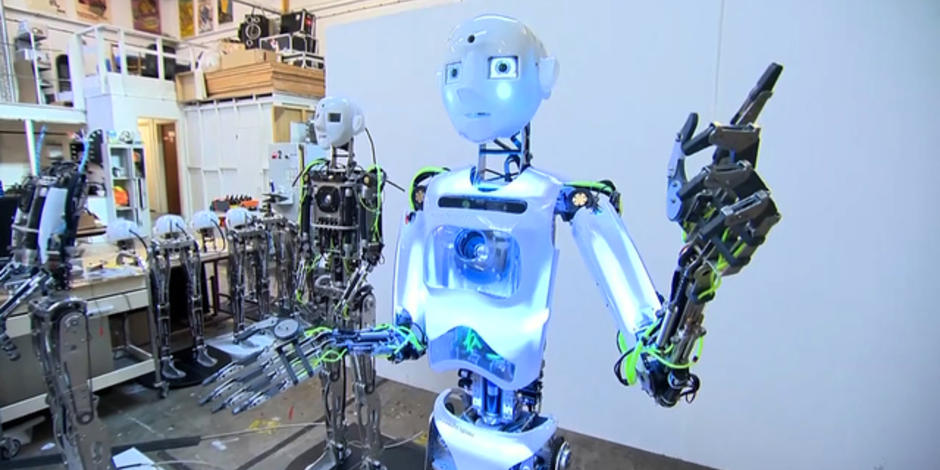
How long will it be before we see the first worker fired by a robot manager?
It is rather significant that economists are shifting their belief. Up until now, economists have believed that new jobs will replace lost jobs. Now the numbers suggest that is changing for the first time in history, and the trend is accelerating.
It’s also interesting to note the term, second economy. Defined as transactions between computers. That is measurable. It can be compared to the first economy. When the second passes the first, people matter less, in real numbers.
Toronto’s Illan Kramer, Inventor of Spray-on Solar
Illan Kramer, a post-doctoral fellow at the University of Toronto, and IBM Canada’s Research and Development Center has invented a new way to spray solar cells onto flexible surfaces using minuscule light-sensitive materials known as colloidal quantum dots (CQDs)—a major step toward making spray-on solar cells easy and cheap to manufacture.
“My dream is that one day you’ll have two technicians with Ghostbusters backpacks come to your house and spray your roof,” says Kramer.
South Korean and U.S. researchers have developed a stretchable material that senses touch, pressure, and moisture, and could be used to give artificial limbs feeling.
Avik Kumar Si – Instagram overtook Twitter this week in terms of monthly active users. 300 million people are active on Instagram each week. This is a striking figure, coming so early in Instagram’s lifecycle. So, what does this inflection tell us about Instagram, Twitter and more importantly: about us?
Matt Bernier at the DaVinci Institute’s “Night with a Futurist” talking about the future of cryptocurrencies
The first cryptocurrency, Bitcoin, was created in 2009 by a mysterious developer using the pseudo-name Satoshi Nakamoto. In 2010, the secretive Satoshi handed the reigns of Bitcoin over to Gavin Andresen, a like-minded developer who now manages the operation along with a team of five senior developers.
Less than a third of the original Satoshi code still exists. The rest has been rewritten by Gavin and his team to plug security holes, improve usability, and make it operationally more efficient. Andresen is the one who conceived of the nonprofit Bitcoin Foundation—established in 2013—which is the closest thing to a central authority in the world of Bitcoin.
While we hear a lot about Bitcoin there are many other cryptocurrencies entering the startup arena.
Futurist Thomas Frey: I’ve been closely watching the debate on artificial intelligence with people like Rodney Brooks saying it’s only a tool, and others like Elon Musk and Stephen Hawking giving bone chilling warnings of how it could lead to the destruction of all humanity.
Not all species weaken and become more likely to die as they age.
Most people would probably describe aging as when we our in our youth we are strong and healthy and then we weaken and die. But, in nature, the phenomenon of aging shows an unexpected diversity of patterns and is altogether rather strange, conclude researchers from The University of Southern Denmark.
Among urban women in their 30s, freezing is trending.
Tiffany Angelo gave herself a few months to grieve after the abrupt end of her marriage. Then she moved on. Not to the next romance, but to something she could plan for: the children she deeply desired and would still have. With or without her ex.