Author: admin

Reviving the Lost Passenger Pigeon: The Great De-Extinction Experiment

Once the most populous bird in North America—and perhaps the world—the passenger pigeon darkened the skies with immense flocks, their cobalt wings and peach-colored chests creating vast aerial spectacles. These flocks were so dense and lengthy that they could block the sun for days, while the collective sound of their wings was said to chill the earth below. Numbering in the billions, they vanished almost overnight, casualties of human exploitation.

In the 19th century, passenger pigeons became a cheap and abundant protein source. They were hunted mercilessly, netted, clubbed, shot, poisoned, and suffocated. By the time protective legislation was considered, few remained. The last passenger pigeon, a female named Martha, died in 1914 at the Cincinnati Zoo.

Continue reading… “Reviving the Lost Passenger Pigeon: The Great De-Extinction Experiment”
Embracing the Future: Building Irreplaceable Skills in the Age of AI

As we stand on the cusp of a monumental shift in artificial intelligence, the urgency to become irreplaceable has never been clearer. Today, we’re consuming “fast creativity,” “fast connections,” and “fast decisions,” much like the world once embraced fast food. This tendency toward “AI obesity”—settling for “good enough” rather than striving for excellence—threatens our jobs, businesses, and even our humanity.

However, AI isn’t inherently the problem. Like food, AI’s impact depends entirely on how we use it. To harness AI’s benefits without succumbing to its pitfalls, we must develop the right competencies, which I call the “three competencies of the future.” These competencies—being AI-ready, human-ready, and change-ready—are essential for thriving in an AI-driven world.

Continue reading… “Embracing the Future: Building Irreplaceable Skills in the Age of AI”

First Student and Con Edison Unveil Solar-Powered V2X Smart Energy Hub with Electric School Buses in Brooklyn

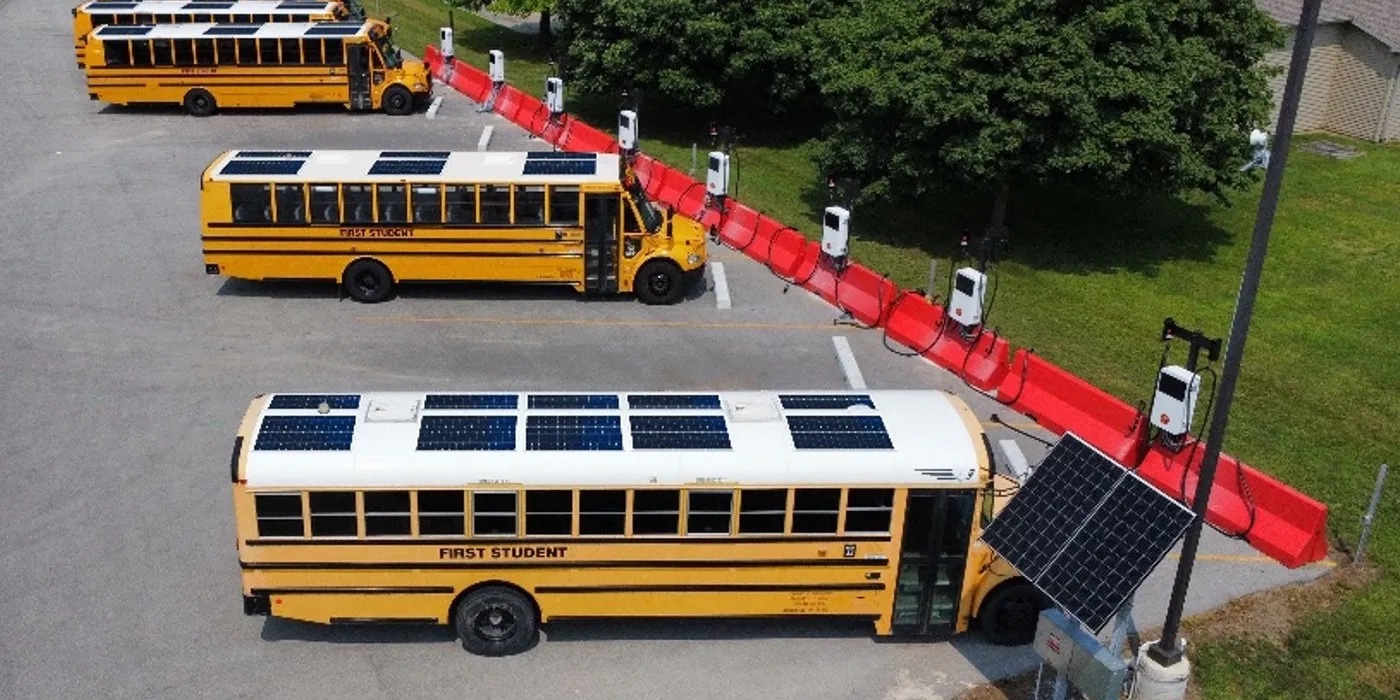
Student transportation leader First Student and utility company Con Edison have launched an innovative vehicle-to-everything (V2X) Smart Energy Hub in Brooklyn, featuring 12 solar-roofed electric school buses. Located at First Student’s Malta Street site, the project is set to replace traditional diesel buses with clean energy-powered alternatives. Solar panels on the buses and rooftop arrays at the facility combine to create a sustainable system for energy generation, battery storage, and power delivery.

First Student has employed its trenchless First Charge deployment method, which eliminates the need for extensive digging, cuts construction costs by at least 30%, and simplifies future charging system upgrades. This technology provides a faster, more efficient rollout, minimizing disruption and expense.

Continue reading… “First Student and Con Edison Unveil Solar-Powered V2X Smart Energy Hub with Electric School Buses in Brooklyn”

China Unveils World’s Most Powerful Hydraulic Cylinder, Marking Breakthrough in Marine Engineering

China has introduced the world’s most powerful hydraulic cylinder for marine pile driving, a remarkable technological feat unveiled in Changzhou, Jiangsu province. With a record-breaking maximum thrust of 5,000 tons—enough to lift 1,000 adult African elephants—the cylinder represents a significant advance in China’s engineering capabilities, according to reports from local media.

Designed by the state-owned China Communications Construction Company (CCCC), this hydraulic powerhouse stands 92 feet tall and measures 6.5 feet in diameter, roughly the height of a ten-story building. The SCMP reported that this massive cylinder will serve as the central “heart” of a 150-meter pile-driving vessel currently under construction, positioning China as a leader in marine engineering technology and reducing dependence on imported components.

Continue reading… “China Unveils World’s Most Powerful Hydraulic Cylinder, Marking Breakthrough in Marine Engineering”

Unitree G1 Sets New Benchmark with Record-Setting Long Jump for Humanoid Robots

Unitree’s G1 humanoid robot has achieved a remarkable feat in agility, setting a new standing long jump record for humanoid robots. In a recently released video, the G1 showcases its advanced performance, achieving a 4.6-foot (1.4 meters) standing long jump—a significant milestone for humanoid robots of its size. Standing at only 1.32 meters tall, the G1 boasts cutting-edge joints with 23 to 43 degrees of freedom and a maximum torque of 120 Nm. The video also highlights features of Unitree’s Go2 robot dog, demonstrating the company’s innovation across various robot models.

In addition to the G1’s jumping capability, Unitree has made strides in humanoid speed with its H1 V3.0 Evolution, which set a Guinness World Record in March as the fastest full-sized humanoid robot, reaching speeds of 7.38 mph on level ground. The G1, retailing at $16,000, is currently available for educational, research, and industrial use, making it accessible to a broad range of applications.

Continue reading… “Unitree G1 Sets New Benchmark with Record-Setting Long Jump for Humanoid Robots”

Mercedes-Benz Opens Europe’s First Integrated Battery Recycling Plant for EV Sustainability

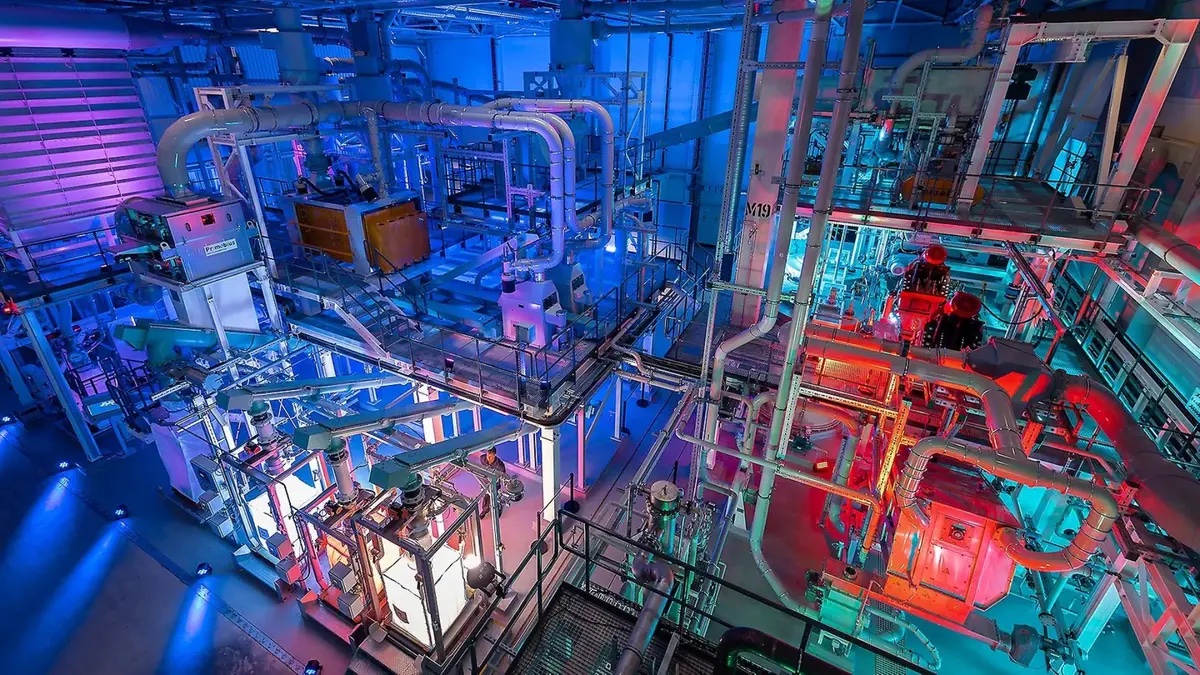
Mercedes-Benz has made a groundbreaking advancement in sustainable electric vehicle (EV) production by opening Europe’s first integrated battery recycling facility in Kuppenheim, Germany. This state-of-the-art plant, representing an investment of tens of millions of euros, is designed to process 2,500 tonnes of batteries annually, producing enough recycled materials to manufacture modules for over 50,000 new EVs. The facility employs a mechanical-hydrometallurgical process that achieves an impressive 96 percent recovery rate of valuable materials. “This innovative technology enables us to recover valuable raw materials from the battery with the highest possible degree of purity,” said Jörg Burzer, Board Member responsible for Production at Mercedes-Benz Group AG.

Innovative EV Recycling Process

The facility’s recycling process begins with the mechanical separation of battery components, followed by the hydrometallurgical treatment of “black mass,” containing valuable metals like cobalt, nickel, and lithium. These metals are then refined to battery-grade quality, allowing them to be reused in new Mercedes-Benz EVs. The plant operates at up to 80°C, an energy-efficient temperature that reduces both energy consumption and waste, and it’s powered entirely by green electricity. The 6,800-square-meter roof of the facility also houses a 350-kilowatt photovoltaic system, making the plant carbon-neutral.

Continue reading… “Mercedes-Benz Opens Europe’s First Integrated Battery Recycling Plant for EV Sustainability”

Unlocking the Secrets of Ancient Roman Concrete: A Self-Healing Formula for Modern Strength

Ancient Roman structures built with concrete have withstood centuries, inspiring researchers to uncover the secret behind their resilience. Unlike today’s Portland cement-based concrete, Roman concrete is known for its incredible durability and even a self-healing ability. This strength has led scientists to seek ways to replicate it, hoping to craft stronger, more sustainable materials for modern use.

Portland cement, developed in the 19th century, is the basis of today’s concrete, but it lacks the robustness of Roman concrete and has a high environmental cost due to its complex production process. Engineers are now exploring concrete alternatives that reduce or eliminate the use of traditional cement.

Continue reading… “Unlocking the Secrets of Ancient Roman Concrete: A Self-Healing Formula for Modern Strength”

Robot-Powered “Spitball Printing” Aims to Revolutionize Sustainable Construction

A new “spitball-throwing” robot, developed by a team at ETH Zurich led by Lauren Vasey, could reshape sustainable building practices. This technology, known as impact printing, shoots out a clay-based material at high speed, allowing for quick construction without the need for cement or curing time—a leap forward in reducing construction’s carbon footprint.

The building sector faces mounting pressure to curb CO2 emissions, especially from materials like concrete, which is slow to 3D-print and heavily dependent on cement. “The building sector needs to dramatically decrease our CO2 emissions from new construction and move towards more circular supply chains,” Vasey explained in a video introduction to the technology.

Continue reading… “Robot-Powered “Spitball Printing” Aims to Revolutionize Sustainable Construction”

Record-Breaking Prime Number Discovered: 41 Million Digits Long

An amateur researcher and former Nvidia employee, Luke Durant, has uncovered the world’s largest known prime number: 2**136,279,841 – 1, surpassing the previous record-holder (2**82,589,933 – 1) by over 16 million digits.

Prime numbers, indivisible by any other number except 1 and themselves, are considered the “atoms of integers” in mathematics, with smaller examples being 2, 3, 5, and 7. Though primes extend to infinity, finding them becomes increasingly complex as the numbers grow larger. Durant’s discovery was made using the Great Internet Mersenne Prime Search (GIMPS), a free software program designed specifically for identifying large prime numbers. The search for this new prime involved thousands of GPUs operating across 24 data centers in 17 countries—a setup that marks a new era in prime discovery, as past large primes were found primarily with personal computers.

Continue reading… “Record-Breaking Prime Number Discovered: 41 Million Digits Long”

KAIST Unveils WalkON Suit F1: A Wearable Robot for Paralyzed Individuals with Self-Walking Assistance

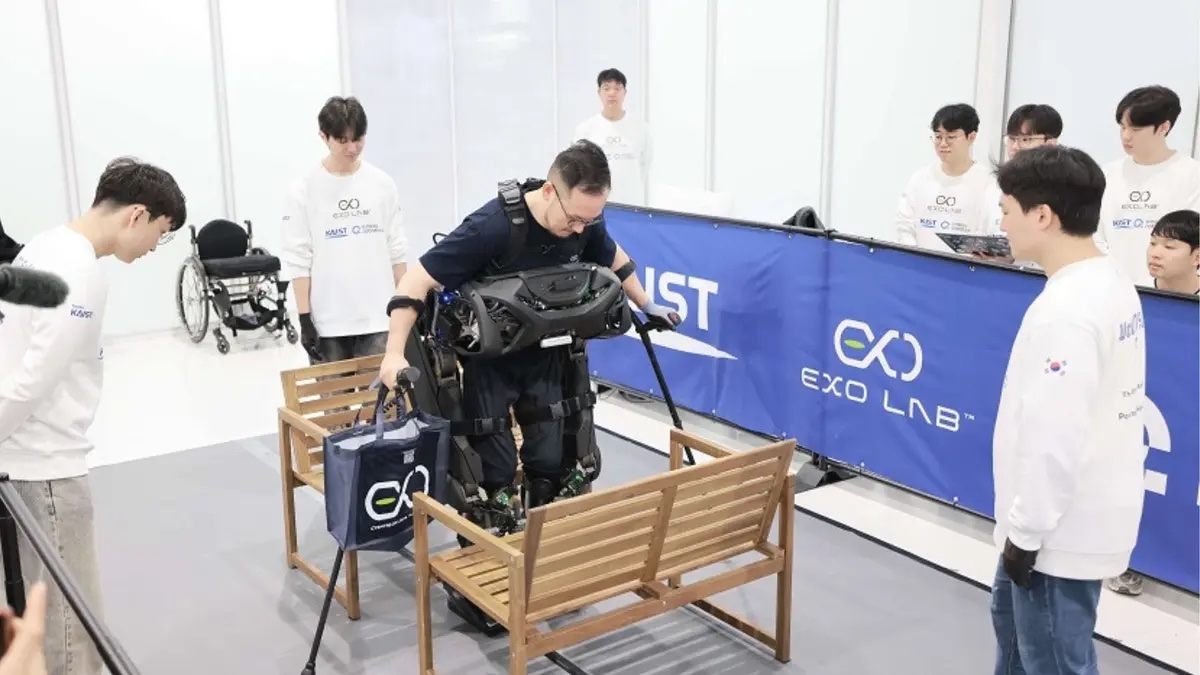
Researchers at the Korea Advanced Institute of Science and Technology (KAIST) have developed an advanced wearable robot, the WalkON Suit F1, designed to provide greater independence for individuals with paraplegia. Announced on October 24, this new version allows users to put on the suit directly from their wheelchairs without needing help from others.

The WalkON Suit series, under development since 2015, targets individuals with the most severe form of paralysis, classified as ASIA Impairment Scale – A (complete paralysis). Unlike other rehabilitation and strength-assisting robots in use, the WalkON Suit F1 is designed specifically to aid independent mobility for people with paraplegia.

Continue reading… “KAIST Unveils WalkON Suit F1: A Wearable Robot for Paralyzed Individuals with Self-Walking Assistance”

Deep Blue Aerospace’s 2027 Suborbital Flight Sells Out in Minutes, Paving the Way for Affordable Space Tourism

Jiangsu-based tech startup Deep Blue Aerospace has unveiled plans to send its first passengers on a 12-minute suborbital space journey in 2027, promising at least five minutes of weightlessness before returning to Earth. Tickets for this pioneering trip sold out within 20 minutes during a live-streamed event on e-commerce giant Taobao, sparking significant excitement among China’s emerging space tourism community. The company plans to release additional tickets next month to meet the high demand.

Unlike full orbital flights, this suborbital experience will reach outer space without completing an orbit, allowing travelers to experience weightlessness while keeping the journey relatively short. Deep Blue Aerospace has acknowledged the “complexity and risks” associated with rocket technology and aims to conduct dozens of tests over the next two years to ensure safety and reliability before its commercial launch in 2027.

Continue reading… “Deep Blue Aerospace’s 2027 Suborbital Flight Sells Out in Minutes, Paving the Way for Affordable Space Tourism”

Apple’s New Health App for Prediabetes: Testing a Future of Personalized Glucose Management

Apple is quietly developing a health app designed to support individuals with prediabetes in making healthier dietary and lifestyle choices. According to recent reports, this experimental app was tested earlier this year with select employees, aiming to help users better understand how specific foods impact their blood sugar levels, potentially preventing the onset of Type 2 diabetes.

While it may not be available to the public yet, this app could eventually integrate with Apple’s ongoing work on a noninvasive glucose monitoring system, which has been under development for more than a decade. In the near future, the app could be compatible with wearable glucose sensors, including a possible sensor for the Apple Watch, as well as with existing blood glucose monitors on the market.

Continue reading… “Apple’s New Health App for Prediabetes: Testing a Future of Personalized Glucose Management”
Discover the Hidden Patterns of Tomorrow with Futurist Thomas Frey
Unlock Your Potential, Ignite Your Success.

By delving into the futuring techniques of Futurist Thomas Frey, you’ll embark on an enlightening journey.

Learn More about this exciting program.