Next generation of biotech food heading for grocery stores

WASHINGTON (AP) — The next generation of biotech food is headed for the grocery aisles, and first up may be salad dressings or granola bars made with soybean oil genetically tweaked to be good for your heart.

By early next year, the first foods from plants or animals that had their DNA “edited” are expected to begin selling. It’s a different technology than today’s controversial “genetically modified” foods, more like faster breeding that promises to boost nutrition, spur crop growth, and make farm animals hardier and fruits and vegetables last longer.

The U.S. National Academy of Sciences has declared gene editing one of the breakthroughs needed to improve food production so the world can feed billions more people amid a changing climate. Yet governments are wrestling with how to regulate this powerful new tool. And after years of confusion and rancor, will shoppers accept gene-edited foods or view them as GMOs in disguise?

Continue reading… “Next generation of biotech food heading for grocery stores”

Ford teaming up with Walmart and Postmates on robot deliveries

Ford___Walmart_1.0

Self-driving vehicles delivering groceries in Miami

Ford is joining forces with Walmart and Postmates to create a grocery delivery service using self-driving vehicles in Miami, the companies announced Wednesday.

Ford has been using Miami as a test bed for its self-driving vehicles since earlier this year. And more recently, the auto giant joined with Postmates to see how people ordering takeout food would interact with an autonomous delivery van.

Now Ford is moving to the next stage: grocery delivery. The company says it will experiment with different vehicle types, as well as modifications to those vehicles needed to keep perishable food items fresh. It will also experiment with a variety of scenarios, such as multiple deliveries on one trip and the user experience of retrieving delivery items from a fully driverless vehicle.

Continue reading… “Ford teaming up with Walmart and Postmates on robot deliveries”

How small robots may kill the tractor and make farming efficient

wrawighriae

The Bristol-based Small Robot Company has created a series of agile robots for farming. By being customisable they could help to replace the tractor

Agriculture has a reputation of being stuck in the past. In reality, for farmers, their workplaces are a fertile testbed for innovative technology – they were among the first to embrace commercial drone use, and autonomous vehicles that could work effectively (and safely) in confined areas of farmland. Among the latest developments in agri-tech are small, farming robots that can improve crop yield and reduce farming’s impact on the environment.

Continue reading… “How small robots may kill the tractor and make farming efficient”

Inside Silicon Valley’s newest, most autonomous farm yet

049E4460-79F7-417C-BE27-B73D8E98F480

Iron Ox’s robots are currently planting, growing, and harvesting lettuce in a California warehouse.

Inside Silicon Valley’s newest, most autonomous farm yet

Inside a former commercial warehouse in San Carlos, California, a robotic arm is carefully transplanting tiny sorrel plants from one large tray to another. In another corner of the room, a larger robot sits ready to carry other trays–filled with romaine lettuce, bok choy, cilantro, and more than two dozen other types of greens–over to the robotic arm. At the moment, there are no people in the room: This is the headquarters of Iron Ox, which bills itself as the world’s first fully autonomous farm.

“We designed the entire process, from the beginning, around robotics,” says Iron Ox co-founder and CEO Brandon Alexander, who previously worked at X, Alphabet’s so-called moonshot factory, and the robotics lab Willow Garage. “It required us pretty much going back to the drawing board to see what we could do if robots were in the loop.”

Continue reading… “Inside Silicon Valley’s newest, most autonomous farm yet”

The next big restaurant chain may not own any kitchens

IMG_9383

If investors at some of the biggest technology companies are right, the next big restaurant chain could have no kitchens of its own. Investors are pouring millions into the creation of a network of shared kitchens, storage facilities, and pickup counters that established chains and new food entrepreneurs can access to cut down on overhead and quickly spin up new concepts in fast food and casual dining. Powering all of this is a food delivery market that could grow from $35 billion to a $365 billion industry by 2030, according to a report from UBS’s research group, the “Evidence Lab”.

Continue reading… “The next big restaurant chain may not own any kitchens”

Cheese Tea could be the new bubble tea -If Americans get over the name

IMG_9118

Tea topped with cheese foam has been stuck on the cusp of trending stateside

“Cheese tea? What’s that?”

Mention it to anyone who’s hearing about it for the first time and you’ll likely get a scrunched-up nose and a look of confusion. Perhaps even a shake of the head. To many Americans, the combination of tea and cheese sounds downright unappetizing. But, as any cheese tea purveyor will tell you, cheese tea tastes better than it sounds. In fact, the drink isn’t that different from bubble tea, which is now firmly entrenched in the mainstream. And given cheese tea’s popularity in Asia, as well as the successful migration of other Asian desserts (like matcha-flavored sweets and shave ice) to major U.S. markets, cheese tea should be on its way to making it big in America. So what’s taking so long?

Cheese tea is the name for cold tea (usually green or black tea, with or without milk) topped with a foamy layer of milk and cream cheese and sprinkled with salt. The drink is sweet, like boba, but has a savory finish. Using a straw is prohibitive to getting enough of that tangy cream overlay, so the method of sipping it from the top of the cup at a 40- to 45-degree angle is integral to enjoying cheese tea. Shops that specialize in cheese tea, like international franchises Happy Lemon and Gong Cha as well as independent shops like Steap in San Francisco, Little Fluffy Head in Los Angeles, and Motto in Pasadena, supply a lid, not unlike a coffee lid, that circulates just the right amount of air for sipping and shields the drinker from a foam mustache.

Continue reading… “Cheese Tea could be the new bubble tea -If Americans get over the name”

Startup inks ‘world’s largest deal’ for driverless grocery deliveries


Whether or not your grocery delivery arrives in a van with a driver behind the wheel may not matter much to you, but an increasing number of companies are nevertheless investing heavily in autonomous delivery vehicles in the belief that they’ll improve efficiency and create significant cost benefits in the long term. Yes, you’ll have to wait and see if those savings will be passed on to you, the customer.

Udelv, a San Francisco-based startup that has already used its autonomous vans to make more than 700 driverless deliveries in the San Francisco Bay area, recently inked what it claims is the world’s largest deal for a grocery delivery service using self-driving vehicles.

Continue reading… “Startup inks ‘world’s largest deal’ for driverless grocery deliveries”

American eating habits are changing faster than fast food can keep up

IMG_8859

Per-person restaurant visits dropped to 28-year low in 2018.

Home cooking would be making a comeback if it ever really went away.

Restaurants are getting dinged by the convenience of Netflix, the advent of pre-made meals, the spread of online grocery delivery, plus crushing student debt and a focus on healthy eating. Eighty-two percent of American meals are prepared at home — more than were cooked 10 years ago, according to researcher NPD Group Inc. The latest peak in restaurant-going was in 2000, when the average American dined out 216 times a year. That figure fell to 185 for the year ended in February, NPD said.

Continue reading… “American eating habits are changing faster than fast food can keep up”

Nestlé is using DNA to create personalized diets in Japan

IMG_8699

The world’s largest food company is experimenting with people’s DNA to build and sell personalized nutrition plans that, it says, will extend lifespans and keep people healthy.

Nestlé is rolling out these new products in Japan first. Some 100,000 people are taking part in a company program there that gives consumers a kit to collect their DNA at home. The program also encourages them to use an app to post pictures of what they’re eating. Nestlé then recommends dietary changes and supplies specialized supplements that can be sprinkled on or mixed into a variety of food products, including teas, according to Bloomberg.

Continue reading… “Nestlé is using DNA to create personalized diets in Japan”

It’s the year 2038–here’s how we’ll eat 20 years in the future

IMG_8547

A science-fiction look at the next two decades of food developments, from robot farmers to 3D-printed meals to government monitoring of your daily calorie intake.

It’s the year 2038. The word “flavor” has fallen into disuse. Sugar is the new cigarettes, and we have managed to replace salt with healthy plants.
 We live in a society in which we eat fruit grown using genetics. We drink synthetic wine, scramble eggs that do not come from chickens, grill meat that was not taken from animals, and roast fish that never saw the sea.

Was this what we had in mind when we started seeking transparency, traceability, and sustainability of our food system many years ago in the early aughts? About a decade ago, we lived through an agricultural bottleneck caused by warm temperatures that caused plagues and diseases, which severely compromised the food sources we were cultivating and consuming. By the end, three quarters of the world’s food was derived from just 12 plant and five animal species. We learned from this mistake and started to embrace true biodiversity, grew meat in labs, and put robotics into farms. But the technological advances that have made clean, sustainable food possible have also created some horrifying scenarios.

Continue reading… “It’s the year 2038–here’s how we’ll eat 20 years in the future”

Kroger rolls out driverless cars for grocery deliveries

Kroger Self Driving Grocery Delivery

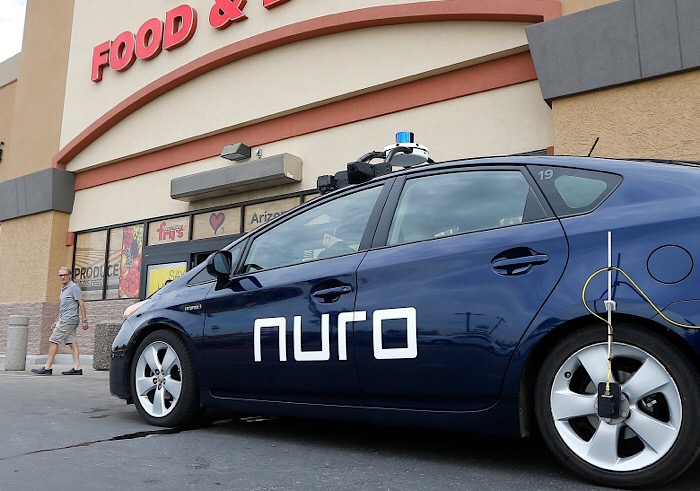
SCOTTSDALE, Ariz. — At a time when big-box retailers are trying to offer the same conveniences as their online competitors, the biggest U.S. grocery chain is testing the use of driverless cars to deliver groceries in a Phoenix suburb.

Kroger’s pilot program launched Thursday morning with a robotic vehicle parked outside one of its own Fry’s supermarkets in Scottsdale. A store clerk loaded the back seat with full grocery bags. A man was in the driver’s seat and another was in the front passenger seat with a laptop. Both were there to monitor the car’s performance.

Continue reading… “Kroger rolls out driverless cars for grocery deliveries”

It’s easy to become obese in America. These 7 charts explain why.

IMG_8263

“In America, the unhealthiest foods are the tastiest foods, the cheapest foods, the largest-portion foods.”

It’s no secret that Americans have gotten much, much bigger over the past few decades. The signs are all around us, from XXXL clothing sizes to supersize movie seats and even larger coffins.

According to an analysis from the Centers for Disease Control and Prevention, the average American man now stands at 5-feet-9 1/4 inches tall and weighs 196 pounds — up 15 pounds from 20 years ago. For women, the change has been even more striking: The average female today stands 5-feet-3 3/4 inches and weighs 169 pounds. In 1994, her scale read 152 pounds

Continue reading… “It’s easy to become obese in America. These 7 charts explain why.”

Discover the Hidden Patterns of Tomorrow with Futurist Thomas Frey
Unlock Your Potential, Ignite Your Success.

By delving into the futuring techniques of Futurist Thomas Frey, you’ll embark on an enlightening journey.

Learn More about this exciting program.