Study: 93% of suicidal patients detected with machine learning algorithms

Suicidal intent 7g5d

New research published in the journal Suicide and Life-Threatening Behavior shows how machine learning can help identify suicidal behavior using a person’s spoken or written words. The technology was able to pinpoint which participants in the study were suicidal, mentally ill but not suicidal, or neither in the vast majority of cases.

Continue reading… “Study: 93% of suicidal patients detected with machine learning algorithms”

Brain-Controlled Bionic Legs Are Here At Last

 NO, REALLY. AMPUTEES HAVE BEEN TESTING THEM FOR OVER A YEAR

For a full decade, Gudmundur Olafsson was unable to move his right ankle. That’s because it wasn’t there. Olafsson’s amputated lower leg was the delayed casualty of an accident from his childhood in Iceland, when he was hit by an oil truck. “I lived in pain for 28 years,” says Olafsson. “After 50-plus operations, I had it off.” For years after the operation he wore a Proprio Foot, a prosthetic with a motorized, battery-powered ankle, sold by the Reykjavik-based company Ossur.

Continue reading… “Brain-Controlled Bionic Legs Are Here At Last”

Researchers Create A Gene Therapy Treatment That May Prevent Alzheimer’s

Alzheimer’s disease is devastating both for those who suffer from it and for those who love them. It is also expensive. It’s estimated that the current worldwide cost of coping with Alzheimer’s is $818 billion. A cure for Alzheimer’s is not available and current treatments for the disease focus on mitigating symptoms rather than eliminating causes.

Continue reading… “Researchers Create A Gene Therapy Treatment That May Prevent Alzheimer’s”

Why UPS Finds Drones Interesting


The package delivery giant is testing drones for sending medical items to rural locations.

The United Parcel Service has high hopes for drones.

In late September, the package delivery giant and a drone startup, CyPhy Works, said they had successfully tested a drone delivery, in which a flying robot delivered an asthma inhaler to a children’s summer camp on a small island off the coast of Massachusetts.

Continue reading… “Why UPS Finds Drones Interesting”

Microsoft hopes to ‘solve’ cancer within 10 years by ‘reprogramming’ diseased cells

 Microsoft has vowed to “solve the problem of cancer” within a decade by using ground-breaking computer science to crack the code of diseased cells so they can be reprogrammed back to a healthy state.

Continue reading… “Microsoft hopes to ‘solve’ cancer within 10 years by ‘reprogramming’ diseased cells”

Nanotech bandage: Healing wounds in days

Egyptian researchers have developed a bandage embedded with nanoparticles for the treatment of wounds using the anti-epilepsy drug Phenytoin, known for its capacity to treat skin injuries.

The bandage can heal wounds in a few days, after just one application to soft tissue. Wounds normally take several days to a few weeks to heal completely, and some may only heal after several months or up to two years.

Continue reading… “Nanotech bandage: Healing wounds in days”

Plastic Surgeons Can Now 3D Print Your Future Nose Job

Whether it’s rhinoplasty or breast augmentation, the general timeline of a cosmetic surgery consultation is relatively consistent: a patient walks in with an idea—often equipped with pictures—and a plastic surgeon outlines what they can do.

Historically, doctors have evolved from sketching proposed changes to embracing two-dimensional imaging on computers to incorporating 3D imaging. Now, some practices are adopting 3D printed models to offer patients a sort of blueprint that they can physically hold and touch with their own hands, and make the $13.5 billion cosmetic procedure industry even more accessible.

Continue reading… “Plastic Surgeons Can Now 3D Print Your Future Nose Job”

The First Artificial Wombs: Researchers grow human embryos in a laboratory

original

We all know how to get pregnant or at least should know, but despite so many tips out there boosting the chances of conceiving, the actual first 2 weeks of pregnancy remain an undetectable mystery to science.

Continue reading… “The First Artificial Wombs: Researchers grow human embryos in a laboratory”

Scientists Use Swarms of Nanorobots to Precisely Target Cancer Cells

new_version-b-low

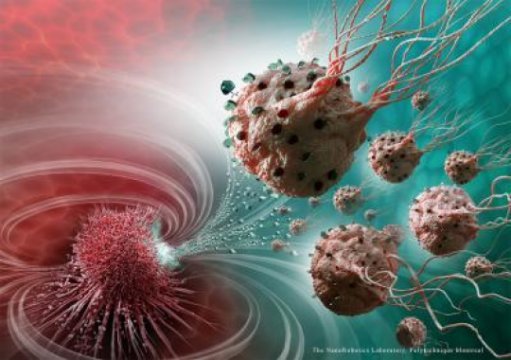
Nanotechnology has always been something more out of the future than the present. It’s very promising tech with a variety of exciting applications that haven’t yet come to our everyday lives. Now scientists from several universities announced a breakthrough in cancer research that may truly fulfill the promise of nano tech. They developed nanorobots that can navigate through the bloodstream to precisely deliver the drug to the cancerous cells.

Continue reading… “Scientists Use Swarms of Nanorobots to Precisely Target Cancer Cells”

This tiny solar-powered device kills 99.999 percent of bacteria

img_2637-1200x0

Water is our most precious resource. We may take this for granted, in developed regions but some 2.8 billion people around the world are affected by the scarcity of clean drinking water.

A tiny new device may help change that. Developed by researchers at the Department of Energy’s SLAC National Accelerator at Stanford University, the device is about half the size of a postage stamp and uses solar energy to disinfect water with bacterial contamination. The researchers reported their experiments in a paper this week in the journal Nature Nanotechnology.

Continue reading… “This tiny solar-powered device kills 99.999 percent of bacteria”

Nanorobots target cancerous tumors with precision

160815134945_1_540x360

Researchers from Polytechnique Montréal, Université de Montréal and McGill University have just achieved a spectacular breakthrough in cancer research. They have developed new nanorobotic agents capable of navigating through the bloodstream to administer a drug with precision by specifically targeting the active cancerous cells of tumours. This way of injecting medication ensures the optimal targeting of a tumour and avoids jeopardizing the integrity of organs and surrounding healthy tissues. As a result, the drug dosage that is highly toxic for the human organism could be significantly reduced.

Continue reading… “Nanorobots target cancerous tumors with precision”

VR and exoskeletons help paraplegics regain movement


screen-shot-2016-08-12-at-9-38-12-am

After twelve months, eight patients and 2,052 sessions spread over 1,958 hours, Duke University is publishing some promising results from a study seeking to demonstrate the ability for brain-machine interfaces to help restore mobility in humans.

Continue reading… “VR and exoskeletons help paraplegics regain movement”

Discover the Hidden Patterns of Tomorrow with Futurist Thomas Frey
Unlock Your Potential, Ignite Your Success.

By delving into the futuring techniques of Futurist Thomas Frey, you’ll embark on an enlightening journey.

Learn More about this exciting program.