Incarceration vs. education: America spends more on its prison system than it does on public schools – and California is the worst

 7C292E78-ED13-4CAB-87D1-20F44C0F4E74

  • Most American states spend more on their prisons than they do on education – and California is the worst, investing $64,642 per prisoner compared to $11,495 per student – a $53,146 difference in spending priorities
  • The reasons include an incarceration rate that has tripled over the past three decades, the higher cost of caring for people in prisons 24 hours a day, and the higher number of workers required to operate a prison
  • New York, Connecticut, New Jersey and Rhode Island round out the top states spending more on prisons

The U.S. spends more on prisons and jails than it does on educating children – and 15 states spend at least $27,000 more per prisoner than they do per student, according to a new report.

Continue reading… “Incarceration vs. education: America spends more on its prison system than it does on public schools – and California is the worst”

Willie Nelson’s new Remedy adds CBD oil to your coffee

Screenshot 2019-02-14 11.49.46

Turns out Willie Nelson wasn’t kidding when he and Merle Haggard sang “It’s All Going to Pot” in 2015.

In 2016, he launched Willie’s Reserve, his own brand of weed with it’s partner brand, Annie Edibles, featuring his wife, Annie Nelson’s artisanal chocolates and infused hard candies. Last year, they expanded the brand with a new product line dubbed SunGrown.

Now the couple has launched a new wellness brand, Willie’s Remedy, which focuses on non-intoxicating cannabidiol (CBD) oil. Their first product is CBD-infused coffee made from Annie Nelson’s personal recipe. After a soft launch last year, the coffee is now available for purchase online. When properly brewed, the coffee is said to deliver 5 mg of CBD oil per 8 oz cup. Your infused caffeine shots will not be cheap, an 8 oz bag of whole coffee beans retails for $36, but according to the press release, the oil comes from “only the cleanest American-sourced hemp.”

Continue reading… “Willie Nelson’s new Remedy adds CBD oil to your coffee”

Super-tall, super-skinny, super-expensive: the ‘pencil towers’ of New York’s super-rich

4626

The proposed 2022 skyline overlooking Central Park.
Photograph: Andrew C Nelson/Jose Hernandez/Skyscraper Museum

An extreme concentration of wealth in a city where even the air is for sale has produced a new breed of needle-like tower. By Oliver Wainwright

It is rare in the history of architecture for a new type of building to emerge. The Romans’ discovery of concrete birthed the great domes and fortifications of its empire. The Victorians’ development of steel led to an era of majestic bridges and vaulted train sheds. The American invention of the elevator created the first skyscrapers in Chicago. Now, we are seeing a new type of structure that perfectly embodies the 21st-century age of technical ingenuity and extreme inequality. A heady confluence of engineering prowess, zoning loopholes and an unparalleled concentration of personal wealth have together spawned a new species of super-tall, super-skinny, super-expensive spire.

Any visitor to New York over the past few years will have witnessed this curious new breed of pencil-thin tower. Poking up above the Manhattan skyline like etiolated beanpoles, they seem to defy the laws of both gravity and commercial sense. They stand like naked elevator shafts awaiting their floors, raw extrusions of capital piled up until it hits the clouds.

Continue reading… “Super-tall, super-skinny, super-expensive: the ‘pencil towers’ of New York’s super-rich”

The fastest-growing job in each U.S. state

5c53470e2500004401c5957f

The unemployment rate rose slightly to 4.0% in January 2019, while the labor force participation rate hit its highest mark since 2013. Overall, the report indicated that the U.S. labor market is still chugging along.

And some jobs are growing faster than others. Construction and extraction jobs are in high demand in the U.S., along with installation, maintenance, and repair services. Production jobs are also quickly developing, as are mathematical and technology-focused occupations.

Using data from the Bureau of Labor Statistics (BLS) and projections from the government-backed Projections Managing Partnership (PMP), we mapped out the top jobs by growth rate (as opposed to plentifulness).

These are the fastest-growing jobs in each state. Titles edited for clarity.

Continue reading… “The fastest-growing job in each U.S. state”

3 reasons why brand storytelling is the future of marketing

https---blogs-images.forbes.com-celinnedacosta-files-2019-01-Celinne0228-1200x801

When creating your marketing strategy, don’t forget about the bigger story: what makes you human?

In today’s fast-paced, overly-automated, and digitally-driven society, humanity is becoming the new premium. The internet constantly rewards us with convenience and instant gratification, making the human touch increasingly more scarce and coveted.

In this environment, businesses can no longer afford to be faceless entities. To survive, businesses need to connect with audiences, pull at their heartstrings, and engage with them on a much deeper level than seen before. That’s where brand storytelling comes in.

Brand storytelling is the cohesive narrative that weaves together the facts and emotions that your brand evokes. In addition to giving your customers reasons why they should buy a product or service, businesses need to start sharing the story behind their brand, why it exists, and why this matters, consistently across all communication.

Continue reading… “3 reasons why brand storytelling is the future of marketing”

Inclusive fashion is the future of runways and retail

180127_DayWon_Group_1854-copy

Thin, white, young, stereotypically “feminine” or “masculine”—those are some of the characteristics that traditionally defined who the fashion industry prioritized.

That’s starting to change. Fashion is under mounting pressure to cater to all customers, as tech-empowered shoppers wield more influence over brands and new upstart labels, willing to serve the shoppers established brands have ignored, are rewarded. This isn’t a passing phase: By 2025, management-consulting firm Bain & Company predicts luxury shoppers will consider a brand’s values, such as inclusivity and diversity, just as much as the quality of the products it sells when deciding how to spend their money.

Continue reading… “Inclusive fashion is the future of runways and retail”

Dread selling yourself? This hot new freelance trend may be your answer

BusinessTalentGroup_CEO_JodyGreenstoneMiller

Jody Greenstone Miller, co-founder and CEO of Business Talent Group, has teamed up with global search firm Heidrick & Struggles to bring indie talent to big companies.

One of the biggest challenges for freelancers is winning new business. Even the most experienced pros often dread pitching new clients to win projects—a job that was often done by the sales or business development team in previous corporate careers.

Some of the most sought-after free agents may not have to hustle up work in the same way in the future. More big companies are looking for high-level freelancers the same way they find other talent: through headhunters.

In a new partnership that reflects the trend, Heidrick & Struggles, a Nasdaq-traded, global executive search firm, announced it is collaborating on an exclusive basis with Business Talent Group (BTG), a high-end marketplace for on-demand independent talent. Heidrick & Struggles will give its clients access to professionals in BTG’s network for project-based assignments.

Continue reading… “Dread selling yourself? This hot new freelance trend may be your answer”

8 companies offering work-from-home jobs that don’t require a college degree

105172555-Googleplex_Campus.1910x1000

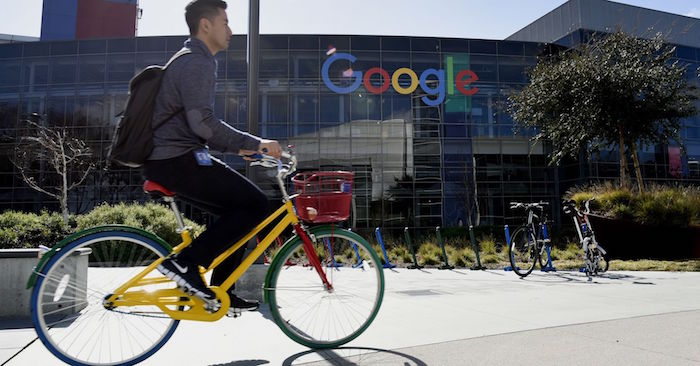
In an effort to secure the best talent on the market, more and more companies are expanding their applicant pool to include professionals without a traditional college degree.

Job search site Glassdoor compiled a list of who some of these companies are, with top employers like Apple, Google and IBM making the cut. Recently, FlexJobs examined that list to see which companies are also in their database with open positions that allow employees to work from anywhere. (FlexJobs notes that while some of the available work-from-home positions at these companies do require a college degree, there are many open positions that don’t.)

Take a look at the list below to see which flexible companies you should consider working for if you don’t have a four-year college education:

Continue reading… “8 companies offering work-from-home jobs that don’t require a college degree”

Amazon Go, one year old, has attracted a lot of cashierless imitators

 1000x-1

Mighty AI spent much of its first five years building software that helps self-driving cars recognize real-world objects. The Seattle startup went so far as to open a Detroit office to cozy up to the auto industry.

Then last February, Mighty AI’s sales team received an unusual request: Instead of identifying pedestrians and cars, could they track items plucked from store shelves by shoppers? A few months later, Mighty AI signed a deal to do just that, joining the race to help brick-and-mortar retailers keep pace with Amazon.com Inc.

A year ago, the e-commerce giant opened a cashierless convenience store called Amazon Go, marking its biggest effort yet to change the way people shop in the physical world. Today a fleet of companies are working to replicate elements of Go or invent other ways of streamlining store operations.

Many are startups like Mighty AI, but established giants are wading in, too. Walmart has been testing Go-style technology, and Kroger and Microsoft recently announced a joint venture to bring elements of the e-commerce shopping experience to the grocery store.

Continue reading… “Amazon Go, one year old, has attracted a lot of cashierless imitators”

Retailers rethink physical stores as click-and-collect catches on

Macy's_Department_Store_-_New_York_-_USA_-_panoramio

Buy online, pick-up in store is often heralded as the future of retail: Customers shopping on their own terms, as efficiently as possible. But it might end up being a bigger lift than expected for retail stores.

Large retailers like Target, Walmart, Kroger and Home Depot are using store pickup to cut delivery costs, encourage customer interaction with associates, and drive in-store sales growth. It’s a strategy that seems to be working: according to an International Council of Shopping Centers 2018 holiday season survey, 86 percent of U.S. shoppers purchased something new while picking up e-commerce orders in stores. Target saw a 5.7 percent holiday sales bump for November and December, in part due to store pickup. And three out of every four digital Target orders are fulfilled by a store, evidence of the central place stores can play in an e-commerce supply chain.

“We consider our stores our single biggest competitive advantage; they function as service hubs, fulfillment hubs, and they’re incredible showrooms for inspiration,” said Target CEO Brian Cornell at the National Retail Federation’s Big Show this week.

Continue reading… “Retailers rethink physical stores as click-and-collect catches on”

Banking’s worst nightmare is here

wallstreetsign_large

We’ve seen enough. We’re going BIG on the death of big banking.

If you’ve ever had to spend time at a bank opening a simple checking account, or even worse—closing a bank account—you won’t be surprised to hear that Americans are abandoning traditional branch banking by the millions.

Even bank executives concede the massive shift in their business.

Deloitte reports that 3 out of 4 banking executives agree that their work is going to drastically change over the next 3-5 years due to digital business trends.

But even they aren’t prepared for what’s coming…

Continue reading… “Banking’s worst nightmare is here”

Book sales are up this year over last year, and physical books are thriving

RTS21B3T-e1537439998483

It’s a tale as old as time, or, at least, the internet: None of us are reading any more, the physical book is dead, Amazon has killed the independent bookstore, and it’s all only going to get worse. But this year, the story looks like just that—a fiction. We are buying books—especially the kind with physical pages—and we’re doing so, increasingly, in well-loved indie bookstores.

In the UK, the Guardian reports, Nielsen BookScan recored year-on-year book sale growth of 22 million pounds ($28 million). It’s likely that 2018 will top 2016’s total sales of 1.59 billion pounds, too, with booksellers on both sides of the Atlantic noting an anecdotal uptick in sales and browsing customers. It’s been good news for British book chains—the country’s largest bookseller, Waterstones, made its first profit since the 2008 financial crisis—and for independent bookshops, too: this year was the first since the advent of Amazon where the number of stores actually went up, rather than down.

Continue reading… “Book sales are up this year over last year, and physical books are thriving”

Discover the Hidden Patterns of Tomorrow with Futurist Thomas Frey
Unlock Your Potential, Ignite Your Success.

By delving into the futuring techniques of Futurist Thomas Frey, you’ll embark on an enlightening journey.

Learn More about this exciting program.