A new form of light was discovered by Prof Paul Eastham of Trinity Dublin’s School of Physics and Prof John Donegan of Science Fondation CRANN. The discovery could have major implications in fibre-optic communications. A study of light’s angular momentum shows that it can be a fraction instead of a multiple.
A new solar cell that is flexible and non-toxic, has been developed by researchers at Australia’s University of New South Wales. The new cells are also cheap to make and are the next step to zero-energy buildings. Until now solar cells have been made from scarce and toxic materials.
Mushroom bodies are made of a mass of thin thread called mycelium. Mycelium acts as an information superhighway that speeds up interaction, of a diverse population and plants. But just as our networks are not always safe, these fungi networks too have a dark side of plants using the networks to their advantage.
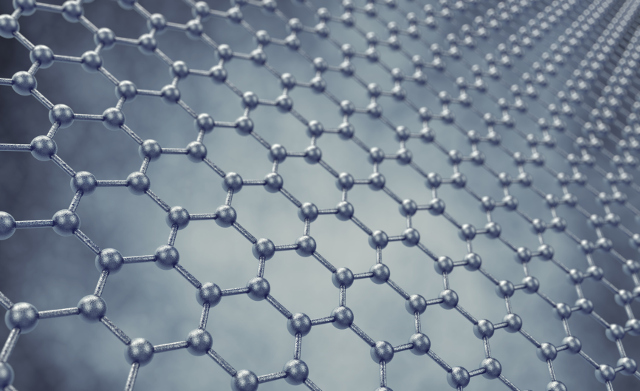
A new material, stronger than graphene, called carbyne has been created, thanks to a new production technique. A team from the University of Vienna has created carbyne for the first time in s stable form. The tensile properties of the super strong material are 40 times that of diamond and double that of graphene.
There is a battle raging between human and machine. Even though machine consciousness is still a long way away, computed algorithms are making choices that once needed human input. Recently Google’s AlphaGo algorithm beat a professional player in the game Go. An achievement that demonstrates the speed and development of machine capabilities. However, there is still much to do to make computers think like a human. Through games we can teach computers how to solve problems intuitively.
NOTE: The field of game science is a hot new field. For anyone interested in learning game theory and how to enter the field of game development, check out DaVinci Coders.
A recent scientific breakthrough in a Ministry of Defence research project is paving the way for scanners that could see underground or through walls. A team of British scientists, including experts at the MoD’s Porton Down labs, have developed a new device that can detect tiny fluctuations in gravity.
Thanks to pioneering nanotechnology research being developed by RMIT University researchers, people could soon be able to replace their washing machines with a little bit of sunshine. The researchers have been working on self-cleaning textiles by growing nanostructures on textiles. When exposed to light, they release a burst of energy that then degrades organic matter.
Recent tests have shown that switching off the satiety neurons caused mice to eat more and double their weight in three weeks. When the cells’ function was restored, the mice reduced the amount they ate each day by about 25pc.
A team of scientists from Imperial College London have proposed a laser model that can could heat materials to temperatures hotter than the center of the Sun in just 20 quadrillionths of a second. That’s 10 million degrees Celsius almost instantaneously.
Amun 3554 is a little more than a mile wide and it’s one of the smallest M-class (metal-bearing) asteroids yet discovered. Unless it ever decides to smash into us — a theoretical possibility, but extremely unlikely over the next few centuries — it will continue orbiting the sun, unknown and unmolested.
Engineers in Australia have have proven, with the highest score ever achieved, that a quantum version of computer code can be written, and manipulated, using two quantum bits in a silicon microchip. The advance removes lingering doubts that such operations can be made reliably enough to allow powerful quantum computers to become a reality.
Scientists in France were able to restore the youth of cells taken from people 100 years of age and older. They reprogrammed them to stem cells stage, demonstrating that aging is in fact reversible.