The House of Earth and Code: How 3D Printing is Rewriting the Rules of Construction

Concrete has dominated architecture for more than a century, shaping everything from suburban homes to megacities. But in Japan, a quiet revolution is underway—one that replaces cement with earth, sensors, and code. The result? A home that is both ancient in material and futuristic in execution.

The project, called Lib Earth House B, is the latest milestone from Japanese firm Lib Work in collaboration with Italian 3D printing pioneer WASP. Using the massive Crane WASP 3D printer, which was first unveiled in 2018 with the prototype “Gaia,” the team built an entire 100-square-meter residence without a single bag of cement. Instead, they relied on earth-based materials, locally sourced and layered into form with additive manufacturing.

Continue reading… “The House of Earth and Code: How 3D Printing is Rewriting the Rules of Construction”

When Bacteria Replace Silicon: The Coming Age of Living Computers

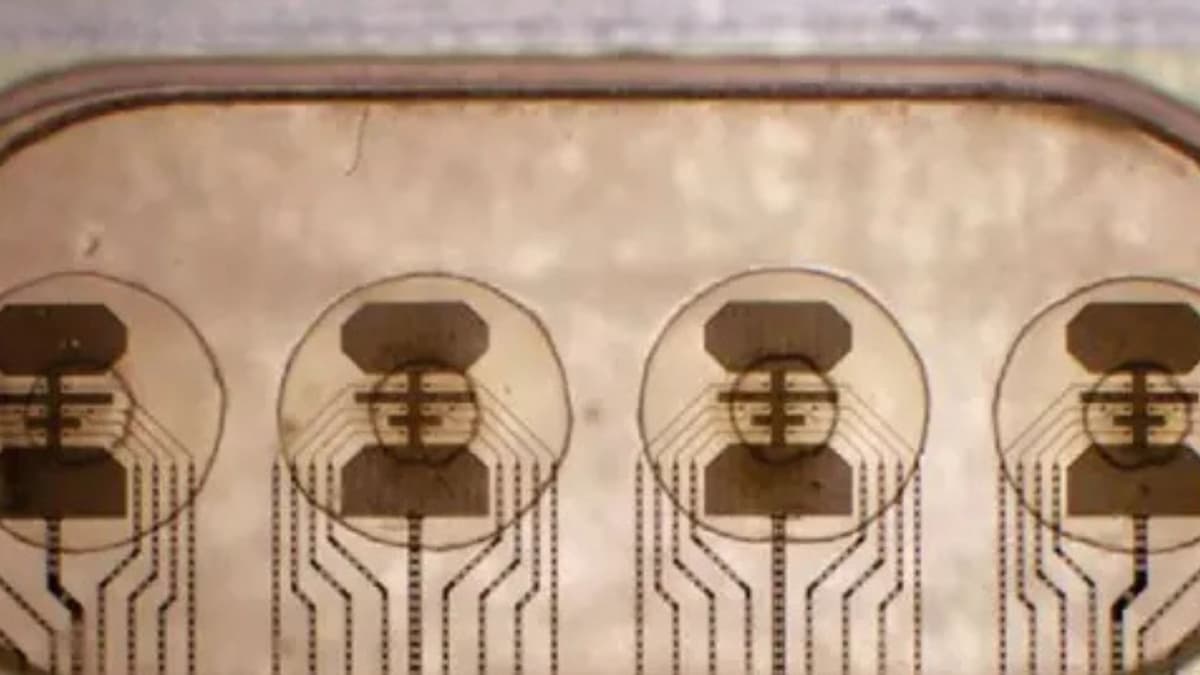
The most powerful computers of tomorrow may not hum inside climate-controlled data centers or be etched into silicon wafers. They may be alive. At Rice University in Texas, a team of scientists has secured nearly $2 million from the National Science Foundation to explore what could become one of the most disruptive computing revolutions in history: transforming bacteria into programmable digital processors.

The logic is simple but radical. Each bacterial cell acts as a tiny processor.

Continue reading… “When Bacteria Replace Silicon: The Coming Age of Living Computers”

The Rise of HELIX: How the First Trillion-Dollar AI-Managed Company Changed Everything

By Futurist Thomas Frey

The headline that broke at 3:47 AM Eastern on March 15, 2038, sent shockwaves through every financial market on the planet: “HELIX Becomes First Trillion-Dollar Company Managed Entirely by Artificial Intelligence.”

What made this moment historically unprecedented wasn’t just the valuation—it was that no human being had made a strategic decision at HELIX for over eighteen months.

Continue reading… “The Rise of HELIX: How the First Trillion-Dollar AI-Managed Company Changed Everything”

The Drone Revolution: Racing Toward Aviation’s Next Historic Firsts

By Futurist Thomas Frey

How tomorrow’s changemakers will earn their place in history through pioneering achievements in unmanned flight

Few of us remember the second person to circumnavigate the globe or the second company to deliver a package by air. History belongs to the firsts, and the rapidly evolving world of drone technology presents an unprecedented opportunity for visionaries to claim their permanent place in the record books.

Every emerging technology produces a cascade of “firsts” that define its trajectory and potential. From Orville Wright’s 12-second flight to Chuck Yeager breaking the sound barrier, aviation’s pioneers shaped how we understand what’s possible in the skies. Today’s drone technology stands poised to generate its own wave of historic achievements—but which will prove most significant?

Continue reading… “The Drone Revolution: Racing Toward Aviation’s Next Historic Firsts”

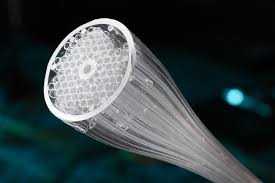
The Hollow Fiber Revolution: How Air-Filled Fibers Could Reshape the Internet

The future of the internet may not lie in more powerful servers or bigger data centers, but in a strand of glass that is—ironically—mostly empty. Scientists at the University of Southampton have developed a radical new hollow-core optical fiber that carries light through air instead of solid glass. The result? Data that moves faster, farther, and with a thousand times more transmission power than today’s networks can handle.

This isn’t just a tweak to existing fiber optics—it’s a potential upheaval in how the world moves information.

Continue reading… “The Hollow Fiber Revolution: How Air-Filled Fibers Could Reshape the Internet”

When Lightning Turns Into Data: NASA’s Real-Time Pollution Tracking Breakthrough

For centuries, lightning has been the ultimate spectacle of raw nature—flashes of white fire splitting the sky, thunder rolling across landscapes, and power surging through the air. But behind the drama lies chemistry, and for the first time, scientists have captured that chemistry in motion from space. It turns out that lightning isn’t just a light show—it’s also a surprising player in the global story of pollution, air quality, and atmospheric balance.

A team at the University of Maryland, working with NASA’s TEMPO instrument, has managed to track nitrogen dioxide released by lightning strikes in real time. This isn’t just scientific curiosity—it’s a leap in how we understand the chemistry of storms and their impact on the air we breathe. Unlike car exhaust or industrial stacks, which dump pollutants at ground level, lightning injects nitrogen oxides high in the atmosphere, where they are especially potent at triggering ozone formation. That ozone can then drift back down, sometimes impacting communities far from the original storm.

Continue reading… “When Lightning Turns Into Data: NASA’s Real-Time Pollution Tracking Breakthrough”

Rethinking the Raspberry: DNA-Free Gene Editing Opens a New Chapter in Precision Agriculture

What if the future of agriculture isn’t about genetic modification as we know it, but about rewriting nature with surgical precision—without leaving any foreign DNA behind? That’s the promise emerging from Cranfield University in England, where researchers have just achieved the world’s first DNA-free gene edits in raspberry plants using CRISPR technology. This breakthrough could mark the beginning of a new agricultural era where crops are enhanced for taste, shelf life, and resilience, all while sidestepping the heavy regulatory baggage that has slowed the acceptance of genetically modified organisms.

Continue reading… “Rethinking the Raspberry: DNA-Free Gene Editing Opens a New Chapter in Precision Agriculture”

China Achieves 22% reduction in aerodynamic drag: High-Speed Trains at 248 mph and Beyond

When a train pushes past 200 miles per hour, it stops being just a train. It becomes a battle with the air itself. At these speeds, aerodynamic drag is no longer a minor nuisance—it is the single largest force standing in the way of efficiency, safety, and speed. Now, a team of engineers in China has made a breakthrough that could reshape the future of high-speed rail: a 22% reduction in aerodynamic drag at 248 mph (400 km/h).

That number may not sound dramatic at first glance, but in the world of transportation engineering, it is staggering. At 248 mph, drag increases by nearly 30% compared with trains running at the more common 217 mph. Every bit of resistance translates into massive amounts of wasted energy, higher operating costs, and limits on how fast and far these machines can run. Reducing drag by 22% is like unlocking a secret door into the future of rail travel.

Continue reading… “China Achieves 22% reduction in aerodynamic drag: High-Speed Trains at 248 mph and Beyond”

DNA-Wrapped Nanoparticles Triple CRISPR’s Power—and Open the Door to a New Era of Genetic Medicine

CRISPR has been hailed as the most revolutionary tool in modern medicine—a molecular scalpel capable of rewriting the code of life itself. But despite its breathtaking promise, the technology has been hobbled by one stubborn obstacle: delivery. Getting CRISPR machinery into the right cells, in the right tissues, at the right time has often been more of an art than a science, with inefficiencies and risks that have slowed its path from the lab to the clinic.

Now researchers at Northwestern University have unveiled a breakthrough that could tip the balance. By wrapping CRISPR inside spherical nucleic acids (SNAs) built from strands of DNA, the team has created a delivery vehicle that triples efficiency, dramatically reduces toxicity, and expands the range of cells that can be edited. These tiny, DNA-coated nanoparticles—known as LNP-SNAs—are rewriting the rules of genetic medicine.

Continue reading… “DNA-Wrapped Nanoparticles Triple CRISPR’s Power—and Open the Door to a New Era of Genetic Medicine”

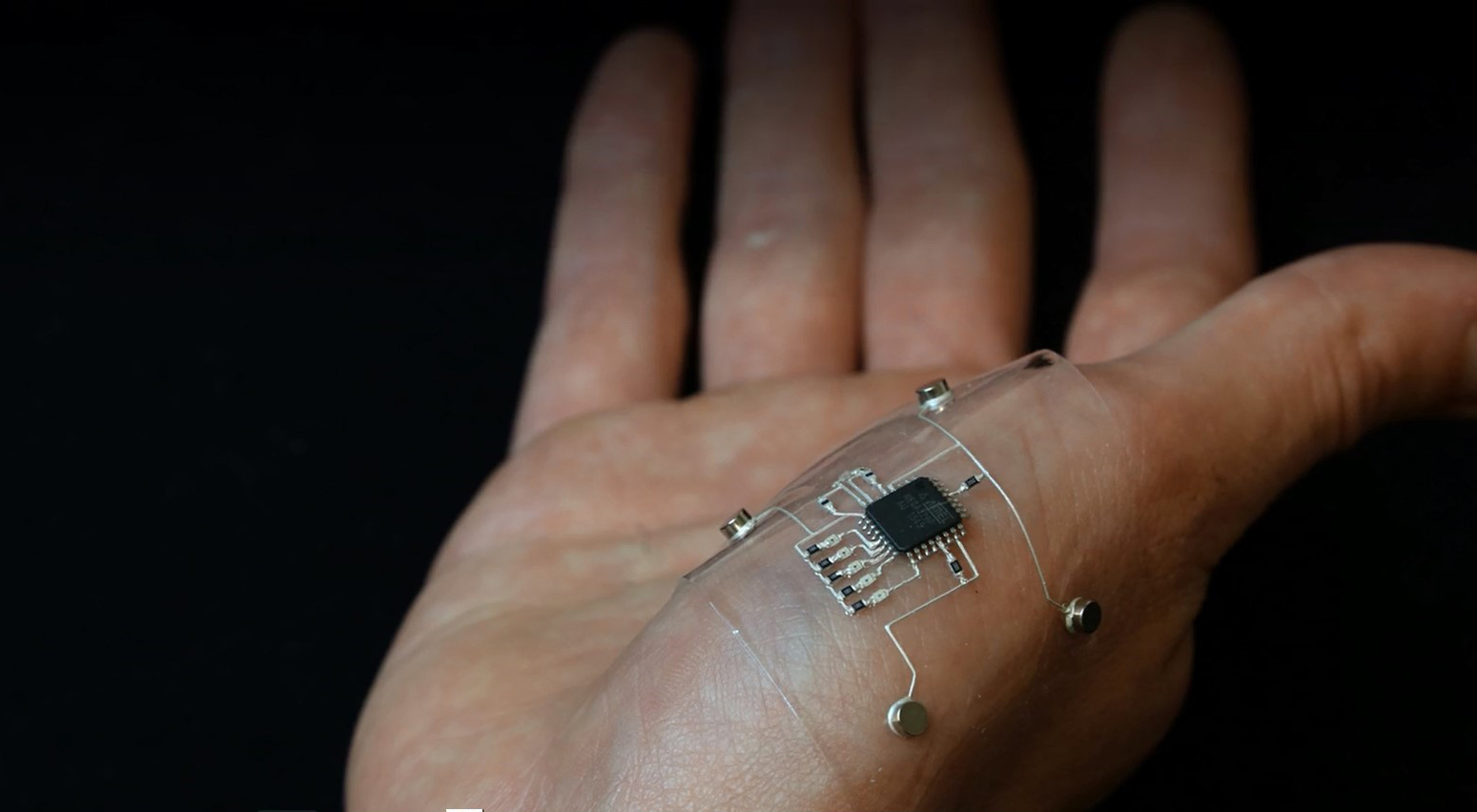
3D-Printed Auxetic Sensors: Redefining Touch for Wearables, Robotics, and Healthcare

The future of sensing technology may not lie in better electronics, but in stranger geometry. Auxetic metamaterials—structures that do the opposite of what we expect when squeezed—are now stepping into the spotlight. Instead of bulging outward when compressed, they contract inward, concentrating strain in ways nature almost never does. For decades, this quirk of physics was a lab curiosity. Now, thanks to 3D printing, auxetic designs are powering a new class of tactile sensors with applications in robotics, healthcare, and wearable technology.

Continue reading… “3D-Printed Auxetic Sensors: Redefining Touch for Wearables, Robotics, and Healthcare”

Heavy Electrons and the Birth of a New Quantum Age

Quantum computing has long promised a revolution, but the path forward has been defined mostly by exotic setups—supercooled superconductors, fragile qubits, and billion-dollar labs. Now, researchers in Japan have uncovered something that could redraw the map entirely: “heavy fermions,” electrons that behave as if they have gained extraordinary mass, displaying quantum entanglement governed by Planckian time—the ultimate clock of quantum mechanics. This is not just a physics curiosity. It could be the foundation for a new type of quantum computer.

Continue reading… “Heavy Electrons and the Birth of a New Quantum Age”

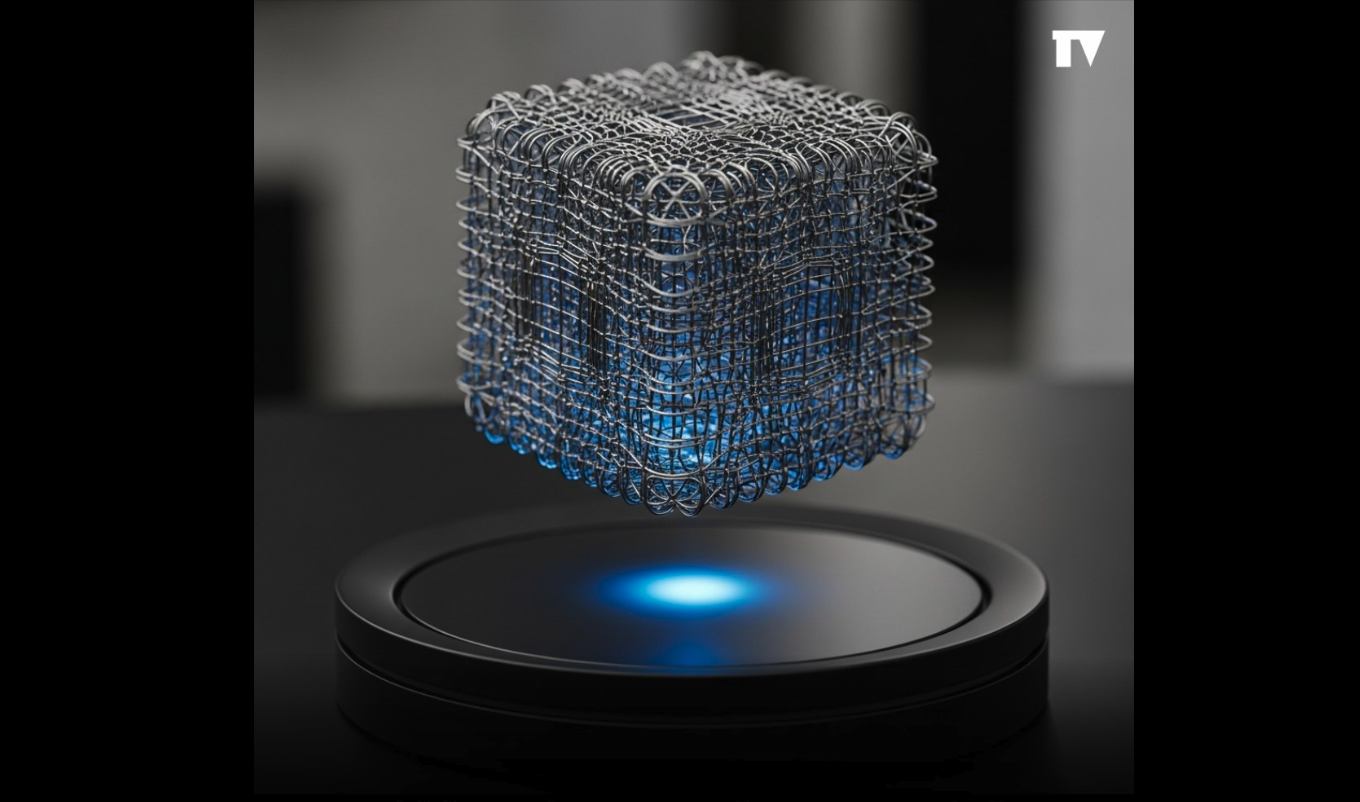
AI-Engineered Nanolattices: Stronger Than Steel, Lighter Than Foam

The strongest materials of the last century were discovered with hammers, furnaces, and patience. The strongest materials of the next century will be discovered with prompts. In labs where lasers etch features thinner than a red blood cell and algorithms hunt Pareto fronts, researchers have now taught artificial intelligence to design a carbon nanolattice that carries the compressive punch of carbon steel while weighing about as much as Styrofoam. That is not a metaphor. It’s a new class of matter—architected by code, born in light, and refined in heat—that could remake aerospace, mobility, construction, sport, and any place where every gram and every Newton matter.

Continue reading… “AI-Engineered Nanolattices: Stronger Than Steel, Lighter Than Foam”
Discover the Hidden Patterns of Tomorrow with Futurist Thomas Frey
Unlock Your Potential, Ignite Your Success.

By delving into the futuring techniques of Futurist Thomas Frey, you’ll embark on an enlightening journey.

Learn More about this exciting program.