When Donald Trump won the election, many in Silicon Valley were flummoxed: “How could a bigoted billionaire with no government experience and a twitchy Twitter trigger finger win the U.S. presidential election?” they asked themselves.
We’re all familiar with the concept of working from home—and in 2017 volunteering from home will become just as ubiquitous. A busy life, working two jobs, unsociable working hours, and living in a remote location can all make it difficult for people to give time or money to good causes in their community. But technology now makes it possible to give your time and energy from the comfort of your own sofa, whether it’s to answer advice lines or support peers one-on-one.
Thirty years ago, it was a big deal when schools got their first computers. Today, it’s a big deal when students get their own laptops. According to Futurist Thomas Frey, in 14 years it’ll be a big deal when students learn from robot teachers over the internet. It’s not just because the technology will be that sophisticated, Frey says, but because the company responsible for it will be the largest of its kind.
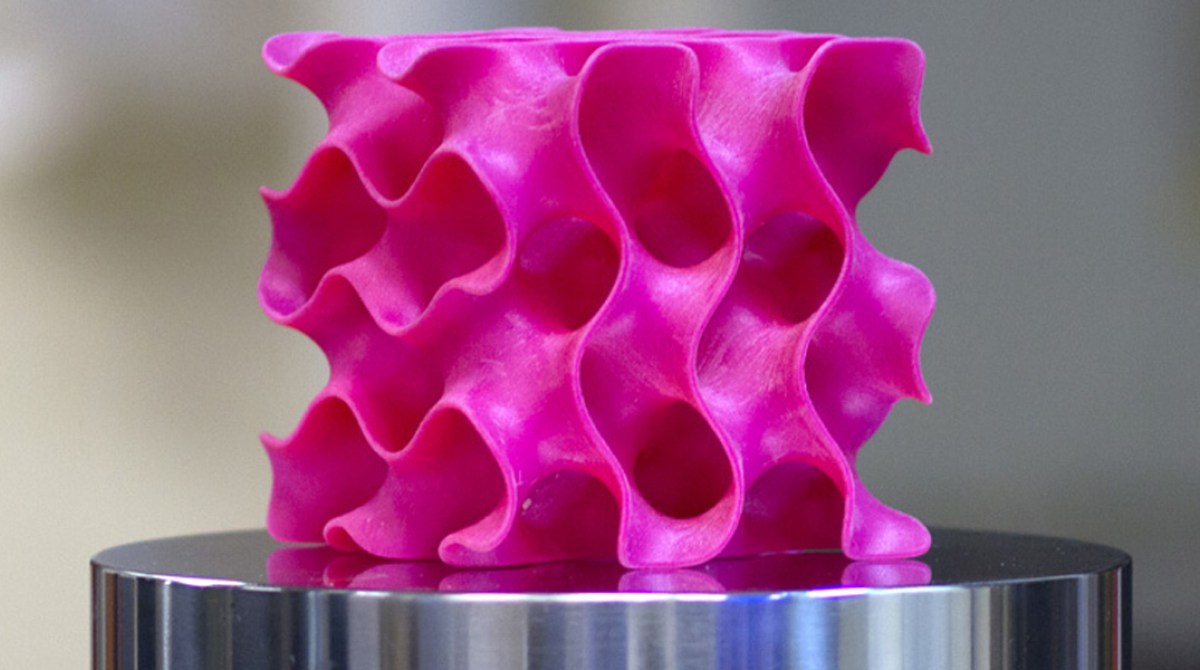
Last September, we wrote about the Hasso-Plattner-Institute in Germany and their R&D on metamaterials, hacking the internal structures of materials to create simple, non-powered machines. By experimenting with various microstructural designs, researchers were able to 3D print simple machines that can deform to create some form of actuation, allowing the 3D printing of switches, latches, door handles, and the like.
For modern families, the adage “food is love” might well be more true put another way: food is power. Not long ago, Dr. Leonard Sax was at a restaurant and overheard a father say to his daughter, “Honey, could you please do me a favour? Could you please just try one bite of your green peas?” To many people, this would have sounded like decent or maybe even sophisticated parenting—gentle coaxing formed as a question to get the child to co-operate without threatening her autonomy or creating a scene.
Shay Howe and Darby Frey believe the path to better management starts with a question. Howe, former VP of product at Belly, and Frey, former head of engineering at Belly (both recently left Belly for new, undisclosed jobs starting in 2017) just launched Lead Honestly, a weekly email product that sends managers five questions, and one management tip, per week. The service is aimed at creating better communication and trust between managers and employees, particularly as employees transition into leadership roles, which require a new skillset that can be tough to learn on the job.
Thirty years ago, it was a big deal when schools got their first computers. Today, it’s a big deal when students get their own laptops. According to futurist Thomas Frey, in 14 years it’ll be a big deal when students learn from robot teachers over the internet.
Futurist Thomas Frey listed 128 things, from jobs like valets and couriers to things like road rage and stoplights, he believes the driverless car era will reduce or render obsolete by 2030.Though the transition to this autonomous car era won’t be smooth, it will bring with it fewer accidents and fatalities due to human error behind the wheel.
During an emergency, having blood on hand for transfusions is critical. But blood needs proper refrigeration, making on the spot care a difficult task. But what if paramedics were equipped with bags of powdered blood cells that could be combined with water and immediately distributed?
Thomas Frey is the executive director at the DaVinci Institute and a renowned futurist speaker. We got on the phone to discuss what the future holds for recruiting: how employers will find talent, who they will be looking for, what skills and traits will matter most, and how employment and the workplace will evolve in the times ahead.
NOTE: Interested in seeing where the future can take you? Visit FuturistSpeaker.com
Around the corner from the famous Diamond District in New York City, David Weinstein sorts through some envelopes on his cluttered desk. All of them are full of diamonds.
Could you create light from a bag of rocks and a downward force? The answer may surprise you. Creating a future that’s bright and safe for all is at the heart of GravityLight – the lamp that’s lighting areas of the world with limited access to electricity using the power of (you guessed it) gravity.