Robots assemble! Meet Singapore’s robotic workforce 

Robots on display at the National Robotics Programme’s 6th anniversary celebration at SUTD

The Straits Times has published an article titled “Robots assemble! Meet Singapore’s robotic workforce.” The article explores how Singapore is using robots to improve its workforce and increase efficiency in industries such as manufacturing, healthcare, and construction.

One example is ST Engineering, a company that has developed a robotic arm that can perform tasks such as drilling, polishing, and milling. These tasks were previously done manually and could be time-consuming and dangerous. According to ST Engineering’s Senior Vice-President, Rajnish Gupta, “The robotic arm has enabled us to increase our productivity by up to 50%, as well as improve worker safety.”

In healthcare, robots are being used to assist in tasks such as patient lifting and transportation. Singapore’s Changi General Hospital has implemented a robot named TUG that can transport medicine, meals, and laundry throughout the hospital. The use of TUG has reduced the workload of hospital staff, allowing them to focus on patient care.

Continue reading… “Robots assemble! Meet Singapore’s robotic workforce “

Soft wearable robot improves arm function for people with ALS

A wearable robotic device that helps lift the shoulders to support arm movements can make it easier for people with amyotrophic lateral sclerosis (ALS) to do daily tasks, a new study reports.

A wearable robotic device has shown promise in improving arm function for patients with amyotrophic lateral sclerosis (ALS), according to a recent article on ALS News Today. The device, called the MyoSuit, is a soft robotic exoskeleton that can be worn on the arm and is designed to assist with movements that are typically impaired in ALS patients.

The MyoSuit is equipped with sensors that detect muscle activity in the arm, allowing it to provide support and assistance as needed. The device can be customized for each patient, with adjustments made to ensure the best possible fit and function. In a recent study, ALS patients who used the MyoSuit for eight weeks showed significant improvements in arm function, including increased strength and range of motion.

Continue reading… “Soft wearable robot improves arm function for people with ALS”

Backed by former Amazon robotics execs this Israeli-tech gets $7.5M to develop battery-free robots

RoboTiCan, an Israeli tech company founded in 2019 by former Amazon Robotics executives, has raised $7.5 million in funding to develop battery-free robots. The company aims to create lightweight, agile robots that can operate in various industries, including logistics, agriculture, and warehousing, using energy harvested from their environment.

According to the company’s CEO, Elad Levy, “The funding will enable us to further our mission of creating sustainable, energy-efficient robots that can improve productivity and efficiency in a variety of industries.” The funding round was led by Zohar Zisapel, an Israeli venture capitalist, with participation from other investors.

Continue reading… “Backed by former Amazon robotics execs this Israeli-tech gets $7.5M to develop battery-free robots”

Japan will allow self-driving delivery robots to roam its streets to combat labour shortages

The Japanese government has announced plans to allow self-driving delivery vehicles on public roads in the country. This move is part of an effort to address the growing demand for home delivery services and alleviate the burden on human drivers.

Under the new rules, self-driving vehicles will be allowed to operate on designated public roads, with a speed limit of 10 km/h. The vehicles will be required to have a human operator on board to take control in case of emergencies.

The government plans to launch a pilot program for self-driving delivery vehicles in 2023, with a goal of having the vehicles in widespread use by the mid-2020s.

“Self-driving vehicles have the potential to revolutionize the delivery industry, improving efficiency and reducing costs,” said Japan’s transport minister, Hiroshi Moriyama. “We are committed to supporting the development of this technology and ensuring its safe and effective use.”

Continue reading… “Japan will allow self-driving delivery robots to roam its streets to combat labour shortages”

Carbon Robotics adds LaserThinning capability to its LaserWeeder

Carbon Robotics, an AI and robotics company specializing in agriculture, has introduced what it says is “the industry’s first LaserThinning capability”, continuing the “rapid innovation” of its LaserWeeder system.

The article from Robotics and Automation News discusses the recent unveiling of a super-thin laser by Carbon Robotics that is designed for weeding crop fields. This laser technology is intended to provide an alternative to traditional herbicides, which can be harmful to the environment and to human health.

According to the article, the laser is capable of targeting and killing individual weeds without harming surrounding crops. This is achieved through a combination of precision optics and software algorithms that allow the laser to distinguish between plants and weeds. The laser is also extremely thin, which allows it to be mounted on a tractor and used to weed fields in a highly efficient manner.

Continue reading… “Carbon Robotics adds LaserThinning capability to its LaserWeeder”

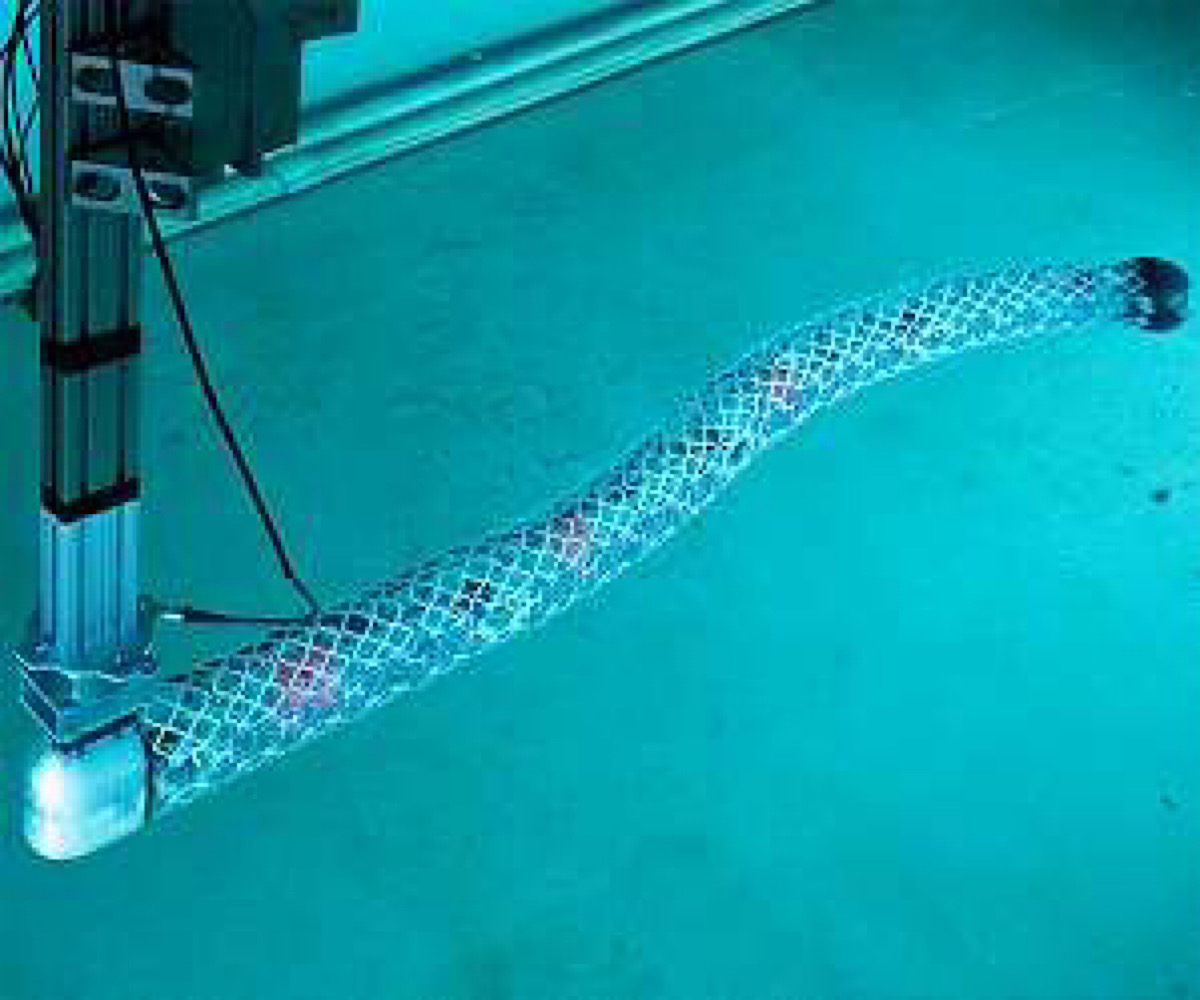
Engineers devise a modular system to produce efficient, scalable aquabots

As reported on Space Daily’s website, a team of engineers has developed a modular system to create efficient and scalable aquatic robots, or “aquabots.” The system was developed by a team of researchers from the Harvard John A. Paulson School of Engineering and Applied Sciences (SEAS) and the Wyss Institute for Biologically Inspired Engineering at Harvard University.

The system is designed to enable the creation of aquabots that can adapt to different tasks and environments, allowing for greater efficiency and scalability in their production. In describing the system, the article states that “The modular design allows for rapid design and fabrication of a range of different robotic platforms, including single- and multi-limbed robots, biomimetic robots, and soft robots.”

Continue reading…Engineers devise a modular system to produce efficient, scalable aquabots

Solar panel cleaning robot can be dropped off and picked up by drone

Dirty solar panels reduce global solar energy output as much as 5 per cent, but a start-up in Israel has tested drone delivery of a new autonomous robot to clean rooftop arrays

In an article published by New Scientist, a new solar panel cleaning robot has been introduced that can be deployed and retrieved by a drone. According to a statement by Dr. Aaron Bestick, the CEO of the company behind the technology, “The robot is designed to work in off-grid locations and can be deployed by a small drone, making it easy to clean solar panels in remote or hard-to-reach locations.” The robot, developed by U.S. startup Aerial Power, is equipped with brushes and nozzles that use water and detergent to clean solar panels. The drone drops off the robot at the site, and the robot cleans the solar panels before returning to the same location to be retrieved by the drone.

Continue reading… “Solar panel cleaning robot can be dropped off and picked up by drone”

Luwu Intelligence Unveils Groundbreaking Raspberry Pi Robotic Dog with Arm

Luwu Intelligence, a leading company in the field of robotics and automation, has made history with the launch of the world’s first Raspberry Pi robotic dog equipped with an arm. This innovative device represents a major milestone in the development of robotics technology, offering a highly advanced and versatile platform for a wide range of applications.

The Raspberry Pi robotic dog, which has been developed by Luwu Intelligence, is a highly sophisticated machine that has been designed to be both easy to use and highly customizable. The device features a powerful Raspberry Pi computer, which provides a robust and flexible platform for programming and control. The robotic dog is also equipped with a robotic arm, which offers a wide range of manipulation and gripping capabilities, making it ideal for tasks such as picking up objects, manipulating tools, and performing complex actions.

One of the key benefits of the Raspberry Pi robotic dog is its ability to be programmed for a variety of tasks, making it ideal for both hobbyists and professionals. Whether you’re looking to use it for education, research, or just for fun, the device is highly adaptable and can be programmed to perform a wide range of functions.

Continue reading… “Luwu Intelligence Unveils Groundbreaking Raspberry Pi Robotic Dog with Arm”

Samsung-backed scientists create robot dog that can jog on sand

Why not take Raibo robot dog for walkies?

By Saqib Shah

The droid can adjust itself while on the move to handle different types of terrain, including hard and soft ground. 

Scientists with backing from Samsung have developed a new robotdog that can move at speeds of up to three metres per second on sand.

The four-legged droid is the brainchild of a research team from the Korea Advanced Institute of Science and Technology (KAIST). Its creators claim the robot has the stability to traverse rough surfaces, and can agilely tackle soft ground without losing its balance.

The bot’s systems, including an advanced neural network that allows it to make decisions on the move, could be harnessed by other robots to effectively tackle all types of terrain, according to the KAIST team.

The droid follows in the footsteps of robotics firm Boston Dynamics’ canine Spot, which caused a stir when it was briefly used by New York police to assist at crime scenes, and later, the French military during training drills. On the cuddlier side, Sony has its small companion pup named Aibo that you can teach to sit, lay down, take a picture, and even sing happy birthday.

Scientists trained the new robot, called “RaiBo“, using a technique called AI-reinforcement learning. This saw them use a variety of simulations that mirrored physical trials, consequently reducing the time needed for an AI to optimise itself for its intended goals, according to Popular Science.

The team created a new artificial neural network capable of adjusting in real-time to the type of ground it was walking on, which then fed that info back to the robot. They also created a new contact modelling based on the robot’s pressure interacting with various unstable terrain, such as sand.

Continue reading… “Samsung-backed scientists create robot dog that can jog on sand”

Scythe Robotics raises $42M to scale autonomous lawnmowers

By Steve Crowe 

Scythe Robotics, a Colorado-based developer of autonomous lawnmowers for the professional landscape industry, raised $42 million in Series B financing. The round was led by Energy Impact Partners and included additional new investors ArcTern Ventures, Alumni Ventures and Amazon’s Alexa Fund, alongside participation from existing investors True Ventures, Inspired Capital and more.

Scythe Robotics said the funding will help it meet demand for the more than 7,500 reservations for its all-electric, fully autonomous M.52 mower. Founded in 2018, this financing round brings the company’s total capital raised to date to $60.6 million.

According to Scythe Robotics, the latest generation of Scythe M.52 can mow all day on a single charge. It features a suite of sensors that enable it to operate safely in dynamic environments by identifying and responding to the presence of humans, animals and other potential obstacles. Simultaneously, it captures property and mower performance data that helps landscapers improve workflow, identify upsell opportunities, schedule more efficiently and manage labor costs.

“Since launching from stealth in June 2021, we’ve seen overwhelming interest from commercial landscape contractors in Scythe M.52 as a solution addressing both their crippling labor pains and their electrification needs,” said Jack Morrison, co-founder and CEO of Scythe. “We’re thrilled to expand our outstanding investor list, particularly with the addition of influential climate-tech investors Energy Impact Partners and ArcTern Ventures, and secure more capital to scale and meet the phenomenal demand for M.52 as we work to decarbonize the landscape industry.”

Morrison was a guest on The Robot Report Podcast in June 2022. He discussed the commercial market for autonomous mowers and how Scythe is going to market to support the needs of commercial landscapers with its Robots-as-a-service (RaaS) business model.

Continue reading… “Scythe Robotics raises $42M to scale autonomous lawnmowers”

boston dynamics’ humanoid robot ‘atlas’ effortlessly helps on construction sites

BOSTON DYNAMICS ON ‘ATLAS’ INTERACTING WITH OBJECTS

Boston Dynamics’ handy helper and humanoid robot Atlas can maneuver obstacles, seamlessly join a choreographed dance party, or jog on its own in the park, and today, he can effortlessly work on construction sites. In the recently released video by the group, Atlas manipulates the world around it as the humanoid robot interacts with objects and modifies the course it is on.

Atlas tests its locomotion, sensing, and athleticism by delivering a bag of tools to a person waiting at the top of a multi-story scaffold and even pushing a cargo box from his position. Atlas grasps, carries, and tosses the tool bag, climbs stairs, jumps between levels, and tips over a large wooden block out of its way before dismounting with an inverted 540-degree flip that project engineers have dubbed the ‘Sick Trick.’

Atlas control lead Ben Stephens says that parkour and dancing were examples of what might be extreme locomotion, and now the team is trying to build upon that research to also do more robotics manipulation. ‘It’s important to us that the robot can perform these tasks with a certain amount of human speed. People are very good at these tasks, so that has required some pretty big upgrades to the control software,’ he says.

Continue reading… “boston dynamics’ humanoid robot ‘atlas’ effortlessly helps on construction sites”

Robots Can Stop To Smell The Roses Now, Thanks To AI And A Biological Sensor

by Tim Sweezy

Researchers at the University of Tel Aviv have developed a robot that can “smell” using an innovative biological sensor. The sensor transfers electrical information in response to the presence of an odor, which the robot is capable of detecting and interpreting. However, the technology is still lags far behind what of millions of years of evolution has enabled.

The breakthrough out of the University of Tel Aviv has researchers hopeful that the new technology could be used in the future to identify explosives, drugs, diseases, and more. This is due to the fact that they were able to identify odors with a level of sensitivity 10,000 times higher than that of a commonly used electronic device that’s employed today.

“An example of this can be found at the airport where we go through a magnetometer that costs millions of dollars and can detect if we are carrying any metal devices. But when they want to check if a passenger is smuggling drugs, they bring in a dog to sniff him,” stated Dr. Ben Maoz of the Fleishman Faculty of Engineering and the Sagol School of Neuroscience.

Researchers provided the example of a mosquito, which can detect “a 0.01 percent difference in the level of carbon dioxide in the air.” Professor Amir Ayali of the School of Zoology and the Sagol Neuroscience added, “Today, we are far from producing sensors whose capabilities come close to those of insects.”Play

Continue reading… “Robots Can Stop To Smell The Roses Now, Thanks To AI And A Biological Sensor”
Discover the Hidden Patterns of Tomorrow with Futurist Thomas Frey
Unlock Your Potential, Ignite Your Success.

By delving into the futuring techniques of Futurist Thomas Frey, you’ll embark on an enlightening journey.

Learn More about this exciting program.