Advancing Seawater Electrolysis: A Breakthrough in Sustainable Hydrogen Production

Seawater electrolysis offers significant potential for decarbonizing the global energy sector, yet its progress has been stalled by challenges such as anode corrosion from chloride ions, unwanted chloride oxidation reactions, and the high cost of catalysts. To overcome these hurdles, self-supported nickel-iron (NiFe) materials have emerged as promising bifunctional catalysts for both hydrogen and oxygen evolution due to their high activity and affordability. Additionally, wood-based carbon (WC) structures are gaining attention as an ideal substrate for these catalysts, thanks to their porous nature and excellent conductivity.

A team of researchers, including Prof. Hong Chen from the Southern University of Science and Technology in China, Prof. Bing-Jie Ni from the University of New South Wales in Australia, and Prof. Zongping Shao from Curtin University in Australia, has devised an innovative approach to enhance the stability of NiFe-based electrodes in seawater electrolysis. Their work, published in the journal Science Bulletin, introduces tungsten into the active NiFe-based catalysts, significantly improving the anodes’ anti-corrosion properties and stability.

Continue reading… “Advancing Seawater Electrolysis: A Breakthrough in Sustainable Hydrogen Production”
James Cook University Researchers Convert Microplastics into Valuable Graphene Material

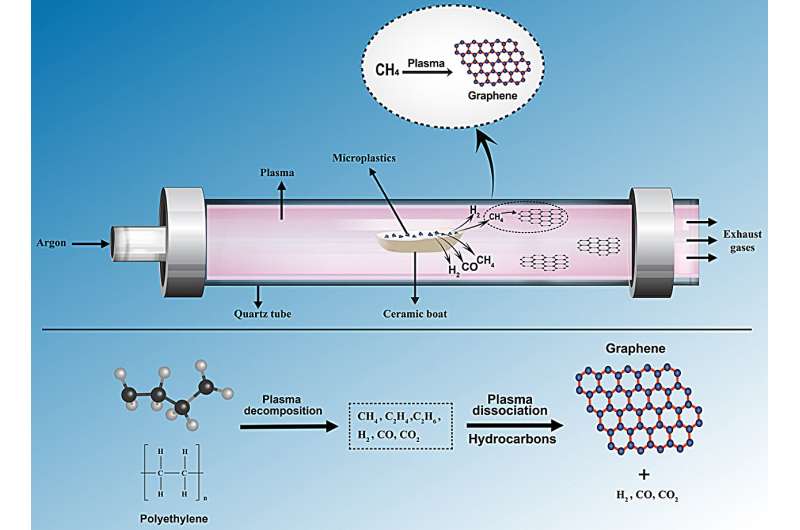
Researchers at James Cook University (JCU) have made a groundbreaking advancement in the fight against microplastic pollution by developing a method to convert microplastics into graphene, a highly valuable material. The findings were published in the journal Small Science.

Professor Mohan Jacob from JCU highlighted the persistent threat posed by microplastics, which degrade into tiny, water-insoluble fragments that are harmful to marine life, animals, and humans. “These microplastics are notorious for their non-degradable and insoluble nature in water and are an evolving threat to fish, animals, and humans,” said Professor Jacob.

Continue reading… “James Cook University Researchers Convert Microplastics into Valuable Graphene Material”

Genetically Modified Poplar Trees: A Sustainable Revolution in High-Performance Engineered Wood

Researchers at the University of Maryland have achieved a groundbreaking advancement in sustainable construction by genetically modifying poplar trees to produce high-performance structural wood without the need for chemicals or energy-intensive processing. Traditionally, engineered wood—often seen as a renewable alternative to materials like steel, cement, glass, and plastic—requires significant processing with volatile chemicals and large amounts of energy, leading to considerable waste. This new development promises a more sustainable approach to producing engineered wood, with far-reaching implications for carbon sequestration and climate change mitigation.

The key innovation lies in editing a single gene in live poplar trees, enabling them to grow wood that is ready for engineering without the need for traditional processing. “We are very excited to demonstrate an innovative approach that combines genetic engineering and wood engineering, to sustainably sequester and store carbon in a resilient super wood form,” said Yiping Qi, a professor in the Department of Plant Science and Landscape Architecture at UMD and a corresponding author of the study. He emphasized the importance of carbon sequestration in the fight against climate change, highlighting the potential uses of this engineered wood in the future bioeconomy.

Continue reading… “Genetically Modified Poplar Trees: A Sustainable Revolution in High-Performance Engineered Wood”

Nokia and Swisscom Launch Nationwide Drones-as-a-Service Network in Switzerland

Swisscom Broadcast has partnered with Nokia to deploy a comprehensive drones-as-a-service network across Switzerland. This initiative will see the deployment of 300 Drone-in-Box units, designed to enhance emergency response, perimeter protection, and infrastructure inspection. The advanced network aims to improve the safety of public safety workers and optimize resource utilization, which could be crucial in saving lives during incidents.

Nokia emphasized that these remotely operated drones will collect critical information within the initial minutes of an emergency, significantly boosting the situational awareness of first responders.

Continue reading… “Nokia and Swisscom Launch Nationwide Drones-as-a-Service Network in Switzerland”

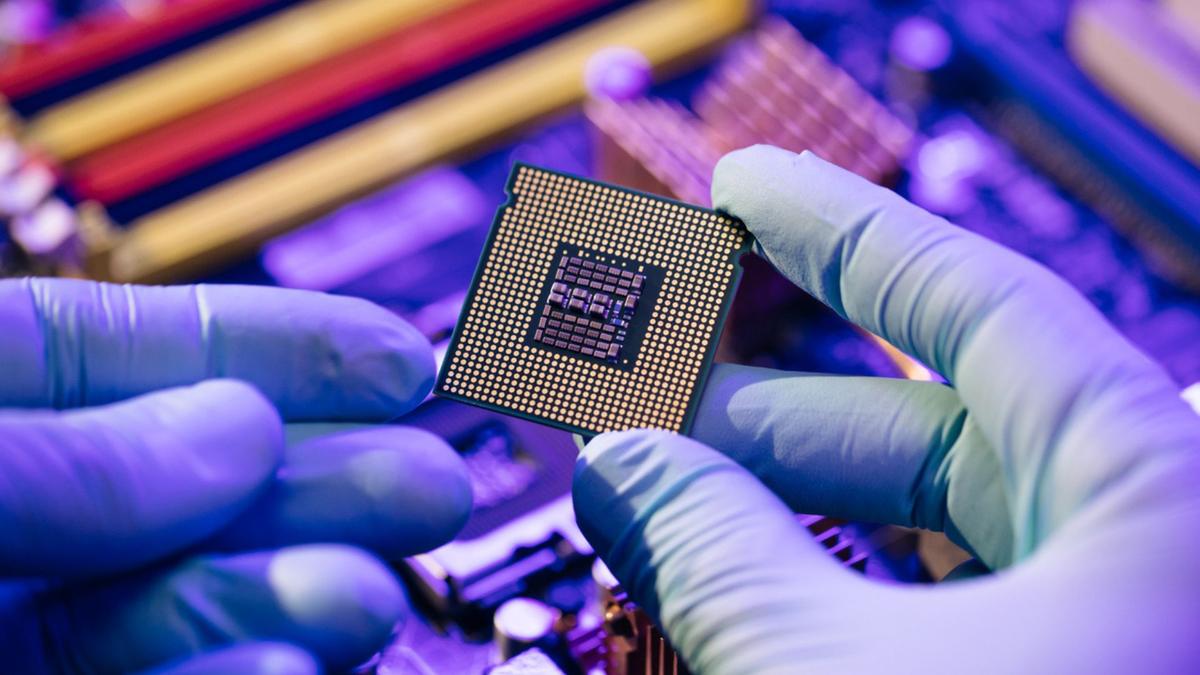
Chinese Researchers Develop Groundbreaking Material for Next-Gen 2D Computer Chips

Chinese researchers have unveiled a novel material that could revolutionize the development of two-dimensional, low-power computer chips. The team from the Shanghai Institute of Microsystem and Information Technology at the Chinese Academy of Sciences created an ultra-thin layer of aluminum oxide, just 1.25 nm thick, using a unique oxidation method at ambient temperature on single-crystalline aluminum. This material meets the stringent requirements set by the International Roadmap for Devices and Systems, offering low gate leakage, low interface state density, and high dielectric strength.

Advancing 2D Field-Effect Transistors (FETs)

As traditional silicon field-effect transistors (FETs) approach their miniaturization limits, new materials are needed to address challenges like short-channel effects. Two-dimensional (2D) materials, such as molybdenum disulfide (MoS2), have emerged as promising candidates due to their atomic thinness and high carrier mobility. However, the lack of high-quality dielectric materials has hindered the full potential of 2D FETs.

Continue reading… “Chinese Researchers Develop Groundbreaking Material for Next-Gen 2D Computer Chips”

Hidden Microbes: The Surprising Bacteria Lurking in Your Microwave

The kitchen is often a hub of activity, and it can get messy—especially in shared living spaces like student flats. But a new study reveals that your microwave may be harboring more than just leftover food. It turns out that these everyday appliances are home to a surprising number of resilient microbes that thrive despite regular use.

Researchers from Darwin Bioprospecting Excellence SL in Paterna, Spain, published a study in the journal Frontiers in Microbiology that highlights the surprising adaptability of bacteria within microwaves. The study found that these hardy microbes are not only resistant to radiation but are also rapidly multiplying.

Continue reading… “Hidden Microbes: The Surprising Bacteria Lurking in Your Microwave”

China’s UHS Maglev Train Achieves Milestone in Low-Vacuum Test

In October 2023, China’s UHS maglev train completed a successful run under non-vacuum conditions on a short test track. This week, the China Aerospace Science and Industry Corporation (CASIC), known for being the country’s largest producer of strategic and tactical missiles, has taken a significant step forward by successfully testing the UHS maglev under low-vacuum conditions on the same track.

According to CGTN, the test results were promising, with the train’s maximum speed and suspension height aligning perfectly with the preset values, though specific numbers were not disclosed. Additionally, all large-scale vacuum-related systems were confirmed to be in working order, marking a successful validation of the technology’s potential.

Continue reading… “China’s UHS Maglev Train Achieves Milestone in Low-Vacuum Test”

Embracing Smart Technology: How Upskilling Enhances the Future of Manufacturing

Despite dystopian fears that technological advancements might diminish or eliminate human value, history shows that innovation profoundly influences how we work. From the printing press to cloud computing and augmented reality, each technological leap has reshaped industries and the roles of those within them.

The reality of technological progress is one of interdependence, where smart technology, like that seen in modern manufacturing facilities, doesn’t replace human value—it enhances it. In the short term, smart technology boosts efficiency and enables workers to leverage data-driven insights. In the long term, those who master these technologies will be in high demand, making upskilling and reskilling essential to bridging today’s reality with tomorrow’s potential.

Continue reading… “Embracing Smart Technology: How Upskilling Enhances the Future of Manufacturing”

Nvidia Unveils Omniverse Cloud Sensor RTX to Revolutionize Autonomous Machine Development

Nvidia is set to launch a new suite of microservices called Omniverse Cloud Sensor RTX, designed to provide highly accurate sensor simulations that will significantly accelerate the development of fully autonomous machines. According to Nvidia, developers using Omniverse Cloud Sensor RTX can test sensor perception and AI software at scale in realistic, physically accurate virtual environments, long before deploying them in the real world.

In addition to aiding developers, Omniverse Cloud Sensor RTX will enable sensor manufacturers to validate and integrate digital twins of their sensors in virtual environments. This capability is expected to reduce the time and cost associated with physical prototyping.

Continue reading… “Nvidia Unveils Omniverse Cloud Sensor RTX to Revolutionize Autonomous Machine Development”

Revolutionizing Construction: UCL Student Develops Biomaterial to Capture CO2 and Reduce Carbon Footprint

A groundbreaking construction biomaterial that utilizes living microorganisms to capture carbon dioxide from the atmosphere has been developed by a graduate student at University College London (UCL) and a team of researchers. This innovation, known as a cyanobacterial engineered living material (C-ELM), has the potential to significantly reduce the construction industry’s carbon footprint if mass-produced and widely implemented.

Developed by a master’s student in the UCL Bio-Integrated Design program, the C-ELM material integrates living cyanobacteria into translucent panels that can be mounted on the interior walls of buildings. These microorganisms, through the process of photosynthesis, absorb carbon dioxide from the air. They then undergo a biomineralization process that binds the carbon dioxide to calcium, forming calcium carbonate and effectively sequestering the carbon.

Continue reading… “Revolutionizing Construction: UCL Student Develops Biomaterial to Capture CO2 and Reduce Carbon Footprint”

Innovative Concrete Recycling Process Paves the Way for Sustainable Construction

Concrete, a material that often ends up in landfills after its use, is responsible for approximately 8% of global carbon emissions due to its production. However, researchers at the University of Tokyo have developed a groundbreaking method to recycle old concrete into new, robust building blocks. These new blocks are not only strong enough for constructing houses and pavements but also offer a sustainable solution to combat climate change.

The innovative process transforms waste concrete into new blocks that capture carbon dioxide, contributing to a circular economy. Remarkably, this method can be repeated, making it a truly sustainable and renewable approach. “We are trying to develop systems that can contribute to a circular economy and carbon neutrality,” said Professor Ippei Maruyama, the lead researcher behind this development.

Continue reading… “Innovative Concrete Recycling Process Paves the Way for Sustainable Construction”

Low-Cost, Silver-Infused Wound Dressings Offer Hope for Burn Treatment

Wound infections, especially those associated with burns, present a significant health challenge, leading to high morbidity and mortality rates. While antibiotics are typically the standard treatment for serious wounds, their effectiveness is increasingly compromised by issues such as cost, limited access, and the growing threat of bacterial resistance—especially when treatments are not completed. This problem is particularly acute in low- and middle-income countries, where burn-related infections cause a large number of deaths, particularly in rural areas.

Burn wounds are notoriously difficult to treat due to several complicating factors. The damage burns cause to the skin disrupts the protective barrier, allowing opportunistic bacteria to thrive on the nutrients exuded from the wound. Additionally, burns compromise blood supply and weaken the local immune response. When burns cover more than a fifth of the body, they often trigger systemic inflammatory response syndrome (SIRS), further complicating infection management.

Continue reading… “Low-Cost, Silver-Infused Wound Dressings Offer Hope for Burn Treatment”
Discover the Hidden Patterns of Tomorrow with Futurist Thomas Frey
Unlock Your Potential, Ignite Your Success.

By delving into the futuring techniques of Futurist Thomas Frey, you’ll embark on an enlightening journey.

Learn More about this exciting program.