Transforming Organic Waste into Fertilizer: A Sustainable Approach Using Hydrothermal Liquefaction and Fungal Treatment

Creating fertilizers from organic waste can significantly reduce fossil fuel consumption and promote sustainable agricultural production. One innovative method is hydrothermal liquefaction (HTL), which converts biomass into biocrude oil through a high-temperature, high-pressure process. Two studies from the University of Illinois Urbana-Champaign explore the use of a fungal treatment to convert the leftover wastewater from HTL into fertilizer for agricultural crops.

“HTL uses wet biomass from organic sources such as swine manure or food waste. The process yields wastewater, called hydrothermal liquefaction aqueous phase (HTL-AP), which is usually discarded. We know it contains nutrients that can be used for fertilizer, but they are mostly in organic forms that plants can’t access. HTL-AP may also contain toxic heavy metals, depending on the type of biowaste,” said co-author Paul Davidson, an associate professor in the Department of Agricultural and Biological Engineering (ABE), part of the College of Agricultural, Consumer and Environmental Sciences and The Grainger College of Engineering at Illinois.

Continue reading… “Transforming Organic Waste into Fertilizer: A Sustainable Approach Using Hydrothermal Liquefaction and Fungal Treatment”
ElevenLabs Partners with Estates of Legendary Stars for AI-Powered Voice Narration

AI audio firm ElevenLabs has inked agreements with the estates of iconic figures such as Judy Garland, James Dean, and other legendary stars to use their voices for reading books, articles, PDFs, and more through its new Reader App.

ElevenLabs envisions users enjoying Garland’s legendary voice reading the original L. Frank Baum novel “The Wonderful Wizard of Oz” or Laurence Olivier delivering a Sherlock Holmes story, among other works. The company emphasizes that it has secured license agreements for the authorized use of these iconic voices as part of the “Iconic Voices” feature of its app.

Continue reading… “ElevenLabs Partners with Estates of Legendary Stars for AI-Powered Voice Narration”

New Hydrogel-Infused Soil Captures Water from Air, Enhances Plant Growth, and Optimizes Fertilizer Use

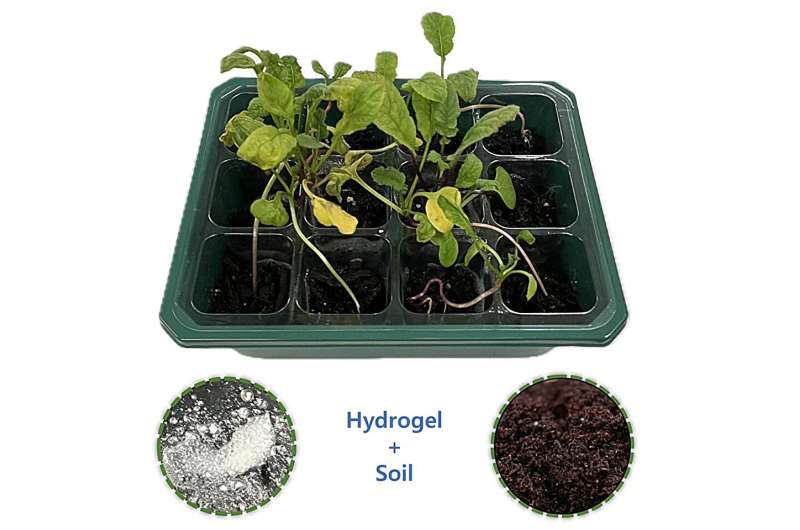
Researchers at The University of Texas at Austin have engineered a new type of soil infused with a hydrogel material that can capture water from the air and provide a controlled release of fertilizer. This innovative “smart soil” significantly enhances plant growth and reduces water and fertilizer usage.

“This new gel technology can reduce the burden on farmers by decreasing the need for frequent irrigation and fertilization,” said Jungjoon Park, a graduate student in the Walker Department of Mechanical Engineering who led the research. “The technology is also versatile enough to be adopted across a wide range of climates, from arid regions to temperate areas.” The research was recently published in ACS Materials Letters.

Continue reading… “New Hydrogel-Infused Soil Captures Water from Air, Enhances Plant Growth, and Optimizes Fertilizer Use”

Aston University Sets New Data Transmission Record of 402 Terabits Per Second

Researchers at Aston University, along with their international team, have set a new record by achieving a data transmission rate of 402 terabits per second using standard optical fiber. This groundbreaking accomplishment holds the potential to stabilize broadband costs amid rising demand for high-speed internet.

In collaboration with an international team, Aston University researchers transmitted data at a remarkable rate of 402 terabits per second through commercially available optical fiber. This new record surpasses their previous milestone set in March 2024, where they achieved a data rate of 301 terabits per second, or 301,000,000 megabits per second, using a single standard optical fiber.

Continue reading… “Aston University Sets New Data Transmission Record of 402 Terabits Per Second”

Chinese Team Achieves Quantum Leap in Electron Simulation

A Chinese research team has constructed a quantum computer capable of simulating the movement of electrons in a solid-state material, a task far beyond the capabilities of the world’s fastest supercomputers. Tracking these subatomic particles is crucial for answering fundamental scientific questions, such as the nature of magnetic attraction. Unlocking this knowledge could pave the way for high-temperature superconducting materials, potentially revolutionizing electricity transmission and transport.

“Our achievement demonstrates the capabilities of quantum simulators to exceed those of classical computers, marking a milestone in the second stage of China’s quantum computing research,” stated team leader Pan Jianwei in an announcement from the Chinese Academy of Sciences.

Continue reading… “Chinese Team Achieves Quantum Leap in Electron Simulation”

Innovative Plasma-Powered Device: Turkish Students Combat Drought with “Plantzma”

A team of five high school students from Türkiye, known as Team Ceres, has developed an innovative plasma-powered device called Plantzma to combat the devastating effects of drought on crops. The team, consisting of Diyar, Adar, Dilvin, Mir Baran, and Beyza, was motivated by their personal experiences after witnessing the destructive impact of a drought in their region.

Their region recently experienced a 40% decline in precipitation rates, with rising pollution exacerbating the situation, leading to an 80% crop loss and a significant food shortage.

Continue reading… “Innovative Plasma-Powered Device: Turkish Students Combat Drought with “Plantzma””

The Evolution and Breakthroughs in Computer Chips

Silicon computer chips have been the cornerstone of technology for over half a century. Today, the tiniest features on commercially available chips are around 3 nanometers, a remarkable feat considering a human hair is roughly 80,000 nanometers wide. Shrinking these features further is essential to meet our growing demand for more memory and processing power. However, we are approaching the limits of what can be achieved with traditional materials and processes.

Researchers at the U.S. Department of Energy’s Princeton Plasma Physics Laboratory (PPPL) are pioneering the next generation of computer chips. They are leveraging their expertise in physics, chemistry, and computer modeling to explore new materials and processes that can produce chips with even smaller features.

Continue reading… “The Evolution and Breakthroughs in Computer Chips”

Revolutionizing LED Technology: Enhancing Performance with Bionic Microstructures

Gallium nitride (GaN)-based light-emitting diodes (LEDs) have revolutionized the lighting industry, offering superior energy efficiency, extended operating life, and enhanced environmental sustainability over conventional lighting technologies. Recently, the push toward miniaturizing LEDs has gained momentum, driven by advancements in display devices, augmented reality, virtual reality, and other emerging technologies. However, the lack of cost-effective native substrates and high threading dislocation density in heteroepitaxial films grown on sapphire substrates remain significant obstacles to improving device performance. Additionally, Fresnel reflections at the epitaxy-substrate interface, caused by abrupt changes in refractive indices, further reduce light energy utilization.

Inspired by the compound eyes of moths, which exhibit excellent anti-reflective properties and strong light-absorption capabilities, researchers have sought to improve light utilization in LEDs. The challenge, however, lies in the rapid and precise processing of microstructures on the curved surfaces of optoelectronic devices. “Common projection lithography methods are highly sensitive to substrate shape, leading to reduced accuracy in microstructure definition on substrates with large warps or irregular shapes,” explains Professor Shengjun Zhou. “We propose a flexible nanoimprint lithography technique that enables high-throughput and high-quality processing of bionic microstructures on curved surfaces.”

Continue reading… “Revolutionizing LED Technology: Enhancing Performance with Bionic Microstructures”

MIT’s New Water Harvester Extracts Fresh Water from Air

In a world where many regions struggle to secure enough water, MIT researchers have developed a new water harvester capable of extracting sufficient fresh water from the air to meet the daily needs of several people.

Water harvesters typically use adsorbent materials to collect water on their surfaces. This new device from MIT maximizes exposure to air with a series of vertical fins spaced 2 mm (0.08 in) apart. These fins are constructed from copper sheets sandwiched in copper foams and coated with a specialized zeolite material, renowned for its water adsorption properties. After an hour, the fins become saturated with water, at which point the copper sheets are heated to release the collected water. Repeating this cycle 24 times a day in air with 30% humidity (considered arid), the harvester can produce up to 1.3 L (0.3 gal) of drinkable water per day per liter of the adsorbent coating. When scaled up, this equates to 5.8 L (1.5 gal) per kilogram (2.2 lb) of material used per day, enough to meet the daily water needs of several people.

Continue reading… “MIT’s New Water Harvester Extracts Fresh Water from Air”

World’s First Super-Sized Nano Transparent Screen Developed and Commercialized

A groundbreaking Nano Transparent Screen (NTS) has been developed and commercialized for the first time in the world. This innovative screen can adjust its transparency according to the environment and can be produced at a low cost, paving the way for the widespread adoption of large transparent screens, which until now have been prohibitively expensive. The newly developed screen is expected to find applications across various products, such as transparent displays in department stores and supermarkets, smart windows for buildings, and versatile transparent displays suitable for both indoor and outdoor promotional uses.

The research team, led by Principal Researcher Jun-Ho Jeong of the Nano-lithography and Manufacturing Research Center at the Korea Institute of Machinery and Materials (KIMM), in collaboration with Meta2People, has successfully commercialized a 100-inch large-sized NTS. This screen’s transparency can be freely adjusted depending on the surrounding lighting and images. The NTS was installed in the outdoor space of the “Youth Mall” located in Chungju in June and will be showcased at the International Nano Technology Exhibition, known as “Nano Korea 2024,” from July 3 to July 5, 2024, at KINTEX in Ilsan.

Continue reading… “World’s First Super-Sized Nano Transparent Screen Developed and Commercialized”

Revolutionary NTNU Technology Harnesses Industrial Waste Heat for Clean Water Production

Researchers at the Norwegian University of Science and Technology (NTNU) have developed an innovative technology that addresses two significant environmental challenges: utilizing industrial waste heat and generating clean water. This breakthrough was highlighted in a recent university press release.

Industrial heat is a major component of global energy consumption. After being used in industrial processes, a significant portion of this heat is typically wasted, released into oceans or the atmosphere. In Norway alone, it is estimated that 20 TWh of heat is wasted annually—equivalent to half the energy demand of Norwegian households or the energy used for heating homes. Kim Kristiansen, a doctoral researcher in NTNU’s Department of Chemistry, sought a more efficient way to repurpose this wasted energy.

Continue reading… “Revolutionary NTNU Technology Harnesses Industrial Waste Heat for Clean Water Production”

Rio Tinto to Launch Carbon-Free Aluminum Smelting Technology in Canada

British-Australian mining company Rio Tinto is set to debut a novel carbon-free aluminum smelting technology at its facility in Canada. This initiative aims to accelerate the shift to more environmentally friendly production methods and significantly reduce greenhouse gas emissions.

The Elysis technology, which replaces traditional smelting processes, promises to eliminate all direct greenhouse gases, producing oxygen instead. This groundbreaking technology will be installed at Rio Tinto’s Arvida smelter in Quebec, where the company will design, engineer, and build a demonstration plant with ten pots operating at 100 kiloamperes (kA).

Continue reading… “Rio Tinto to Launch Carbon-Free Aluminum Smelting Technology in Canada”