The Driverless Revolution Series Part 6: The Daily Life Revolution—How AVs Change Where We Live, Work, and Spend Time

By Futurist Thomas Frey

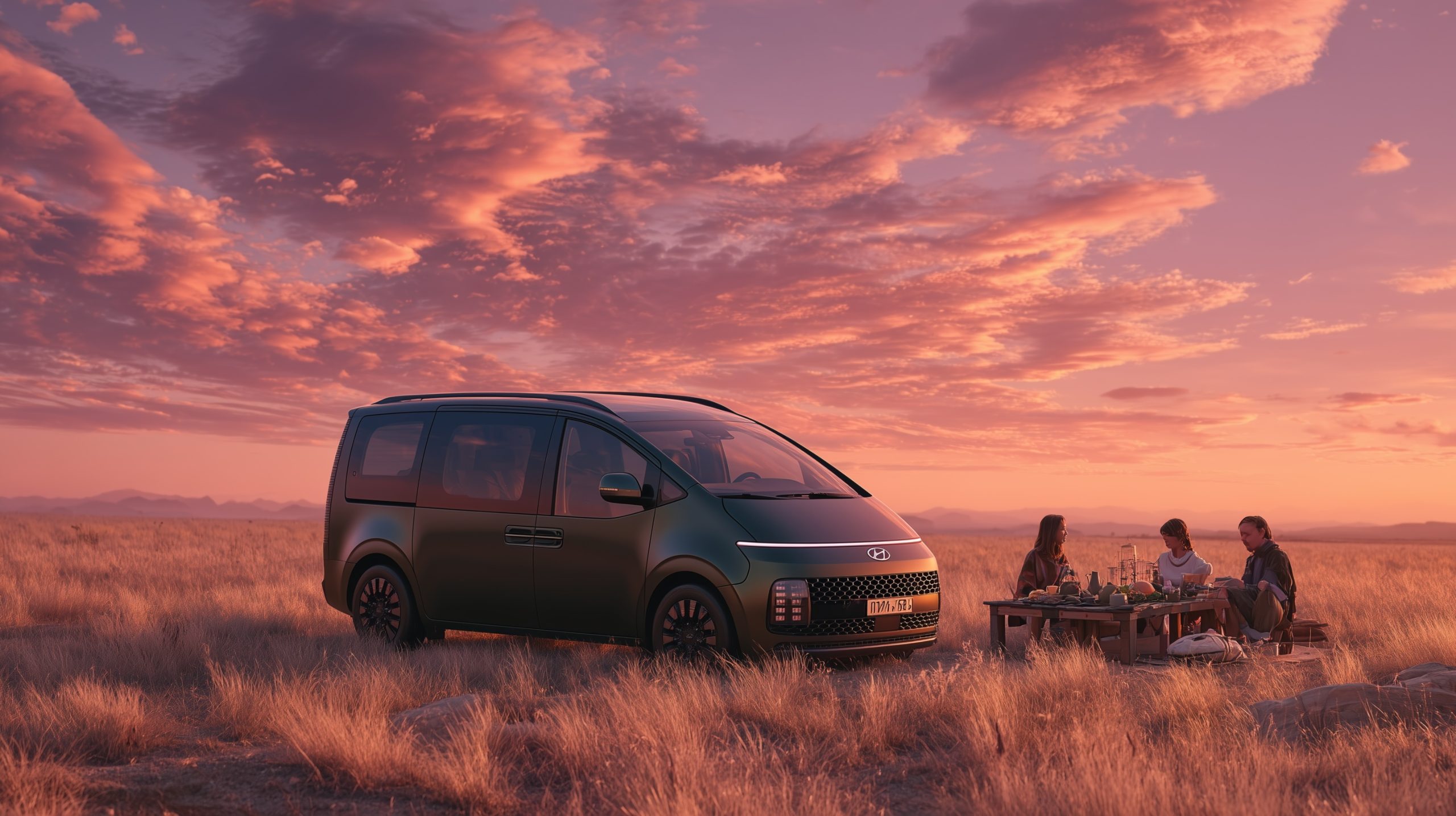
The Commute That Isn’t

It’s 2042. James lives in Boulder, Colorado. He works in downtown Denver—35 miles away.

Every morning at 6:30 AM, an autonomous vehicle arrives at his house. He gets in with his coffee, opens his laptop, and starts working. By the time he arrives at his office at 7:45 AM, he’s already answered emails, reviewed documents, and attended a virtual meeting.

His evening commute? Same thing. He leaves the office at 5:00 PM, works in the AV until 6:15 PM, then walks in his front door having completed a full workday plus 90 minutes of commute-time productivity.

His wife Sarah does something different. She sleeps during her morning commute—the AV picks her up at 7:00 AM, she naps for 45 minutes, and wakes up refreshed when the car announces arrival at her office at 7:45 AM. Evening commute? She reads novels. Watches shows. Catches up with friends via video chat. Her commute time is leisure time.

Their teenage daughter Emma takes an AV to high school. She does homework during the 20-minute ride.

Here’s what changed: The family moved from a small apartment near Denver to a large house in Boulder. Why? Because commute time stopped being wasted time. When you can work or sleep or read during your commute, distance matters less.

This is what autonomous vehicles do to daily life. They don’t just change transportation—they change where we live, how we work, when we travel, and what we do with our time.

Continue reading… “The Driverless Revolution Series Part 6: The Daily Life Revolution—How AVs Change Where We Live, Work, and Spend Time”

The Driverless Revolution Series Part 5: The End of Car Accident Deaths—When 40,000 Annual Fatalities Drop to Zero

By Futurist Thomas Frey

The Call That Never Comes

It’s 11:47 PM on a Friday night. Your 17-year-old son is out with friends. Your phone rings. Unknown number. Your heart stops.

Every parent knows this fear. The late-night call. The police officer on the other end. “There’s been an accident.”

In 2023, over 40,000 Americans died in traffic accidents. That’s 110 people every single day. It’s the leading cause of death for Americans aged 5-29. More than drugs. More than suicide. More than disease.

Every one of those deaths destroyed a family. Parents. Siblings. Children. Friends. Entire communities shattered by one moment of inattention, one patch of ice, one drunk driver, one mechanical failure.

By 2045, that fear largely disappears. The late-night call doesn’t come anymore. Your teenager drives—or rather, rides—in a vehicle that’s statistically safer than your living room.

Traffic deaths won’t drop to zero. There will still be occasional technical failures, edge cases the AI didn’t anticipate, residual human-driven vehicles causing crashes. But 95% of the carnage ends.

40,000 deaths become 2,000. 110 people dying daily becomes 5-6. A leading cause of death becomes a statistical rarity.

This is the most unambiguously good thing autonomous vehicles do. They save lives on a scale we can barely comprehend.

Continue reading… “The Driverless Revolution Series Part 5: The End of Car Accident Deaths—When 40,000 Annual Fatalities Drop to Zero”

The Unwritten Rules of Driverless Cars

By Futurist Thomas Frey

The driverless car is no longer science fiction—it’s here, humming quietly in test fleets, edging into city streets, and waiting for regulators to catch up. But while engineers have solved many of the mechanical and digital challenges, society hasn’t even begun to grapple with the social ones.

Here’s a simple but unsettling question: How young is too young to ride alone in a driverless car? Imagine a six-year-old, buckled into a fully autonomous pod at home, ferried ten minutes to school, and greeted by a waiting teacher at the other end. Is that safe? Is it ethical? Is it legal? And if ten minutes seems fine, what about thirty? What about an hour-long commute across town?

We don’t have answers yet—because the rules haven’t been written.

Continue reading… “The Unwritten Rules of Driverless Cars”

The Reinvention of the Automobile: The Impact of Self-Driving Technology

The automobile was one of the most transformative technologies of the 20th century. The invention of the internal combustion engine reshaped agriculture, personal transportation, and supply chains. It made suburban living possible, altered the design of cities, and drove the demand for fossil fuels. It also gave rise to some of the world’s largest and most influential companies. Now, as we stand on the cusp of reinventing this cornerstone technology, it’s clear that the potential of self-driving cars is immense, though not fully understood by the public or the media.

Self-driving technology, if scaled successfully, could reshape society in ways as profound as the original automobile revolution. However, the full magnitude of this transformation is often underreported. The technology itself, the industries it could disrupt, and the broader implications for daily life are often overlooked in discussions of autonomous vehicles.

Continue reading… “The Reinvention of the Automobile: The Impact of Self-Driving Technology”

Waymo Expands Full-Time Curbside Service at Phoenix Sky Harbor Airport

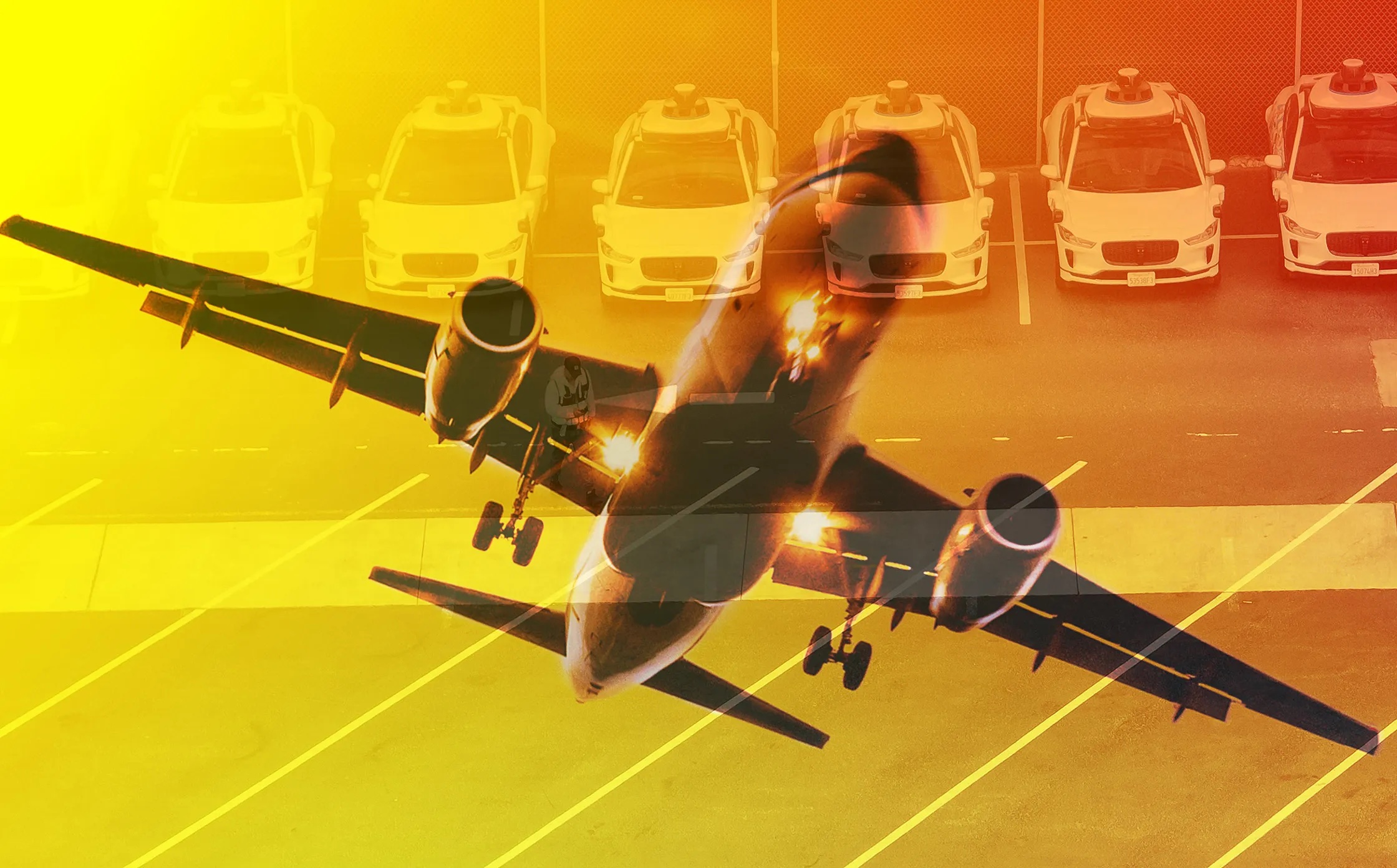
Alphabet’s self-driving vehicle division, Waymo, has begun offering full-day, curbside pickups and drop-offs at Phoenix Sky Harbor International Airport in Arizona. Although the announcement was made quietly via a post on X, it marks a significant step forward in the progress of autonomous vehicle technology. After years of delays, self-driving vehicles seem to be on track to enter the mainstream.

According to Mike Ramsey, an automotive analyst at Gartner, this move is crucial for Waymo’s business. “Airports are a key destination for mobility services—whether it’s a cab, shuttle bus, or an autonomous vehicle,” he explains. Almost a decade ago, Uber and Lyft battled to gain access to airports, recognizing their importance for travelers who need convenient rides and wish to avoid airport parking fees.

Continue reading… “Waymo Expands Full-Time Curbside Service at Phoenix Sky Harbor Airport”

Revolutionizing Transportation: The Era of Self-Driving Semis Emerges

In a dramatic evolution of transportation technology, self-driving semi trucks are poised to revolutionize the logistics industry, potentially replacing human drivers on US highways. Pioneering trials of fully autonomous trucks in Texas mark a significant step toward a future where automated rigs dominate the roads.

A new breed of self-driving trucks, developed by tech giants Aurora Innovations and Kodiak Robotics, is set to hit the highways of the Lone Star State without the need for human oversight. Founded by former executives from Uber, Google’s self-driving project, and Tesla, Aurora has been honing its driverless rigs in Texas since 2020. The company plans to deploy 20 autonomous vehicles along a 240-mile stretch between Dallas and Houston, with ambitions to expand the fleet to thousands in the coming years.

Continue reading… “Revolutionizing Transportation: The Era of Self-Driving Semis Emerges”

The Expansion of Self-Driving Taxis Raises Concerns Over Privacy and Surveillance

As self-driving taxis continue to proliferate in cities like San Francisco, Los Angeles, Phoenix, and Vegas, concerns are growing regarding their impact on privacy and the potential collaboration between these companies and law enforcement. Bloomberg recently investigated how self-driving car companies are working with the police and found that caution is being exercised in the release of data to investigations.

While security cameras are already prevalent in American cities, self-driving cars represent a new level of access for law enforcement, raising questions about privacy infringement. These autonomous vehicles traverse the city, capturing a wider range of footage compared to stationary security cameras. Law enforcement finds it more convenient to approach a single company with a substantial video repository and a dedicated response team rather than reaching out to numerous businesses with their own security systems.

Continue reading… “The Expansion of Self-Driving Taxis Raises Concerns Over Privacy and Surveillance”

New algorithm for self-driving vehicles has a bold ‘collision-free guarantee’

C2499142-A96C-453C-9000-60E592380B34

Northwestern University researchers tested their invention on a swarm of 100 robots

 Algorithm for self-driving vehicles could reduce traffic and crashes Northwestern University. Researchers have developed an algorithm that could stop self-driving vehicles from getting in crashes and traffic jams. The team from Northwestern University (NU) claims their invention is “the first decentralized algorithm with a collision-free, deadlock-free guarantee.”

The algorithm divides the ground beneath the machines into a grid. The robots learn their position through technology similar to GPS and coordinate their movements through sensors that assess where there’s free space to move.

“The robots refuse to move to a spot until that spot is free and until they know that no other robots are moving to that same spot,” said Northwestern Engineering’s Michael Rubenstein, who led the study. “They are careful and reserve a space ahead of time.”

Continue reading… “New algorithm for self-driving vehicles has a bold ‘collision-free guarantee’”

Top companies hiring for autonomous vehicle talent

0DA0C271-3DD7-4A26-B202-3921283DD7A9

Over the last few years, the autonomous vehicle industry has grown rapidly. Here are thoughts and stats from Indeed for the top companies hiring for autonomous vehicle talent.

When news about autonomous vehicles filled headlines a few years ago, it was characterized by bold claims: that entire lanes would be dedicated to hands-free driving by 2020 and door-to-door autonomous trips would be possible around 2030, for example.

Since then, the frenzy about an autonomous takeover of our personal transportation system has waned. But a new reality has set in: Autonomous vehicles are already operating in a number of industries, such as transportation, farming, and small deliveries. While it may not be driving the news cycle, the work on this technology hasn’t slowed down.

Continue reading… “Top companies hiring for autonomous vehicle talent”

China’s driverless future farther off than first thought, report predicts

DB0998D6-8EA2-4631-A48A-00B634D81000

As a number of Chinese tech companies put the pedal to the metal in the race to dominate the autonomous vehicle industry, a major global information provider is proceeding with caution with regard to predicting the industry’s near-term growth

Driverless cars won’t be widely available for online hire in China until around 2025, according to a report published Friday by London-based research firm IHS Markit.

While researchers recognized the potential of autonomous vehicles to make travel more efficient, they warned that the need for policymakers to regulate emerging industries will put the brakes on the switchover from conventional vehicles.

Nonetheless, by 2035 China is expected to be home to some 33.6 million autonomous vehicles, around 10% of the world’s total, the report added.

Continue reading… “China’s driverless future farther off than first thought, report predicts”

Waymo picks Detroit factory for self-driving fleet, to be operational by mid-2019

2C1818AF-E393-412E-A36A-D679054226BDWaymo CEO John Krafcik speaks on stage during the annual Google I/O developers conference in Mountain View, California, May 8, 2018. REUTERS/Stephen Lam

SAN FRANCISCO (Reuters) – Alphabet Inc’s Waymo said on Tuesday it had chosen a factory in Detroit to mass produce self-driving cars, looking to the historical heart of the auto industry to build the vehicles of the future.

The company’s chief executive, John Krafcik, said in a blog post that Waymo would partner with American Axle & Manufacturing to lease and repurpose an existing Detroit facility that will be operational by mid-2019.

Waymo said in January it had chosen Michigan for its first production facility, adding it would receive incentives from the public-private partnership agency, the Michigan Economic Development Corporation, and create up to 400 jobs over time exclusively related to self driving.

Continue reading… “Waymo picks Detroit factory for self-driving fleet, to be operational by mid-2019”

Driverless cars ‘don’t make business sense’

E9E9FCAB-3B26-4696-B7C0-165C56E957E8

The Waymo car (above), formerly the Google self-driving car project, at the Las Vegas Convention Center during the annual trade show CES earlier this year. Companies such as Google and Uber have spent billions of dollars developing driverless vehicles.


Developing fully autonomous cars will take another five years and is an expensive undertaking with no clear returns, says Volkswagen’s head of commercial vehicles.

GENEVA • Fully autonomous vehicles will take at least another five years to perfect, with the cost and complexity of rolling out the technology globally serving to undermine the business case, Volkswagen’s head of commercial vehicles said.

Continue reading… “Driverless cars ‘don’t make business sense’”

Discover the Hidden Patterns of Tomorrow with Futurist Thomas Frey
Unlock Your Potential, Ignite Your Success.

By delving into the futuring techniques of Futurist Thomas Frey, you’ll embark on an enlightening journey.

Learn More about this exciting program.