The AI Revolution in British Agriculture

Artificial Intelligence (AI) is spearheading a transformation in farming practices, pushing the boundaries of what was once thought impossible. In this era of technological advancement, British agriculture stands as a trailblazer, with AI making remarkable strides in reshaping the industry. Countryfile presenter Adam Henson explores the exciting developments in AI and its profound impact on farming.

The Changing Landscape of Agriculture

Traditionally, conversations among cattle breeders and livestock farmers centered around topics like bloodlines, donor sperm quality, and genetic diversity. However, today’s discussions on the farm are increasingly dominated by a different type of AI – artificial intelligence. This technology has made tremendous strides in recent years, revolutionizing agriculture in unprecedented ways.

Continue reading… “The AI Revolution in British Agriculture”


Transforming Plant Health: Scientists Engineer Microbiomes to Combat Diseases

In a groundbreaking achievement, scientists have achieved a significant breakthrough by engineering the microbiome of plants, increasing the prevalence of beneficial bacteria that serve as a shield against diseases. This remarkable discovery, recently published in Nature Communications, is the result of collaborative research between the University of Southampton, China, and Austria. Its implications extend far beyond agriculture, as it has the potential to revolutionize plant health and reduce the need for harmful pesticides.

Much like the human body’s microbiome, consisting of diverse microorganisms residing in and around us, plants also host a multitude of bacteria, fungi, viruses, and other microorganisms within their roots, stems, and leaves. Over the past decade, scientists have been delving into the intricate world of plant microbiomes to understand their influence on plant health and susceptibility to diseases.

Continue reading… “Transforming Plant Health: Scientists Engineer Microbiomes to Combat Diseases”

The Future of Smartphones: Detecting Air Quality and Smoke Levels

A startup named Mobile Physics is spearheading a technological breakthrough that could equip future smartphones with the capability to detect air quality and smoke levels, providing users with crucial alerts about potentially hazardous conditions. Qualcomm and STMicroelectronics are collaborating to embed this innovation in an upcoming Android phone platform.

Why It Matters

Air pollution has emerged as an increasingly pressing health concern, especially with the changing climate:

  • Wildfires, growing in intensity, are adversely impacting air quality in various regions, including the United States.
  • Events like last summer’s eerie orange skies highlight the growing need for awareness about dangerous toxin levels in the environment.
Continue reading… “The Future of Smartphones: Detecting Air Quality and Smoke Levels”

Google’s DeepMind Robotics: Advancing Robot Decision-Making in Outdoor Environments

Google’s DeepMind robotics team has unveiled three groundbreaking innovations aimed at enhancing the decision-making abilities of robots operating in outdoor settings. These advancements promise to enable robots to make quicker, more intelligent, and safer decisions when working alongside humans. Among the key developments is a unique system for gathering training data, accompanied by what Google refers to as a “Robot Constitution.”

AutoRT: Revolutionizing Data Collection

DeepMind’s AutoRT is a cutting-edge data collection system designed to empower robots with the capacity to comprehend their surroundings, adapt to new situations, and select optimal tasks. It harnesses the capabilities of both a Visual Language Model (VLM) and a Large Language Model (LLM), working in tandem.

Continue reading… “Google’s DeepMind Robotics: Advancing Robot Decision-Making in Outdoor Environments”

Deciphering Chicken Clucks: Humans Can Detect Emotions in Chicken Vocalizations

A study led by the University of Queensland has unveiled a fascinating ability in humans – the capability to discern whether chickens are excited or displeased based solely on the sounds of their clucks. Professor Joerg Henning, hailing from UQ’s School of Veterinary Science, spearheaded the research, which delved into whether humans could accurately interpret the context of calls or clucking sounds produced by domestic chickens, one of the world’s most widely farmed species.

Study Methodology and Key Findings

Professor Henning explained the study’s methodology, saying, “In this study, we used recordings of chickens vocalizing in all different scenarios from a previous experiment.” The researchers identified four distinct call types, each associated with specific contexts:

Continue reading… “Deciphering Chicken Clucks: Humans Can Detect Emotions in Chicken Vocalizations”

Challenges in Hiring Recent College Graduates: A Survey Reveals Employer Concerns

A recent survey conducted in December 2023, involving 800 U.S. directors and executives responsible for filling open job positions, has shed light on some concerning trends in hiring recent college graduates. The findings indicate that nearly four in ten managers avoid hiring these graduates, citing concerns about their readiness for the professional world.

One particularly surprising statistic from the survey reveals that one in five employers reported instances of recent college graduates bringing their parents to job interviews. Additionally, 21% of employers noted candidates refusing to turn on their cameras during virtual interviews, which was perceived as a significant challenge.

Continue reading… “Challenges in Hiring Recent College Graduates: A Survey Reveals Employer Concerns”

Advancements at KSTAR: Paving the Way for Fusion Energy’s Future

The global fusion energy community eagerly awaits the International Thermonuclear Experimental Reactor (ITER)’s momentous first plasma, expected in 2025. While ITER takes center stage, smaller reactors worldwide are making groundbreaking strides in preparation for the next-generation energy project. Among these pioneering reactors stands the Korea Superconducting Tokamak Advanced Research reactor (KSTAR) in Daejeon, South Korea.

Since its inception in 2008, KSTAR has been a bastion of research into the fundamental principles of fusion energy, the same process that powers our Sun. By generating plasma temperatures exceeding a scorching 100 million degrees Celsius, KSTAR compels specific hydrogen isotopes to fuse, producing colossal amounts of energy.

Continue reading… “Advancements at KSTAR: Paving the Way for Fusion Energy’s Future”

Breakthrough Nanodrones Utilize Natural Killer Cells for Targeted Cancer Treatment

Researchers have achieved a significant breakthrough in cancer treatment by harnessing the potent capabilities of the body’s natural killer (NK) cells. These innovative nanodrones are designed to selectively target tumors, allowing NK cells to suppress cancer growth effectively. This discovery paves the way for the development of tumor-specific immunotherapies, particularly for challenging-to-treat cancers.

NK cells are specialized white blood cells known for their ability to destroy infected and diseased cells, including cancer cells, without prior exposure to a specific pathogen. Researchers from the Ulsan National Institute of Science and Technology (UNIST) in South Korea have unlocked the potential of NK cells by creating nanodrones that engage these cells and direct them to target and eliminate cancer cells.

Continue reading… “Breakthrough Nanodrones Utilize Natural Killer Cells for Targeted Cancer Treatment”

GE Aerospace’s Hypersonic Engine Breakthrough Takes Flight

Last month, the race to develop reusable hypersonic aircraft heated up as GE Aerospace unveiled a groundbreaking advancement in high-speed jet engine design, potentially enabling conventional aircraft to reach speeds exceeding Mach 10. According to GE’s press release, the company achieved a world-first hypersonic dual-mode ramjet (DMRJ) rig test with rotating detonation combustion (RDC) in a supersonic flow stream. This breakthrough leverages rotating detonation combustion, a highly efficient power production method, within a dual-mode ramjet/scramjet engine.

Ramjets and scramjets are air-breathing jet engines that excel at high speeds, typically from around Mach 3 up to Mach 5 and beyond, but are less effective at lower speeds. GE’s achievement represents a significant step towards developing dual-mode ramjet/scramjets with extended range, especially when combined with a turbine-based combined cycle (TBCC) propulsion system.

Continue reading… “GE Aerospace’s Hypersonic Engine Breakthrough Takes Flight”

Breakthrough Soft Robotic Exosuit Eases Gait Freezing in Parkinson’s Patients

Researchers from Harvard’s John A. Paulson School of Engineering and Boston University’s Sargent College of Health & Rehabilitation Sciences have joined forces to tackle gait freezing in individuals battling Parkinson’s disease. This collaborative project introduces a revolutionary soft, wearable robot, designed to be worn around the hips and thighs, offering a promising solution for those facing mobility challenges due to the condition.

The innovative robotic exosuit, as reported by Interesting Engineering, provides subtle yet significant nudges to the hips during leg swings, effectively extending strides and preventing sudden movement loss. This breakthrough aims to not only enhance mobility but also restore independence to individuals grappling with the debilitating effects of Parkinson’s disease.

Continue reading… “Breakthrough Soft Robotic Exosuit Eases Gait Freezing in Parkinson’s Patients”

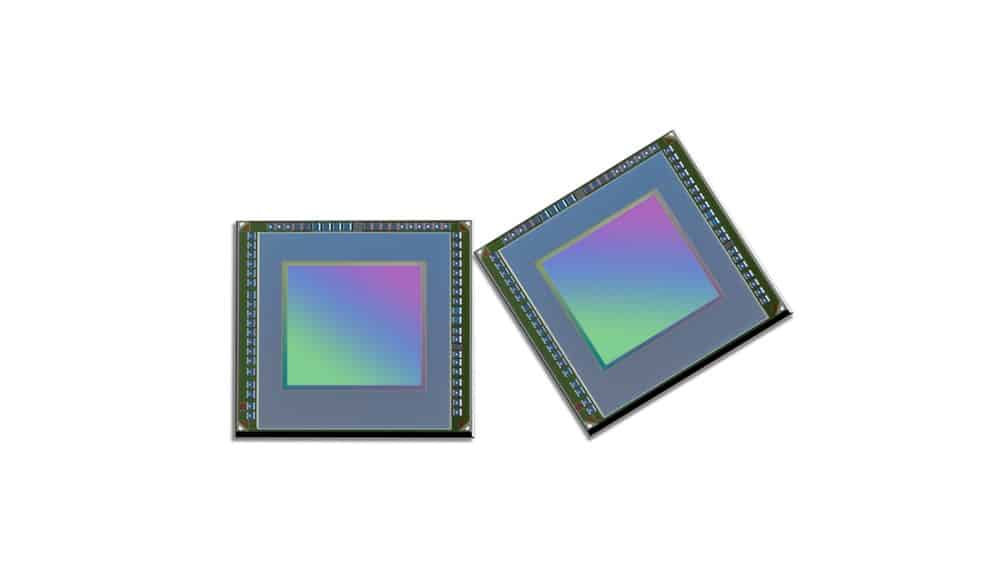
Samsung Unveils Next-Generation Sensors to Elevate Machine Vision Technology

Samsung has recently introduced two cutting-edge sensors as part of its Isocell Vizion family, poised to revolutionize machine vision technology. These sensors have been meticulously crafted to elevate 3D imaging capabilities and enhance image clarity in motion, with one holding remarkable promise for facial recognition and iris biometrics applications.

The Isocell Vizion 63D stands out by incorporating Time-of-Flight (ToF) technology, which precisely measures the time taken by light to travel from the sensor, bounce off objects, and return to the sensor. This sophisticated technology plays a pivotal role in generating 3D representations of the surrounding environment, making it exceptionally valuable for applications like virtual and augmented reality, iris biometrics, facial detection, and gesture recognition. To craft a three-dimensional perspective, the sensor gauges the phase shift between emitted and reflected light, a distinguishing feature of iToF technology that ensures exceptional accuracy.

Continue reading… “Samsung Unveils Next-Generation Sensors to Elevate Machine Vision Technology”

“Brainoware”: Biohybrid Computer Combining Human Brain Organoid and AI Shows Promise in Speech Recognition

In a groundbreaking development, researchers from the University of Indiana Bloomington (UIB) have introduced a new biohybrid computer named “Brainoware,” which merges a “brain organoid” with traditional artificial intelligence (AI). This innovative system demonstrated its potential by achieving 78% accuracy in a speech recognition task, highlighting the possibilities of enhancing computing capabilities with elements of human biology.

The rationale behind this endeavor stems from the remarkable energy efficiency of the human brain. While supercomputers require 20 megawatts of power for processing over a quintillion calculations per second, the human brain accomplishes equivalent tasks with a mere 20 watts. Inspired by this efficiency, scientists explored the idea of augmenting computers by integrating them with three-dimensional clusters of lab-grown human brain cells, known as brain organoids.

Continue reading… ““Brainoware”: Biohybrid Computer Combining Human Brain Organoid and AI Shows Promise in Speech Recognition”