AI and Blockchain Technologies Revolutionize Authentication in the Luxury Market

The global trade in counterfeit goods is staggering, with estimates ranging from $1.7 trillion to $4.5 trillion annually. Combine this with the $120 billion secondary market in fashion and accessories, and the critical need for authentication to protect brands and consumers becomes evident to all involved.

In a recent development, Entrupy, an artificial intelligence-powered authenticator, was announced as the chosen authentication provider for pre-owned luxury handbags on TikTok Shop in the United States. Utilizing a blend of AI and microscopy, Entrupy offers a unique solution to assess the authenticity of luxury items. When an item is scanned using the proprietary device and app, a series of microscopic images are captured. Subsequently, machine learning algorithms compare these images against a database containing millions of records of known authentic and counterfeit products.

Continue reading… “AI and Blockchain Technologies Revolutionize Authentication in the Luxury Market”
AI Breakthrough: Neural Network Achieves Human-Like Language Generalization

Researchers have achieved a significant milestone in artificial intelligence (AI) with the creation of a neural network capable of human-like language generalization. This remarkable AI system performs on par with humans in the crucial cognitive skill of systematically generalizing newly learned words into various contexts.

The researchers conducted tests comparing this new neural network to the AI model underlying the chatbot ChatGPT, renowned for its human-like conversational abilities. Surprisingly, the new neural network outperformed ChatGPT on the language generalization test, highlighting its potential to enhance human-AI interactions significantly.

Continue reading… “AI Breakthrough: Neural Network Achieves Human-Like Language Generalization”

Frontier Bio Revolutionizes Medical Device Testing with Lab-Grown Human Blood Vessels

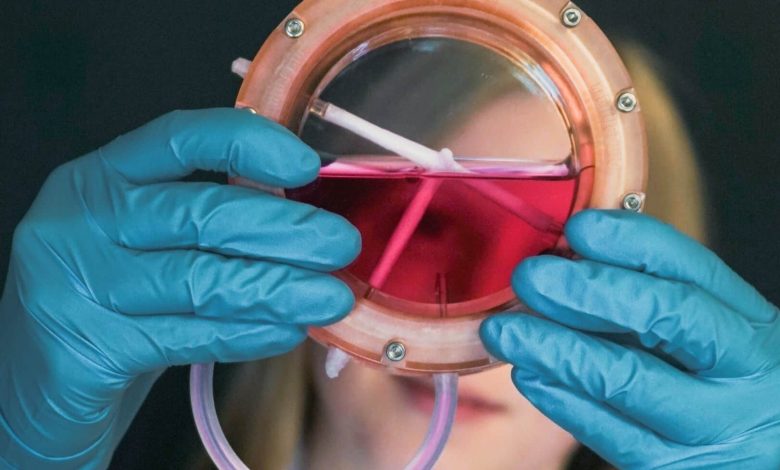
Frontier Bio Corporation, an innovative pioneer in tissue engineering, has introduced a groundbreaking method for crafting living human blood vessels, ushering in a transformative era in medical device testing. The prevailing practice for assessing the safety and efficacy of vascular medical devices involves conducting animal studies before human trials. By harnessing lab-grown blood vessels, Frontier Bio is spearheading a future where dependence on animal testing is drastically minimized, if not eradicated.

Leveraging novel tissue engineering techniques, Frontier Bio manufactures blood vessels using biodegradable polymer scaffolds infused with vascular cells, fostering growth under biomimetic conditions within a laboratory setting. Employing 3D printing technology, Frontier Bio can fabricate these vessels in intricate shapes, replicating the natural architecture of blood vessels, and even simulating disease conditions.

Continue reading… “Frontier Bio Revolutionizes Medical Device Testing with Lab-Grown Human Blood Vessels”

Affordable Precision Agriculture Technologies Make a Difference for Smallholder Farmers

In contemporary agriculture, a multitude of technological innovations, including robots, drones, temperature sensors, and moisture monitors, have revolutionized the way farms are managed. These advancements, collectively referred to as precision agriculture, contribute to enhanced efficiency, resource optimization, and profitability. However, due to the associated costs, this technology often remains beyond the reach of the majority of the world’s farmers.

Susan Amrose, a research scientist at MIT’s Global Engineering and Research (GEAR) Lab, highlights the predicament faced by many small, subsistence farmers around the globe. These farmers grapple with dwindling soil quality, water scarcity, and limited land resources while striving to meet the increasing demand for food production. The urgency to transition to mechanized practices is paramount to address these challenges.

Continue reading… “Affordable Precision Agriculture Technologies Make a Difference for Smallholder Farmers”

Google Cofounder’s Pathfinder 1 Airship Takes Flight Amid High Anticipation

Traffic congestion on the 101 highway in Mountain View, California, is expected to escalate in the coming days or weeks, with motorists eager to witness the inaugural flight of Google cofounder Sergey Brin’s colossal airship, Pathfinder 1. IEEE Spectrum has uncovered that LTA Research, the aerospace company established by Brin in 2015, to spearhead the development of airships for humanitarian and cargo transport, received a special airworthiness certificate for this helium-filled behemoth in early September.

This coveted certificate grants Pathfinder 1, the most substantial airship since the Hindenburg, the green light to commence flight tests at Moffett Field, a joint civil-military airport nestled in Silicon Valley. The airship is authorized to conduct test flights within the confines of Moffett Field and the adjacent Palo Alto airport’s airspace, soaring to heights of up to 460 meters (1,500 feet). This provides ample room for it to venture over the southern region of San Francisco Bay without obstructing the flight paths of planes traveling to or from San Jose and San Francisco International commercial airports.

Continue reading… “Google Cofounder’s Pathfinder 1 Airship Takes Flight Amid High Anticipation”

Unveiling Venus: The Quest to Tame Our ‘Evil Twin’ Planet

Debbie Senesky, an Associate Professor at Stanford University in the Aeronautics and Astronautics Department, believes Venus is not Earth’s sister planet but rather its malevolent twin. Venus’s environment is nothing short of hellish, with surface temperatures soaring to a blistering 480 degrees Celsius, surface pressures a staggering 90 times that of Earth, and an unpleasant scent of rotten eggs, all due to the presence of sulfur compounds.

Senesky raises a compelling question: Could studying Venus’s evolution shed light on Earth’s environmental history and aid in averting a similar fate via climate change? Billions of years ago, Venus might have resembled Earth. Understanding this transformation could offer valuable insights into preserving Earth’s habitability.

Continue reading… “Unveiling Venus: The Quest to Tame Our ‘Evil Twin’ Planet”

Navigating the Evolving Landscape of Gene Therapy: Advances and Challenges

The realm of gene therapy is ever-changing, with new possibilities and challenges continually emerging. With over 6,000 genetic disorders and the list growing, gene therapy stands as a potential panacea for monogenic diseases by altering an individual’s genetic makeup. Notable milestones, such as alipogene tiparvovec’s approval in 2012 and voretigene neparvovec’s endorsement in 2017, signified the transformative power of gene therapy. However, since these landmarks, the field has witnessed numerous developments and confronted its share of obstacles.

Gene Therapy: A Ray of Hope for Neuromuscular and Neurodegenerative Diseases

Neuromuscular diseases (NMDs) and neurodegenerative diseases (NDDs) are often progressive, life-shortening illnesses, many of which lack viable treatments. For this reason, NMDs and NDDs with genetic origins have become promising targets for gene therapy, aiming to address the root cause—the defective genes.

A significant turning point occurred in 2019 when the US Food and Drug Administration approved onasemnogene abeparvovec, an AAV therapy designed to combat spinal muscle atrophy (SMA). This marked a pivotal moment in NMD treatment. SMA, linked to mutations in the SMN1 gene, results in the gradual loss of motor neurons, leading to progressive muscle weakness and, in severe cases, respiratory failure. Onasemnogene abeparvovec involves delivering a functional copy of SMN1 via an AAV9 vector, administered through intravenous injection. Clinical trials showed improved functional and survival outcomes compared to the natural progression of the disease.

Continue reading… “Navigating the Evolving Landscape of Gene Therapy: Advances and Challenges”

ZenML: Bridging Open-Source AI Tools for Tailored Solutions

ZenML is positioning itself as the linchpin in the world of open-source AI tools. This open-source framework facilitates the creation of pipelines that can be harnessed by data scientists, machine-learning engineers, and platform engineers, enabling seamless collaboration in the development of new AI models.

ZenML is noteworthy because it empowers companies to construct their private AI models, albeit not on the scale of GPT-4. These companies can craft smaller, more specialized models that precisely meet their unique requirements. This approach reduces their reliance on external API providers like OpenAI and Anthropic.

Continue reading… “ZenML: Bridging Open-Source AI Tools for Tailored Solutions”

The Ongoing Evolution of AI in Medicine: Challenges and Hopes

Jordan Perchik commenced his radiology residency at the University of Alabama at Birmingham during what he refers to as the “AI scare” in the field. In 2018, just two years after computer scientist Geoffrey Hinton boldly proclaimed that radiologists would soon be rendered obsolete by machine-learning tools, he encountered a significant drop in applications for radiology programs. Hinton, often dubbed the godfather of artificial intelligence (AI), predicted that these AI systems would soon surpass human capabilities in reading and interpreting medical scans and X-rays. Radiology trainees like Perchik worried about the future of their profession.

Fast forward seven years, and radiologists remain very much in demand. While AI-based tools have become integral to medical care, surveys indicate that only a small proportion of physicians, ranging from 10% to 30%, have actually used clinical AI tools. Their attitudes vary from cautious optimism to outright mistrust. The skepticism stems from concerns about the quality and safety of AI applications. This skepticism sometimes leads to the abandonment of the latest AI approaches.

Continue reading… “The Ongoing Evolution of AI in Medicine: Challenges and Hopes”

The Future of Gaming: Mind-Controlled VR and the Evolution of Immersive Experiences

In the dynamic realm of gaming, the future has arrived. With tireless efforts, virtual reality (VR) and neurotechnology companies are uniting science and imagination to create gaming experiences beyond our wildest dreams. Gone are the days of unwieldy and impractical VR headsets; today’s focus is on delivering the utmost in graphics and intuitive controls for an immersive gaming adventure.

To attain this goal, VR tech enterprises are joining forces with neuroscience experts to enhance both the technology and user interaction. At the forefront of their aspirations lies mind-controlled gaming, where brain-computer interfaces (BCIs) empower players to manipulate the game solely with their thoughts. This concept has intrigued researchers for years, recognizing it as the most “naturalistic” way to engage in gaming.

Continue reading… “The Future of Gaming: Mind-Controlled VR and the Evolution of Immersive Experiences”

Scientists Develop Groundbreaking Bioactive Hydrogel for Tissue Regeneration

Researchers at UNSW Sydney have pioneered a groundbreaking material that could revolutionize the cultivation of human tissue in laboratories and enhance its application in medical procedures. This novel material belongs to the family of hydrogels, known for their similarity to the “squishy” substances found in living organisms, such as animal cartilage and plant seaweed. Hydrogels offer immense potential in biomedical research by mimicking human tissue conditions, facilitating cell growth in laboratory settings.

While human-made hydrogels have been employed in various products like food, cosmetics, contact lenses, and absorbent materials, they have also been utilized in medical research to seal wounds and replace damaged tissue. Nonetheless, these synthetic hydrogels often fall short in replicating the complex properties of authentic human tissue.

Continue reading… “Scientists Develop Groundbreaking Bioactive Hydrogel for Tissue Regeneration”

Google’s AR Glasses Concept vs. The New Dual Screen Interpreter Mode on Pixel Fold

Exactly one year ago, Google unveiled an intriguing concept at its I/O developer conference: a pair of augmented reality (AR) glasses that aimed to revolutionize the way we communicate. Although this concept lacked a formal name (and still does), it showcased the practicality of digital overlays, with a focus on real-time language translation during conversations. Unlike the earlier Google Glass, this concept emphasized enhancing accessibility in daily communication rather than indulging in magic spells or playful cartoons.

The unique aspect of these AR glasses was their ordinary appearance, breaking away from the cyborg-like aesthetics of previous AR and VR devices. Despite the promising demonstration, Google remained relatively silent about the product since its unveiling.

Continue reading… “Google’s AR Glasses Concept vs. The New Dual Screen Interpreter Mode on Pixel Fold”
Discover the Hidden Patterns of Tomorrow with Futurist Thomas Frey
Unlock Your Potential, Ignite Your Success.

By delving into the futuring techniques of Futurist Thomas Frey, you’ll embark on an enlightening journey.

Learn More about this exciting program.