A new cryogenic 3D printing technique could one day enable fabrication of off-the-shelf artificial muscle fibres, according to research published in Advanced Materials.
By Katie Fegan
Printing synthetic tissue that mimics the structure of muscle remains a major challenge in tissue engineering. Muscle fibres are anisotropic, meaning that their physical properties, including the ability to transmit mechanical forces, are direction dependent. Introducing a temperature gradient during the fabrication process, from sub-zero temperatures upwards, is a simple way of creating tissue scaffolds with anisotropic microscale pores. However, the freezing process is harmful to cells encapsulated within the scaffold.
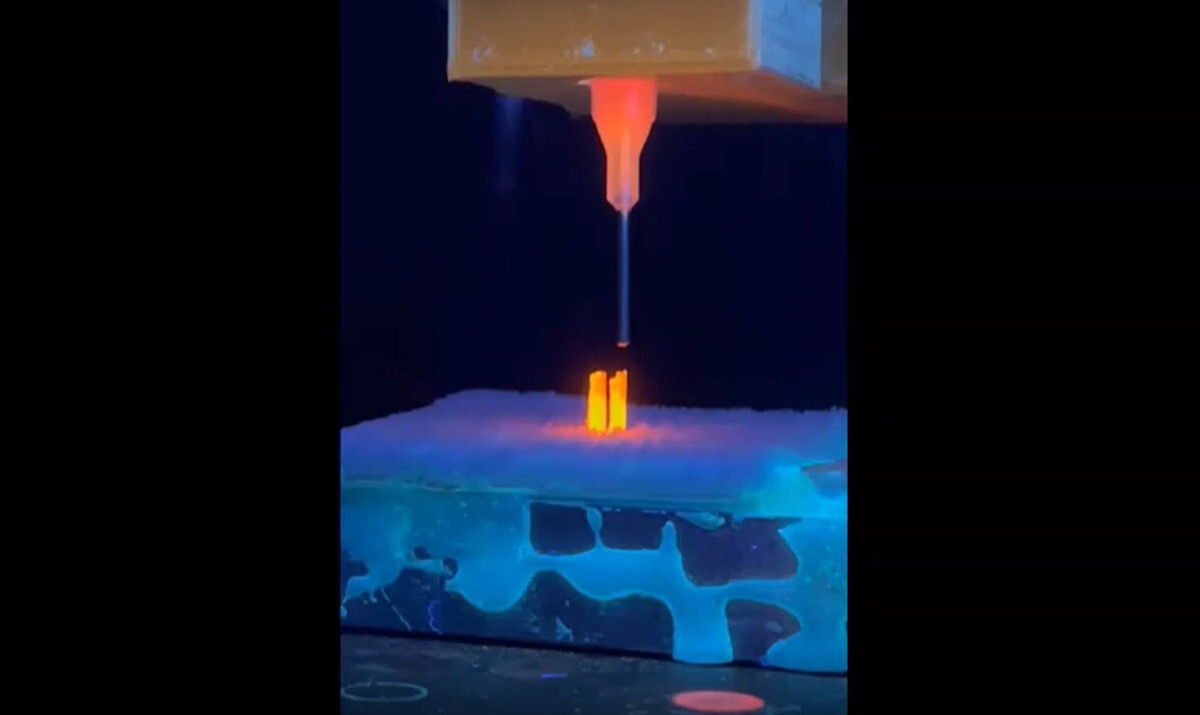
Enter cryobioprinting: an all-in-one fabrication and preservation technique developed by scientists at Brigham and Women’s Hospital and Harvard Medical School. Cryobioprinting combines a customized freezing plate with cryoprotected bioinks to produce cell-laden structures with anisotropic microchannels. The scaffolds can be stored in liquid nitrogen for several months and revived on demand, a feature that would allow pre-made products to be used in a clinical setting.
“Cryobioprinting can give bioprinted tissue an extended shelf life and allows convenient transport of tissue between sites, which is something conventional bioprinting methods do not readily enable,” says senior author Y Shrike Zhang. “[Cryobioprinting] may have broad application in tissue engineering, regenerative medicine, drug discovery and personalized therapeutics.”
Continue reading… “Cryobioprinting could make off-the-shelf tissue-engineered structures a reality”