3D-Printed Auxetic Sensors: Redefining Touch for Wearables, Robotics, and Healthcare

The future of sensing technology may not lie in better electronics, but in stranger geometry. Auxetic metamaterials—structures that do the opposite of what we expect when squeezed—are now stepping into the spotlight. Instead of bulging outward when compressed, they contract inward, concentrating strain in ways nature almost never does. For decades, this quirk of physics was a lab curiosity. Now, thanks to 3D printing, auxetic designs are powering a new class of tactile sensors with applications in robotics, healthcare, and wearable technology.

Continue reading… “3D-Printed Auxetic Sensors: Redefining Touch for Wearables, Robotics, and Healthcare”

Heavy Electrons and the Birth of a New Quantum Age

Quantum computing has long promised a revolution, but the path forward has been defined mostly by exotic setups—supercooled superconductors, fragile qubits, and billion-dollar labs. Now, researchers in Japan have uncovered something that could redraw the map entirely: “heavy fermions,” electrons that behave as if they have gained extraordinary mass, displaying quantum entanglement governed by Planckian time—the ultimate clock of quantum mechanics. This is not just a physics curiosity. It could be the foundation for a new type of quantum computer.

Continue reading… “Heavy Electrons and the Birth of a New Quantum Age”

6G Hyper-Space Communication: Erasing the Boundary Between Earth and Sky

The future of connectivity is no longer about faster downloads on your phone. It’s about stitching Earth and sky into one seamless network. For the first time, Korean researchers have demonstrated integrated terrestrial-satellite 6G hyper-space communication in real flight tests—a breakthrough that signals the dawn of a communication system where no place, and no moment, is offline.

Continue reading… “6G Hyper-Space Communication: Erasing the Boundary Between Earth and Sky”

AI-Assisted Robotic Surgery: Redefining the Operating Room

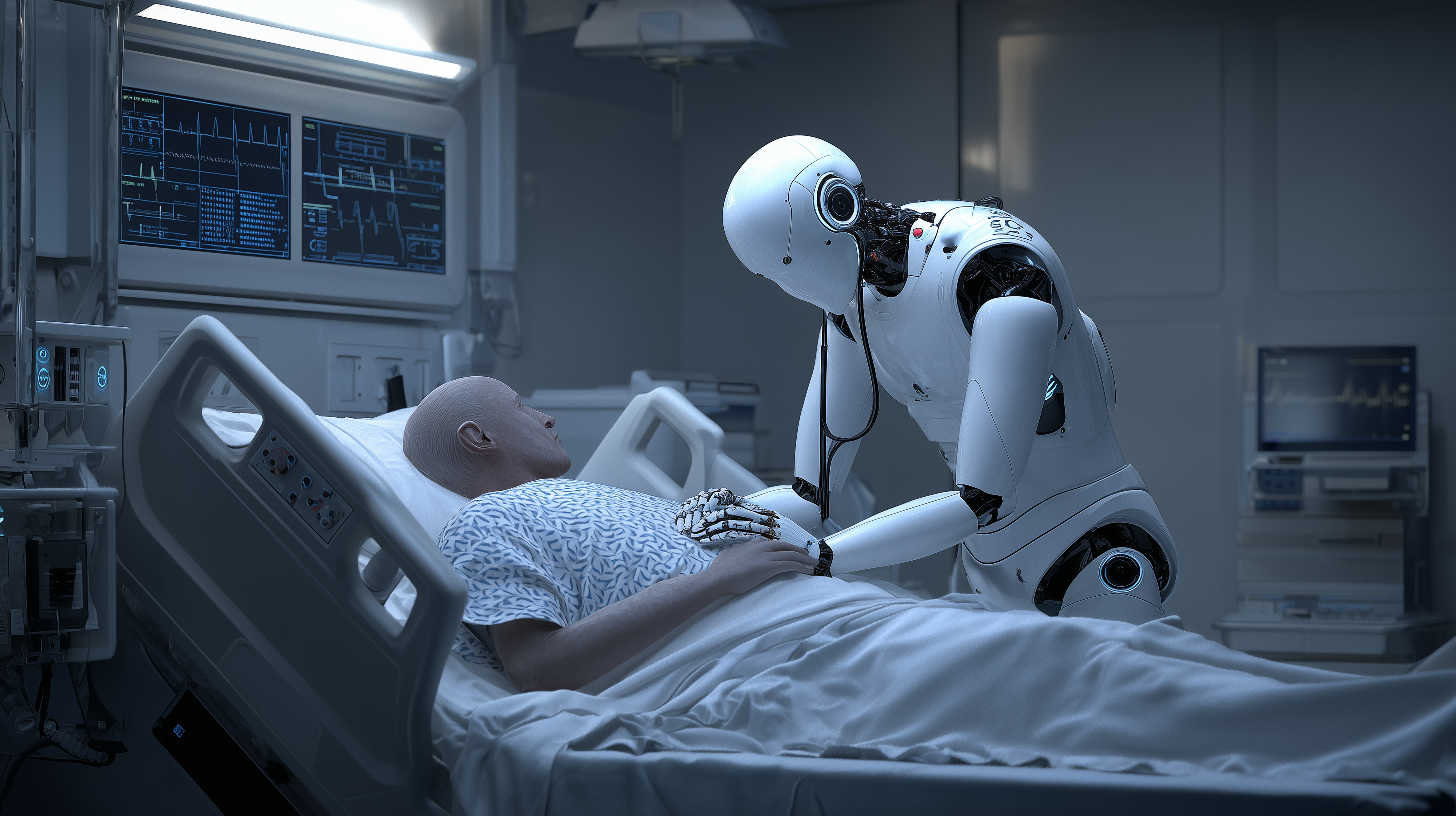
The operating room has long been the stage for human skill, steady hands, and judgment honed over decades. But a new player is stepping into this sacred space—artificial intelligence fused with robotics—and it’s proving to be faster, safer, and more precise than anything we’ve seen before. A sweeping review of 25 studies conducted between 2024 and 2025 has found that AI-assisted robotic surgery can cut complications by up to 30%, shorten recovery times, and even reduce hospital costs. In short, the surgical revolution is here, and the scalpel may soon share equal billing with the algorithm.

Continue reading… “AI-Assisted Robotic Surgery: Redefining the Operating Room”

Why the Next Tech Revolution Won’t Come From Silicon Valley

For decades, Silicon Valley has been shorthand for the future. From microchips to social media, smartphones to AI startups, the Bay Area has claimed center stage as the birthplace of disruptive technology. But the next leap forward will not come from another app or platform—it will come from power. Not just computing power, but literal energy.

Continue reading… “Why the Next Tech Revolution Won’t Come From Silicon Valley”

When Silence Speaks: The Future of Thought-to-Speech Implants

For decades, the ability to “read minds” was confined to the world of science fiction. Heroes with telepathic powers and villains with sinister mental control lived only in our imagination. But now, a quiet revolution is underway in neuroscience that is pulling this fantasy into reality. At Stanford University, researchers have achieved something extraordinary: a brain implant coupled with artificial intelligence that can translate silent thoughts into words in real time. For people who have lost the ability to speak due to paralysis or neurological injury, this is nothing short of a miracle. But for society at large, it raises questions so profound they could reshape the very definition of human privacy.

Continue reading… “When Silence Speaks: The Future of Thought-to-Speech Implants”

AI-Engineered Nanolattices: Stronger Than Steel, Lighter Than Foam

The strongest materials of the last century were discovered with hammers, furnaces, and patience. The strongest materials of the next century will be discovered with prompts. In labs where lasers etch features thinner than a red blood cell and algorithms hunt Pareto fronts, researchers have now taught artificial intelligence to design a carbon nanolattice that carries the compressive punch of carbon steel while weighing about as much as Styrofoam. That is not a metaphor. It’s a new class of matter—architected by code, born in light, and refined in heat—that could remake aerospace, mobility, construction, sport, and any place where every gram and every Newton matter.

Continue reading… “AI-Engineered Nanolattices: Stronger Than Steel, Lighter Than Foam”

The Rise of the Founder-Creator-Investor: The New Power Model of Entrepreneurship

For decades, founders, creators, and investors have lived in separate worlds. Founders built companies. Creators built audiences. Investors wrote checks. Occasionally, the lines blurred—but rarely in a systematic way. That separation is ending. A new archetype is emerging, and it is set to rewrite the rules of entrepreneurship: the Founder-Creator-Investor (FCI).

This model isn’t about side hustlers dabbling in content or investors posting the occasional blog. It’s an operational system where three identities—operator, storyteller, and capital allocator—reinforce one another in a virtuous cycle. Each role magnifies the power of the others, creating an engine of influence and growth that traditional VCs, single-focus founders, and pure creators can’t compete with.

Continue reading… “The Rise of the Founder-Creator-Investor: The New Power Model of Entrepreneurship”

The $1.8 Trillion Education Apocalypse: Why Traditional Universities Will Vanish Faster Than Blockbuster

By Futurist Thomas Frey

The $1.8 Trillion Lie That’s About to Implode

Here’s a prediction that will either make me look like a prophet or a madman by 2030: The traditional university system—with its ivy-covered buildings, tenured professors, and four-year degree programs—will become as irrelevant as typewriter repair shops, and the collapse will happen faster than anyone thinks possible.

I’m not talking about gradual decline or gentle evolution. I’m talking about sudden, catastrophic disruption that will leave educational administrators wondering what hit them. The signs are everywhere if you know how to read exponential curves, and the writing isn’t just on the wall—it’s spray-painted in neon colors across the entire facade of higher education.

The trigger? A perfect storm of artificial intelligence, blockchain verification, global connectivity, and economic desperation that’s about to make the newspaper industry’s collapse look like a gentle summer breeze.

Continue reading… “The $1.8 Trillion Education Apocalypse: Why Traditional Universities Will Vanish Faster Than Blockbuster”

Over-Honking: The Future of Indirect Influence in a Networked World

How a traffic light revelation reveals the hidden architecture of 21st-century communication

By Futurist Thomas Frey

Picture this: You’re at a red light. It turns green. The car directly in front of you sits motionless, but you can see there’s another vehicle ahead blocking the way. Logic says wait. Your horn finger says otherwise. You press down, sending your frustration sailing over the immediate obstacle toward its true target—a perfect example of what I call “over-honking.”

This seemingly trivial traffic moment reveals something profound about how influence actually works in our hyperconnected age. Over-honking isn’t just about cars—it’s become the dominant communication paradigm of our time, reshaping everything from social movements to corporate strategy to personal relationships. And understanding it might be the key to navigating the complex influence networks that will define our future.

Continue reading… “Over-Honking: The Future of Indirect Influence in a Networked World”

The First Personalized Spine Implant: 3D Printing Ushers in a New Era of Surgery

For decades, spinal surgery has walked a fine line between miracle and compromise. Surgeons could remove damaged discs, stabilize fragile vertebrae, and restore mobility—but always with standardized implants designed to fit “most people.” Patients were asked to adapt their unique anatomy to mass-produced devices, often at the cost of mobility, comfort, or repeat procedures. Now, that compromise may be over. In July 2025, UC San Diego Health achieved a milestone that signals the dawn of a new era: the world’s first cervical spine surgery with a fully personalized 3D-printed titanium implant.

Continue reading… “The First Personalized Spine Implant: 3D Printing Ushers in a New Era of Surgery”

Breathing the Future: The First Pig Lung Transplant Into a Human

In medicine, some moments arrive that feel like science fiction made real. One of those moments just happened: scientists in China have transplanted a genetically engineered pig lung into a human body—and kept it alive for nine days. Reported in Nature Medicine, this milestone marks the first time a lung from another species has functioned inside a person, and while challenges remain, it signals a future where the global shortage of donor organs may no longer be a death sentence.

Continue reading… “Breathing the Future: The First Pig Lung Transplant Into a Human”
Discover the Hidden Patterns of Tomorrow with Futurist Thomas Frey
Unlock Your Potential, Ignite Your Success.

By delving into the futuring techniques of Futurist Thomas Frey, you’ll embark on an enlightening journey.

Learn More about this exciting program.