The new MiamiCoin, a cryptocurrency offered through the CityCoins initiative, is available for mining starting Tuesday.
MIAMI, FL — Miami has become the first city with its own cryptocurrency, a digital currency.
The new Miami Coin became available for mining Tuesday through the CityCoins initiative, which generates funds for municipalities through city-specific cryptocurrencies.
“MiamiCoin ($MIA) is a way for people to support the Magic City and grow its crypto treasury while earning BTC and STX yield for themselves,” according to the CityCoins website. “MiamiCoin can be mined or bought by individuals who want to support the Magic City and earn crypto yield from the Stacks protocol.”
If the government works with private industry through strategic public-private partnerships, the U.S. can best address the threats posed by orbital debris and create sustainable policies for safe space exploration.
With Richard Branson and Jeff Bezos soaring into suborbital space, three U.S. flights to the International Space Station (ISS) in July, and SpaceX delivering 88 satellites to orbit in the last six weeks, space traffic is surging. And this is just the beginning of increased commercial and governmental activity in space.
August will see several more trips to the ISS and more launches of satellites. Additionally, the Biden administration signed an agreement with the European Space Agency to use more satellites to address climate change through earth science research. This increased space traffic serves a wide array of purposes and represents vast investments by the private space industry and government. But these investments are going to increasingly be jeopardized by the massive amount of space junk already circling Earth.
There’s plenty of room to fly up there, but, believe it or not, NASA estimates there are already 23,000 pieces of debris larger than 10 centimeters and over 500,000 pieces of smaller junk in orbit. This space junk, or orbital debris, travels at high speeds and even a small piece can cause serious damage or destruction if it hits a spacecraft or satellite.
Rendering of an autonomous replenishment platform. (Photo: Sea Machines.)The Department of Defense (DoD) contract aims to produce autonomous full-scale ocean-going vertical take-off landing replenishment platforms
The US DoD’s Defense Innovation Unit (DIU) has awarded Sea Machines a $3million contract to develop an autonomous full-scale ocean-going replenishment platform.
The contract builds on earlier work by Sea Machines at the behest of the DoD to engineer, build and demonstrate system kits capable of transforming commercial barges into platforms that can land and replenish military aircraft.
That work is now transitioning from proof of concept to a design and trial stage.
Sea Machines founder and CEO Michael Johnson said: ‘The extension of our contract represents the intersection of traditional sectors, such as government, and the capabilities of autonomous technology.’
The prototype kit will include the company’s SM300 autonomous command and control system.
One of the weirdest aircraft to fly in EAA AirVenture this year is an electric VTOL. The Opener Blackfly is an aircraft that you can fly without a pilot license, but there’s a catch.
Every summer, thousands of aviation enthusiasts and Experimental Aircraft Association members descend on Wittman Regional Airport in Oshkosh, Wisconsin, to enjoy a festival of all things flight. You’ll see all sorts of machines at an EAA AirVenture from vintage military aircraft and one-off experiments to the latest concepts. One of the weirder vehicles to show up at AirVenture this year was the Opener Blackfly.
We’ve covered this machine a couple of times before. It’s been described as a flying car by the New York Times, but I don’t think that’s an appropriate designation. This cannot drive on the ground and its flying characteristics seem closer to a helicopter or drone than a plane.
The pilot sits in the middle with fixed wings in front and rear. On those wings are four propellers that allow it to take off and land vertically with a takeoff run of only 36 inches.
Researchers at the Massachusetts Institute of Technology (MIT) have created a nanoparticle diagnostic tool that can detect cancer cells in urine.
The tool, invisible to the naked eye at less than 100 nanometres wide, could also be modified to work as an imaging agent to highlight a confirmed cancerous tumour’s location from a scan.
According to the researchers, the nanoparticle tool, once approved for human use, could be incorporated into routine medical urine tests to screen for traces of cancer cells.
If cancer is found, the patient could be given the nanoparticle to ingest before undergoing a Positron Emission Tomography (PET) imaging scan to find the source of the disease.
In efforts to fight obesity and enhance drug absorption, scientists have extensively studied how gastric juices in the stomach break down ingested food and other substances. However, less is known about how the complex flow patterns and mechanical stresses produced in the stomach contribute to digestion.
Researchers from France, Michigan, and Switzerland built a prototype of an artificial antrum, or lower stomach, to present a deeper understanding of how physical forces influence food digestion based on fluid dynamics. In Physics of Fluids, by AIP Publishing, they reveal a classifying effect based on the breakup of liquid drops combined with transport phenomena derived from complementary computer simulations.
The relevant parts of the stomach are the corpus, where food is stored; the antrum, where food is ground; and the pylorus, or pyloric sphincter, the tissue valve that connects to the small intestine. Slow-wave muscle contractions begin in the corpus, with wave speed and amplitude increasing to form the antral contraction waves (ACWs) as they propagate toward the pylorus.
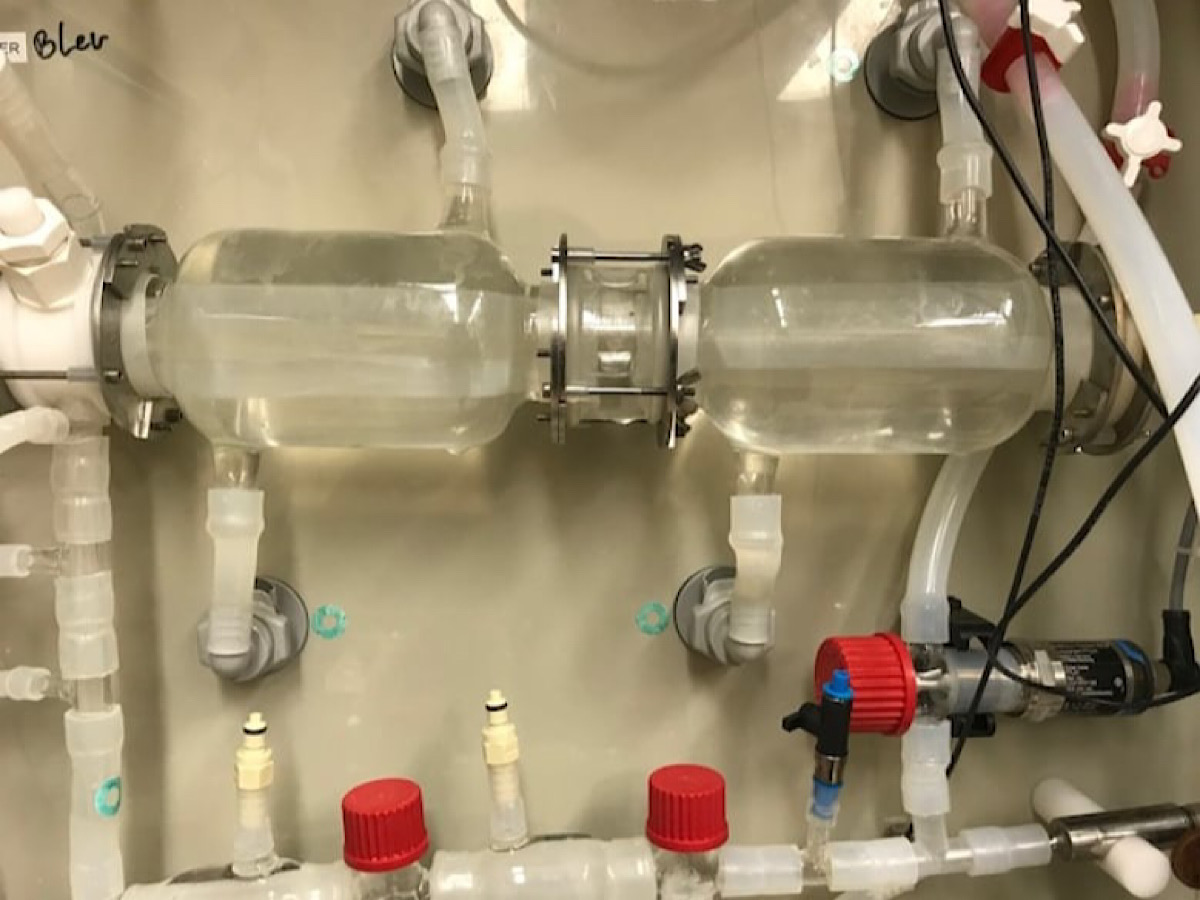
The researchers’ antrum device consists of a cylinder, capped at one end to imitate a closed pylorus, and a hollow piston that moves inside the cylinder to replicate ACWs. As verified through computer simulations and experimental measurements, the protype produces the characteristics of retropulsive jet flow that exist in the antrum.
Food disintegration is quantified by determining the breakup of liquid drops in flow fields produced by ACWs. The researchers studied different model fluid systems with various viscosity to account for the broad physical properties of digested food. The drop size and other parameters resemble conditions in a real stomach.
The bipartisan infrastructure bill has a provision that mandates the unproven technology be incorporated into all passenger vehicles within the decade.
Buried deep in the 2,700-page bipartisan infrastructure billis a provision that mandates all cars manufactured from 2027 onwards be equipped with a drunk driver monitoring system, in the hopes of ending a behavior that results in about 10,000 deaths in the U.S. every year. If passed with this provision, the bill would give a firm release date to a research program the federal government and an automotive industry group have collaborated on for more than a decade.
Since 2008, an alphabet soup of acronym organizations have been working on a public-private partnership to invent a new technology that can prevent drunk driving. The National Highway Traffic Safety Administration (NHTSA) partnered with the Automotive Coalition for Traffic Safety (ACTS), an industry group representing all the major automakers, to form the Driver Alcohol Detection System for Safety Program, which goes by the unfortunate acronym of DADSS.
DADSS is working on two separate detection systems. One detects blood alcohol levels in a driver’s breath through ambient air in the car cabin, supposedly distinguishing the driver’s breath from that of any passengers. The other uses a touch sensor with infrared lights that can be incorporated into the push-start engine button to detect blood alcohol level through the skin. Both are designed to be passive monitoring systems, meaning the driver doesn’t have to do anything to be tested. If, in theory, the system detects a blood alcohol level above the legal limit, the car will not be allowed to drive, but can remain on to power the climate control or charge a phone. The technology will be open-source licensed, so any auto supplier or manufacturer can use it “on the same terms,” although it won’t be free.
It’s abundantly clear that fossil fuel-driven transport needs to be replaced, but more rail infrastructure is only as “green” as the materials and energy it uses. Currently under construction, the UK’s second high-speed rail network, HS2, may use concrete 3D printing technology to build concrete slabs on-site. The contractor, Skanska Costain STRABAG Joint Venture (SCS JV) claims that it will reduce the project’s carbon footprint by up to 50 percent.
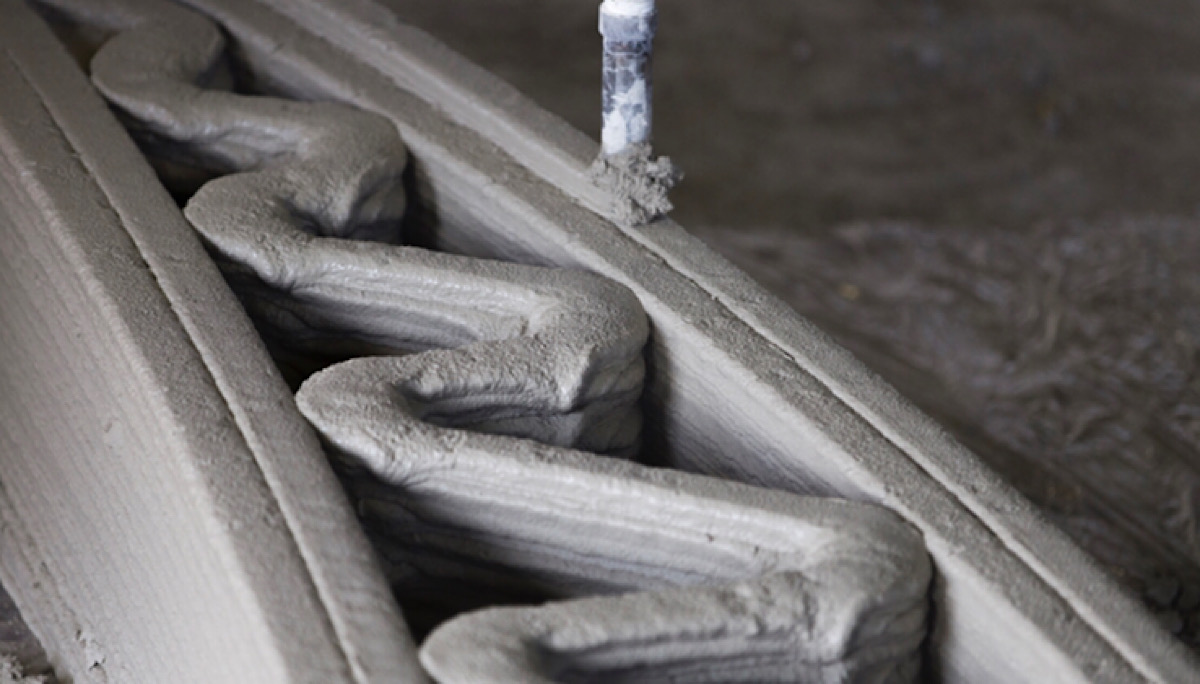
Dubbing the technology “Printfrastructure”, SCS JV says that it will be using a mobile concrete 3D printer to 3D print elements of the rail network on-site, rather than transporting pre-cast slabs by road and lowering them into place via crane. This will allow for the construction of pieces in physically-restricted spaces, prevent disruption of public spaces and roadways that would be required by traditional methods, and make it possible to work during normal daylight hours, rather than at night, when the trains have stopped running.
SCS JV is a joint venture between Costain, a century-old British construction firm involved in the building of the Chunnel between France and England, and Skanska, a century-old Swedish company that’s renovated U.N. headquarters, built the World Trade Center Transportation Hub and MetLife stadium, among other notable projects. Their legacies should be ample evidence that they can take on HS2 and additive construction, but their legacies have also provided ample breeding ground for controversies and corruption.
CyBe Robotic Arm for additive construction. Image courtesy of CyBe.
Working on the project are ChangeMaker3D, a UK-based firm that collaborates with additive construction company CyBe, which has developed a mobile industrial robotic arm that deposits the firm’s own concrete material. ChangeMaker3D will be teaming with Versarien, a material expert, to incorporate graphene into the 3D printing process. So far, the use of graphene has not been used in additive construction, but the project team says, “Concrete with microscopic strands of graphene only several atoms thick running through it like stripes in a stick of rock replaces traditional steel to help drive improved site safety, greater construction flexibility, shorter build time and a smaller carbon footprint.”
This, in turn will reduce the carbon footprint by up to 50 percent, according to SCS JV, in part due to the lack of steel, cranes, and delivery trucks. Another factor contributing to reduced CO2 emissions is the type of pattern that can be produced with 3D printing. Unlike casting, additive construction is capable of making lattice structures that reduce total material use overall.
The CyBe robotic arm 3D printing the drone laboratory in Dubai. Image courtesy of CyBe.
SCS JV Temporary Works Manager, Andrew Duck, said: “Automation enabled by Printfrastructure’s 3D reinforced concrete printing creates a factory-like environmental that delivers a high-quality product that both increases efficient use of materials, and reduces our carbon footprint. It is important that we give technologies such as Printfrastructure the opportunity to flourish because of the possibilities it offers the industry to make a step change in how projects are delivered.”
Numerous studies have suggested that tends to have a much lower carbon footprint than car or air transportation. During the construction phase, emissions may go up, however. China Dialogue suggested that coal use associated with steel and cement production increased two years in a row in 2018, with CO2 emissions thus going up. Though construction of high speed rail infrastructure can result in 58 t– 176 t of CO2 per km of line and year, an analysis by International Union of Railways determined “that the carbon footprint of high speed rail including operation, track construction and rollingstock construction is about 14 to 16 times less than transport by private car or airplane.”
Carbon emission in t CO2 due to construction per km of line and year for high speed rail. Image courtesy of International Union of Railways.
Carbon Footprint of traffic modes on route Valence – Marseille in France for high speed rail. Image courtesy of International Union of Railways.
The amount of greenhouse gasses that can be reduced, however, is determined by the energy source for electric trains. According to Railway Technology, “The high-speed trains between Spain and France run on renewable electrical energy and have a low carbon footprint, with every 100km travelled enabling an emission reduction of around 15kg of CO2.”
HS2 is also aiming to use alternative fuel sources at its construction sites, including hydrogen power. If the HS2 project really does deliver, then even the construction process may use fewer fossil fuels. That may be a big “if”. Not only do we have to see that graphene can be incorporated into the 3D printing process, but we also have to see the HS2 project actually stay on track. In the U.S., high speed rail projects have been regularly derailed by such large oil interests as the Koch brothers. In the U.K., the eastern leg of HS2 has been attacked as “unachievable”.
For those who believe rail may be the answer to decarbonizing transport, let’s hope that that’s not the case. Proof of concept trials for the additive component of HS2 are scheduled to begin in Spring 2022. Meanwhile, Changemaker 3D is also working with the British government to possibly 3D print wastewater distribution chambers in the country.
Tetra Aviation’s new electric aircraft is all about numero uno. The exclusive, single-seat eVTOL, dubbed the Mk-5, will allow just one traveler to fly up to 100 miles safely, silently and sans any emissions.
The aircraft, which has been roughly three and a half years in the making, was recently unveiled at the week-long EAA AirVenture event at the Wittman Regional Airport in Wisconsin. The futuristic design looks kind of like a pod racer from a sci-fi flick and has the innovative tech to match.
Forged from aluminum and carbon-fiber-reinforced polymers (CFRP), the Mk-5 measures roughly 28 feet wide by 20 feet long by 7 feet high and weighs just over 1,000 pounds when empty. It’s equipped with some 32 vertical rotors on four fixed-wing planes along with one horizontal thrust at the rear to help it soar through the skies.
“It is not surprising sellers are opting to rent, due to the all-time high housing prices.”
By Shawn M. Carter
The housing market is red-hot and showing few signs of slowing down. Home prices were at a median $386,888 in June, according to Redfin, up 24% since last June. And demand is high: The average house lasted just 14 days on the market, a whopping 25 fewer than last year.
While that seems like welcome news to sellers looking to cash in, 45% of people told Rent.com that even after a home sale, they don’t plan to buy another house right away.
Researchers polled 2,800 homeowners in June to see how the crisis changed their plans. Here’s why people are forgoing the purchase of another house and what they’re doing instead.
Scientists mailed freeze-dried mouse sperm on a postcard and birthed pups on the other side, a major advance for affordable long-distance sperm transfer.
It’s always a delight to receive a thoughtful letter in the mail, but scientists in Japan have added a whole new layer to the experience by sending each other postcards containing freeze-dried mouse sperm. What’s more, the researchers were able to produce viable mouse offspring with the sperm that landed in their mailboxes after days in the post.
The unprecedented experiment could transform the way that sperm from many different species is transported, pioneering applications for “infertility treatments, livestock production, maintenance of strains of genetically modified individuals, and conservation of genetic resources, including those of endangered species,” according to a study published on iScience on Thursday.
“This is the first report in the world [to show] that freeze-dried mouse sperm can be preserved in a thin plastic sheet (0.2 millimeters) instead of conventional glass ampoules,” said Daiyu Ito, a PhD student at the University of Yamanashi who led the new study, in an email.
“We went through various trials and errors and finally succeeded,” he continued. “When we were able to develop a method of preservation of mouse sperm freeze-drying on a sheet, we thought that mouse sperm should be able to be mailed on a postcard by this method” which is the “absolute cheapest” technique ever developed to transport sperm.
The wearable ‘pancreas’ connects to a patient’s smartphone, using an algorithm to monitor blood glucose levels and automatically give insulin as needed.
Patients with type 2 diabetes benefit from wearing an ‘artificial pancreas’ run by a computer algorithm, a new study has found.
The device helped people monitor how much sugar was in their blood and automatically administered the exact amount of insulin needed to bring high sugar levels down. It even learned their eating habits to find patterns in glucose intake.
After 20 days with the artificial pancreas, patients had a more consistently safe blood glucose level and had reduced their risk of lengthy ‘hypos’ – serious symptoms that occur when a person has dangerously low sugar levels.
The study focussed on patients living with type 2 diabetes and kidney failure, a ‘particularly vulnerable group’ according to Dr Charlotte Boughton from the Wellcome Trust-MRC Institute of Metabolic Science at the University of Cambridge, who led the research.
“Managing their condition – trying to prevent potentially dangerous highs or lows of blood sugar levels – can be a challenge,” she said.
“There’s a real unmet need for new approaches to help them manage their condition safely and effectively.”