Revolutionary 3D Printing Technique Opens New Doors for Bone Tissue Research and Drug Development

In a groundbreaking development, researchers have harnessed the power of low-cost FDM 3D printing technology to create scaffolds that closely mimic the mineral properties of natural bone tissue. By combining poly(lactic-co-glycolic acid) (PLGA) with hydroxyapatite (HA), they’ve created a base structure that offers a realistic environment for bone research. This innovative method significantly lowers the barrier to entry for labs, as it eliminates the need for expensive bioprinters traditionally required for such work.

While high-end bioprinters can cost hundreds of thousands of dollars, this new technique shows that even inexpensive desktop 3D printers can be used to produce functional scaffolds that are suitable for complex biomedical research. This democratization of technology could allow a wider range of labs, especially those with limited funding, to engage in advanced bone tissue research.

Continue reading… “Revolutionary 3D Printing Technique Opens New Doors for Bone Tissue Research and Drug Development”

Innovative 3D-Printed Furniture Shines at Designblok 2024, Winning Best Designer Presentation

At the 2024 Designblok exhibition, four forward-thinking designers—winners of the 2023 Designblok Diploma Selection—collaborated on a groundbreaking showcase that explored the practical applications of 3D-printed wood materials in furniture design. Their innovative pieces earned them the prestigious 2024 Designblok Award for Best Designer Presentation. Partnering with Additive Tectonics, the designers demonstrated how 3D printing can be utilized to create functional, sustainable, and aesthetically pleasing furniture while improving production efficiency.

Friedrich Gerlach’s Lumo Sofa is a standout example of how 3D printing can be leveraged for both sustainability and design innovation. The sofa features a stackable structure that maximizes the printer bed space, reducing material waste and improving production efficiency. Its seat is made from 100% wool fabric and filling, making it fully biodegradable, while the simple yet elegant design ensures practicality and comfort. This modular design emphasizes the potential of 3D printing to produce furniture that not only meets modern aesthetic standards but also aligns with sustainable principles.

Continue reading… “Innovative 3D-Printed Furniture Shines at Designblok 2024, Winning Best Designer Presentation”

John Deere Unveils New Autonomous Machines at CES 2025, Revolutionizing Agriculture, Construction, and Landscaping

At the CES 2025 technology event in Las Vegas, John Deere, the renowned American manufacturer of agricultural machinery and heavy equipment, revealed several groundbreaking autonomous vehicles designed to support industries ranging from agriculture to construction and commercial landscaping. Among the innovations showcased were the company’s first autonomous articulated dump truck (ADT), a battery-powered autonomous mower for landscaping, and next-generation tractors tailored for both large-scale farming and specialized orchard work.

John Deere’s expanded portfolio of autonomous machines aims to address the growing challenge of labor shortages, particularly in industries that require timely and skilled labor. “Our agriculture, construction, and landscaping customers all have critical tasks that must be completed at specific times of the day and year, yet skilled labor is increasingly scarce,” said Jahmy Hindman, Chief Technology Officer at John Deere. “Autonomy can help solve this problem by enabling machines to work safely and efficiently in complex environments, benefiting not only our customers but society at large.”

Continue reading… “John Deere Unveils New Autonomous Machines at CES 2025, Revolutionizing Agriculture, Construction, and Landscaping”

The Ant-Nose: A Revolutionary Device That Could Transform How We Detect and Monitor Health, Food, and Safety

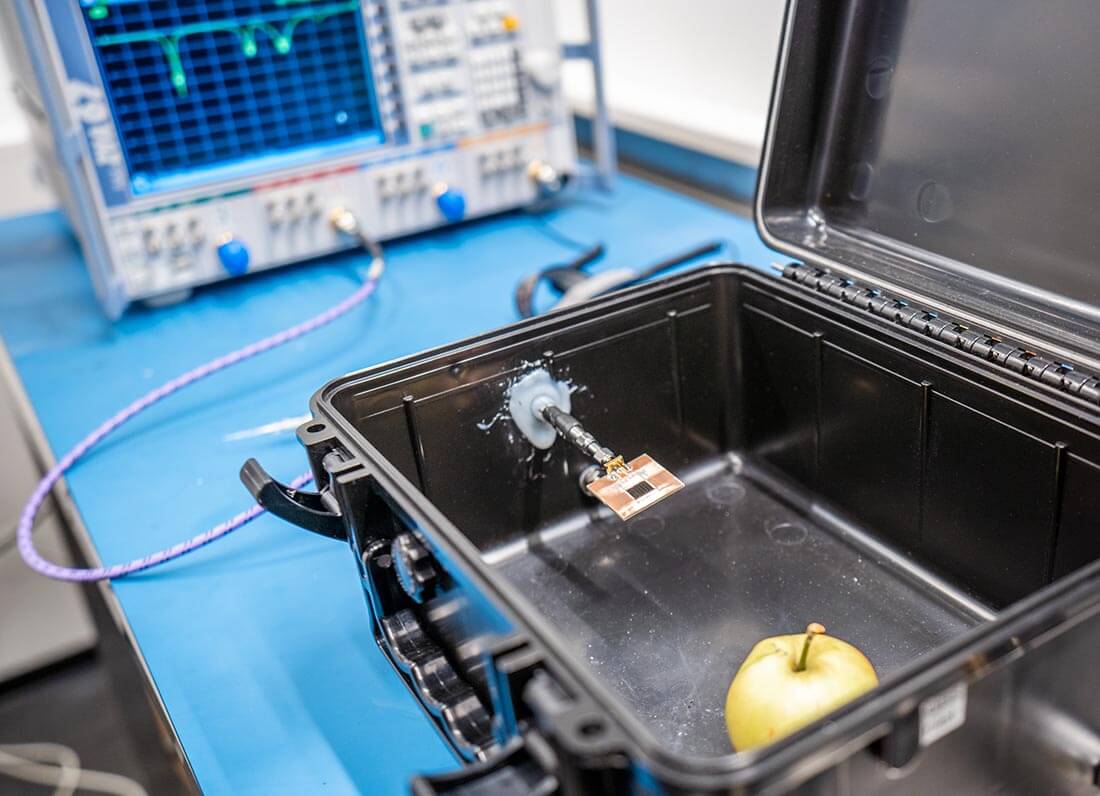
Imagine a device that could identify mechanical damage in apples before bruising appears, detect diseases through a patient’s breath, monitor food freshness in real time across entire supply chains, and even sniff out hazardous gases in industrial settings—all using technology already found in your smartphone. Researchers at the Norwegian University of Science and Technology (NTNU) have developed such a device: a groundbreaking electronic nose that uses a single sensor to perform tasks that typically require hundreds of sensors. This innovative technology, known as the “Ant-nose,” could revolutionize industries ranging from food safety to environmental monitoring, offering a simpler and more affordable alternative to existing systems.

The Ant-nose uses a familiar principle—antenna technology, the same technology that powers wireless communication in devices like smartphones and computers—to create an artificial sense of smell. Unlike traditional electronic noses, which often require large arrays of specialized sensors, the Ant-nose achieves its remarkable sensitivity with a single antenna and a single type of coating. This simplicity dramatically reduces both cost and power consumption while maintaining high performance.

Continue reading… “The Ant-Nose: A Revolutionary Device That Could Transform How We Detect and Monitor Health, Food, and Safety”

Revolutionary Glasses Could Protect Epilepsy Patients from Seizure-Inducing Light

A groundbreaking innovation in epilepsy management is offering new hope for individuals with photosensitive epilepsy. Researchers from the University of Glasgow and the University of Birmingham have developed a pair of advanced glasses that can shield users from light wavelengths known to trigger seizures. This breakthrough could enhance the safety of epilepsy patients during everyday activities like watching television, using computers, or enjoying entertainment.

The revolutionary glasses feature liquid crystal lenses capable of blocking harmful light frequencies, with a particular focus on the 660-720nm wavelength range, which is most likely to provoke seizures in photosensitive individuals. The lenses’ ability to filter out these wavelengths has been shown to reduce the risk of seizures, offering a new layer of protection.

Continue reading… “Revolutionary Glasses Could Protect Epilepsy Patients from Seizure-Inducing Light”

Understanding Plant Adaptation: New Research Could Improve Crop Resilience to Climate Change

A team of scientists at the University of Calgary is making strides in understanding how plants adapt to environmental stressors, offering promising insights that could help make agricultural crops more resilient to heat, drought, and climate change. Dr. Sam Yeaman, an associate professor in the Department of Biological Sciences, and his team have published groundbreaking research in the Proceedings of the National Academy of Sciences (PNAS), shedding light on how distantly related plant species—from sunflowers to poplars—adapt to similar stresses.

The study, led by Dr. Gabriele Nocchi, marks a significant step in understanding whether different plant species, despite their genetic differences, use similar genetic tools to respond to environmental challenges. The answer, according to Yeaman, is nuanced. “Yes, and no,” he explains. “While there is overlap in the genes used, plants also exhibit unique adaptive strategies. You could say that while each species has its own adaptation story, many share common genetic themes.”

Continue reading… “Understanding Plant Adaptation: New Research Could Improve Crop Resilience to Climate Change”

Soda Cans and Seawater: A New Frontier in Clean Energy

A groundbreaking discovery by scientists at the Massachusetts Institute of Technology (MIT) could revolutionize clean energy production using materials as simple as old soda cans and seawater. By harnessing the power of aluminum and seawater to generate hydrogen fuel, this innovative approach could have far-reaching implications for sustainable energy systems, especially in maritime applications.

Aluminum, a material most commonly found in soda cans and foil wraps, is often overlooked for its potential in energy production. However, when treated correctly, aluminum can react with water to produce hydrogen gas—a clean, efficient fuel that only releases water vapor when burned. Although the basic chemical reaction between aluminum and water has been known for some time, scaling it up for practical and cost-effective use has been a significant challenge—until now.

Continue reading… “Soda Cans and Seawater: A New Frontier in Clean Energy”

NASA’s LEXI X-ray Imager to Capture First Global Images of Earth’s Magnetic Field from the Moon

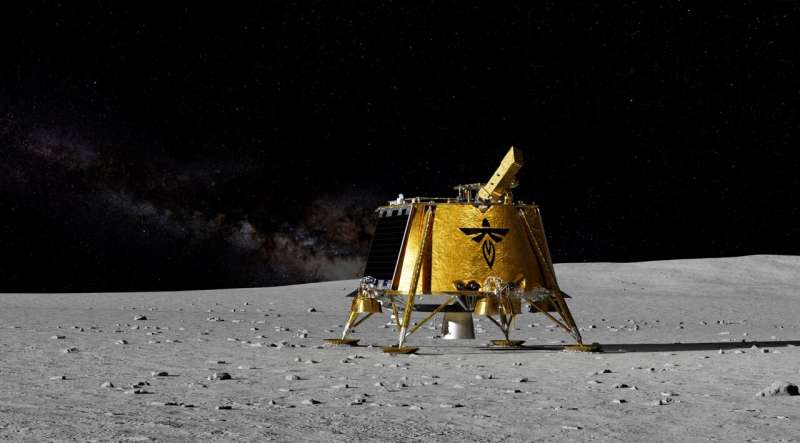
As part of NASA’s Artemis campaign, a cutting-edge X-ray imager, the Lunar Environment Heliospheric X-ray Imager (LEXI), is heading to the Moon to capture the first global images of Earth’s magnetic field, which protects our planet from harmful solar radiation. LEXI is one of 10 scientific payloads onboard the upcoming lunar mission, set to launch from Kennedy Space Center in Florida no earlier than mid-January. The payload will ride aboard Firefly Aerospace’s Blue Ghost Lander under NASA’s Commercial Lunar Payload Services (CLPS) initiative.

LEXI’s primary mission is to support NASA’s understanding of how Earth’s magnetosphere—its magnetic shield—responds to space weather, which is driven by solar activity. By taking detailed X-ray images of this protective barrier, the instrument will provide insights into the dynamic processes that shape our planet’s interaction with the solar wind and other cosmic forces.

Continue reading… “NASA’s LEXI X-ray Imager to Capture First Global Images of Earth’s Magnetic Field from the Moon”

Triple-Layer Solid Polymer Electrolyte: A Breakthrough in Lithium Metal Battery Safety and Durability

A research team from the Division of Energy & Environmental Technology at DGIST, led by Principal Researcher Kim Jae-hyun, has developed an innovative lithium metal battery featuring a “triple-layer solid polymer electrolyte.” This advancement promises significant improvements in both fire safety and battery lifespan, positioning it as a potential game-changer for applications in electric vehicles and large-scale energy storage systems.

Traditional solid polymer electrolyte (SPE) batteries have faced persistent challenges, particularly in ensuring optimal contact between the battery’s electrodes. This is critical in preventing the formation of “dendrites”—tree-like structures of lithium that form during repeated charging and discharging cycles. These dendrites can cause internal short circuits, potentially leading to fires or even explosions, posing a significant safety hazard.

Continue reading… “Triple-Layer Solid Polymer Electrolyte: A Breakthrough in Lithium Metal Battery Safety and Durability”

HOT3D Dataset: Advancing Human-Robot Interaction through Enhanced Hand-Object Tracking

While humans naturally use their hands for communication and manipulating objects, current robotic systems often struggle with complex manual tasks. To bridge this gap, researchers have increasingly turned to machine learning models that process images of humans performing manual activities. These models aim to enhance robotic manipulation and, by extension, improve robot interactions with both humans and the objects in their environment. In addition to this, similar models could further enhance human-machine interfaces, including augmented and virtual reality (AR and VR) systems. However, to train these machine learning systems effectively, access to high-quality, annotated datasets showcasing human interactions with objects is essential.

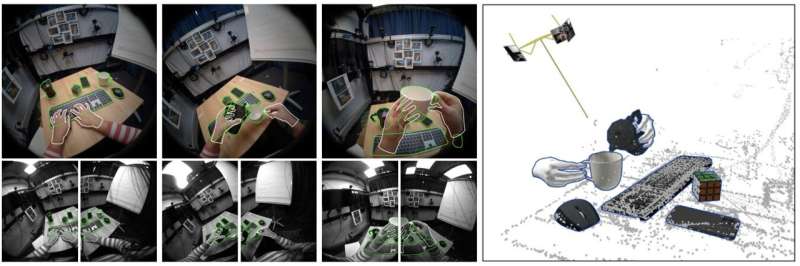
Meta Reality Labs recently unveiled a promising new dataset called HOT3D, which could accelerate machine learning research focused on analyzing hand-object interactions. This dataset, introduced in a paper published on the arXiv preprint server, contains over 833 minutes of high-quality ego-centric 3D video footage. The videos capture human users engaging with a variety of objects from an egocentric perspective, meaning the footage mirrors what the user would see as they perform manual tasks.

Continue reading… “HOT3D Dataset: Advancing Human-Robot Interaction through Enhanced Hand-Object Tracking”

Exploring the Nanoscale: A Groundbreaking Discovery in Magnetism

Imagine a world so minuscule it challenges the limits of human perception — the nanoscale. To visualize this, consider shrinking a single strand of human hair a million times over. In this incredibly tiny realm, atoms and molecules govern a universe of properties and behaviors that are largely uncharted — until now.

Researchers Deepak Singh and Carsten Ullrich, along with their teams of students and postdoctoral fellows at the University of Missouri’s College of Arts and Science, have made a groundbreaking discovery: the identification of a new type of quasiparticle present in all magnetic materials, regardless of their strength or temperature. This discovery opens up a new frontier in our understanding of magnetism and could revolutionize multiple fields of technology.

Continue reading… “Exploring the Nanoscale: A Groundbreaking Discovery in Magnetism”

Voyant Photonics Unveils Affordable Carbon FMCW Lidar Sensor for Enhanced Machine Perception

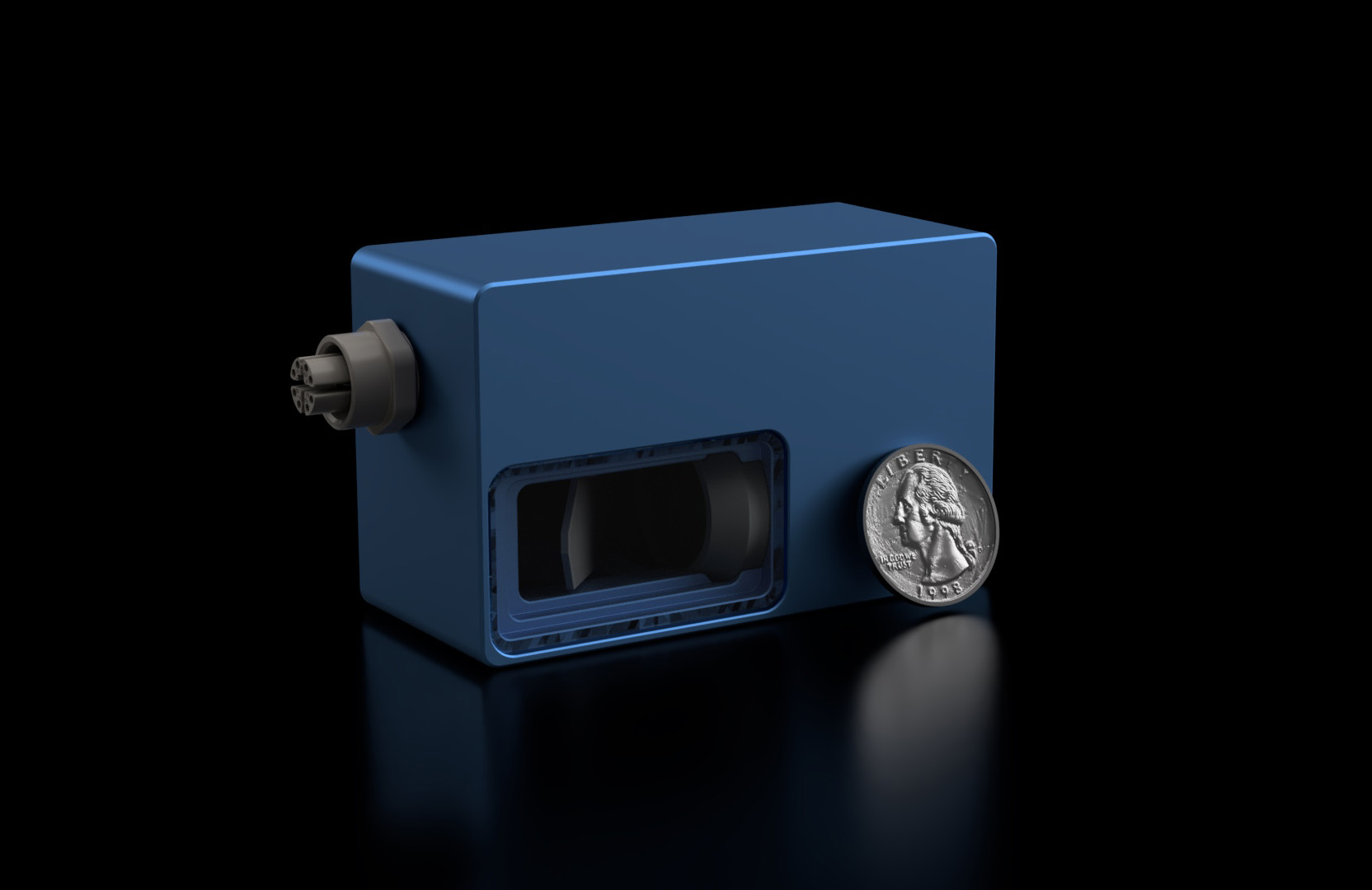
Voyant Photonics has officially launched its Carbon FMCW lidar sensor, a cutting-edge solution designed to provide affordable, high-performance lidar on a chip. This new sensor, developed for applications in industrial automation, robotics, and security, offers solid-state beam steering and high-resolution, millimeter-precision detection. The company aims to push the boundaries of machine perception with a sensor that delivers advanced capabilities at a disruptive price point.

At the heart of the Carbon sensor is a silicon photonic chip that is small enough to fit on a fingernail. Despite its compact size, the Carbon sensor offers high-resolution, real-time object detection and the ability to perform static and dynamic segmentation at distances of up to 200 meters (656 feet). Voyant integrated optics directly onto the lidar photonic integrated circuit (PIC), which allows for better performance at a fraction of the cost of traditional lidar technologies.

Continue reading… “Voyant Photonics Unveils Affordable Carbon FMCW Lidar Sensor for Enhanced Machine Perception”
Discover the Hidden Patterns of Tomorrow with Futurist Thomas Frey
Unlock Your Potential, Ignite Your Success.

By delving into the futuring techniques of Futurist Thomas Frey, you’ll embark on an enlightening journey.

Learn More about this exciting program.