Pollination Gets Automated: China’s Leap Into Robotized Farming

For centuries, farmers and scientists have relied on tedious, manual methods of cross-pollination to create new, hardier crops. But now China has dropped a technological bombshell: GEAIR, the world’s first autonomous AI-powered hybrid pollination robot. It doesn’t just mimic human labor—it outpaces it, promising to slash breeding costs, accelerate crop cycles, and inject near-perfect precision into a process once defined by trial and error.

Built by researchers at the Institute of Genetics and Development Biology, GEAIR combines AI, robotics, and gene editing into one closed-loop breeding machine. In a greenhouse trial, the robot proved it could identify a flower, extend a delicate robotic arm, and transfer pollen with inch-perfect accuracy—an act that once demanded painstaking human attention. The implications are staggering: hybrid seeds that once took years to develop could be created in a fraction of the time.

Continue reading… “Pollination Gets Automated: China’s Leap Into Robotized Farming”

Supersonic Without the Sonic Boom: The Jet That Could Shrink the Atlantic

The dream of supersonic travel didn’t die with the Concorde—it just went quiet. Literally. A Boston-based aerospace firm, Spike Aerospace, claims its upcoming S-512 Diplomat business jet will fly from New York to Paris in under four hours—without shattering windows or rattling eardrums along the way.

That’s the breakthrough. Since 1973, supersonic flight over U.S. territory has been banned because of the disruptive sonic booms that rattled cities and outraged regulators. If Spike delivers on its promise of a “low-boom” jet, it won’t just shrink the map—it will reopen airspace that’s been locked down for half a century.

Continue reading… “Supersonic Without the Sonic Boom: The Jet That Could Shrink the Atlantic”

The Protein That Could Turn Carbon Monoxide Poisoning from a Death Sentence into a Treatable Emergency

Carbon monoxide—the silent killer—claims 1,500 lives a year in the U.S. and sends 50,000 people to the emergency room. It seeps in without smell, taste, or warning, hijacking the body’s oxygen supply in minutes. For decades, our only defense has been to pump victims full of pure oxygen, sometimes in high-pressure chambers, and hope it’s not too late.

Now, a team at the University of Maryland School of Medicine may have cracked the code for a true antidote—one that doesn’t just help the body cope but actively hunts down and removes the toxin.

Continue reading… “The Protein That Could Turn Carbon Monoxide Poisoning from a Death Sentence into a Treatable Emergency”

The Self-Vanishing Heart Patch That Heals From Within

For centuries, heart surgery has been an engineering challenge wrapped inside a biological mystery. The heart is not only the most vital muscle in the body—it’s also the most unforgiving. Every beat is a test of strength, resilience, and precision. Now, a team of researchers has unveiled a breakthrough that could change cardiac repair forever: a bioengineered heart patch that seals, heals, and then… disappears.

Continue reading… “The Self-Vanishing Heart Patch That Heals From Within”

The Silicon Valley Baby Race: Engineering the Next Generation of Geniuses

In the glass-walled boardrooms and billion-dollar kitchens of Silicon Valley, a new obsession is taking root—designing children for brilliance. Not just healthy, not just happy, but armed from birth with genetic advantages meant to push them toward the top of the intellectual food chain.

Forget private tutors and coding camps. This is next-level parental ambition: paying tens of thousands of dollars to screen embryos for traits like IQ, or even hiring high-end matchmakers whose client lists look like an Ivy League reunion. The goal? To create children primed for elite universities, cutting-edge problem-solving, and—if you believe the true believers—saving humanity from the very technologies their parents are building.

Continue reading… “The Silicon Valley Baby Race: Engineering the Next Generation of Geniuses”

The “Master Key” Protein That Could Unlock Human Memory

What if the difference between losing your memories and keeping them sharp for decades came down to one overlooked protein?

Researchers at Rutgers University believe they may have found exactly that—a molecular “master key” called cypin that could redefine how we approach brain health, learning, and recovery after injury.

For more than two decades, neuroscientist Bonnie Firestein has been obsessed with this underappreciated protein. Her team’s latest findings reveal that cypin isn’t just a passive player in the brain—it’s an active architect, organizing and protecting the molecular machinery that keeps neurons talking to each other.

Continue reading… “The “Master Key” Protein That Could Unlock Human Memory”

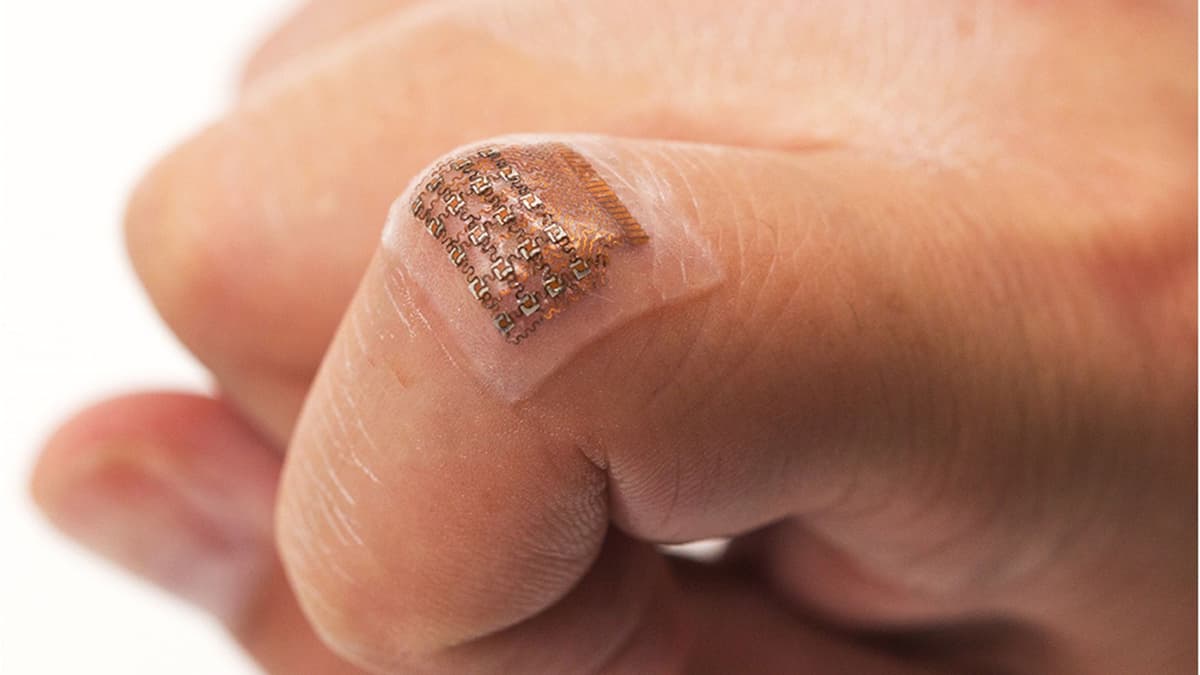
The Wearable That Could End the Era of the Blood Pressure Cuff

For more than a century, checking your blood pressure has meant wrapping a cuff around your arm, squeezing it until your fingers tingle, and sitting perfectly still while a machine spits out two numbers. Useful? Sure. Practical for real-time monitoring? Not even close.

That static, one-off measurement leaves doctors with an incomplete picture of what’s happening inside your arteries during the other 23 hours and 59 minutes of your day. And it’s part of why hypertension—one of the world’s most common and deadly conditions—still blindsides millions of people.

Continue reading… “The Wearable That Could End the Era of the Blood Pressure Cuff”

Metal Alchemy at the Speed of Light: Caltech’s 3D Printing Breakthrough Rewrites the Rules of Alloy Design

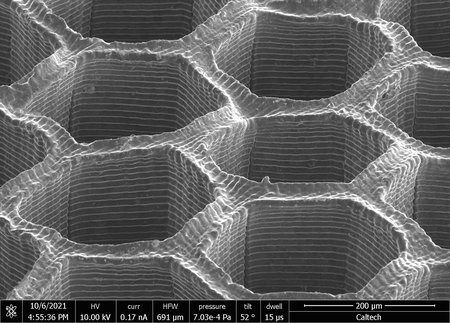
For centuries, metallurgy has been a slow, brute-force art—smelting, mixing, hammering, and hoping the end product has the right properties. But Caltech scientists have just detonated that tradition with a breakthrough that turns metalmaking into a precision craft, letting researchers dial in alloy compositions like a DJ spinning tracks.

Their new approach, an extension of hydrogel-infusion additive manufacturing (HIAM), doesn’t just make parts—it engineers metal at the atomic scale. The process starts with a 3D-printed hydrogel scaffold, which is soaked in metallic salt solutions. The hydrogel burns away in a high-heat calcination process, leaving behind metal oxides. Then, under a hydrogen-rich environment, oxygen is stripped out and the final alloy emerges—dense, strong, and shaped exactly as designed.

Continue reading… “Metal Alchemy at the Speed of Light: Caltech’s 3D Printing Breakthrough Rewrites the Rules of Alloy Design”

Sun-Forged Cities: China’s Plan to 3D-Print the Moon into Habitable Worlds

It sounds like something straight out of a sci-fi novel—colonists on the Moon building cities from nothing but sunlight and lunar dirt. But in a laboratory in Hefei, China, engineers have turned this fantasy into working hardware.

The Deep Space Exploration Laboratory has developed a 3D-printing-style machine that takes lunar regolith—the powdery soil covering the Moon—and uses concentrated sunlight to melt it into tough, functional bricks. No glue. No additives. No supply rockets hauling cement from Earth. Just heat, dust, and ingenuity.

Continue reading… “Sun-Forged Cities: China’s Plan to 3D-Print the Moon into Habitable Worlds”

The 3D-Printed Exoskeleton That Learns Your Hand

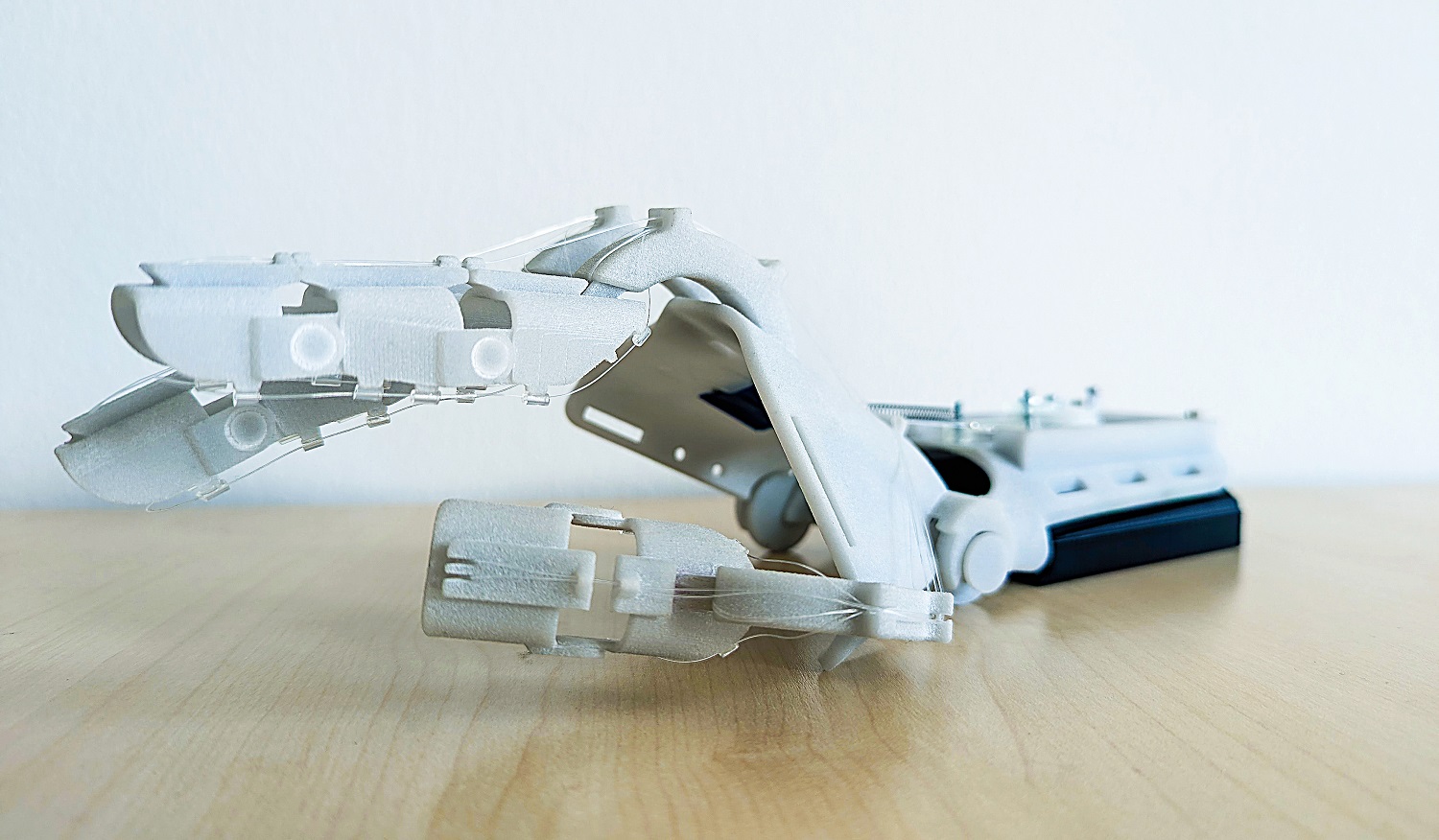
At first glance, it looks like something out of a cyberpunk film—a sleek, skeletal glove clinging to your hand like a second skin. But this isn’t science fiction. At Germany’s Fraunhofer Institute for Machine Tools and Forming Technology (IWU), researchers are engineering custom 3D-printed exoskeletons that adapt to your exact hand shape, strength profile, and even your injury history.

The concept is deceptively simple: combine a precise 3D scan of your hand with parametric CAD design and selective laser sintering (SLS) to print an exoskeleton that matches your anatomy, not some average model. Every curve, joint angle, and finger length is taken into account. No two devices are the same—because no two hands are the same.

Continue reading… “The 3D-Printed Exoskeleton That Learns Your Hand”

AI Roadside Guardians: How Australia’s LAARMA Tech Could End the Era of Roadkill

Every year, highways become killing fields—not just for humans, but for the animals whose habitats those highways slice apart. Fences can block some crossings, but they’re expensive, high-maintenance, and often just push the problem elsewhere. Now, Australian researchers believe they’ve found a smarter, faster, and more adaptable answer: AI that sees animals before you do—and warns you in real time.

Meet LAARMA—the Large Animal Activated Roadside Monitoring and Alert system. It’s an open-source, self-learning AI platform that uses sensors to detect large animals up to 200 meters away, in any weather, day or night. When a detection is made, roadside signs instantly flash a tailored warning to drivers, naming the animal and signaling urgency. The result? In a recent five-month trial in cassowary country, drivers slowed down by as much as 10%, with the system correctly spotting the birds 97% of the time.

Continue reading… “AI Roadside Guardians: How Australia’s LAARMA Tech Could End the Era of Roadkill”

The Brain’s New Window: How Sound is Taking Us Five Times Deeper into the Mind

For years, brain imaging has been like staring through a foggy window—you can make out the surface clearly, but the deeper you try to see, the murkier it gets. Standard light-based microscopes are great for mapping the cortex, but when it comes to peering into deeper, more complex regions like the hippocampus, resolution collapses.

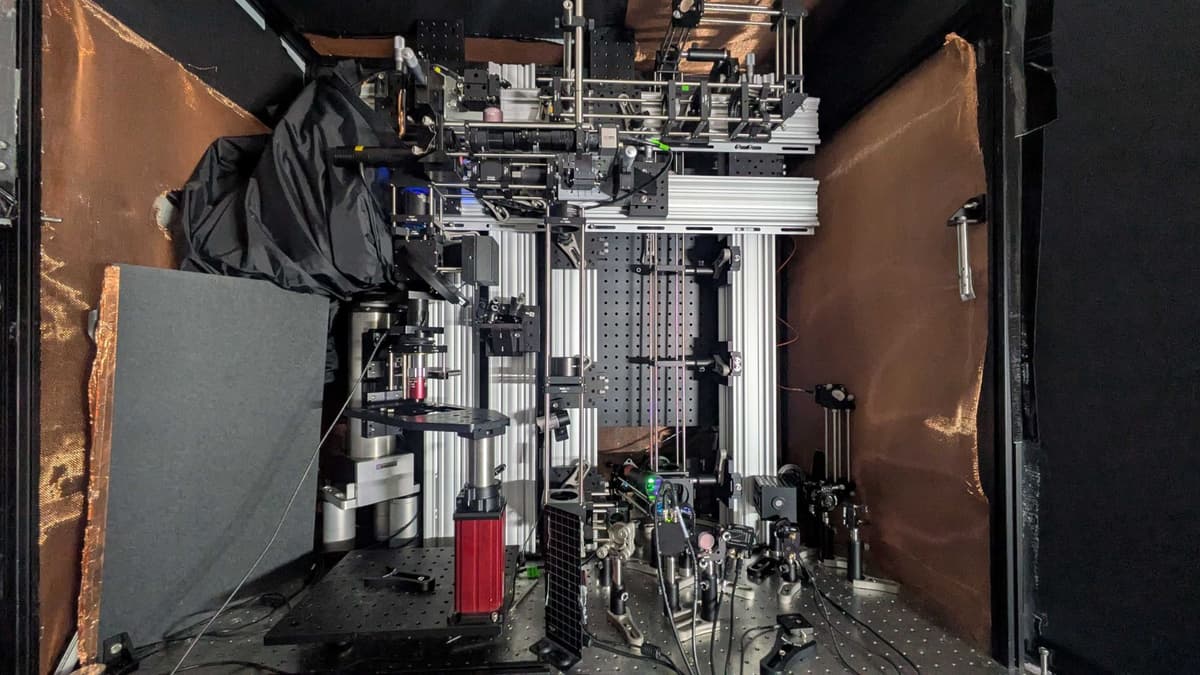
MIT researchers just shattered that barrier with the world’s first sound-powered microscope—a hybrid system that uses ultrafast bursts of light to trigger microscopic sound waves, then “listens” to those waves to build high-resolution images. The result: brain scans at five times the depth of existing methods, with zero dyes, chemicals, or genetic modifications.

Continue reading… “The Brain’s New Window: How Sound is Taking Us Five Times Deeper into the Mind”