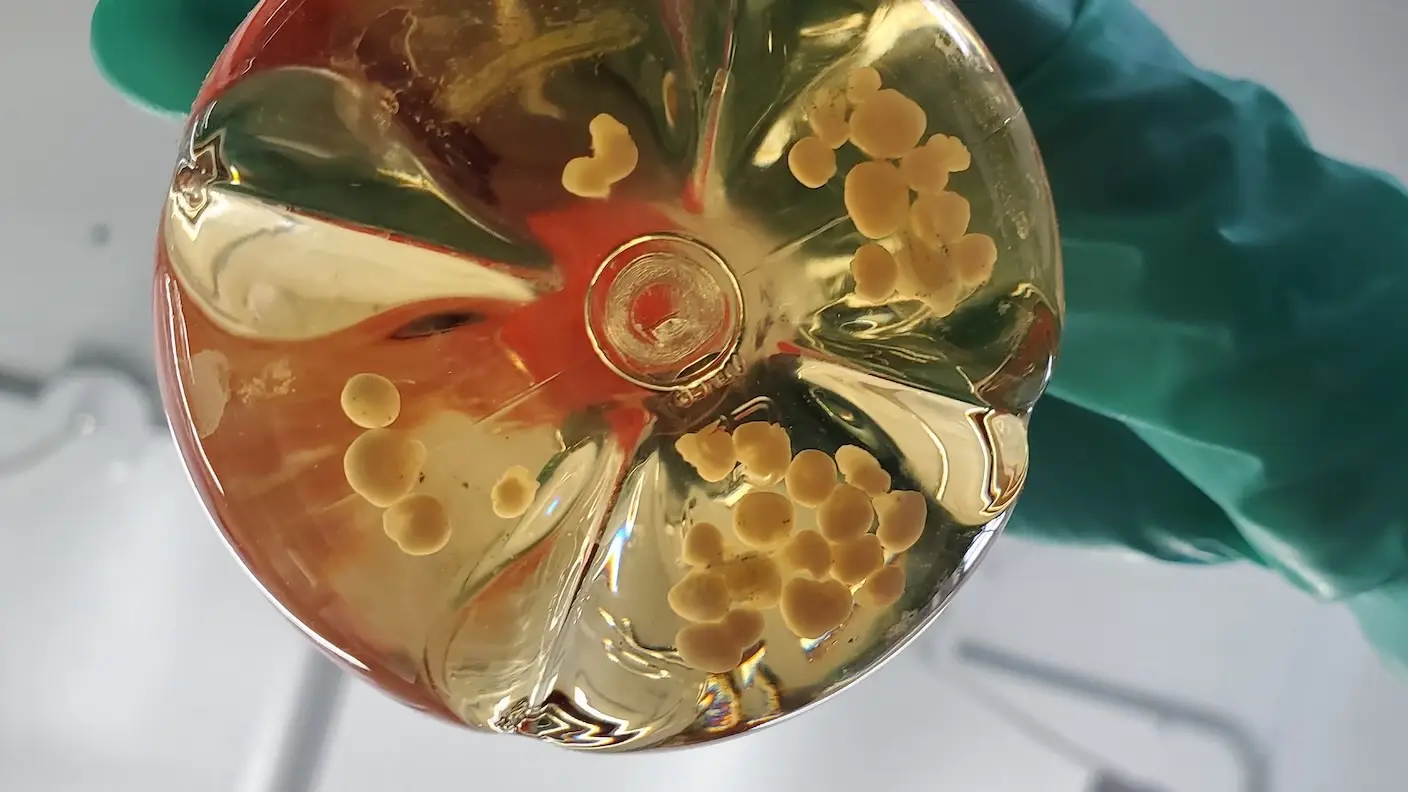
Japan’s Rice Fields Just Became Power Plants—Without Sacrificing the Rice

In the mountain valleys of Nagano, a new kind of harvest is taking place. Farmers aren’t just pulling in sacks of rice—they’re also producing enough electricity to power dozens of homes. And they’re doing it on the same plot of land.

Perched three meters above the paddies, a shimmering array of dual-axis solar panels follows the sun’s path across the sky. This isn’t just a fixed frame bolted to a post—these panels tilt and pivot daily, even seasonally, fine-tuning the balance between feeding the plants below and feeding the grid above.

Continue reading… “Japan’s Rice Fields Just Became Power Plants—Without Sacrificing the Rice”
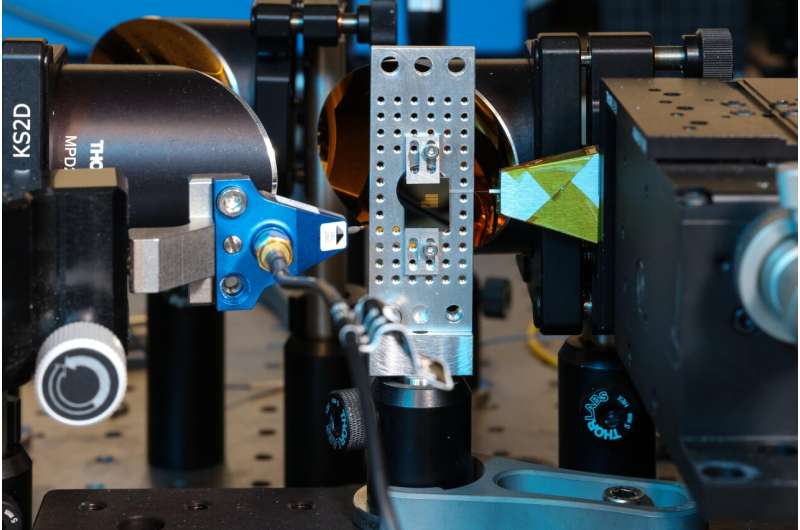
The Chip That Speaks Two Languages: Bridging Light and Terahertz for the Next Communication Leap

For decades, engineers have dreamed of a single device that could fluently translate between the lightning-fast language of light and the high-bandwidth whisper of terahertz waves. Now, a team at EPFL and Harvard has done exactly that—on a chip so small it could ride on your fingernail.

Terahertz (THz) radiation sits in the electromagnetic no man’s land between microwaves and infrared light—too fast for conventional radio tech, too tricky for optical systems to harness directly. But if you could get THz signals to talk to existing optical networks, you’d open the door to ultra-secure 6G communications, millimeter-precision radar, and data transfer speeds that make today’s fiber optics look like dial-up.

Continue reading… “The Chip That Speaks Two Languages: Bridging Light and Terahertz for the Next Communication Leap”

Silicon’s Reign Is Ending — Meet the Atomic Assassin From China

Silicon has ruled the digital world for over half a century. But every empire falls. And now, a new contender has arrived—wafer-scale indium selenide (InSe), the shimmering, two-dimensional material engineers are calling the “golden semiconductor.”

For decades, InSe was a lab curiosity: high hopes, microscopic samples, and lots of theory. But that era just ended.

Continue reading… “Silicon’s Reign Is Ending — Meet the Atomic Assassin From China”

Weaponizing Mosquitoes: The Genetic Hack That Could End Malaria Without Killing a Single Bug

The deadliest animal on Earth isn’t a lion or a shark. It’s the mosquito.

These tiny, winged parasites are responsible for more deaths throughout human history than all wars combined. Every year, malaria alone kills over half a million people—most of them children. But now, scientists have unveiled a radical twist in the fight against these flying disease factories: don’t kill the mosquitoes. Reprogram them.

In a breakthrough that could change global health forever, researchers have genetically engineered mosquitoes to become immune to malaria—and then passed that immunity down through generations using a gene drive that rewrites the rules of evolution itself.

Welcome to the age of biological counterinsurgency.

Continue reading… “Weaponizing Mosquitoes: The Genetic Hack That Could End Malaria Without Killing a Single Bug”

Neuralink Goes Global: Elon Musk’s Brain Chip Heads to the UK for High-Stakes Human Trials

The future just got a UK passport.

In a bold expansion beyond U.S. borders, Neuralink—the brain-computer interface (BCI) startup founded by Elon Musk—has launched its first European clinical trial. The UK has become ground zero for testing the next phase of mind-controlled technology, as seven British patients with severe paralysis prepare to have a coin-sized chip implanted directly into their brains.

Let’s be clear: this isn’t a sci-fi plot. It’s happening now.

Working alongside the University College London Hospitals and Newcastle upon Tyne Hospitals, Neuralink is testing whether its N1 chip can allow paralyzed individuals to control digital devices with nothing but thought. Type an email? Open an app? Play a game? All without lifting a finger. For the right patient, this could be a leap from locked-in to logged-on.

Continue reading… “Neuralink Goes Global: Elon Musk’s Brain Chip Heads to the UK for High-Stakes Human Trials”

The Great Educational Awakening:Why Learning Must Become Earning

The most profound question facing humanity isn’t whether AI will change education—it’s whether we’ll have the courage to let it save us from an educational system that’s systematically failing millions while enriching a privileged few.

The Uncomfortable Truth We’re All Avoiding

Why do we persist with an educational model that transforms curious five-year-olds into debt-laden twenty-two-year-olds who can recite Shakespeare but can’t balance a budget, code a website, or solve real-world problems? Simon Sinek reminds us to start with why, so let’s ask the uncomfortable question: What if our entire approach to education is fundamentally backwards?

Continue reading… “The Great Educational Awakening:Why Learning Must Become Earning”

The Propeller Revolution Is Here—and It’s Loopy

Since the age of steamships, propellers haven’t changed much. Same basic shape. Same basic inefficiencies. Until now.

Enter Sharrow Engineering—a Detroit-based disruptor with a bold claim: they’ve reinvented the propeller. Not tweaked. Not optimized. Reinvented.

Their invention? A hypnotic, closed-loop design that looks more like modern art than marine hardware. But this loopy shape isn’t just for show—it eliminates the drag-inducing tip vortices that have plagued traditional propellers since the 1830s. The result? Up to 30% more fuel efficiency, drastically reduced noise and vibration, and handling so smooth it feels like piloting a completely different vessel.

Continue reading… “The Propeller Revolution Is Here—and It’s Loopy”

The Death of Middle Management and the Rise of the Mini-CEO

Everyone’s asking whether AI will kill their job.

Wrong question.

The real story isn’t about who gets replaced. It’s about who gets upgraded. Because AI isn’t just reshaping tasks—it’s obliterating the entire concept of traditional management.

Middle managers were never the stars. They were the routers. They translated executive direction downward and aggregated employee output upward. Necessary? Sure. But revolutionary? Never.

Continue reading… “The Death of Middle Management and the Rise of the Mini-CEO”

The Ground Beneath You Is Now a Battery—And It’s Already Working

For over a century, humanity has stored electricity by pumping water uphill and letting it flow back down. It’s a clever trick—but now we’re thinking deeper. Literally.

What if we could turn the Earth itself into a rechargeable battery?

That’s exactly what a Texas-based company called Quidnet is doing. Their new technology—Geomechanical Energy Storage (GES)—uses high-pressure water injections into layers of impermeable rock to store massive amounts of energy for months, with zero leakage.

Not hours. Not days. Months.

Continue reading… “The Ground Beneath You Is Now a Battery—And It’s Already Working”

They Bleed, Therefore They Live: Mini Organs Just Crossed the Threshold of Life

For years, mini organs—organoids—have been stuck in a paradox. We could grow them. We could watch them twitch, pulse, and mimic the basic behaviors of hearts, brains, livers, and lungs. But they couldn’t survive long enough to matter.

Why? Because they didn’t bleed.

Without blood vessels, these lab-grown miracles died from the inside out—hollow promise at the core. Now, two groundbreaking studies have rewritten that fate. Scientists have finally cracked the code to vascularize organoids, breathing life into what were once biological shadows.

Continue reading… “They Bleed, Therefore They Live: Mini Organs Just Crossed the Threshold of Life”

Sunlight, a Sponge, and the End of Thirst: Scientists Unleash Scalable, Energy-Free Desalination

Forget billion-dollar desalination plants, complex filters, or energy-hungry infrastructure. The next revolution in clean water might just come from a 3D-printed sponge and the sun.

In a radical leap forward, researchers at the American Chemical Society have developed a lightweight, porous aerogel that turns salty seawater into fresh, drinkable water using nothing more than natural sunlight and a curved piece of plastic. No electricity. No pressure systems. Just a sun-powered sponge that could fit in your backpack—and possibly save millions.

Continue reading… “Sunlight, a Sponge, and the End of Thirst: Scientists Unleash Scalable, Energy-Free Desalination”

Plastic’s Chemical Jailbreak: Scientists Slash Recycling Costs with One Enzyme-Fueled Hack

The world’s dirtiest material may have just met its molecular match.

In a stunning breakthrough, scientists have unveiled a new enzymatic recycling method that turns plastic’s worst traits into profit-generating advantages—and it all hinges on a single, brilliantly simple chemical switch.

Led by researchers from the U.S. Department of Energy’s National Renewable Energy Laboratory (NREL), the University of Massachusetts Lowell, and the University of Portsmouth, the new process promises to break down PET—the world’s most-used plastic—faster, cheaper, and cleaner than ever before. Forget decades of hype around theoretical recycling utopias. This one actually works.

Continue reading… “Plastic’s Chemical Jailbreak: Scientists Slash Recycling Costs with One Enzyme-Fueled Hack”
Discover the Hidden Patterns of Tomorrow with Futurist Thomas Frey
Unlock Your Potential, Ignite Your Success.

By delving into the futuring techniques of Futurist Thomas Frey, you’ll embark on an enlightening journey.

Learn More about this exciting program.