What if the future of agriculture isn’t about genetic modification as we know it, but about rewriting nature with surgical precision—without leaving any foreign DNA behind? That’s the promise emerging from Cranfield University in England, where researchers have just achieved the world’s first DNA-free gene edits in raspberry plants using CRISPR technology. This breakthrough could mark the beginning of a new agricultural era where crops are enhanced for taste, shelf life, and resilience, all while sidestepping the heavy regulatory baggage that has slowed the acceptance of genetically modified organisms.
Continue reading… “Rethinking the Raspberry: DNA-Free Gene Editing Opens a New Chapter in Precision Agriculture”The Dawn of Living Computers: How Bacteria Could Outthink Silicon
For nearly a century, our digital world has been built on silicon—chips, transistors, and circuits etched into wafers that power smartphones, satellites, and supercomputers. But as artificial intelligence pushes computation to its physical and energy limits, scientists are daring to imagine something radically different: computers made not of metal, but of life itself.
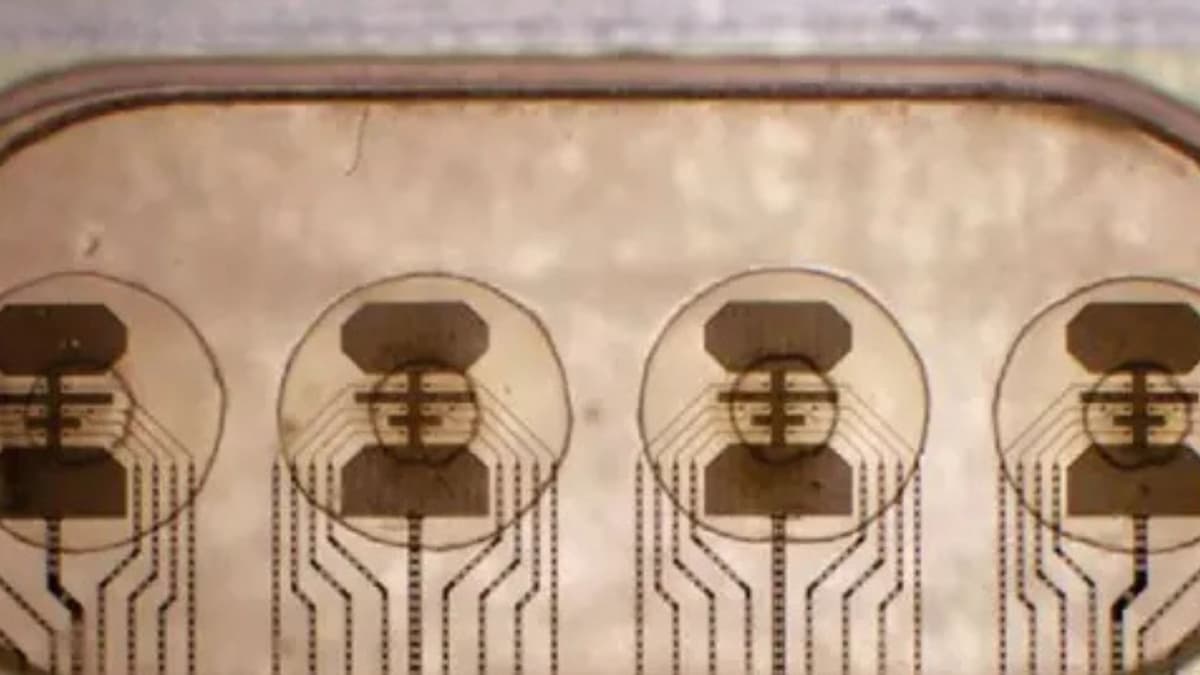
At Rice University in Texas, researchers are pioneering a bold new field called biocomputing, with bacterial cells as the foundation. Funded by a $1.99 million National Science Foundation grant, their project treats each bacterial cell as a tiny processor. Microbes are natural information handlers. They sense, respond, and adapt to their environments in ways that resemble computational logic. The question now is whether they can be linked into vast biological networks that think, learn, and evolve.
Continue reading… “The Dawn of Living Computers: How Bacteria Could Outthink Silicon”Korea’s Mega-Region Leap: Why the Neumann Engine Could Redefine National Economies
Building an Integrated National Economy Through Systematic Wealth Creation
By Futurist Thomas Frey
For centuries, the engines of civilization were cities—Athens, Rome, London, New York. Each rose as a singular hub of culture, commerce, and political power. But the 21st century has rewritten the map of influence. Today, mega-regions—vast interconnected networks of cities bound by infrastructure, trade, and innovation pipelines—generate most of the world’s wealth. They are the new battlegrounds for global competitiveness.
Continue reading… “Korea’s Mega-Region Leap: Why the Neumann Engine Could Redefine National Economies”The Birth of Synthetic Motherhood: China’s Race to Build the First Pregnancy Robot
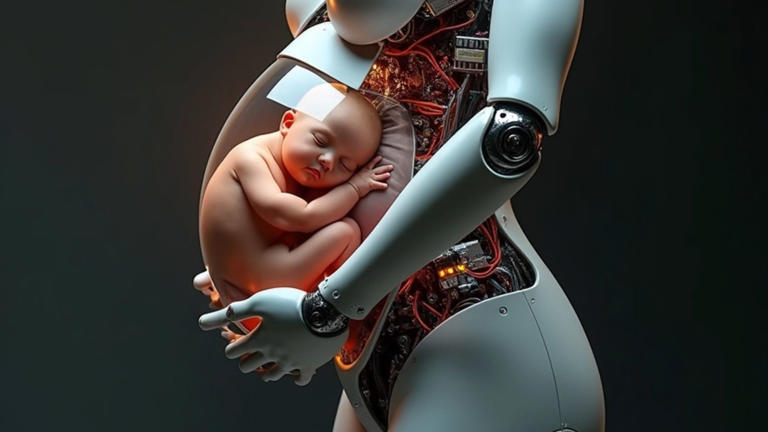
For centuries, the act of carrying and delivering life has been bound to the biology of women. Now, that fundamental truth is being challenged by a vision straight out of science fiction: a humanoid robot with an artificial womb, designed to carry a child from conception to delivery.
Continue reading… “The Birth of Synthetic Motherhood: China’s Race to Build the First Pregnancy Robot”Heavy Electrons and the Birth of a New Quantum Age
Quantum computing has long promised a revolution, but the path forward has been defined mostly by exotic setups—supercooled superconductors, fragile qubits, and billion-dollar labs. Now, researchers in Japan have uncovered something that could redraw the map entirely: “heavy fermions,” electrons that behave as if they have gained extraordinary mass, displaying quantum entanglement governed by Planckian time—the ultimate clock of quantum mechanics. This is not just a physics curiosity. It could be the foundation for a new type of quantum computer.
Continue reading… “Heavy Electrons and the Birth of a New Quantum Age”6G Hyper-Space Communication: Erasing the Boundary Between Earth and Sky
The future of connectivity is no longer about faster downloads on your phone. It’s about stitching Earth and sky into one seamless network. For the first time, Korean researchers have demonstrated integrated terrestrial-satellite 6G hyper-space communication in real flight tests—a breakthrough that signals the dawn of a communication system where no place, and no moment, is offline.
Continue reading… “6G Hyper-Space Communication: Erasing the Boundary Between Earth and Sky”AI-Assisted Robotic Surgery: Redefining the Operating Room
The operating room has long been the stage for human skill, steady hands, and judgment honed over decades. But a new player is stepping into this sacred space—artificial intelligence fused with robotics—and it’s proving to be faster, safer, and more precise than anything we’ve seen before. A sweeping review of 25 studies conducted between 2024 and 2025 has found that AI-assisted robotic surgery can cut complications by up to 30%, shorten recovery times, and even reduce hospital costs. In short, the surgical revolution is here, and the scalpel may soon share equal billing with the algorithm.
Continue reading… “AI-Assisted Robotic Surgery: Redefining the Operating Room”AI-Engineered Nanolattices: Stronger Than Steel, Lighter Than Foam
The strongest materials of the last century were discovered with hammers, furnaces, and patience. The strongest materials of the next century will be discovered with prompts. In labs where lasers etch features thinner than a red blood cell and algorithms hunt Pareto fronts, researchers have now taught artificial intelligence to design a carbon nanolattice that carries the compressive punch of carbon steel while weighing about as much as Styrofoam. That is not a metaphor. It’s a new class of matter—architected by code, born in light, and refined in heat—that could remake aerospace, mobility, construction, sport, and any place where every gram and every Newton matter.
Continue reading… “AI-Engineered Nanolattices: Stronger Than Steel, Lighter Than Foam”The Rise of the Founder-Creator-Investor: The New Power Model of Entrepreneurship
For decades, founders, creators, and investors have lived in separate worlds. Founders built companies. Creators built audiences. Investors wrote checks. Occasionally, the lines blurred—but rarely in a systematic way. That separation is ending. A new archetype is emerging, and it is set to rewrite the rules of entrepreneurship: the Founder-Creator-Investor (FCI).
This model isn’t about side hustlers dabbling in content or investors posting the occasional blog. It’s an operational system where three identities—operator, storyteller, and capital allocator—reinforce one another in a virtuous cycle. Each role magnifies the power of the others, creating an engine of influence and growth that traditional VCs, single-focus founders, and pure creators can’t compete with.
Continue reading… “The Rise of the Founder-Creator-Investor: The New Power Model of Entrepreneurship”The $1.8 Trillion Education Apocalypse: Why Traditional Universities Will Vanish Faster Than Blockbuster
By Futurist Thomas Frey
The $1.8 Trillion Lie That’s About to Implode
Here’s a prediction that will either make me look like a prophet or a madman by 2030: The traditional university system—with its ivy-covered buildings, tenured professors, and four-year degree programs—will become as irrelevant as typewriter repair shops, and the collapse will happen faster than anyone thinks possible.
I’m not talking about gradual decline or gentle evolution. I’m talking about sudden, catastrophic disruption that will leave educational administrators wondering what hit them. The signs are everywhere if you know how to read exponential curves, and the writing isn’t just on the wall—it’s spray-painted in neon colors across the entire facade of higher education.
The trigger? A perfect storm of artificial intelligence, blockchain verification, global connectivity, and economic desperation that’s about to make the newspaper industry’s collapse look like a gentle summer breeze.
Continue reading… “The $1.8 Trillion Education Apocalypse: Why Traditional Universities Will Vanish Faster Than Blockbuster”The First Personalized Spine Implant: 3D Printing Ushers in a New Era of Surgery
For decades, spinal surgery has walked a fine line between miracle and compromise. Surgeons could remove damaged discs, stabilize fragile vertebrae, and restore mobility—but always with standardized implants designed to fit “most people.” Patients were asked to adapt their unique anatomy to mass-produced devices, often at the cost of mobility, comfort, or repeat procedures. Now, that compromise may be over. In July 2025, UC San Diego Health achieved a milestone that signals the dawn of a new era: the world’s first cervical spine surgery with a fully personalized 3D-printed titanium implant.
Continue reading… “The First Personalized Spine Implant: 3D Printing Ushers in a New Era of Surgery”Breathing the Future: The First Pig Lung Transplant Into a Human
In medicine, some moments arrive that feel like science fiction made real. One of those moments just happened: scientists in China have transplanted a genetically engineered pig lung into a human body—and kept it alive for nine days. Reported in Nature Medicine, this milestone marks the first time a lung from another species has functioned inside a person, and while challenges remain, it signals a future where the global shortage of donor organs may no longer be a death sentence.
Continue reading… “Breathing the Future: The First Pig Lung Transplant Into a Human”