South Korea to Provide Blockchain-based Digital Identities to Citizens by 2024

South Korea plans to provide digital identities encrypted by blockchain with smartphones to citizens in 2024 to facilitate its economic development., Bloomberg reported Monday.

The South Korean government stated that with the expansion of the digital economy, the ID embedded in the smartphone is an indispensable emerging technology to support the development of data. 

Through digital identities on the blockchain, the network verification process will be simplified, and users can log in without taking a certificate or a verification code sent by text.

Widespread use based on digital IDs will be expected to increase government efficiency by saving more administrative workforce and time, reducing wage fraud, expanding consumer credit, facilitating trade, and generating new markets.

Alternatively,  other applications of digital IDs include: facilitating online medical services; hotel check-in using a smartphone; prevention of ID forgery and theft; remote approval of contracts; fast boarding, etc.

McKinsey & Company believes introducing digital IDs could boost a country’s gross domestic product (GDP) by as much as 13% and reduce business costs by trillions of dollars.

Citing Hwang Seogwon, an economist at the Korea Institute for Science and Technology Policy, stressed the importance of risk assessment:

“Digitals IDs can yield huge economic benefits in finance, healthcare, taxes, transportation and other areas and may catch on quickly among the Korean population.”

Continue reading… “South Korea to Provide Blockchain-based Digital Identities to Citizens by 2024”

Hyundai Set To Open Hotel Powered Exclusively By EVs

Reservations for Hotel Hyundai are now open. 

By Ben O’Hare

Hyundai has announced plans to open a luxury pop-up hotel powered solely by its electric vehicles. The hotel will consist of a cabin, a restaurant, and a cinema and will be located in Essex, England. 

The pop-up hotel aims to demonstrate the Ioniq 5’s vehicle-to-load (V2L) capabilities and will be open for three weeks next year. The cabin suite features an EV charger, a shower, and a kettle – all of which will be powered by an Ioniq 5. Furthermore, the restaurant will only serve locally sourced food meanwhile the coffee lounge will provide espressos that are brewed using energy from an Ioniq 5. 

The hotel’s cinema area will consist of a projector, speakers, and popcorn machine all powered by (you guessed it) an Ioniq 5.

It appears the hotel will consist of only one cabin and therefore will only cater for one party at a time. Those interested in staying in the hotel can enter a competition to win a free trip.

Continue reading… “Hyundai Set To Open Hotel Powered Exclusively By EVs”

Innovative Biotechnology Fuses Targeted and Immune Therapies To Kill Treatment-Resistant Cancer Cells

Mutated KRAS-driven lung cancer cells (purple) in a genetically engineered mouse model of lung cancer.

New biotechnology combines targeted and immune therapies to kill treatment-resistant cancer cells.

Targeted therapies specifically attach to and inhibit cancer-causing proteins, but cancer cells can swiftly evolve to counter their action. Immunotherapies, a second drug class, harnesses the immune system to attack cancer cells. However, these agents often cannot “see” the disease-causing changes happening inside cancer cells, which appear normal from the outside.

Now, a new study describes a strategy to overcome these limitations based on several insights. The research was led by scientists from the Perlmutter Cancer Center at NYU Langone Health.

First, the investigation team recognized that certain targeted drugs called “covalent inhibitors” form stable attachments with the disease-related proteins they target inside cancer cells. They also knew that once inside cells, proteins are naturally broken down and presented as small pieces (peptides) on cell surfaces by major histocompatibility complex (MHC) molecules. Once bound to MHC, peptides are recognized as foreign by the immune “surveillance” system if they are sufficiently different from the body’s naturally occurring proteins.

Continue reading… “Innovative Biotechnology Fuses Targeted and Immune Therapies To Kill Treatment-Resistant Cancer Cells”

Apple AR/VR to Authenticate User Identification and Payments Via Iris Scanning

Expect this high-end headgear to be unveiled in 2023!

By Trisha Kae Andrada

Apple’s AR/VR (augmented reality and virtual reality) device will reportedly use iris-scanning biometrics to enable smooth user switching and payment authentication without the need to input a password.

According to 9to5Mac, these capabilities are similar to those of the Face ID biometrics system featured in recent iPhones and iPads.

It is believed to make it easier for numerous individuals to use the same gear. Also, the feature differentiates the device from the most recent Meta Quest Pro VR headset, which doesn’t have it.

The headset has been under development at Apple for many years, and finally, recent news indicated that it is set to be unveiled sometime in 2023.

Continue reading… “Apple AR/VR to Authenticate User Identification and Payments Via Iris Scanning”

A new AI model can accurately predict human response to novel drug compounds

The journey between identifying a potential therapeutic compound and Food and Drug Administration approval of a new drug can take well over a decade and cost upward of a billion dollars. A research team at the CUNY Graduate Center has created an artificial intelligence model that could significantly improve the accuracy and reduce the time and cost of the drug development process.

Described in a newly published paper in Nature Machine Intelligence, the new model, called CODE-AE, can screen novel drug compounds to accurately predict efficacy in humans. In tests, it was also able to theoretically identify personalized drugs for over 9,000 patients that could better treat their conditions. Researchers expect the technique to significantly accelerate drug discovery and precision medicine.

Accurate and robust prediction of patient-specific responses to a new chemical compound is critical to discover safe and effective therapeutics and select an existing drug for a specific patient. However, it is unethical and infeasible to do early efficacy testing of a drug in humans directly. Cell or tissue models are often used as a surrogate of the human body to evaluate the therapeutic effect of a drug molecule. Unfortunately, the drug effect in a disease model often does not correlate with the drug efficacy and toxicity in human patients. This knowledge gap is a major factor in the high costs and low productivity rates of drug discovery.

Continue reading… “A new AI model can accurately predict human response to novel drug compounds”

Fast-as-lightning 3D microprinting with two lasers

In light sheet 3D printing, red and blue laser light is used to print objects precisely and quickly on a micrometer scale. Credit: Vincent Hahn, KIT

Printing objects from plastic precisely, quickly, and inexpensively is the goal of many 3D printing processes. However, speed and high resolution remain a technological challenge. A research team from the Karlsruhe Institute of Technology (KIT), Heidelberg University, and the Queensland University of Technology (QUT) has come a long way toward achieving this goal. It developed a laser printing process that can print micrometer-sized parts in the blink of an eye. The international team published the work in Nature Photonics.

Stereolithography 3D printing is currently one of the most popular additive manufacturing processes for plastics, both for private and industrial applications. In stereolithography, the layers of a 3D object are projected one by one into a container filled with resin. The resin is cured by UV light. However, previous stereolithography methods are slow and have too low a resolution. Light-sheet 3D printing, which is used by the KIT researchers, is a fast and high-resolution alternative.

Continue reading… “Fast-as-lightning 3D microprinting with two lasers”

Honda and Sony Join Forces to Create EVs to Take You to the Metaverse

By 2026, Sony Honda Mobility will produce EVs that have at least some self-driving capability and will be packed with Sony content.

By Emily Dreibelbis

Honda is prepping to release its first electric SUV in 2024, in partnership with GM, but it’s also now teaming up with Sony on entertainment-focused EVs that will hit the market in 2026.

Sony, which gave us the Walkman, PlayStation, and films like Spider Man, Jumanji, and The Karate Kid, will have an equal, 50% stake in the newly formed Sony Honda Mobility Inc. (SHM)(Opens in a new window). 

“SHM aims to evolve the mobility space into the entertainment and emotional space, by seamlessly integrating real and virtual worlds, and exploring new entertainment possibilities through digital innovations such as the metaverse,” Honda says. 

Continue reading… “Honda and Sony Join Forces to Create EVs to Take You to the Metaverse”

Novel Antibiotic Cement May Help Treat Bone Infections

Every year, 700,000 people die due to antibiotic resistance. Now, researchers from Brigham and Women’s Hospital have developed a specialized drug-device delivery system to identify an effective antibiotic for targeted use in a bone cement matrix. The new antibiotic demonstrated promising results used against Staphylococcal in a rat model. Their approach may potentially be used to treat bone infections and decrease bacterial resistance development.

Their findings are published in Nature Biomedical Engineering in an article titled, “A potent antibiotic-loaded bone-cement implant against Staphylococcal bone infections.”

“New antibiotics should ideally exhibit activity against drug-resistant bacteria, delay the development of bacterial resistance to them, and be suitable for local delivery at desired sites of infection,” wrote the researchers. “Here, we report the rational design, via molecular-docking simulations, of a library of 17 candidate antibiotics against bone infection by wild-type and mutated bacterial targets.”

Continue reading… “Novel Antibiotic Cement May Help Treat Bone Infections”

The Search for a Pill That Can Help Dogs—and Humans—Live Longer

A startup called Loyal is developing drugs to slow down the aging process in dogs, potentially adding a few years to their lifespans.

BY TOM SIMONITE

People have been searching for a fountain of youth for thousands of years. Celine Halioua thinks she’s found one—for canines. Be patient, we’re next.

CELINE HALIOUA DROPS into a crouch and greets Bocce, a Chihuahua-dachshund mix with soulful brown eyes, like a long-lost friend. “Oh my God, you’re so beautiful!” she chirps. The two have just met in an upstairs room at Muttville Senior Dog Rescue in San Francisco, where light streams in through the open windows and urine occasionally streams onto the floor. About a dozen elderly dogs, none taller than a kneecap, putter around on the gray linoleum or nap on blankets. When Halioua kneels, her dark hair tumbling over her shoulder, Bocce rests his head blissfully in her lap.

Continue reading… “The Search for a Pill That Can Help Dogs—and Humans—Live Longer”

How a fleet of robots could help solve the Great Lakes plastic pollution problem

A Seabin at work in one of the Great Lakes

By REBECCA REDELMEIER

Waste capture devices collect thousands of pieces of trash in the Great Lakes each day. Can they also motivate humans to stop putting waste in the water in the first place? 

In the murky waters of Lake Ontario just off the Toronto harbor, a stream of trash inches toward a round, tubular-looking device floating in the water. A piece of white styrofoam bumps up against the device’s lip. Then, in one fluid motion, it tumbles over the edge. With tendrils of marine plants circling the waste, it looks like the styrofoam could have entered a portal to an undersea world. Instead, the device is a gateway to a less mystical — yet vital — destination: the garbage dump.

“It’s basically like a floating trash can,” says Chelsea Rochman, professor of ecology and evolutionary biology at the University of Toronto, who has worked with a team at the university to capture trash in Lake Ontario with bins like these since 2019. Powered from shore, the device, called a Seabin, uses a motor to create a vortex that gently pulls in floating waste from a 160-foot radius and then stores the trash in an attached basket. 

Across the Great Lakes, which stretch from Duluth, Minnesota, to the border between the United States and Canada in northern New York, dozens of Seabins now work alongside stormwater filters in a cross-border project dubbed the Great Lakes Plastic Cleanup. In mid-September, they were also joined by aquatic waste-collection drones and beach-cleaning roving robots — all to remove some of the 22 million pounds of plastic that enter the lakes each year and help researchers like Rochman understand the Great Lakes waste problem.

People can’t remove waste 24 hours a day like the devices can

“We know that the amount of litter we have out there needs more power than the people power that we have,” Rochman explains. Though local groups have organized beach cleanups for decades, people can’t remove waste 24 hours a day like the devices can, nor can they pick up the tiny pieces that machines are able to capture.

Standing on the shore of Lake Ontario, with Toronto’s streetcars rattling by, Rochman points out the overflowing municipal trash bin along the sidewalk — one of several sources of the trash. Municipal sewage systems, industrial spills, stormwater runoff, recreational boating and beach waste, and agricultural debris all wind up in the lakes as well. In one bin, toothbrushes, tampon applicators, dental flossers, shoe strings, eyeglasses, food scraps, and syringes are entwined in the tendrils of marine plants. Between the leaves, tiny flecks of plastic poke out.

Continue reading… “How a fleet of robots could help solve the Great Lakes plastic pollution problem”

Stable Diffusion VR is a startling vision of the future of gaming

A glimpse into “Real-time immersive latent space.”

By Katie Wickens

A while ago I spotted someone working on real time AI image generation in VR and I had to bring it to your attention because frankly, I cannot express how majestic it is to watch AI-modulated AR shifting the world before us into glorious, emergent dreamscapes. 

Applying AI to augmented or virtual reality isn’t a novel concept, but there have been certain limitations in applying it—computing power being one of the major barriers to its practical usage. Stable Diffusion image generation software, however, is a boiled-down algorithm for use on consumer-level hardware and has been released on a Creative ML OpenRAIL-M licence. That means not only can developers use the tech to create and launch programs without renting huge amounts of server silicon, but they’re also free to profit from their creations.

I was awoken in the middle of the night to conceptualize this projectScottie Fox – Stable Diffusion VR dev

ScottieFoxTTV(opens in new tab) is one creator who’s been showing off their work with the algorithm in VR on twitter. “I was awoken in the middle of the night to conceptualize this project,” he says. As a creator myself, I understand that the Muses enjoy striking at ungodly hours.

What they brought to him was an amalgamation of Stable Diffusion VR and TouchDesigner app-building engine, the results of which he refers to as “Real-time immersive latent space.” That might sound like some hippie nonsense to some, but latent space is a concept fascinating the world right about now. 

Continue reading… “Stable Diffusion VR is a startling vision of the future of gaming”

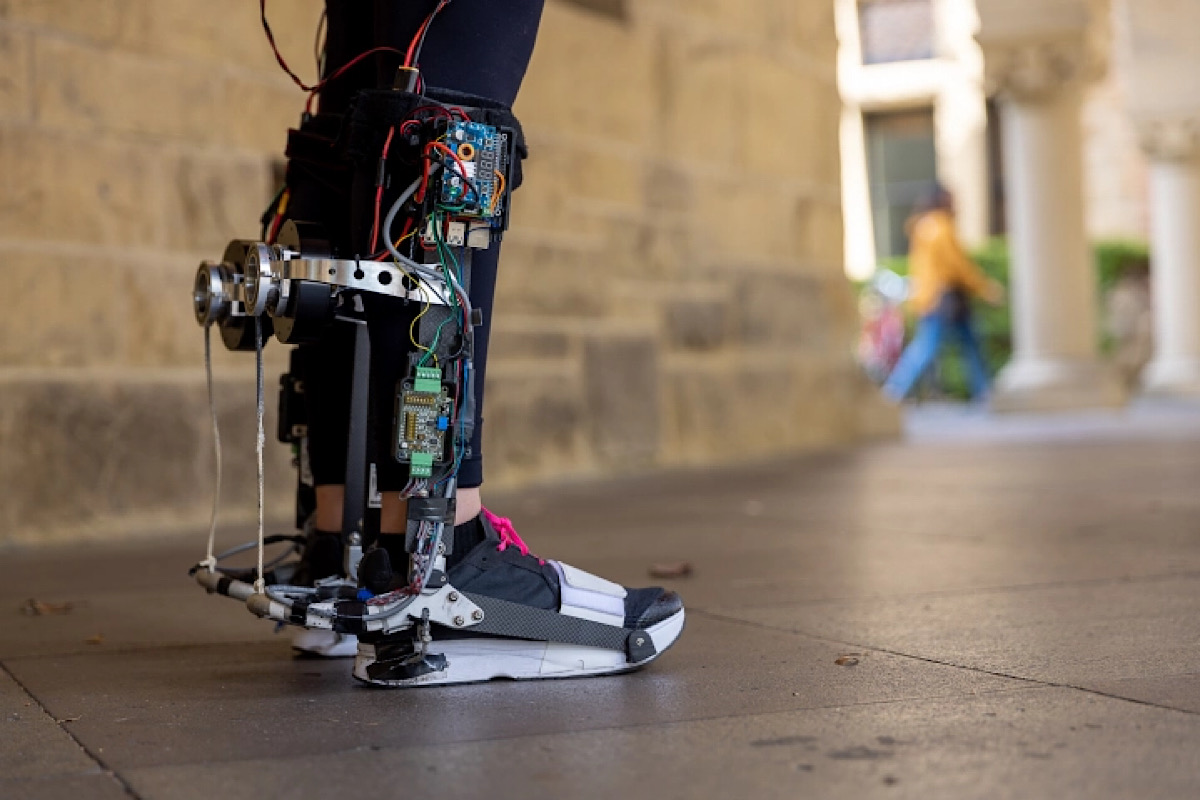
A robotic exoskeleton adapts to wearers to help them walk faster

The boot-like device uses machine learning to provide support for an individual with mobility problems.

By Rhiannon Williams

An exoskeleton that uses machine learning to adapt to its wearers’ gait could help make it easier for people with limited mobility to walk.

The exoskeleton, which resembles a motorized boot, is lightweight and allows the wearer to move relatively freely, both increasing their walking speed and reducing the amount of energy they use while moving.

Developed by researchers from Stanford University, it consists of cheap wearable sensors, a motor, and a small Raspberry Pi computer, powered by a rechargeable battery pack worn around the waist. The sensors are embedded into the boot to measure force and motion unobtrusively. 

Continue reading… “A robotic exoskeleton adapts to wearers to help them walk faster”
Discover the Hidden Patterns of Tomorrow with Futurist Thomas Frey
Unlock Your Potential, Ignite Your Success.

By delving into the futuring techniques of Futurist Thomas Frey, you’ll embark on an enlightening journey.

Learn More about this exciting program.