Drone delivery service using Starlink launched in Japan

    A delivery drone flies in a mountainous area in Chichibu, Saitama Prefecture

    Terra Drone, a Japanese drone delivery company, has partnered with Starlink, a satellite internet service provided by SpaceX, to bring high-speed internet and drone deliveries to rural and remote areas in Japan. The joint venture will enable Starlink to offer internet connectivity through its high-bandwidth, low-latency satellite network, while Terra Drone will use its fleet of drones to deliver supplies to areas that are difficult to access.

    “Terra Drone is proud to partner with Starlink to provide essential services to people living in remote areas of Japan,” said Toru Tokushige, the CEO of Terra Drone. “By leveraging our expertise in drone logistics and Starlink’s advanced satellite technology, we hope to make a meaningful difference in people’s lives.”

    Continue reading… “Drone delivery service using Starlink launched in Japan”

    New Way to Help Aging Cells Produce Collagen

    This treatment significantly reduced wrinkles in mice.

    According to a recent press release by Life Extension Advocacy Foundation (LEAF), a team of scientists from Insilico Medicine and Wize Pharma have discovered a new way to help aging cells produce collagen, a key protein that provides structure and support to the skin, bones, and other tissues.

    “Collagen plays a crucial role in maintaining the health and youthfulness of our body, but its production declines with age, leading to a range of age-related issues,” said Dr. Alex Zhavoronkov, founder and CEO of Insilico Medicine. “Our team has identified a novel approach to enhance collagen synthesis in aging cells, which could have significant implications for the field of regenerative medicine.”

    The researchers used an artificial intelligence (AI) system called GENTRL to design small molecules that can activate a specific pathway in the cells called the TGF-β signaling pathway, which is known to stimulate collagen production. They then tested these molecules on human skin fibroblasts and found that they could boost collagen synthesis by up to 300%.

    Continue reading… “New Way to Help Aging Cells Produce Collagen”

    Solar panel cleaning robot can be dropped off and picked up by drone

    Dirty solar panels reduce global solar energy output as much as 5 per cent, but a start-up in Israel has tested drone delivery of a new autonomous robot to clean rooftop arrays

    In an article published by New Scientist, a new solar panel cleaning robot has been introduced that can be deployed and retrieved by a drone. According to a statement by Dr. Aaron Bestick, the CEO of the company behind the technology, “The robot is designed to work in off-grid locations and can be deployed by a small drone, making it easy to clean solar panels in remote or hard-to-reach locations.” The robot, developed by U.S. startup Aerial Power, is equipped with brushes and nozzles that use water and detergent to clean solar panels. The drone drops off the robot at the site, and the robot cleans the solar panels before returning to the same location to be retrieved by the drone.

    Continue reading… “Solar panel cleaning robot can be dropped off and picked up by drone”

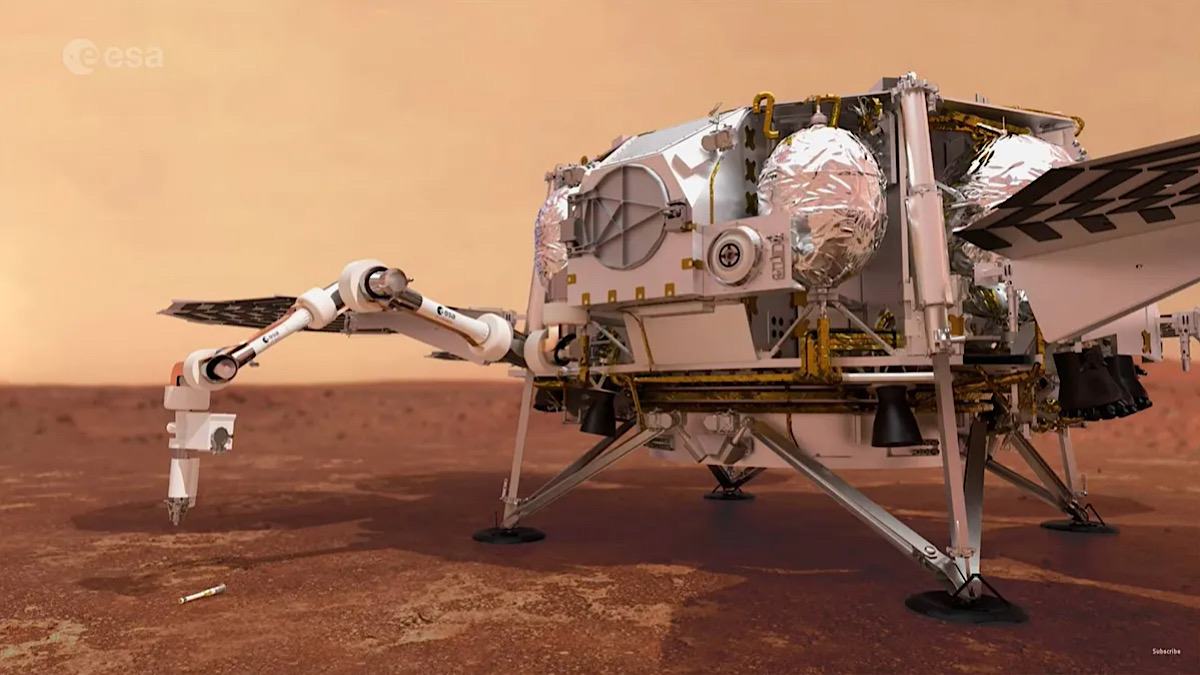
    NASA’s Perseverance rover is exploring Mars, searching for signs of ancient life and collecting rock samples.

    HOWEVER, GETTING THOSE SAMPLES BACK TO EARTH IS A COMPLEX AND CHALLENGING PROCESS. TO HELP WITH THIS TASK, NASA HAS DEVELOPED A ROBOTIC ARM THAT WILL PLAY A KEY ROLE IN THE MARS SAMPLE RETURN MISSION.

    The Sample Caching System on board the Perseverance rover includes a seven-foot-long robotic arm equipped with a drill and a coring mechanism. The arm can collect rock samples from the Martian surface, seal them in special tubes, and deposit them in a storage system located inside the rover.

    Once the samples are safely stored, the rover will deposit them on the surface of Mars for future retrieval by a follow-up mission. That mission, called the Mars Sample Return campaign, will launch a spacecraft to Mars to collect the samples and bring them back to Earth.

    Continue reading… “NASA’s Perseverance rover is exploring Mars, searching for signs of ancient life and collecting rock samples.”

    Chinese startup Xpeng Inc. has unveiled the world’s largest autonomous electric cargo airplane, the AT200.

    Pelican Cargo offers a range of up to 200 miles and a payload capacity of 400 pounds.

    THE CARGO PLANE HAS A LENGTH OF 41 METERS AND A WINGSPAN OF 38 METERS, MAKING IT THE LARGEST AIRCRAFT OF ITS KIND. IT CAN CARRY A MAXIMUM PAYLOAD OF 1.5 METRIC TONS AND FLY FOR UP TO 1,200 KILOMETERS ON A SINGLE CHARGE.

    The AT200 is designed to reduce the operating costs and carbon footprint associated with air freight. Its electric motors are more efficient and generate less noise and pollution than traditional jet engines, and the autonomous technology allows for more precise and efficient flight paths, reducing fuel consumption.

    The cargo plane comes equipped with advanced safety features, including backup systems for key components and real-time monitoring of flight data. Xpeng has reportedly conducted extensive testing and plans to enter commercial service in 2022.

    The AT200 has already attracted investment from leading Chinese delivery services, including SF Express and XAG. XAG plans to use the cargo plane for agricultural transport and will partner with Xpeng to develop additional autonomous technology for use in the agriculture industry.

    Continue reading… “Chinese startup Xpeng Inc. has unveiled the world’s largest autonomous electric cargo airplane, the AT200.”

    Researchers at the University of California, Santa Barbara, have developed a special drone that can collect environmental DNA (eDNA) from trees.

    THE EDNA CONTAINS GENETIC MATERIAL SHED BY ORGANISMS IN THE ENVIRONMENT AND CAN PROVIDE VALUABLE INSIGHTS INTO THE BIODIVERSITY AND HEALTH OF ECOSYSTEMS.

    The drone, called the Spectral Phenotyping and Environmental Reconnaissance (SPEAR) system, is equipped with a hyperspectral camera and a custom-built eDNA sampler. The camera captures detailed images of the tree canopy, while the eDNA sampler collects genetic material from the leaves.

    By analyzing the eDNA, researchers can identify the species of trees in the area, as well as the animals and insects that interact with them. This information can help scientists better understand the complex relationships between different species and the health of the ecosystem as a whole.

    The SPEAR system has already been tested in a variety of environments, including tropical rainforests and oak woodlands. The drone’s ability to collect eDNA from trees offers a non-invasive and highly effective method for monitoring biodiversity and ecosystem health.

    Continue reading… “Researchers at the University of California, Santa Barbara, have developed a special drone that can collect environmental DNA (eDNA) from trees.”

    Xpeng Robotics Secures $100 Million in Series A Funding to Advance Home Robotics

    Xpeng Robotics, a leading player in the field of robotics technology, has announced the completion of a successful $100 million Series A funding round. The funds will be used to further develop Xpeng’s cutting-edge home robotics technology and bring it to market.

    The Series A funding round was led by a group of high-profile investors, including well-known venture capital firms and strategic investors. The funds will be used to advance Xpeng’s work in the field of home robotics, which includes the development of highly advanced robots designed for use in the home.

    Continue reading… “Xpeng Robotics Secures $100 Million in Series A Funding to Advance Home Robotics”

    Luwu Intelligence Unveils Groundbreaking Raspberry Pi Robotic Dog with Arm

    Luwu Intelligence, a leading company in the field of robotics and automation, has made history with the launch of the world’s first Raspberry Pi robotic dog equipped with an arm. This innovative device represents a major milestone in the development of robotics technology, offering a highly advanced and versatile platform for a wide range of applications.

    The Raspberry Pi robotic dog, which has been developed by Luwu Intelligence, is a highly sophisticated machine that has been designed to be both easy to use and highly customizable. The device features a powerful Raspberry Pi computer, which provides a robust and flexible platform for programming and control. The robotic dog is also equipped with a robotic arm, which offers a wide range of manipulation and gripping capabilities, making it ideal for tasks such as picking up objects, manipulating tools, and performing complex actions.

    One of the key benefits of the Raspberry Pi robotic dog is its ability to be programmed for a variety of tasks, making it ideal for both hobbyists and professionals. Whether you’re looking to use it for education, research, or just for fun, the device is highly adaptable and can be programmed to perform a wide range of functions.

    Continue reading… “Luwu Intelligence Unveils Groundbreaking Raspberry Pi Robotic Dog with Arm”

    Autonomous Ride Hailing: A Future of Transportation Driven by Machines

    The transportation industry is undergoing a major transformation, and ride hailing services such as Uber and Lyft are leading the charge. With the advent of autonomous vehicles, the future of ride hailing is rapidly becoming one of machines driving us to our destinations.

    As technology continues to advance, the deployment of autonomous vehicles is becoming increasingly viable. Companies like Waymo, Tesla, and Cruise are at the forefront of developing self-driving cars that have the potential to revolutionize the way we move around our cities. These vehicles will provide a more convenient, efficient, and safer alternative to traditional forms of transportation.

    One of the key benefits of autonomous ride hailing services is the elimination of the need for a human driver. This not only makes the service more affordable, but also significantly reduces the risk of accidents caused by human error. Autonomous vehicles are equipped with advanced sensors and algorithms, such as those developed by Mobileye, that allow them to navigate complex road conditions and avoid potential hazards.

    Continue reading… “Autonomous Ride Hailing: A Future of Transportation Driven by Machines”


    “REVOLUTIONARY” DETONATION PROPULSION SYSTEM MAY PROPEL FUTURE CREWED MISSIONS INTO DEEP SPACE

    By MICAH HANKS

    NASA has announced the initial development and testing of its first full-scale rotating detonation rocket engine (RDRE) is complete, heralding technology that could aid in carrying humans to the moon in the near term, and may potentially also help facilitate deep space travel in the decades ahead.

    The RDRE, a novel rocket engine design that could pave the way for new kinds of spacecraft propulsion, relies on detonation produced by supersonic combustion to create the thrust that moves it through space. The design is both more powerful and more efficient than current rocket engine spacecraft, making it ideal for crewed deep space missions to planets like Mars.

    The development of the promising new system of propulsion was verified in recent days by engineering teams with NASA’s Marshall Space Flight Center in Huntsville, Alabama, with assistance from Indiana-based IN Space LLC, who collaborated with the space agency to develop the engine and conduct more than a dozen “hot fire” tests last year.

    The collaboration has relied on 3D printing and other efficient production methods to develop and test hardware used in the construction of the RDRE, which is capable of extended periods of operation and maintaining optimum performance, despite extremely hot and highly pressurized environments produced by detonation rocket propulsion.

    NASA says the RDRE is able to achieve this by using its proprietary copper-alloy GRCop-42 paired with a process involving powder bed fusion additive manufacturing, which allows its continued operation under such extreme conditions.

    Continue reading…
    “REVOLUTIONARY” DETONATION PROPULSION SYSTEM MAY PROPEL FUTURE CREWED MISSIONS INTO DEEP SPACE

    Biomedical Engineers Create Semi-Living ‘Cyborg Cells’ That Could Revolutionize Health, Environment

    A living replica of Dutch painter Vincent van Gogh’s famously severed ear is displayed at Culture and media museum ZKM, in Karlsruhe, southwestern Germany, on June 4, 2014. The ear is part of the exhibition “Sugababe” by Diemut Strebe, an artist specialised in artworks using biological material, who collaborated with scientists to reconstruct the Dutch master’s ear using DNA from a relative and 3D printers. 

    By Jace Dela Cruz

    THESE CYBORG CELLS MAY BE USED TO CREATE NOVEL DRUGS AND CLEAN UP POLLUTION, ACCORDING TO THE RESEARCHERS.

    University of California’s (UC) biomedical engineers has developed “cyborg cells,” which are semi-living but cannot reproduce. However, these synthetic cells could have vast applications, especially in creating novel drugs and cleaning up pollution, according to the university’s press release on Jan. 18.

    Continue reading… “Biomedical Engineers Create Semi-Living ‘Cyborg Cells’ That Could Revolutionize Health, Environment”

    A miniature robot for diagnosing lung cancer

    This tiny soft robot can be steered through the branches of the lungs without causing damage for safer diagnosis.

    In recent years, soft robotics has garnered a spotlight in the surgical field due to their scalability, flexibility, and the potential for safer interactions with biological tissues. These aspects of soft robotics are particularly beneficial in minimally invasive surgical procedures where surgeons must be able to perform many tasks within limited spaces.

    Interventional bronchoscopy procedures stand to benefit greatly from the development of soft robots because of the challenging paths that a bronchoscope must traverse. Coupled with the small diameters of the lung branches, this makes it very difficult with traditional tools to reach deeper in the lungs, where early tumors are generally found.

    However, when a robot is made smaller to fit in tighter spaces, it produces smaller forces before failing. This is especially relevant when the robot is made of soft materials.

    Continue reading… “A miniature robot for diagnosing lung cancer”
    Discover the Hidden Patterns of Tomorrow with Futurist Thomas Frey
    Unlock Your Potential, Ignite Your Success.

    By delving into the futuring techniques of Futurist Thomas Frey, you’ll embark on an enlightening journey.

    Learn More about this exciting program.