China Unveils Record-Breaking Tunnel-Boring Machine for Massive Yangtze River Project

China has completed production on its largest-ever tunnel-boring machine (TBM), named Jianghai, meaning “river and ocean” in Chinese. This giant machine measures 16.64 meters (54.5 feet) in diameter and spans 475 feet (145 meters) in length, weighing approximately 5,000 metric tons (11 million pounds). Built through a partnership between China Railway Construction Heavy Industry (CRCHI) and China Railway 14th Bureau Group, Jianghai is the most massive TBM developed domestically in China to date.

The new TBM is set to tackle a challenging tunneling project beneath the Yangtze River in Jiangsu Province. The machine will bore a tunnel linking Nantong and Suzhou, a key section of a planned 24-mile (39-kilometer) highway scheduled for completion by 2028. At a depth of up to 246 feet (75 meters), the tunnel will extend roughly 7 miles (11.2 kilometers) under the Yangtze River. Due to the difficult terrain, which includes soft soil, underground water, and silt, traditional manual tunneling is unfeasible. Instead, Jianghai will proceed at a daily pace of 12 to 16 meters (39 to 52 feet), with the entire tunneling phase expected to last two and a half years. Precision is crucial for the project; to protect nearby river dams, the TBM’s path must stay within 1 centimeter (0.4 inches) of specifications.

Continue reading… “China Unveils Record-Breaking Tunnel-Boring Machine for Massive Yangtze River Project”
New “Nervous System” Technology Could Extend Drone Flight Time and Reduce Maintenance

Scientists at the University of Southampton have developed a groundbreaking drone technology that mimics a nervous system, enabling drones to stay operational longer while reducing maintenance needs. This innovative system uses advanced optical fibers that continuously monitor the drone’s structural integrity, effectively reducing the frequency of required inspections and boosting operational efficiency.

One of the key benefits of this optical fiber system is its ability to monitor stresses and strains on the drone in real time, similar to how a nervous system functions in the human body. Dr. Holmes from the university’s Optoelectronics Research Centre explained, “This is a kind of nervous system for drones. It sends back real-time information using light – rather than electricity – avoiding the interference issues common with electronic systems.”

Continue reading… “New “Nervous System” Technology Could Extend Drone Flight Time and Reduce Maintenance”

New Findings in Magnetism of Kagome Magnets Could Propel Quantum Computing and Superconductor Technologies

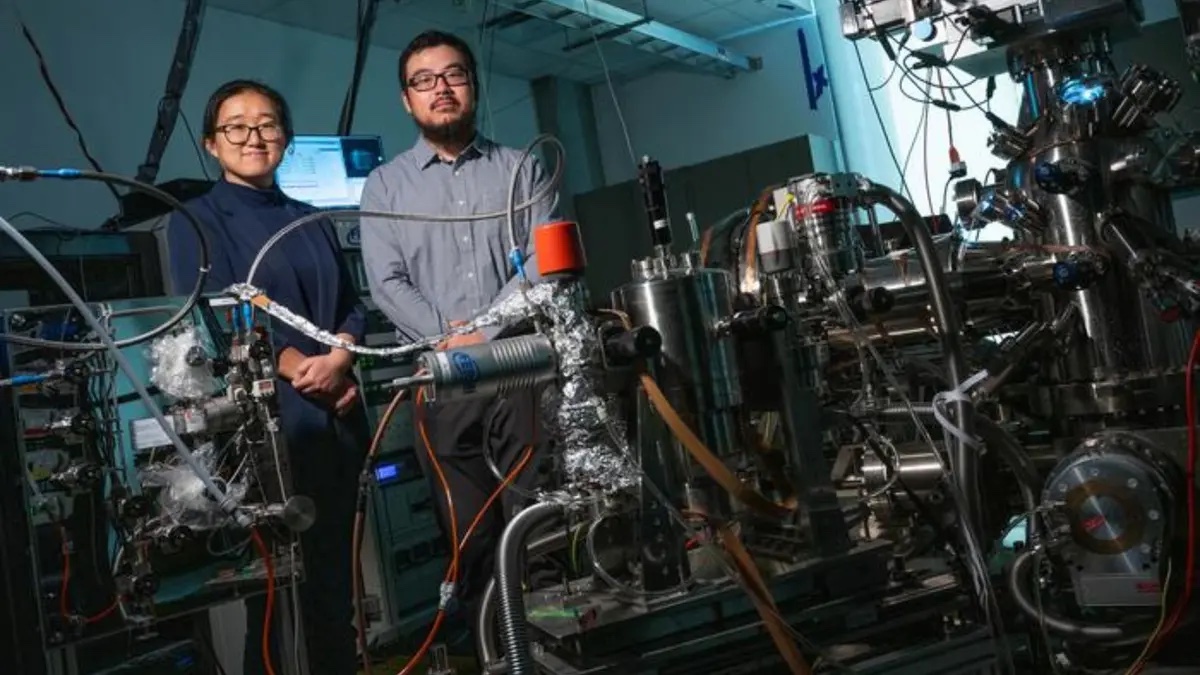
Researchers at Rice University have unveiled groundbreaking insights into magnetism and electronic interactions within advanced materials, potentially revolutionizing fields like quantum computing and high-temperature superconductors. Their study of iron-tin (FeSn) thin films has shifted the understanding of kagome magnets, which are structured in a pattern inspired by traditional Japanese basket weaving. The team discovered that FeSn’s magnetic properties are driven by localized electrons, rather than the previously believed mobile electrons—a revelation that could alter how scientists approach materials in quantum technology.

Despite these advancements, challenges remain in observing magnetic splitting at higher temperatures in kagome magnets. However, in a key development, the team was able to create high-quality FeSn thin films and analyze their electronic structure using a combination of molecular beam epitaxy and angle-resolved photoemission spectroscopy. Their findings showed that the kagome flat bands remained split even at elevated temperatures, a sign that localized electrons drive the material’s magnetic properties. This discovery underscores the complex role electron correlation plays in shaping magnetic behaviors in kagome structures.

Continue reading… “New Findings in Magnetism of Kagome Magnets Could Propel Quantum Computing and Superconductor Technologies”

New Algorithm Promises to Slash AI’s Soaring Energy Consumption by 95%

The rapid rise of artificial intelligence has sparked transformative advances across industries, but it has also introduced a major challenge: energy consumption. As more companies integrate AI technologies, the energy demands of these systems are increasing rapidly. While major players like Nvidia, Microsoft, and OpenAI have downplayed these concerns, one company, BitEnergy AI, believes it has a solution.

Researchers at BitEnergy AI have developed a new algorithm, Linear-Complexity Multiplication (L-Mul), which could drastically reduce AI energy usage by up to 95% without compromising performance. This breakthrough has the potential to reshape the AI landscape, offering a more sustainable approach to AI processing.

Continue reading… “New Algorithm Promises to Slash AI’s Soaring Energy Consumption by 95%”

CRISPR for Youthful Brains? How Gene Editing Could Help Reverse Brain Aging

Gene editing might not seem like the obvious solution for keeping brains young, yet recent research suggests that CRISPR technology could rejuvenate brain stem cells and even reverse aspects of aging. Stem cells, which are unspecialized cells capable of renewing themselves and differentiating into various cell types, could hold the key to age reversal, especially in neural tissues.

Though the potential application in humans is still speculative, recent discoveries in mice offer promising insights. A team led by Professor Anne Brunet at Stanford University successfully used CRISPR to boost aging mice’s brain function by disrupting neural stem cells, which then produced new, youthful neurons. According to Brunet, this process may enhance resilience in the older brain.

Continue reading… “CRISPR for Youthful Brains? How Gene Editing Could Help Reverse Brain Aging”

“Molecular Jackhammers”: How Scientists Are Using Near-Infrared Light to Destroy Cancer Cells

In a revolutionary study, researchers from Rice University have discovered a powerful new method to fight cancer by utilizing molecular vibrations triggered by near-infrared (NIR) light. This technique could pave the way for non-invasive cancer treatments that effectively destroy cancer cells with minimal impact on surrounding tissues.

The core of this breakthrough lies in a small dye molecule, traditionally used in medical imaging, that acts as a “molecular jackhammer.” When activated by NIR light, these molecules begin to vibrate in sync—a phenomenon known as plasmon resonance—which ultimately ruptures the membranes of cancer cells, effectively dismantling them.

Continue reading… ““Molecular Jackhammers”: How Scientists Are Using Near-Infrared Light to Destroy Cancer Cells”

Japanese Scientists Engineer Hybrid Cells with Plant-Like Photosynthesis in Groundbreaking Study

Japanese scientists have successfully created hybrid cells that combine animal and plant traits, allowing animal cells to produce energy from sunlight through photosynthesis. This novel approach, led by researchers at the University of Tokyo, could have transformative implications for creating lab-grown tissues, organs for transplants, and even cultivated meat.

In living organisms, animal cells rely on mitochondria to convert chemical energy from food into usable energy. Plant cells, however, use chloroplasts to perform photosynthesis, converting sunlight into cellular energy. In this study, the team introduced chloroplasts from red algae into cultured hamster cells, enabling them to perform photosynthesis—a feat previously achieved only in yeast, a fungus, but never before in animal cells.

Continue reading… “Japanese Scientists Engineer Hybrid Cells with Plant-Like Photosynthesis in Groundbreaking Study”

A New Era for AI Robotics: Physical Intelligence Aims to Transform Household Tasks with Adaptive AI “Brains”

Emerging startup Physical Intelligence (Pi) isn’t aiming to build new robots; instead, it seeks to equip existing machines with AI that enables them to autonomously perform precise tasks requiring dexterity, like folding laundry or packing fragile items. This unique approach, showcased in Pi’s recent unveiling of its general-purpose robotic model, “π0” (pi-zero), opens up exciting possibilities for household automation and beyond.

San Francisco-based Physical Intelligence has developed pi-zero, a foundational AI model that powers robots to tackle tasks previously too complex for most machines. With this software, robots can manage chores such as removing clothes from the dryer, grinding coffee beans, and even setting the table. The vision? A home where robots can vacuum, load the dishwasher, make the bed, and even plan and cook dinner by analyzing fridge contents.

Continue reading… “A New Era for AI Robotics: Physical Intelligence Aims to Transform Household Tasks with Adaptive AI “Brains””

Five Game-Changing Technologies Revolutionizing Agriculture

Agriculture, the foundation of human civilization, sustains populations and fuels economies. Recently, technological advancements have transformed the agricultural sector, paving the way for more sustainable, efficient, and resilient farming practices. Here are five innovations that are reshaping the future of food production:

Continue reading… “Five Game-Changing Technologies Revolutionizing Agriculture”

Princeton’s Tabletop Fusion Reactor Could Be the Future of Clean Energy

The Princeton Plasma Physics Laboratory (PPPL) has achieved a groundbreaking feat: creating a compact fusion reactor using 3D-printed parts and off-the-shelf materials, all small enough to fit on a kitchen table. This deceptively simple device—a glass vacuum tube surrounded by 3D-printed nylon and thousands of magnets—contains the key to replicating the power of the stars, potentially leading to a future of abundant, clean energy.

The story, shared by IEEE Spectrum, highlights how PPPL’s reactor could change the fusion landscape. While fusion reactors have existed for years, they’re typically massive and costly. Germany’s Wendelstein 7-X, an experimental stellarator, took two decades and $1.1 billion to build. In contrast, PPPL’s smaller-scale reactor prototype is an affordable proof of concept, demonstrating that the principles of fusion can be achieved with minimal resources and compact designs.

Continue reading… “Princeton’s Tabletop Fusion Reactor Could Be the Future of Clean Energy”

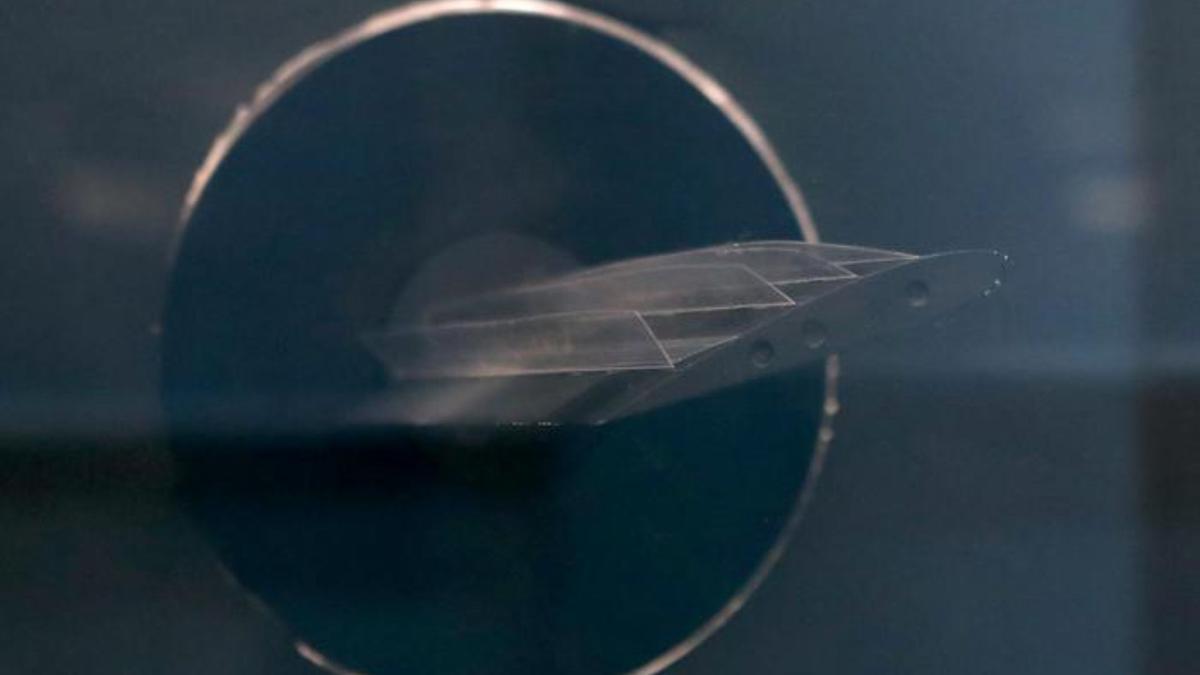
Inspired by Birds, Princeton Engineers Develop Advanced Multi-Row Wing Flaps to Improve Aircraft Performance and Safety

Researchers at Princeton University’s School of Engineering have looked to nature—specifically, birds—to enhance flight safety and efficiency in aircraft. Inspired by the covert feathers birds use for precise maneuvers, the team has designed multi-row flaps that deploy automatically to prevent aircraft from stalling.

Birds rely on covert feathers during complex aerial movements, like landing in high winds, to improve control and stability. While engineers have long used single-row flaps in aircraft to improve lift, they haven’t explored multi-row configurations that mimic how birds manage airflow in response to environmental changes. Assistant Professor Aimy Wissa and her team focused on the aerodynamics of deploying multiple rows of flaps and how this design could improve flight performance.

Continue reading… “Inspired by Birds, Princeton Engineers Develop Advanced Multi-Row Wing Flaps to Improve Aircraft Performance and Safety”

China’s Space Transportation Tests Supersonic Jet Prototype, Targeting Mach 4 Speeds

Beijing-based Space Transportation, also known as Lingkong Tianxing Technology, has announced the successful test flight of its Yunxing prototype—a commercial transport plane capable of flying nearly twice the speed of Concorde, the world’s first supersonic passenger plane. The Yunxing prototype can reportedly reach speeds of Mach 4, or approximately 3,069 miles per hour, and a follow-up engine test is planned for next month, according to the South China Morning Post (SCMP). The company aims to complete a full-sized model by 2027.

When the Concorde launched, it set groundbreaking standards for supersonic travel, becoming the first passenger airliner to reach twice the speed of sound. Powered by Rolls-Royce Olympus engines, the Concorde was capable of speeds up to 1,330 miles per hour, enabling passengers to fly from New York to London in about three hours. Now, Space Transportation intends to shatter this record with a supersonic jet that could complete a journey from Beijing to New York in roughly two hours.

Continue reading… “China’s Space Transportation Tests Supersonic Jet Prototype, Targeting Mach 4 Speeds”
Discover the Hidden Patterns of Tomorrow with Futurist Thomas Frey
Unlock Your Potential, Ignite Your Success.

By delving into the futuring techniques of Futurist Thomas Frey, you’ll embark on an enlightening journey.

Learn More about this exciting program.