Embracing AI in Writing: From Skepticism to Strategic Advantage

I’ve always been a writer, and writing has been at the core of my career in public relations and communications strategy. Initially, I scoffed at the idea that generative AI could threaten my role. How could a “soulless” machine rival my creative skill? But soon, I realized the true risk to my career wasn’t AI itself—it was my reluctance to adopt it.

Despite years of working with AI technologies, I held back from incorporating it into my daily tasks. When asked at a marketing team meeting about our use of AI, I was the only one not using it regularly. It was like being the last person without a smartphone—a distinction I didn’t want.

Continue reading… “Embracing AI in Writing: From Skepticism to Strategic Advantage”

Envision Energy Unveils Industry-Leading Battery for Grid Storage at Shanghai Tech Expo

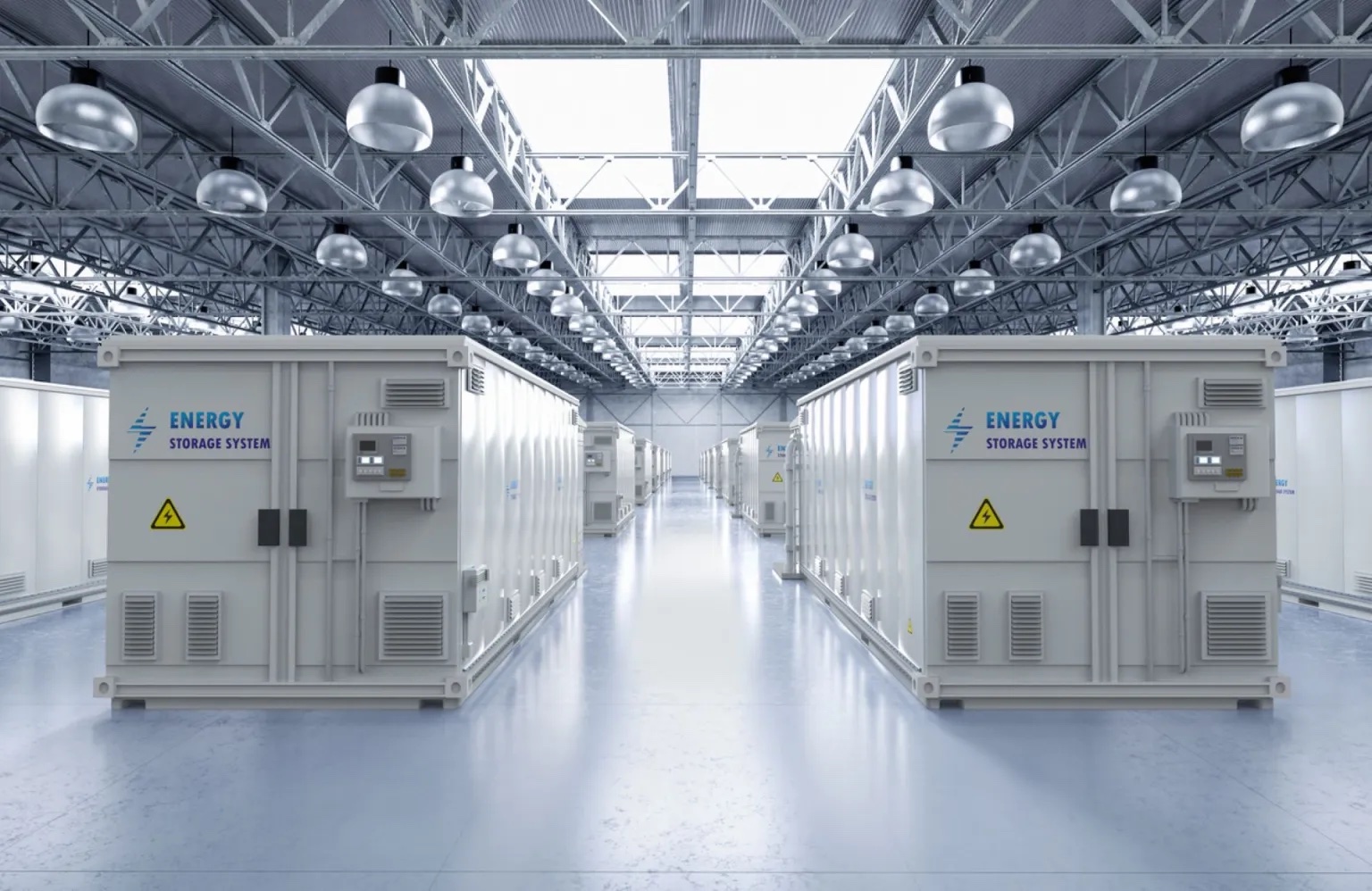
At a tech exhibition in Shanghai, battery manufacturer Envision Energy showcased its latest high-capacity grid-storage battery, drawing widespread attention. According to PV Magazine’s report on the Electrical Energy Storage Alliance’s Energy Storage Exhibition, Envision’s new battery boasts an impressive energy density of 541 kilowatt-hours per square meter. This advanced unit can store up to 8 megawatt-hours (MWh) of power within a standard 20-foot container, surpassing the 6 MWh capacity currently offered by leading competitors.

“We made a huge jump from our previous generation products to cut costs at the system level,” said a representative from Envision, as quoted in PV Magazine. The power pack’s high energy density is designed to store and manage intermittent renewable energy more efficiently, with a remarkable 96% “roundtrip” efficiency rate, which measures the amount of energy retained during storage and retrieval.

Continue reading… “Envision Energy Unveils Industry-Leading Battery for Grid Storage at Shanghai Tech Expo”

EU Awards $55.1 Million to Boost Tidal Energy with New Projects in France

The European Union has allocated $55.1 million (€51 million) to support the development of two tidal energy farms in France, marking a significant step in renewable energy. The funding, provided through the EU Innovation Fund, has been awarded to HydroQuest, a French tidal energy company, and Normandie Hydroliennes, a tidal energy developer.

HydroQuest, in partnership with renewable energy firm Qair, will use the funding to establish the 17.5-MW FloWatt tidal farm, expected to launch in 2026. Normandie Hydroliennes will develop a 12-MW NH1 tidal farm featuring four turbines, slated for completion in 2028. This initiative is part of a larger effort by the European Commission to support 85 net-zero projects across 18 countries, granting €4.8 billion ($5.19 billion) in the Innovation Fund’s largest round of funding since its inception.

Continue reading… “EU Awards $55.1 Million to Boost Tidal Energy with New Projects in France”

Mazda Unveils the EZ-6: A Game-Changing Entry in the Electric Vehicle Market

The electric vehicle (EV) market continues to evolve with rapid technological advancements, and now Mazda is making a powerful entry with its all-new EZ-6 sedan. This latest EV promises a remarkable range of up to 600 km (373 miles) on the CLTC cycle, aiming to address one of the biggest challenges in EV adoption: range anxiety.

The EZ-6’s extended range is powered by a robust 68.8 kWh battery and a 190 kW (254 hp) electric motor. For those wanting even more distance, Mazda also offers an Extended-Range Electric Vehicle (EREV) version. This variant pairs a 93-hp gasoline engine with a 160 kW electric motor, reaching a total range of up to 1,301 km (808 miles). According to CarNewsChina, the EZ-6 can recharge from 30% to 80% in a swift 15 minutes, enhancing convenience for EV drivers.

Continue reading… “Mazda Unveils the EZ-6: A Game-Changing Entry in the Electric Vehicle Market”

Hiroshi Ishiguro’s Android Doppelganger: The Future of Life-like Robotic Clones

Have you ever wondered if a robotic duplicate of yourself—with a similar face, hair, and expressions—could one day exist? Hiroshi Ishiguro, a Japanese inventor, has turned this idea into a reality. Over the past 18 years, he has developed six robotic clones of himself. His latest creation, Geminoid HI-6, is an eerily accurate replica of Ishiguro, mirroring his appearance and even replicating his facial expressions.

Currently displayed at Osaka University, the Geminoid HI-6 goes beyond appearances. Ishiguro has equipped it with a large language model, plus knowledge from ten of his books and numerous media interviews. “This version is conversational,” explains Ishiguro. Originally, he used the robot to deliver lectures in his absence. Now, however, it can engage with audiences and respond to questions after a lecture, enhancing the sense of interaction and presence.

Continue reading… “Hiroshi Ishiguro’s Android Doppelganger: The Future of Life-like Robotic Clones”

Reviving the Lost Passenger Pigeon: The Great De-Extinction Experiment

Once the most populous bird in North America—and perhaps the world—the passenger pigeon darkened the skies with immense flocks, their cobalt wings and peach-colored chests creating vast aerial spectacles. These flocks were so dense and lengthy that they could block the sun for days, while the collective sound of their wings was said to chill the earth below. Numbering in the billions, they vanished almost overnight, casualties of human exploitation.

In the 19th century, passenger pigeons became a cheap and abundant protein source. They were hunted mercilessly, netted, clubbed, shot, poisoned, and suffocated. By the time protective legislation was considered, few remained. The last passenger pigeon, a female named Martha, died in 1914 at the Cincinnati Zoo.

Continue reading… “Reviving the Lost Passenger Pigeon: The Great De-Extinction Experiment”

Embracing the Future: Building Irreplaceable Skills in the Age of AI

As we stand on the cusp of a monumental shift in artificial intelligence, the urgency to become irreplaceable has never been clearer. Today, we’re consuming “fast creativity,” “fast connections,” and “fast decisions,” much like the world once embraced fast food. This tendency toward “AI obesity”—settling for “good enough” rather than striving for excellence—threatens our jobs, businesses, and even our humanity.

However, AI isn’t inherently the problem. Like food, AI’s impact depends entirely on how we use it. To harness AI’s benefits without succumbing to its pitfalls, we must develop the right competencies, which I call the “three competencies of the future.” These competencies—being AI-ready, human-ready, and change-ready—are essential for thriving in an AI-driven world.

Continue reading… “Embracing the Future: Building Irreplaceable Skills in the Age of AI”

First Student and Con Edison Unveil Solar-Powered V2X Smart Energy Hub with Electric School Buses in Brooklyn

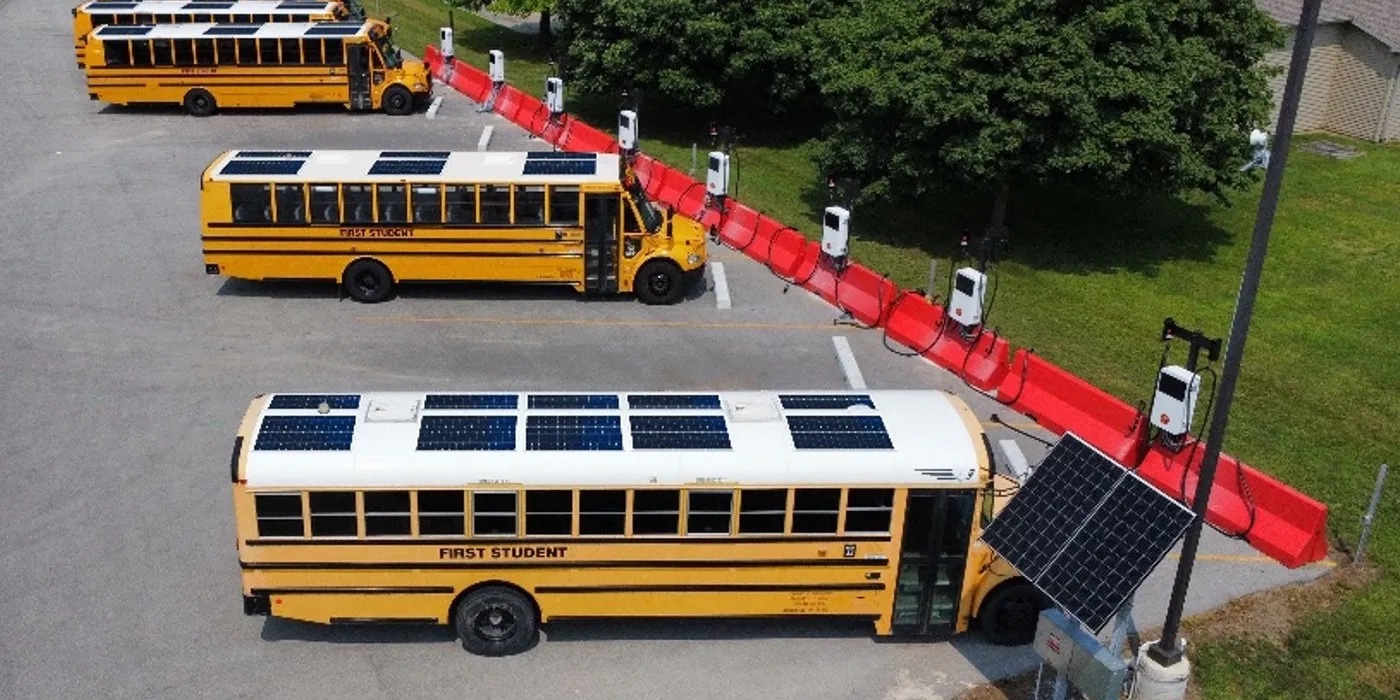
Student transportation leader First Student and utility company Con Edison have launched an innovative vehicle-to-everything (V2X) Smart Energy Hub in Brooklyn, featuring 12 solar-roofed electric school buses. Located at First Student’s Malta Street site, the project is set to replace traditional diesel buses with clean energy-powered alternatives. Solar panels on the buses and rooftop arrays at the facility combine to create a sustainable system for energy generation, battery storage, and power delivery.

First Student has employed its trenchless First Charge deployment method, which eliminates the need for extensive digging, cuts construction costs by at least 30%, and simplifies future charging system upgrades. This technology provides a faster, more efficient rollout, minimizing disruption and expense.

Continue reading… “First Student and Con Edison Unveil Solar-Powered V2X Smart Energy Hub with Electric School Buses in Brooklyn”

China Unveils World’s Most Powerful Hydraulic Cylinder, Marking Breakthrough in Marine Engineering

China has introduced the world’s most powerful hydraulic cylinder for marine pile driving, a remarkable technological feat unveiled in Changzhou, Jiangsu province. With a record-breaking maximum thrust of 5,000 tons—enough to lift 1,000 adult African elephants—the cylinder represents a significant advance in China’s engineering capabilities, according to reports from local media.

Designed by the state-owned China Communications Construction Company (CCCC), this hydraulic powerhouse stands 92 feet tall and measures 6.5 feet in diameter, roughly the height of a ten-story building. The SCMP reported that this massive cylinder will serve as the central “heart” of a 150-meter pile-driving vessel currently under construction, positioning China as a leader in marine engineering technology and reducing dependence on imported components.

Continue reading… “China Unveils World’s Most Powerful Hydraulic Cylinder, Marking Breakthrough in Marine Engineering”

Unitree G1 Sets New Benchmark with Record-Setting Long Jump for Humanoid Robots

Unitree’s G1 humanoid robot has achieved a remarkable feat in agility, setting a new standing long jump record for humanoid robots. In a recently released video, the G1 showcases its advanced performance, achieving a 4.6-foot (1.4 meters) standing long jump—a significant milestone for humanoid robots of its size. Standing at only 1.32 meters tall, the G1 boasts cutting-edge joints with 23 to 43 degrees of freedom and a maximum torque of 120 Nm. The video also highlights features of Unitree’s Go2 robot dog, demonstrating the company’s innovation across various robot models.

In addition to the G1’s jumping capability, Unitree has made strides in humanoid speed with its H1 V3.0 Evolution, which set a Guinness World Record in March as the fastest full-sized humanoid robot, reaching speeds of 7.38 mph on level ground. The G1, retailing at $16,000, is currently available for educational, research, and industrial use, making it accessible to a broad range of applications.

Continue reading… “Unitree G1 Sets New Benchmark with Record-Setting Long Jump for Humanoid Robots”

Mercedes-Benz Opens Europe’s First Integrated Battery Recycling Plant for EV Sustainability

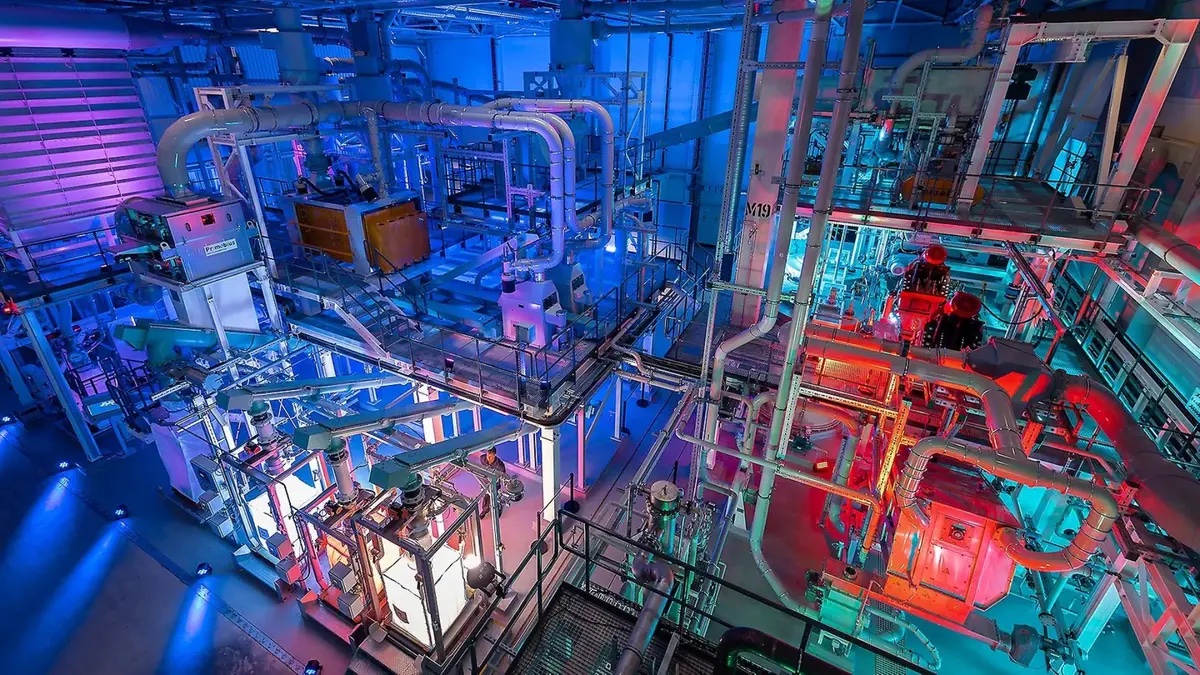
Mercedes-Benz has made a groundbreaking advancement in sustainable electric vehicle (EV) production by opening Europe’s first integrated battery recycling facility in Kuppenheim, Germany. This state-of-the-art plant, representing an investment of tens of millions of euros, is designed to process 2,500 tonnes of batteries annually, producing enough recycled materials to manufacture modules for over 50,000 new EVs. The facility employs a mechanical-hydrometallurgical process that achieves an impressive 96 percent recovery rate of valuable materials. “This innovative technology enables us to recover valuable raw materials from the battery with the highest possible degree of purity,” said Jörg Burzer, Board Member responsible for Production at Mercedes-Benz Group AG.

Innovative EV Recycling Process

The facility’s recycling process begins with the mechanical separation of battery components, followed by the hydrometallurgical treatment of “black mass,” containing valuable metals like cobalt, nickel, and lithium. These metals are then refined to battery-grade quality, allowing them to be reused in new Mercedes-Benz EVs. The plant operates at up to 80°C, an energy-efficient temperature that reduces both energy consumption and waste, and it’s powered entirely by green electricity. The 6,800-square-meter roof of the facility also houses a 350-kilowatt photovoltaic system, making the plant carbon-neutral.

Continue reading… “Mercedes-Benz Opens Europe’s First Integrated Battery Recycling Plant for EV Sustainability”

Unlocking the Secrets of Ancient Roman Concrete: A Self-Healing Formula for Modern Strength

Ancient Roman structures built with concrete have withstood centuries, inspiring researchers to uncover the secret behind their resilience. Unlike today’s Portland cement-based concrete, Roman concrete is known for its incredible durability and even a self-healing ability. This strength has led scientists to seek ways to replicate it, hoping to craft stronger, more sustainable materials for modern use.

Portland cement, developed in the 19th century, is the basis of today’s concrete, but it lacks the robustness of Roman concrete and has a high environmental cost due to its complex production process. Engineers are now exploring concrete alternatives that reduce or eliminate the use of traditional cement.

Continue reading… “Unlocking the Secrets of Ancient Roman Concrete: A Self-Healing Formula for Modern Strength”
Discover the Hidden Patterns of Tomorrow with Futurist Thomas Frey
Unlock Your Potential, Ignite Your Success.

By delving into the futuring techniques of Futurist Thomas Frey, you’ll embark on an enlightening journey.

Learn More about this exciting program.