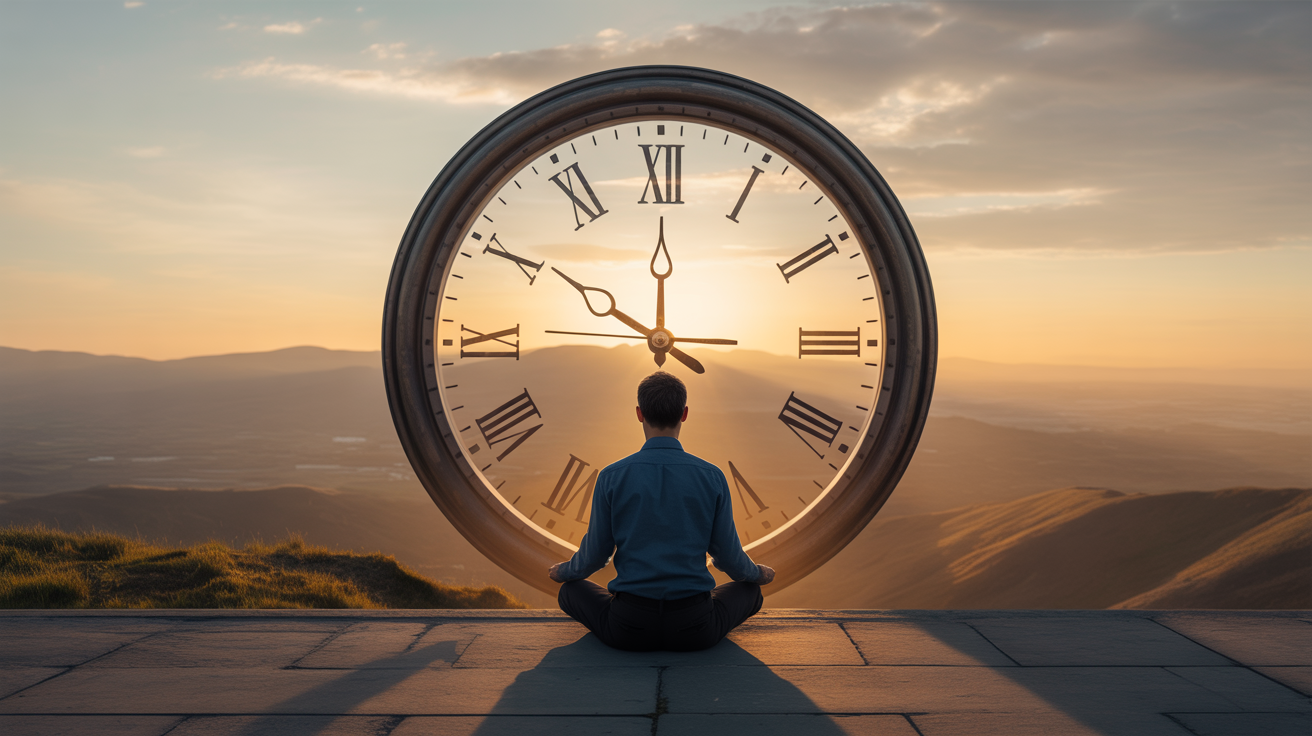
By Futurist Thomas Frey
We just went through another time change, and like clockwork (pun intended), social media erupted with complaints. Our bodies feel off. Our kids are cranky. Our sleep schedules are disrupted. Productivity drops for weeks.
The debate always follows the same pattern: some people cite energy savings and evening daylight as benefits, while others point to increased heart attacks, car accidents, and workplace injuries in the days following the switch. States threaten to opt out. Congress occasionally considers making Daylight Saving Time permanent. And then we all move on until the next time change.
But here’s what nobody’s asking: why are we still letting a system invented in 1918 dictate how 330 million Americans experience time?
Daylight Saving Time was created during World War I to conserve coal and electricity. The logic was simple: shift the clocks forward in summer so people use less artificial light in the evenings. Germany did it first. The U.S. followed. And we’ve been stuck with this twice-yearly disruption ever since—despite the fact that modern energy studies show the savings are negligible or nonexistent.
We’re optimizing for coal lamps and gas lighting in an era of LED bulbs and solar panels. It’s absurd.
But making Daylight Saving Time permanent—the “solution” most commonly proposed—isn’t much better. It just picks one arbitrary time system over another arbitrary time system. Neither actually aligns with how human bodies work.
The Real Problem: Clock Time vs. Body Time
Here’s the deeper issue nobody wants to confront: our entire timekeeping system is fundamentally broken.
Every wall clock, smartphone, and digital display runs on a system oriented around 12:00 noon—when the sun reaches its highest point. This made perfect sense for ancient sundial designers who had no better reference points. But it’s terrible for human biology.
Humans are diurnal creatures. We wake with sunrise. We sleep after sunset. Our bodies are governed by circadian rhythms—internal biological clocks that regulate sleep, hormone production, body temperature, and alertness based on light and darkness cycles.
But our social timekeeping system completely ignores this. Your alarm goes off at 7:00 AM whether sunrise happens at 5:30 AM or 8:00 AM. You’re expected at work at 9:00 AM regardless of whether your body is primed for alertness or still producing sleep hormones. Your evening schedule is dictated by clock time, not by when darkness actually falls.
The result? We’re in constant conflict with our own biology. We fight our bodies every single day, using caffeine to force alertness when we should be sleeping and melatonin to force sleep when we should be waking. We call this normal. It’s not. It’s a design flaw in how we’ve structured modern life.
Enter Circadian Time
What if there were an alternative? Not Daylight Saving Time, not permanent Standard Time, but something fundamentally different—a timekeeping system that actually aligns with human biology?
I call it Circadian Time.
The concept is simple but radical: instead of organizing our days around 12:00 noon, we organize them around sunrise. Every day begins at “zero time” when the sun first crests the horizon. Your day starts when your body naturally wants to wake—with light.
This means sunrise would always happen at, say, 6:00 AM in Circadian Time, regardless of the season. The tradeoff? Sunset would fluctuate more dramatically—as much as six hours difference between summer and winter in places like Colorado. But here’s the key insight: we’d be maximizing our alignment with daylight hours when our bodies are naturally alert, rather than fighting artificial schedules that ignore biological reality.
“Wait,” you’re thinking, “this sounds impossibly complicated. How would anything get scheduled? How would global coordination work?”
That’s where technology comes in.
The Circadian Time App
In 1918, this idea would have been impossible. Today, it’s trivial.
We have GPS satellites that know exactly where you are. We have atomic clocks that keep perfect time. We have smartphones that already adjust automatically for time zones and Daylight Saving changes. Creating an app that recalibrates your day around sunrise based on your precise location and the season? That’s not hard. That’s a weekend coding project.
But imagine taking it further. Imagine an AI-powered Circadian Time app that doesn’t just reset zero time to sunrise—it learns your personal circadian rhythms through sensors and wearables. It discovers when you’re naturally most alert, when your body wants to sleep, when your cognitive performance peaks, when you need rest.
This isn’t science fiction. We already track sleep cycles, heart rate variability, activity levels, and dozens of other biological markers. We just don’t integrate that data into how we structure our days. Instead, we let 9-to-5 schedules invented in the 1920s dictate when we work, regardless of whether our bodies and brains are actually functioning optimally.
A true Circadian Time system would create a personalized daily rhythm that aligns with both solar cycles and your individual biology. It would tell you when to tackle your hardest cognitive work, when to exercise, when to schedule meetings, when to wind down—all based on your body’s actual readiness, not arbitrary clock numbers.
Rather than fighting your biology with caffeine and willpower, you’d be working with it. Rather than forcing yourself to be productive during your personal low-energy periods, you’d structure tasks around your natural performance cycles.
This is what unlocking your “inner superman” actually looks like—not through superhuman effort, but through intelligent alignment with how your body actually works.
Why This Matters More Than You Think
You might be thinking, “This is interesting philosophy, but I live in the real world where everyone else uses normal clocks.”
Fair point. But consider this: we’ve already proven that rigid time systems can change. We adopted Daylight Saving Time. We’ve debated abandoning it. Some states have. Time zones themselves were only invented in 1883 when railroads demanded coordination.
Time systems aren’t natural laws—they’re social conventions. And social conventions can change when better alternatives emerge.
More importantly, the COVID pandemic proved that millions of people can work on flexible schedules when given the option. Remote work, flexible hours, asynchronous collaboration—we’ve already demolished the idea that everyone must work 9-to-5 in the same physical location.
Why not take the next step? Why not acknowledge that the arbitrary numbers on clocks are actively working against human performance and well-being?
Final Thoughts
We just went through another time change, and we’ll go through another one in six months. We’ll complain, adjust, and accept it as inevitable.
But it’s not inevitable. It’s a choice. We’re choosing to maintain a time system designed for coal conservation during World War I. We’re choosing to ignore a century of research into circadian biology. We’re choosing to let ancient sundial logic dictate modern life.
The technology exists today to do something radically better. We could align our days with sunrise. We could personalize schedules around individual biology. We could stop forcing humans to adapt to clocks and start making clocks adapt to humans.
The only thing stopping us is the assumption that because something has always been done a certain way, it must continue that way forever.
Time to wake up. Preferably at sunrise.
Related Links:
Circadian Time: Unlocking Our Inner Superman
The Science of Circadian Rhythms
Daylight Saving Time: Costs and Benefits Analysis