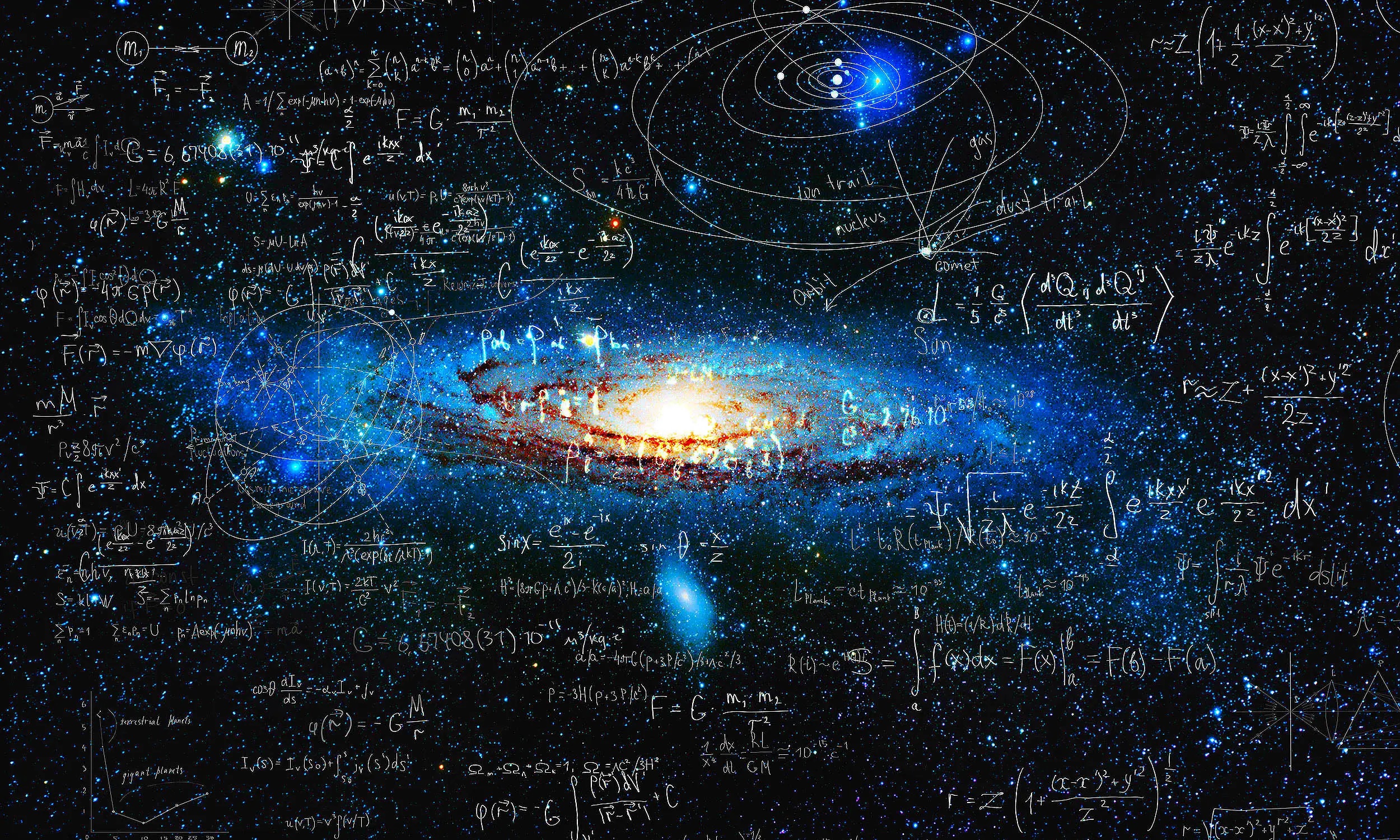
For nearly a century, dark matter—a mysterious substance believed to account for most of the universe’s mass—has baffled scientists. First hypothesized by Dutch astronomer Jan Oort in 1932 to explain the unseen mass necessary for galaxies to remain intact, dark matter has remained elusive, with no direct detection despite decades of research. However, a recent study by Dr. Richard Lieu of The University of Alabama in Huntsville (UAH) proposes a groundbreaking alternative that could shift our understanding of cosmic forces.
In his paper, published in the Monthly Notices of the Royal Astronomical Society, Dr. Lieu introduces a revolutionary theory suggesting that gravity might exist without the presence of mass. If correct, this theory could explain certain gravitational phenomena without the need for dark matter.
“My inspiration came from a desire to find a different solution to the gravitational field equations in general relativity,” explains Lieu, a distinguished professor of physics and astronomy at UAH. The simplified form of these equations, known as the Poisson equation, is typically applied to galaxies and galaxy clusters. “It provides a finite gravitational force even when no detectable mass is present,” Lieu continues. “This search for an alternative is driven by frustration with the prevailing dark matter theory, which has persisted for nearly a century without direct evidence.”
Lieu’s theory is based on the concept of topological defects—cosmic irregularities that may have emerged during a phase transition in the early universe. A phase transition refers to a large-scale change in the state of matter. Lieu suggests that these defects, which he envisions as shell-like structures, could generate the extra gravitational force needed to hold galaxies and galaxy clusters together.
While the precise nature of the phase transition that could create such defects remains unclear, Lieu describes these topological anomalies as highly dense, compact regions of space. Commonly, these structures manifest as linear formations known as cosmic strings, though Lieu’s theory also entertains the possibility of spherical shells.
“The shells in my paper consist of two layers,” Lieu explains. “The inner layer is made of positive mass, and the outer layer contains negative mass. The total mass of both layers combined is zero, meaning no measurable mass. Yet, when a star sits within this shell, it experiences a strong gravitational pull toward the center of the shell.”
This radical theory could provide an alternative explanation for the gravitational forces that bind galaxies, challenging the long-standing need for dark matter. While further research is needed to test and refine Lieu’s ideas, his work presents a bold step toward reshaping our understanding of gravity and the structure of the universe.
By Impact Lab