Author: admin

Revolutionizing Biological Research: Parallel Bio’s Vision for Automation and Organoid Technology

Ari Gesher, the new Head of Technology at Parallel Bio, may be a newcomer to biotech, but he’s already making waves with his ambitious vision for disrupting biological research. The startup is banking on a combination of automation and organoid technology to streamline experiments, making them faster, more efficient, and highly reliable. The aim? Freeing scientists to focus on designing innovative experiments while robots handle the repetitive tasks.

Gesher believes this approach could solve the longstanding biotech dilemma of having to choose between speed, quality, and cost. “There’s this old adage: cheaper, faster, better—pick two,” he said. “Our approach asks, why not have all three?”

Continue reading… “Revolutionizing Biological Research: Parallel Bio’s Vision for Automation and Organoid Technology”

Revolutionary Drone Swarm Tackles Wildfires with AI Technology

A team of researchers has developed a swarm of self-coordinating drones designed to act as first responders in combating wildfires. This innovative solution, which combines cutting-edge AI, thermal, and optical imaging technology, was created by the University of Sheffield’s School of Electrical and Electronic Engineering to enhance early mitigation strategies for wildfires.

These AI-powered drones can autonomously detect, investigate, and relay information about fires to firefighting teams. By utilizing swarm technology developed at the University of Bristol, the drones can intelligently coordinate with one another to deploy fire retardants, monitor fire progression, and safely return to base. Dr. Lyudmila Mihaylova, Professor of Signal Processing and Control at the University of Sheffield, emphasized the importance of this breakthrough, saying, “Autonomous wildfire detection and localization, especially in remote and large geographic areas with hot weather, is a challenging task that current technology has not fully addressed.”

Continue reading… “Revolutionary Drone Swarm Tackles Wildfires with AI Technology”

Turning Plastic Waste into Graphene: A Groundbreaking Solution to Microplastic Pollution

Plastic waste is an escalating environmental crisis, and scientists are exploring innovative ways to tackle it. A team of researchers has developed a revolutionary method to transform microplastics into graphene—a material even harder than diamond—with potential applications across various industries. This environmentally friendly technique not only offers a sustainable approach to recycling plastic but also holds promise for fields like water purification, sensor manufacturing, and chemical absorption.

The process, spearheaded by researchers at James Cook University, involves converting microplastics into graphene through a method called Atmospheric Pressure Microwave Plasma (APMP) synthesis. Dr. Adeel Zafar, a key researcher, highlighted the method’s efficiency, stating, “Approximately 30 mg of microplastics produced nearly 5 mg of graphene in just one minute. This is significantly faster and more efficient than previous methods, offering a simpler and greener solution to plastic waste.”

Continue reading… “Turning Plastic Waste into Graphene: A Groundbreaking Solution to Microplastic Pollution”

The Rise of Biohybrid Robots: Blurring the Line Between Machine and Life

In 2014, researchers at the University of Illinois achieved a groundbreaking feat by creating a microscopic swimming robot, but what truly set it apart was its composition—cardiac muscle cells derived from rats. This innovation was among the first “biohybrid robots,” blending biological components with mechanical systems, challenging the traditional notion of robots as non-living, metal-based entities.

Two years later, Harvard researchers expanded on this concept, creating a 16-millimeter biohybrid “animal” resembling a stingray. With an elastomer body, a gold skeleton, and rat muscle cells, this creature glided through water, powered and guided by light. Since then, biohybrid robots have evolved, with recent advancements including a robot that walks with a human-like gait and a robotic hand equipped with biological neural networks.

Continue reading… “The Rise of Biohybrid Robots: Blurring the Line Between Machine and Life”

Revolutionary Nanocatalyst Transforms Wastewater Treatment

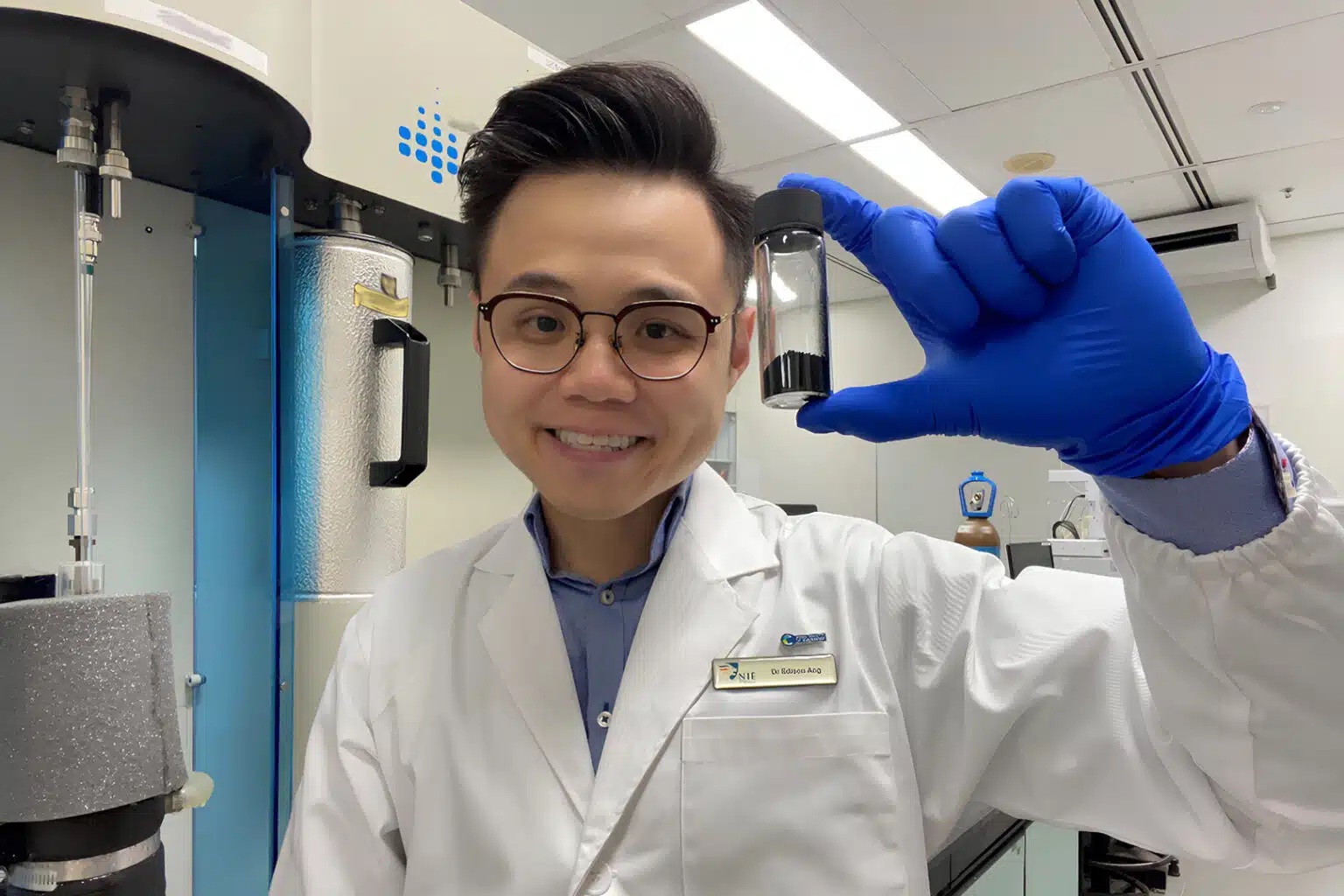
A research team led by Assistant Professor Edison Ang Huixiang from the National Institute of Education/Nanyang Technological University (NIE/NTU) Singapore has developed a groundbreaking nanocatalyst that could revolutionize wastewater treatment and pollutant elimination. Their innovative approach, detailed in a recent study published in Materials Horizons and featured in the Emerging Investigator series, introduces a more efficient method for cleaning wastewater.

The researchers engineered a novel catalyst by combining cobalt with manganese oxide nanorods (MnO@Co/C-600). They enhanced its performance by coating the catalyst with carbon, significantly improving its ability to attract and degrade harmful pollutants.

Continue reading… “Revolutionary Nanocatalyst Transforms Wastewater Treatment”

Richtech Robotics Introduces AI Bartender ADAM at Globe Life Field

Richtech Robotics, a leader in AI-driven service robots, has launched its latest ADAM robot bartender at Globe Life Field, home of the Texas Rangers. This installation marks the 10th deployment of ADAM, reflecting the Paradise, Nevada-based company’s commitment to enhancing personalized hospitality experiences.

“ADAM has seen a surge in popularity following the successful debut of its advanced AI features at CES 2024,” said Matt Casella, president of Richtech Robotics. “We’re thrilled to bring ADAM to the iconic Globe Life Field, continuing our mission to deliver exceptional, engaging, and fluid interactions across various industries. We’re eager to see how fans at the stadium interact with our leading robot.”

Continue reading… “Richtech Robotics Introduces AI Bartender ADAM at Globe Life Field”

Microbial Allies: How Bacteria Are Revolutionizing Green Tech Recycling

In an innovative approach to combating climate change, scientists have formed an unexpected alliance with bacteria to extract rare metals crucial for green technology. Without the aid of these microbes, the world could soon face a shortage of raw materials needed to build essential components like turbines, electric cars, and solar panels.

Leading this groundbreaking work is a team from the University of Edinburgh, which is focusing on harnessing bacteria to extract valuable metals such as lithium, cobalt, and manganese from discarded batteries and electronic waste. These scarce and costly metals are essential for producing electric cars and other green technologies, a fact emphasized by Professor Louise Horsfall, chair of sustainable biotechnology at Edinburgh.

Continue reading… “Microbial Allies: How Bacteria Are Revolutionizing Green Tech Recycling”

Breakthrough in Brain-Machine Interfaces: EPFL Develops Miniaturized Brain-to-Text Technology

Researchers from EPFL have developed a groundbreaking miniaturized brain-machine interface (BMI) capable of translating brain activity into text on tiny silicon chips. This next-generation technology, known as the Miniaturized Brain-Machine Interface (MiBMI), promises to revolutionize communication for individuals with severe motor impairments.

Brain-machine interfaces have long held the potential to restore communication and control to people with conditions such as amyotrophic lateral sclerosis (ALS) and spinal cord injuries. However, traditional BMIs have been bulky, power-hungry, and limited in practical applications. The new MiBMI, developed by EPFL’s Integrated Neurotechnologies Laboratory (INL), overcomes these challenges by offering a compact, low-power, and highly accurate solution.

Continue reading… “Breakthrough in Brain-Machine Interfaces: EPFL Develops Miniaturized Brain-to-Text Technology”

Revisiting the Drake Equation: New Factors Shed Light on the Rarity of Advanced Civilizations

In 1961, astronomer Frank Drake introduced his famous equation to estimate the number of civilizations in the Milky Way capable of communicating with us. However, our understanding of planetary science has evolved considerably since then. Now, a team of scientists has proposed crucial adjustments to the equation that might explain the Great Silence—the puzzling lack of contact with extraterrestrial civilizations.

The Drake Equation, while popular and intuitive, has faced criticism for its broad assumptions and ambiguous parameters. It often produces an overly optimistic estimate for the value of N—the number of civilizations in our galaxy with which we might communicate. This has fueled the Fermi Paradox: If intelligent life is common, why haven’t we found evidence of it? Recent research published in Scientific Reports offers a potential solution by introducing two new factors into the equation.

Continue reading… “Revisiting the Drake Equation: New Factors Shed Light on the Rarity of Advanced Civilizations”

Remote Work’s Impact on U.S. Urban Transportation Patterns

The widespread shift to remote work following the Covid-19 pandemic has dramatically altered urban transportation trends across the United States, according to a recent study by MIT researchers.

The study reveals a marked difference in the impact of remote work on vehicle miles traveled (VMT) and mass-transit usage across the country.

“A 1 percent decrease in onsite workers correlates with a roughly 1 percent reduction in automobile miles driven, but a 2.3 percent drop in mass transit ridership,” says Yunhan Zheng SM ’21, PhD ’24, an MIT postdoctoral researcher and co-author of the study.

“This is among the first studies to establish the causal relationship between remote work and its effects on vehicle miles traveled and transit ridership across the U.S.,” adds Jinhua Zhao, an MIT professor and another co-author.

Continue reading… “Remote Work’s Impact on U.S. Urban Transportation Patterns”

World’s Largest Soccer Stadium: The Grand Stade Hassan II to Rise in Morocco

Stadium experts Populous and architects Oualalou + Choi have teamed up to design an extraordinary new stadium in the form of a massive tent. Named the Grand Stade Hassan II, this architectural marvel will be situated near Casablanca, Morocco, and is set to become the largest soccer stadium in the world.

The stadium is being developed for Morocco’s role in co-hosting the 2030 FIFA World Cup alongside Portugal and Spain. Drawing inspiration from a traditional Moroccan gathering known as a Moussem, the design echoes the Bedouin-inspired stadium in Qatar, creating a cultural and historical connection.

Continue reading… “World’s Largest Soccer Stadium: The Grand Stade Hassan II to Rise in Morocco”

Breakthrough in Brain-Computer Interfaces: Restoring Communication for ALS Patients

A brain-computer interface (BCI) surgically implanted in a 45-year-old man with amyotrophic lateral sclerosis (ALS) and severe dysarthria has demonstrated remarkable success in restoring conversational communication, according to findings from the BrainGate2 trial.

On the first day of use, just 25 days after surgery, the BCI achieved an impressive 99.6% accuracy with a 50-word vocabulary. By the second day, it reached 90.2% accuracy using a vocabulary based on a 125,000-word dictionary, reported David Brandman, MD, PhD, from the University of California Davis, and his colleagues in the New England Journal of Medicine.

Continue reading… “Breakthrough in Brain-Computer Interfaces: Restoring Communication for ALS Patients”
Discover the Hidden Patterns of Tomorrow with Futurist Thomas Frey
Unlock Your Potential, Ignite Your Success.

By delving into the futuring techniques of Futurist Thomas Frey, you’ll embark on an enlightening journey.

Learn More about this exciting program.