Author: admin

Bee Venom: A Potential Game-Changer in the Fight Against Breast Cancer

In a groundbreaking study that is causing ripples in the medical community, researchers have uncovered a remarkable avenue in cancer research – using bee venom to target and eliminate cancer cells. This revelation has the potential to revolutionize the future of cancer treatment.

For centuries, the humble European honeybee (Apis mellifera) has provided humans with valuable products such as honey, propolis, and venom. Now, scientists are delving deep into the molecular structure of bee venom, particularly in the context of combating one of the most prevalent forms of cancer afflicting women globally: breast cancer. The study aims to gain a comprehensive understanding of the molecular intricacies and target specificity of bee venom in combating cancer cells. This knowledge will serve as the foundation for developing and optimizing potent new therapeutics, harnessing a resource that is not only abundantly available but also economically viable for production in diverse communities worldwide.

Continue reading… “Bee Venom: A Potential Game-Changer in the Fight Against Breast Cancer”

Revolutionary Bionic Hand Offers Life-Changing Transformations for Amputees

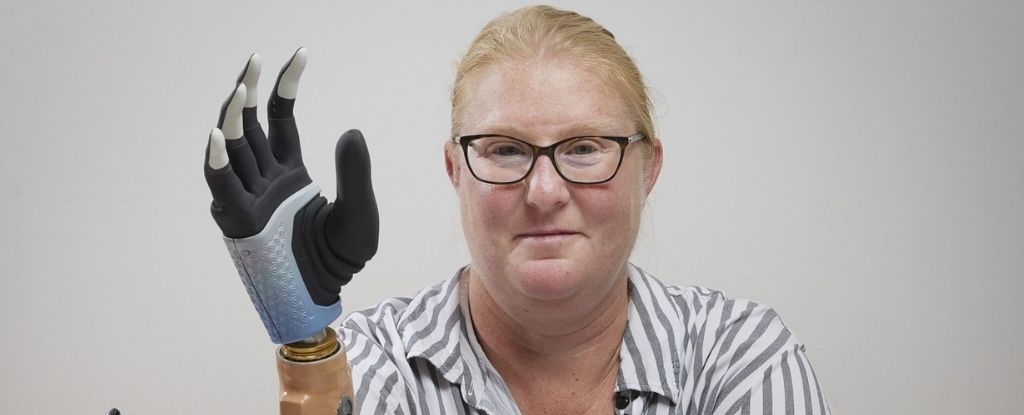
A pioneering bionic hand has brought about a remarkable transformation for a 50-year-old Swedish woman who lost her hand in a farming accident. This cutting-edge prosthesis utilizes groundbreaking technology to establish a direct connection with the user’s bones, muscles, and nerves, creating a human-machine interface that enables artificial intelligence to translate brain signals into precise, natural movements. The recipient, Karin, now experiences a limited sense of touch and can individually move all five fingers of her bionic hand with a remarkable success rate of 95 percent.

After two decades of living without her right hand, Karin has regained the ability to perform 80 percent of her everyday tasks. This includes activities like food preparation, object handling, clothing fastening, and operating door knobs or screws. Additionally, since receiving the prosthetic hand, Karin’s excruciating phantom pain, which had previously felt as though her hand was undergoing torment, has significantly diminished, reducing her reliance on medication.

Continue reading… “Revolutionary Bionic Hand Offers Life-Changing Transformations for Amputees”

Bioprinted Skin Breakthrough Offers Faster Healing and Reduced Scarring

A groundbreaking development in bioprinting has the potential to transform the field of human skin replacement. This innovative bioprinted skin is the result of a novel process that combines all six primary skin cell types with hydrogels, enabling the creation of thick, multilayered skin. When successfully transplanted, this advanced skin can accelerate wound healing and significantly reduce scarring, heralding a new era of reliability and natural integration for skin grafts and transplants.

The integration of hydrogels with the primary skin cell types represents a remarkable advancement. It offers the prospect of faster healing and less evidence of transplants, as patients require less time to nurse the bioprinted skin back to health. While researchers have previously explored the creation of living skin for robots, this breakthrough demonstrates that generating full-thickness human bioengineered skin is both achievable and highly beneficial. It promotes faster healing and a more authentic appearance following the application of bioprinted skin.

Continue reading… “Bioprinted Skin Breakthrough Offers Faster Healing and Reduced Scarring”

Neural Dust: Tiny Sensors Revolutionize Real-Time Organ Monitoring and Electroceutical Treatment

While monitoring your heart rate and VO2 max with the latest fitness tracker is impressive, researchers are pioneering new, minuscule technology capable of tracking the real-time status of nearly any organ, nerve, or muscle. In an awe-inspiring leap towards a futuristic-cyborg reality, this innovation, aptly named “neural dust,” holds the potential to stimulate nerves and muscles, introducing a groundbreaking era of “electroceutical” treatments for conditions like epilepsy and inflammation.

Engineers at the University of California, Berkeley, have engineered sensors scarcely larger than a large grain of sand. These sensors harness ultrasound technology to both power the implant and transmit data. Successfully implanted in the muscles and nerves of rats, neural dust is poised for further development, with the researchers aspiring to create even smaller sensors applicable within the brain.

Continue reading… “Neural Dust: Tiny Sensors Revolutionize Real-Time Organ Monitoring and Electroceutical Treatment”

A Technological Breakthrough: 3D Scanning Human Motion in Hollywood

As the Hollywood actors’ strike continues, approaching its 100th day without a resolution in sight, a significant technological advancement has breathed new life into one of the actors’ major concerns. The breakthrough in 3D scanning technology is making it increasingly feasible to capture human body movements and performances, potentially paving the way for studios to store and reuse actors’ mannerisms as 3D models indefinitely.

While 3D scanning technology has been present in Hollywood for decades, the conventional methods involved complex and time-consuming setups. These setups often included multiple cameras arranged in a 360-degree configuration around an actor’s body or, when capturing motion, the use of ping-pong ball-like “markers” attached directly to the actor along with a snug-fitting bodysuit. Even with recent advancements employing artificial intelligence, such as the UK startup Move AI, multiple cameras remained a common requirement (although Move AI now offers a limited, invitation-only release of a single-camera app).

Continue reading… “A Technological Breakthrough: 3D Scanning Human Motion in Hollywood”

Bleu Jour Seeks Backing for Cutting-Edge KUBB Mini PC

Bleu Jour, renowned for crafting exceptional mini PCs, is now actively seeking backers to bring their latest innovation, the KUBB mini PC, to life.

Measuring a mere 8cm x 8cm, this device is hailed as the world’s smallest fanless PC powered by the Intel N100 CPU. In addition to its compact size, the KUBB mini PC boasts remarkable features, making it a standout in its category. It operates in complete silence and offers configurations with up to 16GB LPDDR5 RAM and storage options of up to 1TB NVMe M.2 SSD. Under the hood, a four-core 3.4GHz CPU ensures high-performance computing.

Continue reading… “Bleu Jour Seeks Backing for Cutting-Edge KUBB Mini PC”

Hadrian X: The Revolutionary Bricklaying Robot Transforming Construction

The remarkable Hadrian X, a bricklaying robot, arrives at a construction site seemingly as an ordinary truck. However, it then extends a colossal 32-meter (105-foot) boom arm and commences the precise laying of up to 300 large masonry blocks every hour. This spectacle is truly impressive. We’ve been closely following this Australian innovation since its inception as an excavator-mounted prototype back in 2015. Even at that early stage, it could construct the brick framework for a full-sized home in just two days – a pace approximately 20 times faster than human bricklayers, as reported by Fastbrick Robotics, now known as FBR, the creator of the robot. In 2023, it has transitioned to commercial use. FBR has unveiled its first “next-gen” Hadrian-X system, and during a recent outdoor test build, it achieved a new speed record, maintaining a rate exceeding 300 masonry blocks per hour on a testing and calibration run.

When we extrapolate this impressive rate to the largest blocks the Hadrian X can handle – hefty 45-kilogram (99-pound) monsters measuring 600 x 400 x 300 mm (23.6 x 15.7 x 11.8 in) – we find that this machine has the potential to lay approximately 70 square meters (753 square feet) of vertical wall each hour, roughly equivalent to a quarter of a tennis court. Furthermore, FBR anticipates that it can become even faster, with a rated top speed of 500 blocks per hour.

Upon arriving at a site, the Hadrian X is operated via a tablet, following a CAD plan to lay bricks with precision. Workers load masonry blocks into the back of the truck by the pallet load. Then, “dehacker” robots unpack and, if necessary, cut them to size using a circular saw. Subsequently, the blocks are dispatched one by one down the central shaft of the boom arm, each coated with a special construction adhesive, which replaces traditional mortar. Within 45 minutes, they are firmly in place and dry. Notably, the Hadrian X’s telescoping boom arm is sufficiently long to construct three-story structures from street level without requiring a ladder, and it operates around the clock, even in various weather conditions.

The initial test build, as seen in the video provided, reveals some minor inaccuracies in brick placement around the 1:08 mark. However, considering that this was the very first run for the next-gen robot in a testing and calibration capacity, it’s reasonable to assume that such issues will be swiftly addressed. FBR currently has two more robots under construction, with the first and second units set to travel to the USA for demonstrations and deployment in FBR’s Florida-based “Wall as a Service” business.

The Hadrian X represents a groundbreaking advancement in the construction industry, poised to revolutionize how we approach bricklaying and construction projects.

Promising Breakthrough: New Biomarker Unveiled as Potential Target for Alzheimer’s Disease

Alzheimer’s disease, a devastating neurodegenerative condition afflicting millions worldwide, has long eluded effective treatment options. Characterized by the accumulation of amyloid plaques in the brain, these plaques have been implicated in the disease’s hallmark symptoms. Despite years of research, drugs aimed at reducing plaque buildup have shown mixed results in clinical trials. However, a recent study led by researchers at Yale University may have uncovered a new biomarker and a potential therapeutic target that could change the course of Alzheimer’s disease. These groundbreaking findings were published in the journal Nature.

The research team, under the guidance of Dr. Jaime Grutzendler, the Dr. Harry M. Zimmerman and Dr. Nicholas and Viola Spinelli Professor of Neurology and Neuroscience at the Yale School of Medicine, has introduced a novel perspective. Their study suggests that it is not the amyloid plaques themselves but rather the swelling caused by a byproduct of these plaques that underlies the debilitating symptoms of Alzheimer’s.

Continue reading… “Promising Breakthrough: New Biomarker Unveiled as Potential Target for Alzheimer’s Disease”

AI in Healthcare: From Diagnosis to Surgery, A Transformative Force

Amid the COVID-19 lockdown, Courtney’s four-year-old son, Alex, began experiencing excruciating pain and stunted growth, setting off a three-year-long battle involving 17 doctors to uncover the root cause of his suffering. With no clarity on her son’s condition, Courtney turned to an unconventional source for answers: ChatGPT. “I meticulously reviewed his MRI notes and fed them into ChatGPT,” shared the determined mother. To her astonishment, the AI suggested that Alex might be grappling with a rare neurological condition known as tethered cord syndrome. Following this revelation, Alex underwent surgery to rectify his spinal issues and is currently on the road to recovery.

While ChatGPT is no substitute for medical professionals, this remarkable incident highlights the immense potential of artificial intelligence in healthcare. In October 2022, the World Economic Forum projected that India’s AI investment is set to reach a substantial USD 11.78 billion by 2025, contributing around USD 1 trillion to the Indian economy by 2035. AI has already made its mark in various sectors, and healthcare is the latest addition to this list. India, with its massive population of 1.4 billion, grapples with a shortage of medical professionals, with only 64 doctors per 100,000 people, as opposed to the global average of 150 doctors per 100,000. AI is stepping in to complement the efforts of healthcare providers.

Continue reading… “AI in Healthcare: From Diagnosis to Surgery, A Transformative Force”

South Korean Scientists Develop Groundbreaking Battery Anode for Rapid EV Charging

A team of experts hailing from South Korea’s esteemed Pohang University of Science and Technology has made an exciting claim – they have engineered a revolutionary battery anode capable of reducing electric vehicle (EV) recharge times to a mere six minutes. This breakthrough represents yet another stride in a global effort by researchers to transform EVs into dependable and cost-effective modes of transportation, regardless of geographic location.

The heart of Pohang’s innovation revolves around the replacement of the conventional graphite anode with a manganese ferrite variant. This manganese ferrite anode has proven to store an astonishing 1.5 times more lithium ions than the researchers initially anticipated, as reported by Freethink.

Continue reading… “South Korean Scientists Develop Groundbreaking Battery Anode for Rapid EV Charging”

The Impact of AI on Workplace Collaboration: Balancing Pros and Cons

Recent workplace data has ignited a discussion on the potential influence of artificial intelligence (AI) on collaboration and knowledge sharing within organizations. Content-generating robots, like ChatGPT, offer numerous valuable applications for society, but the question arises – where should the line be drawn when it comes to deploying these tools in the workplace?

SINTEF, in collaboration with Knowit consultants, conducted a recent study, which involved extensive interviews with employees in technology and digitalization-focused enterprises. The study unveiled two consistent trends in how AI is being integrated into work environments.

Continue reading… “The Impact of AI on Workplace Collaboration: Balancing Pros and Cons”

Sanctuary AI’s Phoenix Robot: Revolutionizing the Workforce and the Future of Labor

In recent years, the global dialogue surrounding robots and their impact on the workforce has experienced a remarkable transformation. Instead of the widespread concerns about robots taking jobs, the focus has shifted towards exploring how rapidly these machines can bridge the gaps in the labor market. At the forefront of this pivotal shift is Sanctuary AI, a Vancouver, B.C.-based company that has successfully secured over $100 million in Canadian dollars to bring its vision of “labor as a service” to life. The centerpiece of their innovative approach is Phoenix, a 5-foot, 7-inch general-purpose humanoid robot, equipped with an AI system called Carbon.

Geordie Rose, the CEO and co-founder of Sanctuary AI, passionately states, “The economic opportunity here, in terms of being able to both provide the labor that people want and being able to profit from it by developing a technology like this, is an opportunity unlike any that I think has ever existed. It’s way bigger than the steam engine, for example.” In an episode of the GeekWire Podcast, Rose discusses the evolving trends, the current capabilities and limitations of Phoenix, the company’s overarching strategy, and the hurdles that lie ahead.

Continue reading… “Sanctuary AI’s Phoenix Robot: Revolutionizing the Workforce and the Future of Labor”
Discover the Hidden Patterns of Tomorrow with Futurist Thomas Frey
Unlock Your Potential, Ignite Your Success.

By delving into the futuring techniques of Futurist Thomas Frey, you’ll embark on an enlightening journey.

Learn More about this exciting program.