
If you live in a US city, car-sharing services like Lyft and Uber might seem omnipresent. However, the ride-sharing economy still has a ways to go, at least according to consumer sentiment.

If you live in a US city, car-sharing services like Lyft and Uber might seem omnipresent. However, the ride-sharing economy still has a ways to go, at least according to consumer sentiment.

We’ve trained machine learning systems to identify objects, navigate streets and recognize facial expressions, but as difficult as they may be, they don’t even touch the level of sophistication required to simulate, for example, a dog. Well, this project aims to do just that — in a very limited way, of course. By observing the behavior of A Very Good Girl, this AI learned the rudiments of how to act like a dog.
Continue reading… “Who’s a good AI? Dog-based data creates a canine machine learning system”

The creation of in vitro, or “clean,” meat involves extracting stem cells from animals
The extracted cells are grown and multiplied in a lab to create meat
Experts’ conservative estimates say clean meat will on store shelves by 2021
Continue reading… “How close are we to a hamburger grown in a lab?”

Last week, Lund University reported that microplastics cross the blood-brain barrier to accumulate in the brains of fish, and this build-up may be related to behavioral disorders in fish, including slower eating and less exploration of their environments.
Continue reading… “Water 3.0 solves problem of microplastics and pharmaceuticals in wastewater”

Kenya’s rhinos, elephants, and zebras pull in millions of tourism dollars and supply jobs. Poachers threaten that – but an ambitious programme is combining the influence of local communities and innovative technology to keep them at bay.
Continue reading… “The bold, tech-fueled plan to save Africa’s big beasts”

For expecting parents, 24 weeks is an important milestone. It’s a little more than halfway through pregnancy, and it’s at this age that the fetus has at least a fighting chance of surviving outside its mother’s body. The odds of survival aren’t great—only about half of babies birthed at this age survive—but it’s possible.
Continue reading… “Scientists built an external womb to help premature infants survive”

Infertile mice have given birth to healthy pups after having their fertility restored with ovary implants made with a 3D printer.
Researchers created the synthetic ovaries by printing porous scaffolds from a gelatin ink and filling them with follicles, the tiny, fluid-holding sacs that contain immature egg cells.
Continue reading… “World’s first 3D-printed ovaries allow infertile mice to give birth”

A team of researchers from the Korea Advanced Institute of Science and Technology (KAIST) have developed technology that allows them to control the movement of turtles using human thought.
Think of it as a real life — but significantly scaled down — application of the 2009 blockbuster Avatar concept where humans control the body of an alien by remotely transferring human consciousness into another biological body. The team uses a brain-computer interface (BCI) that helps translate brain waves into commands that guide or control the movement of the turtle.
Continue reading… “A New Brain-Interface Device Lets You Control Animals With Your Thoughts”
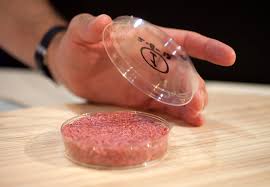
Lab-grown meat could be on your plate within the next five years. For the past few years, the barrier to getting test-tube meat into the hands of consumers has been the cost of production. In 2013, it was around $325,000 to make this stuff in a lab, but the process has been refined, and the cost now is just $11.36.
In 2015, the cost was $44 per pound.

For a mother escorting her kids through the Philadelphia Zoo, it was a close encounter of the ferocious kind. Directly in front of her as she strolled down the zoo’s main walkway was a Siberian tiger, a 400-plus-lb. carnivore capable of tearing apart a wild antelope. But rather than panic, the family laughed. The tiger was out of its lair, but its pathway was at a safe, meshed-in distance from onlookers, and after a few moments of looking around, the tiger moved on.
The tiger’s trail, dubbed Big Cat Crossing, is part of a bigger initiative called Zoo360 that has changed the way humans and animals experience the nation’s oldest zoo. There’s no question the experience is compelling for the humans. On a recent visit, I watched children drop their lunches in awe of white-faced saki monkeys hanging out in the trees. I witnessed one couple stop midconversation when a gorilla lumbered overhead, and saw more than a few families startled by the appearance of a large cat that seemed eerily close to them. But the bigger impact of Zoo360, says its chief operating officer, Andrew Baker, may be its effort to transform the experience of animals in captivity.
Continue reading… “The Future of Zoos: Challenges Force Zoos to Change in Big Ways”

Wildlife photographer Will Burrard-Lucas had long wanted to add up-close-and-personal images of iconic African animals to his portfolio. But to get those intimate shot of lions and leopards, he would need to crawl up right next to their sharp-toothed faces. So Burrard-Lucas devised a far less deadly alternative.
Continue reading… “Robots are transforming how we see wildlife”
A craft beer company and an ad agency brewed up a brilliant idea to save marine life if six-pack rings end up in the ocean. Are you aware that 80% of the plastic humans throw away ends up in the oceans? The sad reality is made worse when one learns that, as a result, billions of pounds of plastic are now swirling in convergences in the seas. In fact, 40% of earth’s total ocean mass is now covered by plastic.
Continue reading… “Beer Company Invents Six-Pack Rings That Feed, Rather Than Kill, Marine Life”

By delving into the futuring techniques of Futurist Thomas Frey, you’ll embark on an enlightening journey.
Learn More about this exciting program.