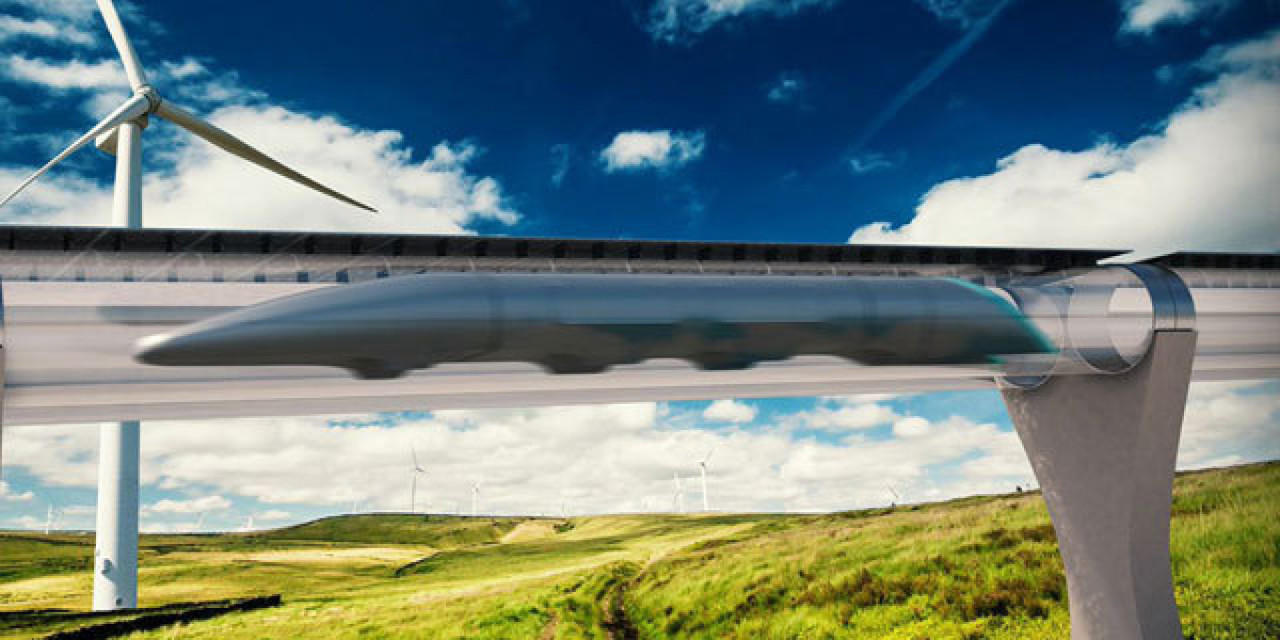
Thanks to an agreement recently announced, Austria, Hungary and Slovakia are all set to benefit from Elon Musk’s futuristic transportation system. The tubular transportation system of the future, hyperloop, is headed for Europe.
Over the past few years, there has been a sort of entrepreneurial utopia bloom in Silicon Valley. Young kids with big ideas moved to the Bay Area, where zealous venture capitalists were anxious to fund the next Facebook or the next Uber. However, there’s been trouble in paradise recently. Mega-rounds have declined, and companies have started laying off employees.
The robots are coming! They’ll be taking millions – maybe billions – of jobs away with them. Yoram Yaakobi, head of the Microsoft Israel R&D center, says not to worry.
You may be able to ask Google questions you would never ask aloud and the search engine will silently offer you the answers. But, ou can’t think of Google as an oracle for anonymous searches. Sometimes, the most intimate questions a person is asking—about health worries, relationship woes, financial hardship—are the ones that set off a chain reaction that can have troubling consequences both online and offline.
Futurist Thomas Frey: A few weeks ago I was asked to appear on CCTV, the Chinese-American television channel for an interview about the topic of border walls.
With the crisis in Syria deepening, affecting bordering countries and virtually all of the European Union, the show’s moderator asked me a series of tough questions about immigration trends and whether border walls, like the one proposed in Hungary, would become a growing trend.
In retrospect, the thoughts I conveyed on-air to this complex situation were not as crystallized as they could have been, forcing me to rethink my responses.
Cybercriminals stealing our biometric information is very unsettling. Passwords, credit cards and even Social Security numbers can be changed to guard against identify theft and fraud. Fingerprints, however, cannot. At least, not permanently. Perhaps the only silver lining to the U.S. Office of Personnel Management’s announcement last week that criminals had stolen 5.6 million fingerprint files, up from the 1.1 million files originally reported missing, is that it would be extremely difficult to use such biometric data to commit fraud or theft.
The world is on the brink of a new industrial revolution in which advances in the field of artificial intelligence will obsolete human labor, according to many economists and technologists today. Two Oxford researchers recently analyzed the skills required for more than 700 different occupations to determine how many of them would be susceptible to automation in the near future, and the news was not good: They concluded that machines are likely to take over 47 percent of today’s jobs within a few decades.
One airline is creating an even greater travel nightmare: weighing passengers. In order to figure out calculate the gross weight of an aircraft before it takes off, Uzbekistan Airlines has announced it will be weighing both passengers’ luggage and their bodies before they board flights. Yes, weighing people. On scales. In the airport.
What is the overriding theme that all of the following data-breach headlines have in common from the past year? The Sony Pictures hack: Everything we know so far; Anonymous hackers release emails ordering bear cubs be killed; Hackers threaten to release names from adultery website; How Latest Snowden Leak Is Headache for White House; How DID hackers steal celebrities’ private iCloud photos? Connecting the dots yet? If not, here are a two more headlines to tip you off: Hackers Remotely Kill a Jeep on the Highway – With Me in It and Hacktivists taking aim at Dallas-Fort Worth police departments.
Trend Micro researchers Kyle Wilhoit and Stephen Hilt decided to take a closer look at gas station monitoring systems after one was hacked earlier this hear. They set up fake internet-connected systems called “GasPots” — honeypots that mimic the real ones — in several countries to track hackers’ movements.
Forty-five years ago, Ernst Stuhlinger, the associate director of science at Nasa’s Marshall Space Flight Center, an original member of Wernher von Braun’s Operation Paperclip team, was asked by Sister Mary Jucunda, a Zambia-based nun, how he could suggest spending billions of dollars on spaceflight when many children were starving on Earth.