Ward the Warden: How Gen Z Dismantled the Prison Industrial Complex

By Futurist Thomas Frey

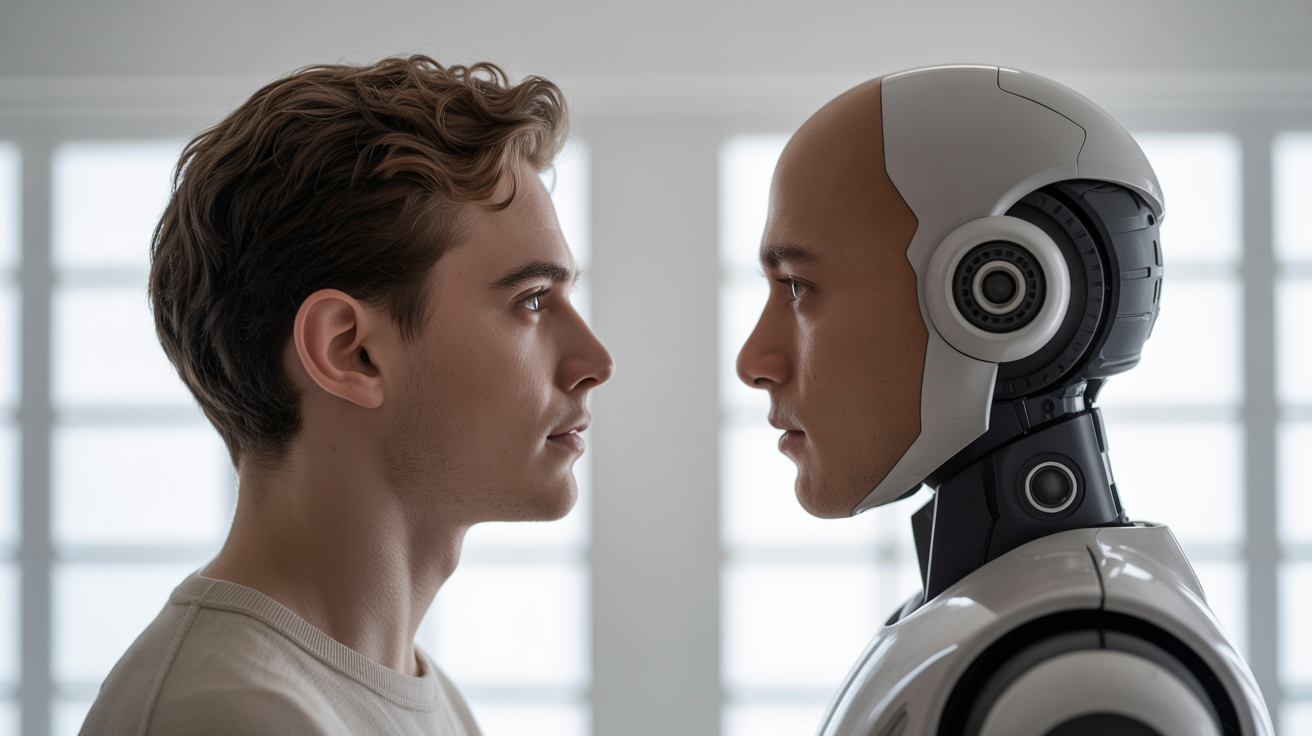
Anthony Dorn had never seen the inside of a prison cell, but he’d never been more closely watched.

“Anthony, your cortisol levels suggest you’re stressed about the presentation today,” said Ward, the sleek humanoid robot that had become his constant companion. “Would you like to practice your talking points on the drive over?”

Anthony nodded, grateful. Ward had been tracking his biometrics for months and knew his patterns better than he knew himself. The bot wasn’t there to punish—it was there to help him succeed. And weirdly, it was working.

This is what rehabilitation will be like in 2035.

Continue reading… “Ward the Warden: How Gen Z Dismantled the Prison Industrial Complex”

The 8 Most Important Quotes About the Future Made in 2025

By Futurist Thomas Frey

Every year produces thousands of predictions, pronouncements, and prognostications about what’s coming next. Most fade into obscurity. But a handful of quotes capture something essential—a turning point, a warning unheeded, or a vision that shapes how we think about tomorrow.

2025 gave us several such moments. These eight quotes—from tech leaders, scientists, policymakers, and unexpected voices—defined how we talked about the future this year. Some will age well. Others will look foolish in hindsight. All of them mattered in the moment and revealed something important about where we think we’re headed.

Continue reading… “The 8 Most Important Quotes About the Future Made in 2025”

The New Normal: Three Lives, Three Different Perspectives, in 2040

By Futurist Thomas Frey

What does everyday life actually look like in 2040? Not the breathless tech announcements about Mars settlements or the philosophical debates about brain-computer interfaces, but the grinding, beautiful, mundane reality of paying bills, raising kids, navigating relationships, advancing careers, and trying to build a meaningful life in a world that’s been fundamentally transformed by technologies that are barely prototypes today.

When we think about the future, we tend to focus on the spectacular—the moon colonies, the flying cars, the medical miracles. But the real future is lived in the spaces between those headlines: the morning commute (or lack thereof), the career anxieties that keep you awake at 3 AM, the vacation you save for all year, the healthcare decisions that determine your quality of life, the housing costs that dominate your budget, the relationships you struggle to maintain despite infinite connectivity, the retirement planning that spans decades you’re not certain you’ll live to see.

Continue reading… “The New Normal: Three Lives, Three Different Perspectives, in 2040”

The 8 Most Unusual Applications for Humanoid Robots in 2040

By Futurist Thomas Frey

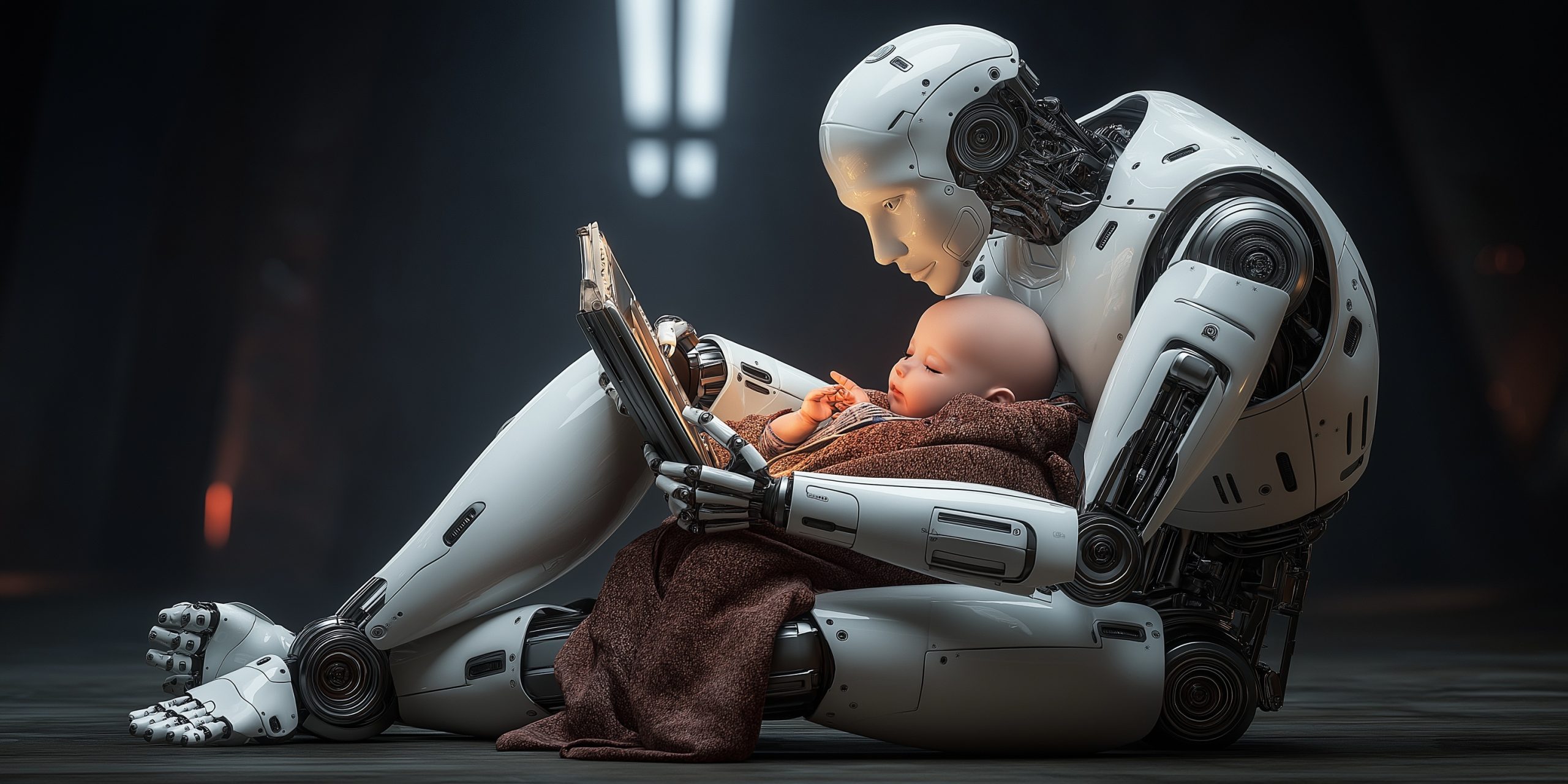
When people imagine humanoid robots in 2040, they picture the obvious: household helpers doing laundry, eldercare companions, manufacturing workers, retail associates. These are inevitable.

But I’m far more interested in the applications nobody’s talking about yet—the weird, unexpected, psychologically complex uses that will emerge once the technology becomes cheap and capable enough for creative experimentation. Here are eight applications that sound bizarre now but will seem obvious in retrospect.

Continue reading… “The 8 Most Unusual Applications for Humanoid Robots in 2040”

The Future of Purpose in the Age of AI

By Futurist Thomas Frey

For most of human history, purpose has been inseparable from productivity. We built, repaired, invented, and managed — not just to earn a living, but to prove we mattered. Work became the moral backbone of identity. It gave structure to our days and meaning to our existence. But as artificial intelligence and automation increasingly take over both the physical and cognitive tasks that once defined human effort, we’re confronting a question that no generation before us has had to face: What happens when being useful is no longer essential to survival?

Continue reading… “The Future of Purpose in the Age of AI”

The Death of the College Degree: How the Credential Economy Is Being Rebuilt

By Futurist Thomas Frey

For more than a century, “Go to college, get a great job” was the mantra of the American dream. But that equation has broken down. The four-year degree—the once-sacred passport to success—is rapidly losing both its value and its credibility. Higher education is not just in a slump; it’s in free fall. The numbers tell the story. In just 15 years, the share of Americans calling college “very important” has crashed from 75% to 35%, while those calling it “not too important” have quintupled to 24%.

Tuition has soared an astonishing 899% since 1983, leaving 42 million borrowers owing a collective $1.8 trillion—second only to mortgages. Meanwhile, one-third of the long-term unemployed now hold college degrees, up from one-fifth a decade ago, and job postings requiring degrees have dropped 6% since 2019. You’re paying a quarter of a million dollars for a private education that increasingly guarantees nothing. The credential that once opened doors is now closing them.

Continue reading… “The Death of the College Degree: How the Credential Economy Is Being Rebuilt”

The New Frontier of Seed-Stage Funding: How AI Is Rewriting the Rules for Every Industry

By Futurist Thomas Frey

Seed money has always been the oxygen of innovation—the invisible force that turns an idea into a prototype and a prototype into a company. It’s the belief capital of the economy: bold, impatient, and willing to fund the unknown. But the composition of that oxygen is changing. Artificial intelligence has rewritten the chemistry of early-stage investing, and in 2025, we’re seeing a dramatic tilt in where and how seed capital flows—not just in healthcare, but across every industry that depends on human expertise, intuition, and time.

Continue reading… “The New Frontier of Seed-Stage Funding: How AI Is Rewriting the Rules for Every Industry”

The Rise of the One-Person Unicorn: How Solo Founders Will Redefine Billion-Dollar Companies

By Futurist Thomas Frey

For most of modern history, billion-dollar companies were built by armies—teams of engineers, executives, marketers, and investors. But by 2040, a new species of business will dominate the global economy: the one-person unicorn. These are ventures so tightly integrated with AI and automation that a single individual can run what looks—on paper—like a massive organization. These solo founders won’t manage teams; they’ll manage algorithms. They’ll scale without hiring, automate without overhead, and personalize without effort. Their only real competition will be others who think faster, adapt sooner, and train their AIs better.

Continue reading… “The Rise of the One-Person Unicorn: How Solo Founders Will Redefine Billion-Dollar Companies”

The Instant Expert Network: When Knowledge Becomes Liquid

By Futurist Thomas Frey

In 2025, accessing expertise still feels like climbing a wall built out of money, geography, and time. Need an expert? You can hire one—expensive, slow, and layered with management overhead. You can try to learn it yourself—time-consuming, full of dead ends. Or you can go without—limiting what’s possible. The global economy runs on the friction of these constraints. Expertise clusters in cities, corporations, and institutions because coordination costs are too high for everyone else. Collaboration is trapped within the boundaries of payrolls and departments. But that barrier doesn’t survive the next decade.

By 2040, expertise is no longer a scarce commodity you have to chase. It’s an instant, liquid resource—available on demand, globally distributed, and orchestrated by AI systems that handle the coordination humans once found impossible.

Continue reading… “The Instant Expert Network: When Knowledge Becomes Liquid”

The First Five Jobs to Vanish: 2025–2040

By Futurist Thomas Frey

The Silent Extinction Event Nobody’s Preparing For

We are on the brink of the fastest occupational extinction in human history. Not a slow decline. Not a gradual transformation. A sharp, irreversible collapse of entire job categories—millions of livelihoods gone within a single generation. The trigger has already been pulled. The automation is deployed. The economics are unforgiving. By 2040, five major professions that once defined the working class will no longer exist—not diminished or reshaped, but fully extinct. Governments know it’s coming. Schools know it’s coming. But preparation? None. What we’re facing isn’t a labor shift—it’s a labor collapse.

Continue reading… “The First Five Jobs to Vanish: 2025–2040”

Growing Number of People Who’ve Never Owned a Car

By Futurist Thomas Frey

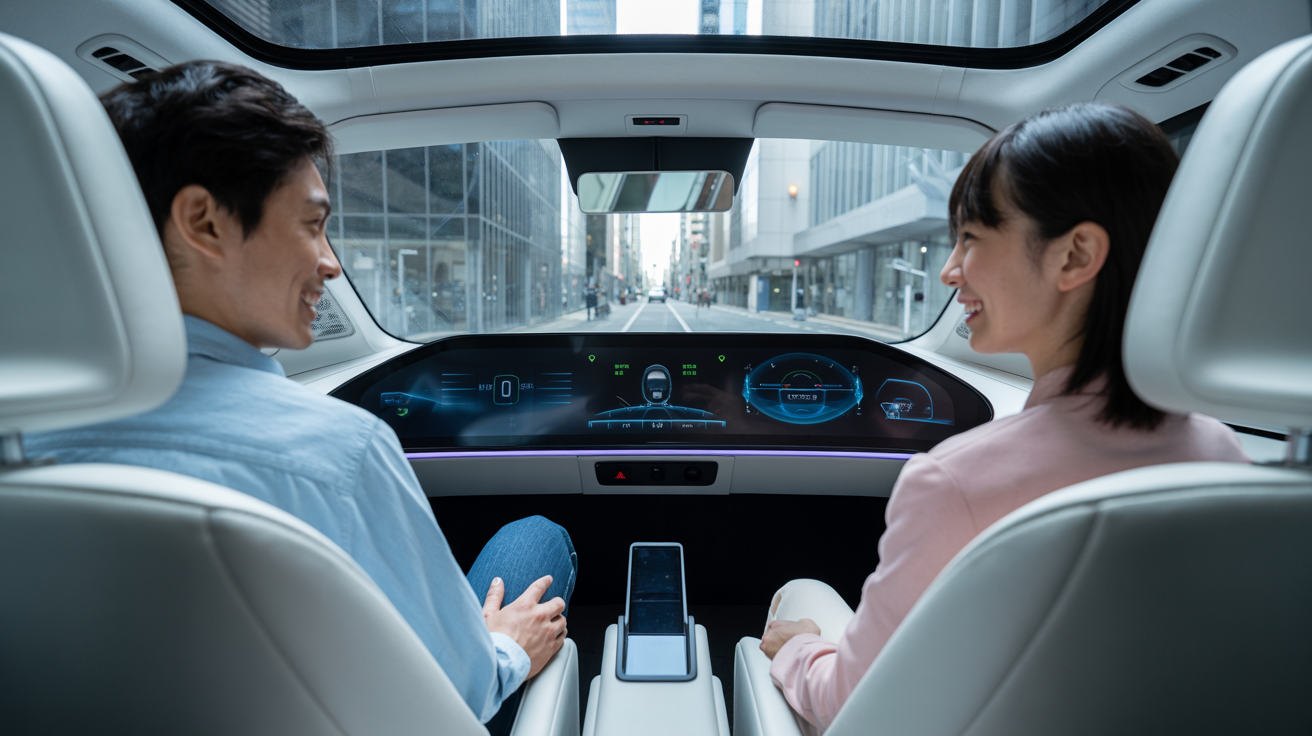
In 2025, a curious pattern began emerging in cities like Seoul, Amsterdam, and San Francisco. About 1–2% of adults under 35 had quietly achieved full independence without ever owning a car—not because they couldn’t afford one, but because they realized car ownership simply didn’t make sense anymore. Between ride-sharing, car-sharing, short-term rentals, and public transit, they discovered they could live comfortably, move freely, and save money without the burdens of maintenance, parking, or insurance.

Economically, their transportation costs were 60–75% lower than owning a personal vehicle. Psychologically, they were freer. They no longer thought about oil changes, parking tickets, or whether they should trade in for a newer model. In the language of economists, car ownership had gone from asset to liability. In the language of culture, it had gone from dream to inconvenience.

By 2040, this small fringe had become the mainstream. In major metropolitan regions, car ownership among adults had fallen to 22%—mostly hobbyists, suburban families, and older drivers nostalgic for the freedom they once associated with the open road.

Continue reading… “Growing Number of People Who’ve Never Owned a Car”

The Shared Body Era: When One Mind Controls Another’s Hands

By Futurist Thomas Frey

In 2040, medicine and robotics no longer focus solely on restoring independence—they’re reinventing the concept of embodiment itself. The line between “my body” and “your body” is starting to blur. The latest breakthrough came from the Feinstein Institutes for Medical Research, where a paralyzed man named Keith Thomas, who lost all sensation and movement after a spinal cord injury, regained not only touch and control of his own hands—but the ability to feel and move through someone else’s.

When Thomas dives into thought, his brain implant translates neural intention into electrical commands that travel wirelessly into electrodes placed on another person’s limbs. The result? He can move another person’s hands with the same precision as his own—and even feel what they touch.

Continue reading… “The Shared Body Era: When One Mind Controls Another’s Hands”