
Had a child recently? Well, here’s something you might want to prepare yourself for. By the time wedding bells are ringing your new son- or daughter-in-law could very well be a robot.
Continue reading… “Humans will marry robots by 2050”

Had a child recently? Well, here’s something you might want to prepare yourself for. By the time wedding bells are ringing your new son- or daughter-in-law could very well be a robot.
Continue reading… “Humans will marry robots by 2050”

The answer is, quite frankly, yes. Machine learning is currently used in some ways, including solving social issues. Algorithms have been designed that use is predicting what movie you will enjoy watching, or what you might like to buy from a particular retailer. But now, things need to be stepped up a notch before we are ready to solve the world’s social issues by using machine learning.
Continue reading… “Will machine learning be used to solve social problems in the future?”

In popular culture, certain countries are stereotypically associated with certain products — beer in Germany, carpets in Turkey, electronics in Japan. But those things aren’t what people are really searching for.
Continue reading… “The most Googled products in every country”

Driven by a declining population, a trend for developing robotic babies has emerged in Japan as a means of encouraging couples to become “parents.” The approaches taken vary widely and are driven by different philosophical approaches that also beg a number of questions, not least whether these robo-tots will achieve the aim of their creators.
Continue reading… “Japan hopes robot babies will encourage people to have real babies”

We humans aren’t great predictors of the future. For most of history, our experience has been “local and linear.” Not much change occurred generation to generation: We used the same tools, ate the same meals, lived in the same general place.
Continue reading… “Think exponentially and better predict the future”

In the wake of Edward Snowden’s revelations about the National Security Administration, the installation of mass surveillance equipment in cities across Europe, and disclosure of multiple massive user data leaks, people have been forced to confront the dystopian reality that big government has stepped into the role of Big Brother. What has been less discussed is the proliferation of little brothers, corporations that closely monitor their workers as a matter of course, using a variety of new technologies.
Continue reading… “The future of employee monitoring”

Researchers have created a machine that they claim can tell if a person is a convicted criminal simply from their facial features. The artificial intelligence, created at Shanghai Jiao Tong University, was able to correctly identify criminals from a selection of 186 photos nine out of 10 times by assessing their eyes, nose and mouth.
Continue reading… “Minority Report-style AI learns to predict if people are criminals”

Can’t stand the sight of anything with eight legs? New technology could cure arachnophobes as scientists have worked out how to remove specific fears from the human brain.
Continue reading… “Scientists can remove fears from your brain”
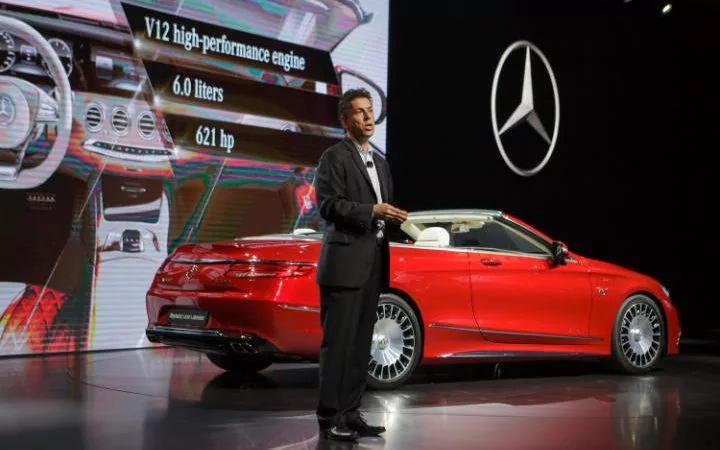
Dietmar Exler, chief executive of Mercedes-Benz USA, believes that driverless cars are likely to be ‘bullied’ by human drivers when the two are sharing road space.
Continue reading… “Mercedes chief warns that humans ‘will bully robot cars’”

New research published in the journal Suicide and Life-Threatening Behavior shows how machine learning can help identify suicidal behavior using a person’s spoken or written words. The technology was able to pinpoint which participants in the study were suicidal, mentally ill but not suicidal, or neither in the vast majority of cases.
Continue reading… “Study: 93% of suicidal patients detected with machine learning algorithms”

How much time should kids be allowed to stare into their screens like zombies? New guidelines issued by the American Academy of Pediatrics upturns conventional thinking on the matter, showing that a sweeping one-size-fits-all approach is not the right way for parents to go about limiting their children’s screen time.
Continue reading… “Limiting Children’s Screen Time: We Were Wrong”
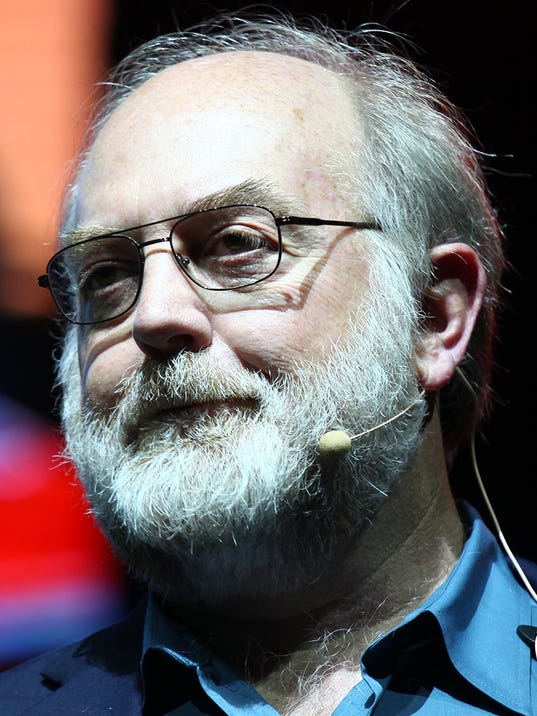
What will Iowa’s farms look like when the combines and tractors drive themselves?
How will Des Moines’ banking and insurance sectors fare when supercomputers run financial markets?
Where will Iowans live when a self-driving car can take them anywhere with the tap of a smartphone?
These are the kind of questions Thomas Frey ponders.
Continue reading… “Futurist Thomas Frey predicts farming drones, driverless streets”

By delving into the futuring techniques of Futurist Thomas Frey, you’ll embark on an enlightening journey.
Learn More about this exciting program.