When Donald Trump won the election, many in Silicon Valley were flummoxed: “How could a bigoted billionaire with no government experience and a twitchy Twitter trigger finger win the U.S. presidential election?” they asked themselves.
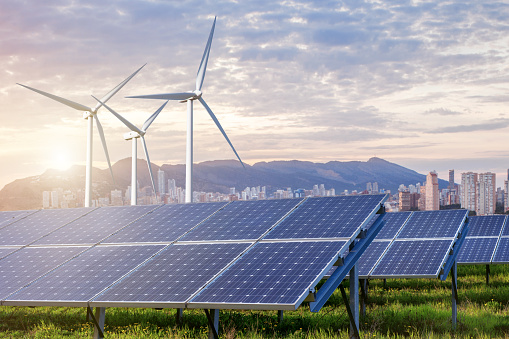
U.S. solar employs more workers than any other energy industry, including coal, oil and natural gas combined, according to the U.S. Department of Energy’s second annual U.S. Energy and Employment Report. 6.4 million Americans now work in the traditional energy and the energy efficiency sector, which added more than 300,000 net new jobs in 2016, or 14 percent of the nation’s job growth.
Divergent 3D, a Los Angeles-based startup that hopes to disrupt automotive manufacturing, has raised $23 million in a Series A funding round led by technology venture capital fund Horizons Ventures. The company will use the funding to help it commercialize its manufacturing platform, which uses 3D printing to produce the chassis of an automobile. The platform produces 3D printed joints, which it calls a Node, that can be connected with carbon fiber structural materials to build a strong and light chassis.
Tesla’s software timeline to fully autonomous driving on its new Autopilot hardware can be somewhat complicated. There’s ‘Enhanced Autopilot’, which in itself offers several different features, and there’s ‘Full Self-Driving Capability’, which despite its name will not enable self-driving for a while, but could still be useful to Tesla drivers very soon.
Much of the focus in the technology world currently is on artificial intelligence, machine learning and big data – and how they will affect the way we use products and how machines operate. But developing just as quickly, although with slightly less hype, is 3D printing, or additive manufacturing (AM), which is going to have at least as big an impact on how we make things as AI et al. The process creates products by depositing layers of material, generally ground metal or plastic, to a template, lasering that material into place and repeating the process to build the required product – anything from replacement hips to jet engine parts.
Hey kids, want to grow up to land the best job in the country? Then keep poring over those math and science textbooks. Jobs that require a range of STEM skills (science, technology, engineering and math) claimed 14 spots in Glassdoor’s new “50 Best Jobs in America” survey, out Monday.
During Betsy DeVos’ recent three-hour confirmation hearing to become President Donald Trump’s education secretary, charter schools came up no fewer than 60 times. Homeschooling was mentioned once. Charter schools have become a significant part of the US public-education system and now educate 2.5 million kids. But homeschooling has quietly experienced a surge in recent years too. Brian Ray, a homeschooling researcher at the National Home Education Research Institute, estimates the number of kids taught at home is growing by as much as 8% a year since the total hovered around 2 million in 2010, according to US Census figures.
It’s official: graphene has been made into a superconductor in its natural state – which means electrical current can flow through it with zero resistance. Last year, physicists managed to do this by doping graphene with calcium atoms, but this is the first time researchers have achieved superconductivity in the material without having to alter it. And the results so far show that the material achieves an incredibly rare type of superconductivity that’s even crazier and more powerful than scientists expected.
South Korea is seeking to develop a train-like public transport concept that is almost as fast as the speed of sound up 1,000 km / h, the Korea Railroad Research Institute (KRRI) said Tuesday. The state-run institute will join forces with other research groups and Hanyang University to build the near-supersonic “train”, which would be able to travel from Seoul to Busan in half an hour.
We’re all familiar with the concept of working from home—and in 2017 volunteering from home will become just as ubiquitous. A busy life, working two jobs, unsociable working hours, and living in a remote location can all make it difficult for people to give time or money to good causes in their community. But technology now makes it possible to give your time and energy from the comfort of your own sofa, whether it’s to answer advice lines or support peers one-on-one.
A company is planning to build the world’s first floating city in the middle of the Pacific Ocean. The government of French Polynesia has signed an agreement with a US firm and they hope construction work will begin in 2019. The Seasteading Institute has spent the past five years trying to work out how to build “permanent, innovative communities floating at sea”.
Thirty years ago, it was a big deal when schools got their first computers. Today, it’s a big deal when students get their own laptops. According to Futurist Thomas Frey, in 14 years it’ll be a big deal when students learn from robot teachers over the internet. It’s not just because the technology will be that sophisticated, Frey says, but because the company responsible for it will be the largest of its kind.