The Hall of Future Jobs: A Living Exhibit of What AI Can’t Replace

By Futurist Thomas Frey

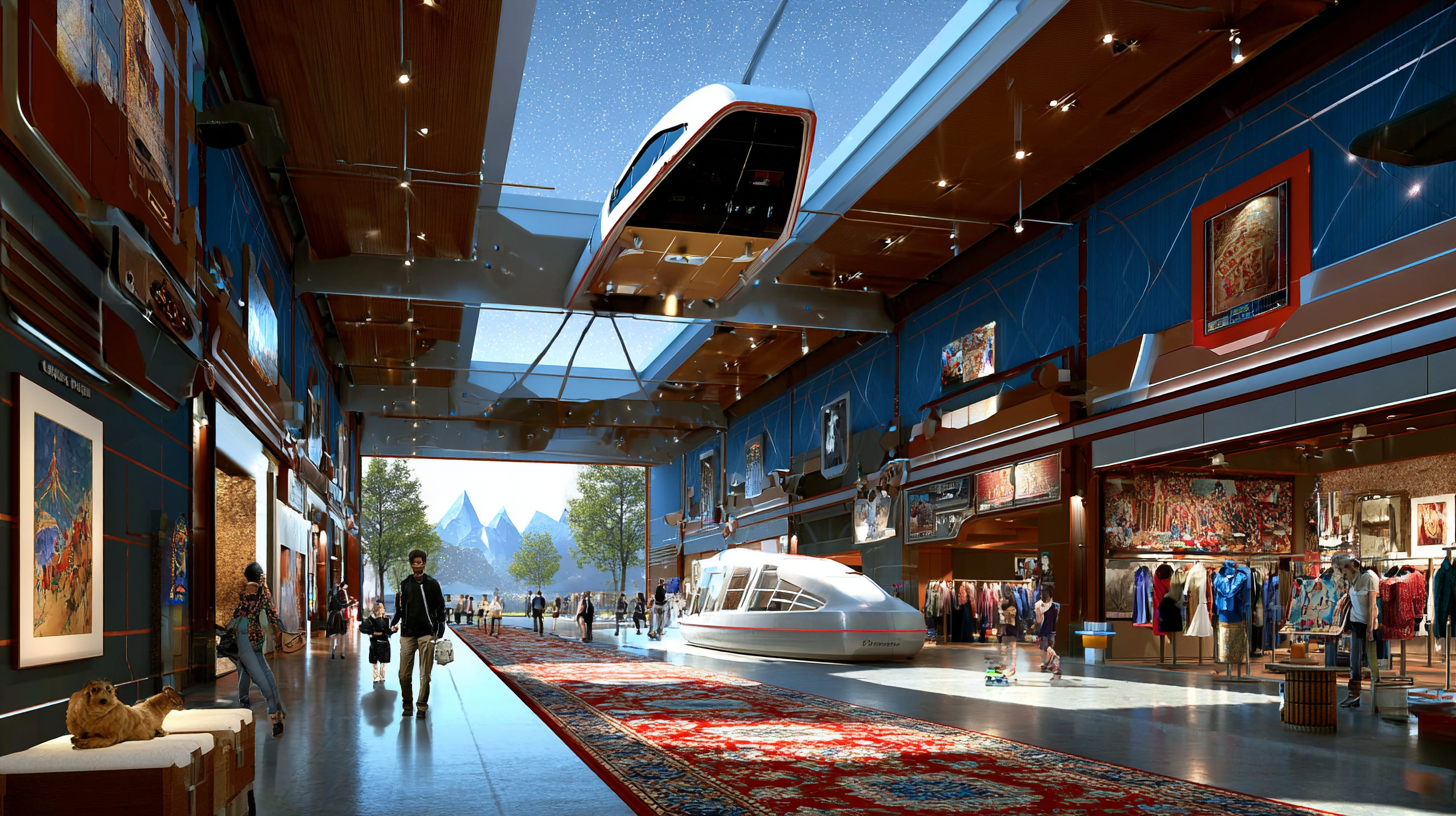
Step into the year 2035, and the world of work looks radically different. AI has become a co-pilot in nearly every industry, automation is woven into the fabric of daily life, and robotics has mastered an astonishing range of physical and cognitive tasks. Yet even in this hyper-automated society, there remain roles that resist full automation—jobs that require human presence, judgment, creativity, or empathy in ways machines can only support, not replace.

That’s the concept behind the Hall of Future Jobs, a provocative exhibition designed to track the frontier between what machines can do and what they can’t. Unlike a traditional museum exhibit, this hall will never be static. It will evolve as AI, robotics, and automation advance, constantly retiring old jobs once considered untouchable and adding new ones that emerge in the cracks between human ingenuity and machine efficiency.

Continue reading… “The Hall of Future Jobs: A Living Exhibit of What AI Can’t Replace”

The Power of Unanswerable Questions in Shaping the Future

By Futurist Thomas Frey

For centuries, humanity has been propelled forward not just by the answers we’ve uncovered, but by the questions we dared to ask. Some of those questions seemed unthinkable at the time: Can we fly? Can we split the atom? Can machines think? Each one opened a door to a reality that was once unimaginable. And yet, lurking beyond the questions we’ve answered lies a far more provocative realm—the unanswerable ones.

Over the past two decades, I’ve dedicated a significant part of my work to exploring what I call unanswerable questions. These aren’t simply puzzles waiting for a clever scientist to crack or problems requiring more data. They are the questions that probe the limits of human understanding, stretching across science, philosophy, technology, and even the meaning of existence itself.

Continue reading… “The Power of Unanswerable Questions in Shaping the Future”

The Future Creates the Present

Bt Futurist Thomas Frey

We like to imagine time as a straight arrow—yesterday shaping today, today shaping tomorrow. But what if that’s backwards? What if the future is actually pulling us forward, shaping our choices in the present?

This isn’t just philosophy. It’s the engine behind nearly every innovation, invention, and bold decision in human history. The future isn’t some distant horizon—it’s a gravitational force, bending today’s reality toward what could be. When I say, “the future creates the present,” I mean that our vision of what’s ahead is already dictating what we build, what we prioritize, and how we act right now.

Continue reading… “The Future Creates the Present”

The Billion-Person Problem: How the Next Fortune Will Be Built

The road to the next trillion-dollar industry won’t be paved by niche apps, luxury products, or one-off unicorns. It will be built by solving what futurist Peter Diamandis calls “billion-person problems.” The idea is simple but radical: the greatest wealth is created when you provide massive value to massive numbers of people. In other words, if you want to make a billion dollars, solve a problem that touches a billion lives.

This isn’t theory—it’s already happened. Think about Google organizing the world’s information, Facebook connecting billions of people, or Tesla pushing mass adoption of electric mobility. Each tackled inefficiencies or unmet needs that were global in scale. The new frontier? Problems bigger than social media or search engines. Problems that affect humanity at its core.

Continue reading… “The Billion-Person Problem: How the Next Fortune Will Be Built”

The Democracy Upgrade We Desperately Need: How Rated Voting Could Save American Politics

By Futurist Thomas Frey

American democracy is broken. Not gradually deteriorating or showing signs of wear—utterly, systemically broken in ways that threaten the foundation of our republic. We’re trapped in a political system that forces 330 million diverse Americans into two rigid camps, rewards extremism over pragmatism, and makes governing nearly impossible. But there’s a solution hiding in plain sight, one so elegantly simple yet revolutionary that it could transform American politics overnight: rated voting.

Imagine an electoral system where you could support your favorite candidate without “wasting” your vote. Where politicians built coalitions instead of bases. Where compromise became a virtue rather than betrayal. Where governing majorities emerged from actual consensus rather than barely-winning pluralities. This isn’t utopian fantasy—it’s the proven reality of rated voting systems already working in cities across America.

Continue reading… “The Democracy Upgrade We Desperately Need: How Rated Voting Could Save American Politics”

How Age Reversal Could Solve the Global Underpopulation Crisis

For decades, headlines warned us about overpopulation. From Paul Ehrlich’s dire Population Bomb predictions in the 1960s to endless talk of resource exhaustion, the narrative has been one of too many people crowding into a finite world. But here’s the plot twist: the real threat isn’t overpopulation—it’s underpopulation.

New data is rewriting the story. The United Nations once projected global population to peak at 10.9 billion by 2100. But The Lancet recently published a study showing the peak will likely come earlier—9.7 billion by 2064—before dropping back down to 8.8 billion by the end of the century. That means billions fewer people and a global demographic implosion decades sooner than expected.

Continue reading… “How Age Reversal Could Solve the Global Underpopulation Crisis”

The Year of Superintelligence?

Every era has its defining question. Ours may be this: What happens when intelligence itself becomes a resource that outpaces us—by orders of magnitude we can barely imagine?

Elon Musk recently put it bluntly: “I think we’re quite close to digital superintelligence. It may happen this year, maybe it doesn’t happen this year—next year for sure.” Whether you take his timeline literally or not, the very fact that leading voices in AI and quantum research are openly discussing artificial superintelligence (ASI) means the world is entering a point of no return.

Continue reading… “The Year of Superintelligence?”

When Bacteria Replace Silicon: The Coming Age of Living Computers

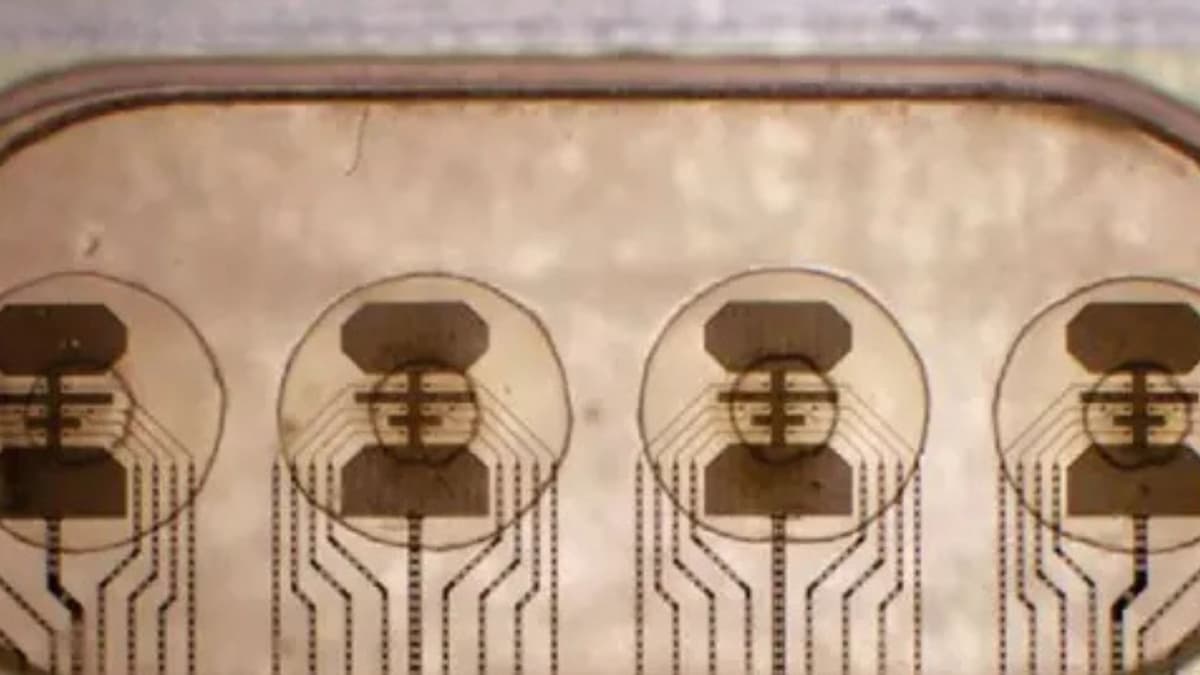
The most powerful computers of tomorrow may not hum inside climate-controlled data centers or be etched into silicon wafers. They may be alive. At Rice University in Texas, a team of scientists has secured nearly $2 million from the National Science Foundation to explore what could become one of the most disruptive computing revolutions in history: transforming bacteria into programmable digital processors.

The logic is simple but radical. Each bacterial cell acts as a tiny processor.

Continue reading… “When Bacteria Replace Silicon: The Coming Age of Living Computers”

The Rise of HELIX: How the First Trillion-Dollar AI-Managed Company Changed Everything

By Futurist Thomas Frey

The headline that broke at 3:47 AM Eastern on March 15, 2038, sent shockwaves through every financial market on the planet: “HELIX Becomes First Trillion-Dollar Company Managed Entirely by Artificial Intelligence.”

What made this moment historically unprecedented wasn’t just the valuation—it was that no human being had made a strategic decision at HELIX for over eighteen months.

Continue reading… “The Rise of HELIX: How the First Trillion-Dollar AI-Managed Company Changed Everything”

The Drone Revolution: Racing Toward Aviation’s Next Historic Firsts

By Futurist Thomas Frey

How tomorrow’s changemakers will earn their place in history through pioneering achievements in unmanned flight

Few of us remember the second person to circumnavigate the globe or the second company to deliver a package by air. History belongs to the firsts, and the rapidly evolving world of drone technology presents an unprecedented opportunity for visionaries to claim their permanent place in the record books.

Every emerging technology produces a cascade of “firsts” that define its trajectory and potential. From Orville Wright’s 12-second flight to Chuck Yeager breaking the sound barrier, aviation’s pioneers shaped how we understand what’s possible in the skies. Today’s drone technology stands poised to generate its own wave of historic achievements—but which will prove most significant?

Continue reading… “The Drone Revolution: Racing Toward Aviation’s Next Historic Firsts”

The Birth of Synthetic Motherhood: China’s Race to Build the First Pregnancy Robot

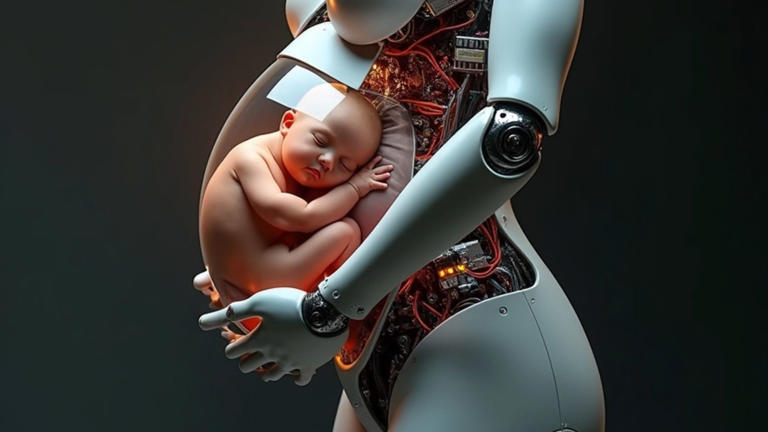
For centuries, the act of carrying and delivering life has been bound to the biology of women. Now, that fundamental truth is being challenged by a vision straight out of science fiction: a humanoid robot with an artificial womb, designed to carry a child from conception to delivery.

Continue reading… “The Birth of Synthetic Motherhood: China’s Race to Build the First Pregnancy Robot”

Why the Next Tech Revolution Won’t Come From Silicon Valley

For decades, Silicon Valley has been shorthand for the future. From microchips to social media, smartphones to AI startups, the Bay Area has claimed center stage as the birthplace of disruptive technology. But the next leap forward will not come from another app or platform—it will come from power. Not just computing power, but literal energy.

Continue reading… “Why the Next Tech Revolution Won’t Come From Silicon Valley”
Discover the Hidden Patterns of Tomorrow with Futurist Thomas Frey
Unlock Your Potential, Ignite Your Success.

By delving into the futuring techniques of Futurist Thomas Frey, you’ll embark on an enlightening journey.

Learn More about this exciting program.