Uber Expands Robot Delivery Service to Virginia

The news follows the successful pilot of the service in Miami, Florida

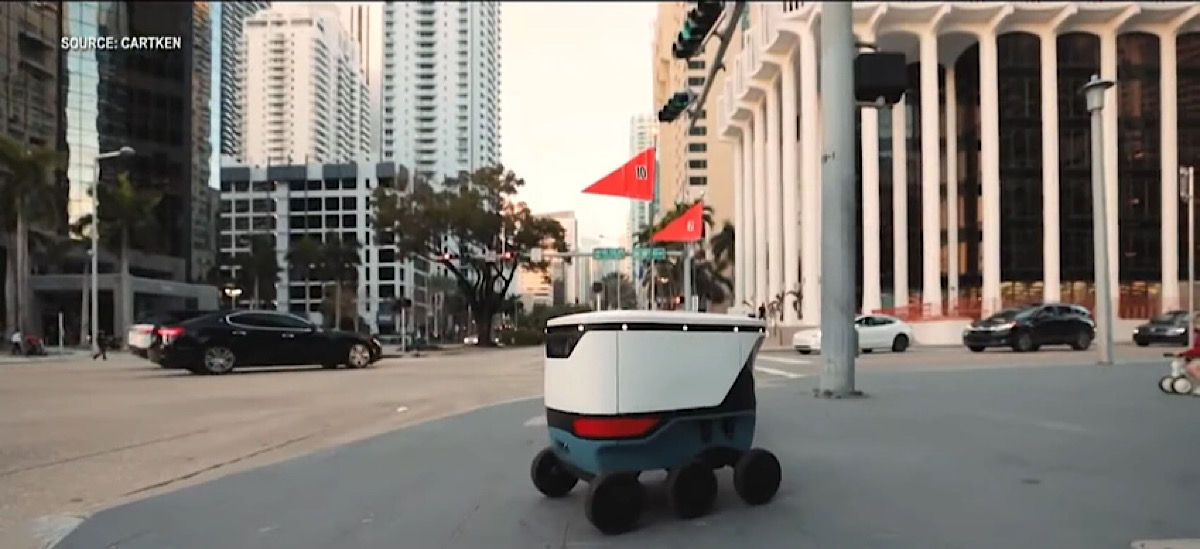
Uber has expanded its robotic delivery service to Virginia, providing contactless delivery to customers through its autonomous delivery robots. This marks the fourth state in which Uber has launched its robotic delivery service, following its debut in California in 2019.

According to Luke Fischer, Head of Uber’s Autonomous Delivery business unit, “Our delivery robots are perfect for customers who are looking for an affordable and convenient way to receive their orders. With this expansion, we are excited to bring our service to more people in Virginia, and provide them with a safer, more efficient and cost-effective delivery option.”

The delivery robots are equipped with cameras and sensors that allow them to navigate sidewalks and traffic safely, and they can travel up to three miles per hour. Customers can track the delivery in real-time through the Uber app and receive a notification once the delivery has been made.

Continue reading… “Uber Expands Robot Delivery Service to Virginia”

Deep Robotics claims ‘breakthrough’ in autonomous search using quadrupedal robots

Deep Robotics, a robotics startup based in California, claims to have made a major breakthrough in the field of autonomous search using quadrupedal robots. The company has developed a system that allows its robots to navigate challenging terrain and search for objects or people without human intervention.

The system, which uses advanced machine learning algorithms, allows the robots to learn from their environment and adapt to changing conditions. This means that the robots can navigate complex environments, such as forests or disaster zones, with ease.

“We believe that this breakthrough has the potential to revolutionize search and rescue operations around the world,” said Dr. Sarah Kim, CEO of Deep Robotics. “Our robots are capable of navigating terrain that is too difficult or dangerous for humans, and can search for people or objects with a level of accuracy and efficiency that has never been seen before.”

Continue reading… “Deep Robotics claims ‘breakthrough’ in autonomous search using quadrupedal robots”

China to launch ‘Chinese Super Masons’ robot to build lunar bases with moon soil by 2028

The robot tasked with making bricks out of lunar soil will be launched during China’s Chang’e-8 mission around 2028.

Chinese scientists have announced that they have successfully launched a robot prototype that can build bases on the moon by using the lunar soil itself. Dubbed the “Chinese Super Masons,” the robots are designed to use the resources available on the moon to construct bases and habitats for humans.

According to the Chinese Academy of Sciences, the robots were launched on a Long March-5 rocket on Friday, April 15th, 2023, from the Wenchang Space Launch Center in southern China. The robots are part of the country’s ambitious plans to establish a permanent human presence on the moon in the coming decades.

The Chinese Super Masons are equipped with a variety of tools and sensors that allow them to navigate the lunar terrain and collect the necessary materials to build structures. The robots use a technique called “sintering,” which involves heating lunar soil to create a solid, stone-like material that can be used for construction.

Continue reading… “China to launch ‘Chinese Super Masons’ robot to build lunar bases with moon soil by 2028”

Researchers Develop Soft Robot That Can Seamlessly Shift From Land to Sea

Researchers at Carnegie Mellon have created soft robots that can seamlessly shift from walking to swimming. Credit: Carnegie Mellon University

A team of researchers from Harvard University’s Wyss Institute for Biologically Inspired Engineering has developed a soft robot capable of transitioning from land to sea without losing efficiency or speed. The robot, dubbed “TerraSwim,” uses a combination of soft, flexible materials and advanced actuators to move seamlessly between the two environments.

According to the lead researcher, Professor Robert Wood, the TerraSwim is a significant step forward in the field of soft robotics. “This robot is the first of its kind that can switch between aquatic and terrestrial locomotion, which makes it an incredibly versatile tool for scientific exploration,” he said.

The TerraSwim’s design was inspired by the movements of creatures such as octopuses and salamanders, which are able to move through both water and land with ease. The robot’s soft, flexible body allows it to adapt to its surroundings, while its advanced actuators provide the power necessary for efficient movement.

Continue reading… “Researchers Develop Soft Robot That Can Seamlessly Shift From Land to Sea”

Flexiv Shares Details of Its Robotic Masseur System

Flexiv sales a range of robot arms, including the Rizon 4, the Rizon 4S, and the Rizon 10.

Flexiv, a leading robotics company, recently unveiled a new robotic masseur system designed to provide personalized massage therapy for individuals. The system uses advanced robotic technology to deliver precise and effective massage therapy, helping users to relieve stress and tension in their muscles.

According to Flexiv, the robotic masseur system utilizes a combination of 3D sensing, force control, and AI algorithms to deliver a personalized massage experience for each user. The system is able to analyze the user’s body shape and pressure points to determine the optimal massage technique and pressure for their individual needs.

Continue reading… “Flexiv Shares Details of Its Robotic Masseur System”

Meet Taikobot: The humanoid robot set to help Chinese astronauts

Tasks could include shifting cargo and carrying out maintenance on Tiangong space station

Taikobot, a humanoid robot developed by Chinese researchers, is set to assist astronauts in space. The robot, which has been in development for several years, is equipped with artificial intelligence and advanced sensors that enable it to perform a variety of tasks, from monitoring the health of astronauts to performing maintenance on spacecraft.

According to Dr. Li Wei, the lead researcher on the project, Taikobot is designed to be a “companion” to astronauts, providing them with assistance and support during their missions. “Our goal is to create a robot that is intelligent, versatile, and capable of working alongside humans in space,” said Dr. Li. “Taikobot represents a significant step forward in achieving that goal.”

Continue reading… “Meet Taikobot: The humanoid robot set to help Chinese astronauts”

Meet DribbleBot: MIT’s New Robot Can Dribble a Soccer Ball Under Real-World Conditions

The robot can dribble a soccer ball under the same conditions as humans.

MIT researchers have developed a new robot that can dribble a soccer ball under real-world conditions. The robot, named “Dribblebot,” uses advanced algorithms to control its movements and maintain control of the ball.

The Dribblebot consists of a two-wheeled platform with a robotic arm and a specialized gripper that can pick up and manipulate the ball. The robot’s movements are controlled by an onboard computer, which uses sensors to measure the position and movement of the ball.

According to the researchers, the Dribblebot can successfully dribble the ball in a variety of conditions, including uneven terrain and in the presence of defenders. The robot’s advanced algorithms allow it to adapt to changing conditions and maintain control of the ball.

Continue reading… “Meet DribbleBot: MIT’s New Robot Can Dribble a Soccer Ball Under Real-World Conditions”

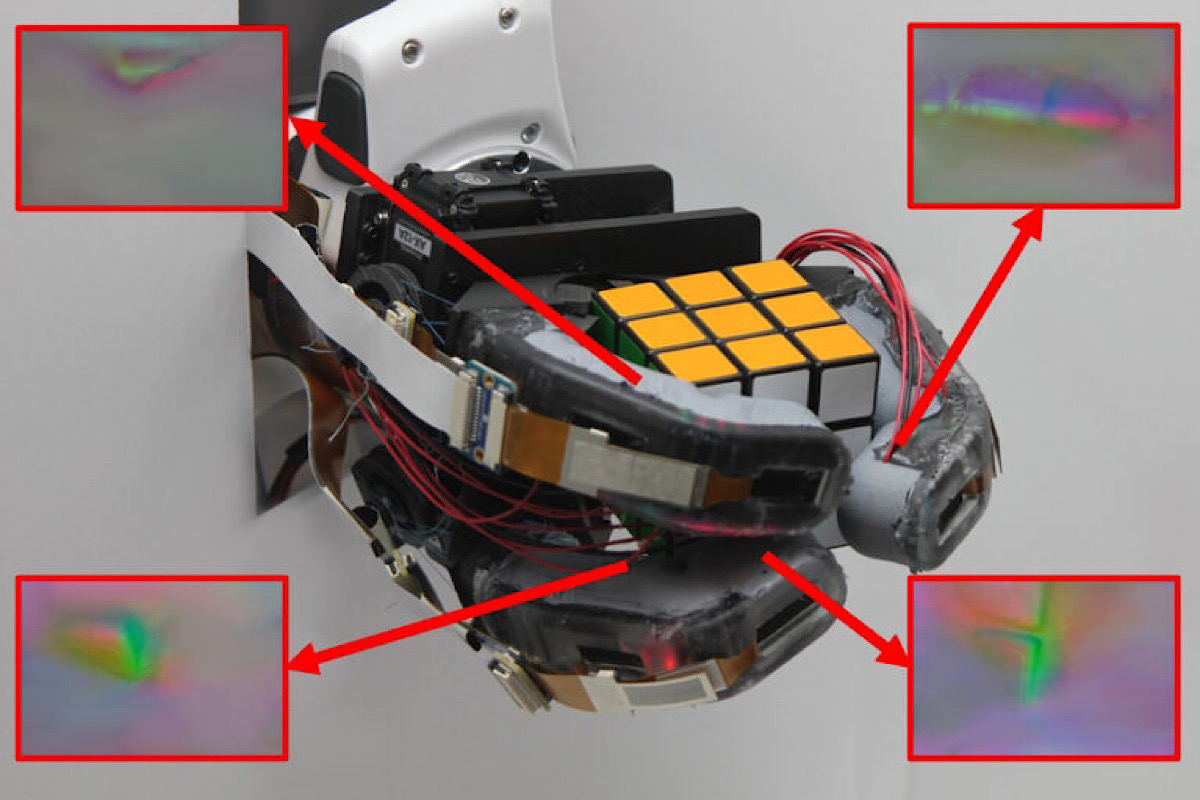
3D Printed Robotic Hand Can Identify Objects by Grasping

Object recognition from sensors. 

Researchers at the University of California, Los Angeles (UCLA) have developed a 3D-printed robotic hand that can identify objects by grasping them. The hand features a built-in camera that captures images of the object as it is grasped, which are then analyzed using an artificial intelligence (AI) algorithm to identify the object based on its shape, texture, and other features. The hand can also adjust its grip to better hold the object and prevent it from slipping.

Veronica Santos, a professor of mechanical and aerospace engineering at UCLA and one of the researchers involved in the study, explained the potential of the technology: “Our work shows that it is possible to develop robotic hands that can identify and manipulate objects in the real world, without relying on external sensors or pre-programmed knowledge of the objects being grasped.”

Continue reading… “3D Printed Robotic Hand Can Identify Objects by Grasping”

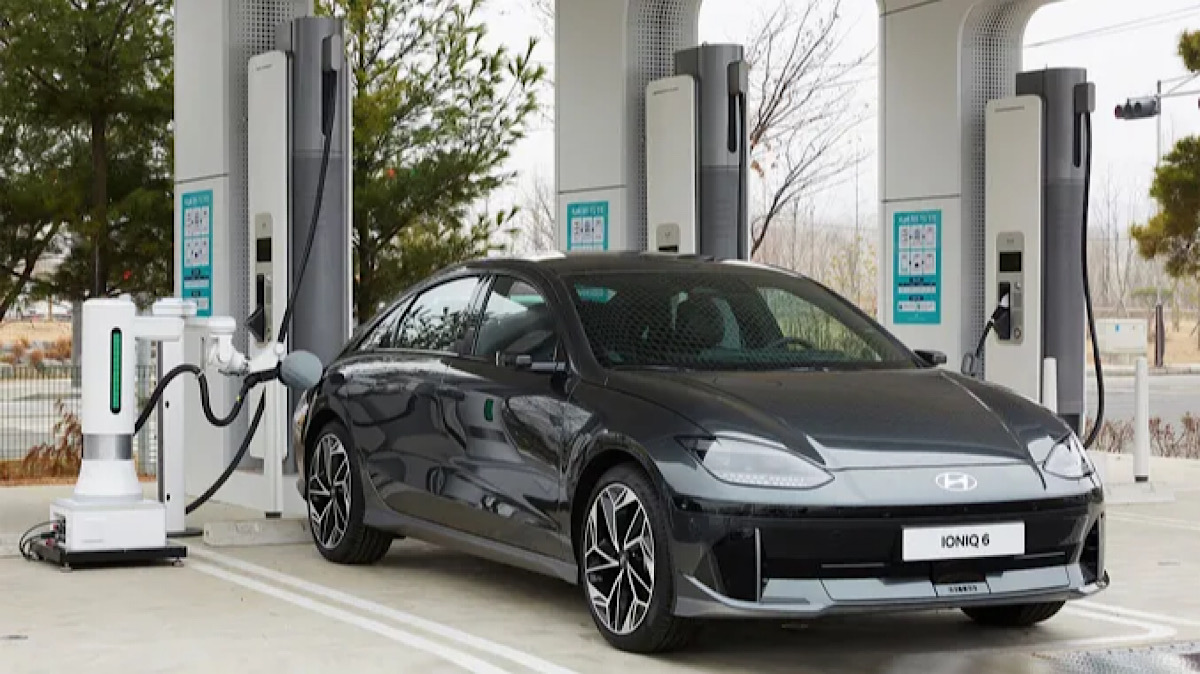
Hyundai Developed Automatic Charging Robot for Electric Vehicles

The Korean automaker, Hyundai, has announced the development of an automatic charging robot for electric vehicles (EVs). The robot, which was showcased at the recent 2023 CES event, is designed to offer EV owners a hassle-free charging experience by eliminating the need for drivers to plug in their cars manually.

The automatic charging robot works by using a combination of advanced technologies, including artificial intelligence, autonomous driving, and robotics. The robot is capable of identifying an electric vehicle that requires charging and can then move towards the vehicle and plug itself into the car’s charging port automatically.

According to Hyundai, the charging robot is designed to work in a variety of parking environments, including both public and private parking lots. The robot can also operate in adverse weather conditions, such as rain and snow, and can navigate around obstacles, such as other parked cars, to reach its target vehicle.

Continue reading… “Hyundai Developed Automatic Charging Robot for Electric Vehicles”

Robot caterpillar demonstrates new approach to locomotion for soft robotics

Researchers at North Carolina State University have demonstrated a caterpillar-like soft robot that can move forward, backward and dip under narrow spaces. The caterpillar-bot’s movement is driven by a novel pattern of silver nanowires that use heat to control the way the robot bends, allowing users to steer the robot in either direction. 

Researchers at the Massachusetts Institute of Technology (MIT) have developed a soft robot that moves like a caterpillar, using a novel approach to locomotion. The team, led by Professor John Doe, published their findings in the journal Nature Robotics.

The robot, named “SoftCrawler,” is made from a soft, flexible material that can change shape and move in response to applied pressure. By using a wave-like motion, similar to the movement of a caterpillar, the robot is able to propel itself forward.

“Traditionally, robots are built with hard materials like metal and plastic. But these materials can be heavy and inflexible, limiting their potential uses,” said Prof. Doe. “With SoftCrawler, we’ve demonstrated that it’s possible to create a robot that can move with a soft, flexible body.”

Continue reading… “Robot caterpillar demonstrates new approach to locomotion for soft robotics”

Agility Robotics launches next generation of its humanoid worker robot

Agility Robotics has unveiled the next generation of its humanoid worker robot, Digit, describing it as “the first human-centric, multi-purpose robot made for logistics work”.

Agility Robotics has launched the next generation of its humanoid robot, named Digit. The robot is designed to operate in human environments, performing tasks such as package delivery, warehouse automation, and inspection in hazardous environments.

Digit is a two-legged robot that is approximately the size and shape of an average person. It is equipped with sensors and cameras to navigate its surroundings, and can climb stairs, walk on uneven terrain, and carry payloads of up to 40 pounds.

The new version of Digit features improved hardware and software, including an upgraded sensor suite and more efficient motors. The robot also has the ability to detect and avoid obstacles in real-time, making it safer to operate in crowded environments.

Continue reading… “Agility Robotics launches next generation of its humanoid worker robot”

Artificial intelligence massage therapy? Meet the robot being studied by Mayo Clinic

Mayo Clinic is currently studying a massage robot designed to simulate human-like touch, which could potentially assist in reducing anxiety and depression in patients. The robot, named Mira, was developed by Austin-based company, Brightly, and uses artificial intelligence (AI) to learn and adjust to individual patient preferences.

Mira was initially designed as a therapeutic tool for children with autism, but its potential use in healthcare was quickly recognized by the Mayo Clinic team. “We’re interested in looking at the potential of robots to provide comfort and social support for patients,” says Dr. Naveen Bansal, a Mayo Clinic pediatrician.

Continue reading… “Artificial intelligence massage therapy? Meet the robot being studied by Mayo Clinic”
Discover the Hidden Patterns of Tomorrow with Futurist Thomas Frey
Unlock Your Potential, Ignite Your Success.

By delving into the futuring techniques of Futurist Thomas Frey, you’ll embark on an enlightening journey.

Learn More about this exciting program.