New technology ‘retrains’ cells to repair damaged brain tissue in mice after stroke

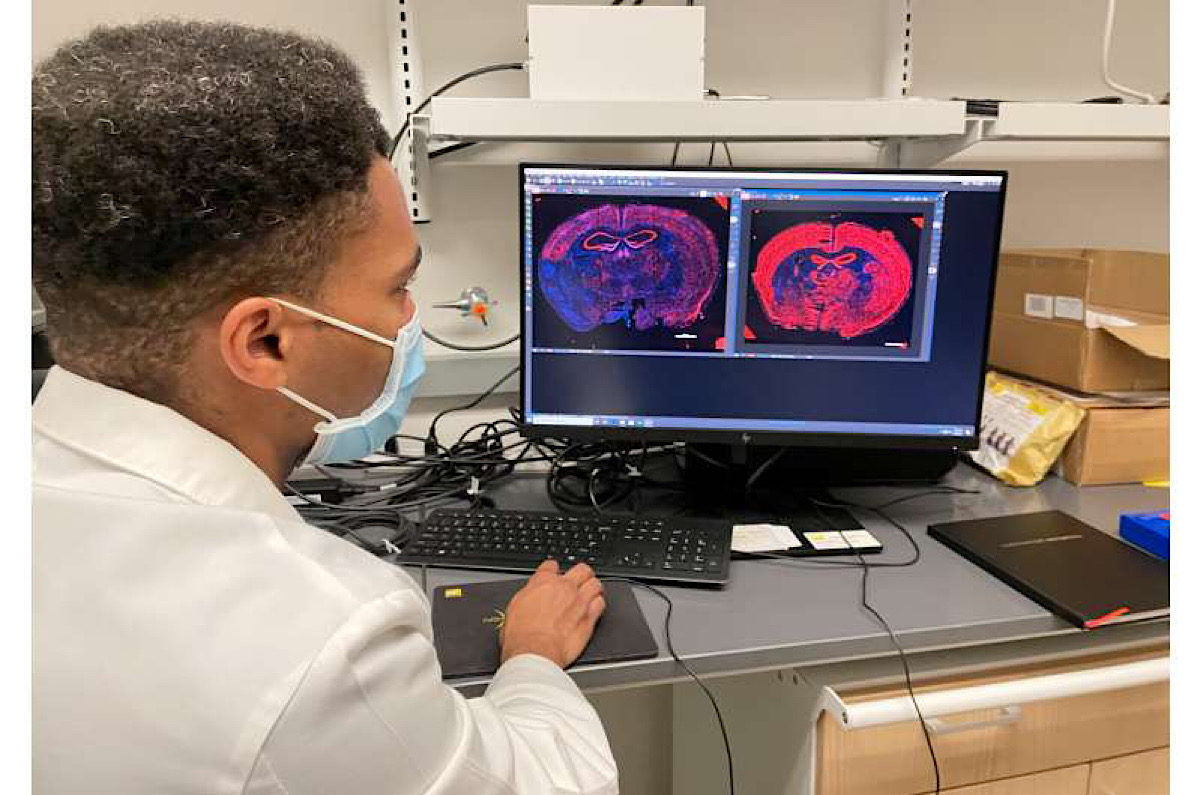
Graduate research associate Jordan Moore reviews brain MRI images of mice in the nanomedicine lab at The Ohio State University College of Medicine. In a new study, researchers demonstrate the potential of a new cell therapy to reverse damage from ischemic stroke by regrowing blood vessels and healthy brain tissue. Credit: The Ohio State University Wexner Medical Center

by The Ohio State University

Most stroke victims don’t receive treatment fast enough to prevent brain damage. Scientists at The Ohio State University Wexner Medical Center, College of Engineering and College of Medicine have developed technology to “retrain” cells to help repair damaged brain tissue. It’s an advancement that may someday help patients regain speech, cognition and motor function, even when administered days after an ischemic stroke.

Engineering and medical researchers use a process created by Ohio State called tissue nanotransfection (TNT) to introduce genetic material into cells. This allows them to reprogram skin cells to become something different—in this case vascular cells—to help fix damaged brain tissue.

Study findings published online today in the journal Science Advances.

In this mouse study, cells were ‘pre-conditioned’ with specific genes and injected into the stroke-affected brains, where they promoted the formation of new blood vessels via reprogramming and the repair of damaged brain tissue.

“We can rewrite the genetic code of skin cells so that they can become blood vessel cells,” said Daniel Gallego-Perez, an assistant professor of biomedical engineering and surgery at Ohio State who is leading the research. “When they’re deployed into the brain, they’re able to grow new, healthy vascular tissue to restore normal blood supply and aid in the repair of damaged brain tissue.”

Researchers studied the process in mice and found that those treated with this innovative cell therapy regained 90% of their motor function. MRI scans showed damaged areas of the brain were repaired within a few weeks.

Continue reading… “New technology ‘retrains’ cells to repair damaged brain tissue in mice after stroke”


Scientists Are Building a ‘Digital Twin’ of Earth

by Matthew Hart

The European Space Agency (ESA) is working on a “digital twin” of Earth in the hopes of better understanding our planet’s past, present, and future. The project, first announced in September of last year, will deploy AI, as well as quantum computing, to build Earth’s digital doppelgänger in virtual space. And the scientists hope this Digital Twin Earth will help them forecast extreme, climate change-induced weather events.

Popular Mechanics reported on the digital Earth, which ESA scientists discussed during the agency’s 2020 Φ-week event. The scientists say their digital model will help humanity to “monitor the health of the planet,” as well as simulate the effects of human behavior on the environment.

The scientists are going to evolve the digital twin over the next decade, constantly feeding real-world data into the model; data that will come from the EU’s Copernicus program, which captures atmospheric data, such as air quality changes. They’ll then use neural networks (computer algorithms) to identify patterns in Earth’s weather systems, and hopefully begin making accurate predictions.

“Machine learning and artificial intelligence could improve the realism and efficiency of the Digital Twin Earth—especially for extreme weather events and numerical forecast models,” European Center for Medium-Range Weather Forecasts (ECMWF) Director General, Florence Rabier, said at the event. Rabier and her colleagues also noted that the satellites collecting the data for the models are deploying AI programs.

Continue reading… “Scientists Are Building a ‘Digital Twin’ of Earth”

IBM Built an AI Capable of Holding Its Own Against Humans in a Debate

By Joel Hruska 

Over the past few years, AI has gone from a niche topic to an exploding field. AI can improve audio and video quality, animate still images of long-dead people, and identify you from an analprint. One thing it hasn’t been able to do? Argue effectively within the context of a formal debate.

To overcome this problem, IBM created Project Debater, an AI development program focused on exactly what it sounds like. Many AI projects, especially those focusing on gaming, have a clear winner and a loser based on the evaluation of numerical criteria, such as pieces captured, lives lost, or the ratio between kills and deaths. Effectively debating a human requires a vastly different skill set.

A recent paper in Nature describes the results of a 2019 test between Project Debater and globally recognized debate champion Harish Natarajan. The AI and individual debated whether preschool should be subsidized. Each side was given 15 minutes for prep time without additional internet access, which Project Debater used to sort through its own internal database of content. Both sides gave a four-minute speech, followed by a two-minute closing statement.

Continue reading… “IBM Built an AI Capable of Holding Its Own Against Humans in a Debate”

Facebook Developing Neural Wristband to Support Augmented Reality Glasses

The Facebook AR-supporting wearable device will be capable of detecting nerve signals to interpret complex hand gestures.

By Reuters

  • This marks as a step-up for Facebook in a hotly contested race 
  • Facebook had said smart glasses would need to rely on devices like phones
  • A wristband would be able to serve as a platform for computing

Wearers of the band would be able to interact with the virtual world with their finger movements.

Facebook said on Thursday it is developing a wristband that would be able to control its augmented reality (AR) glasses that are expected to be launched this year.

Continue reading… “Facebook Developing Neural Wristband to Support Augmented Reality Glasses”

The first 3D-printed housing community in the US is being built in the California desert

By David Williams, CNN

Developers plan to build 15 3D-printed houses in Rancho Mirage, California.

(CNN)Developers in Southern California are building what they say will be the first 3D-printed zero net energy neighborhood in the United States.Palari Group said it plans to build 15 eco-friendly 3D-printed homes on a five-acre parcel of land in Rancho Mirage, an upscale community in the Coachella Valley, near Palm Springs.The 1,450 square foot, single-story homes will be made from a stone composite material that is strong, fire resistant, water resistant and termite proof, Palari Group founder and CEO Basil Starr told CNN.The homes will be made of modular panels that are printed out by their partner Mighty Buildings at a facility in Oakland and are assembled at the building site “kind of like Lego blocks,” Starr said.

Continue reading… “The first 3D-printed housing community in the US is being built in the California desert”

REV-1 robot takes on snow for last-mile delivery

Refraction AI’s recent $4.2M raise helps deploy more practical robot 

By Grace Sharkey

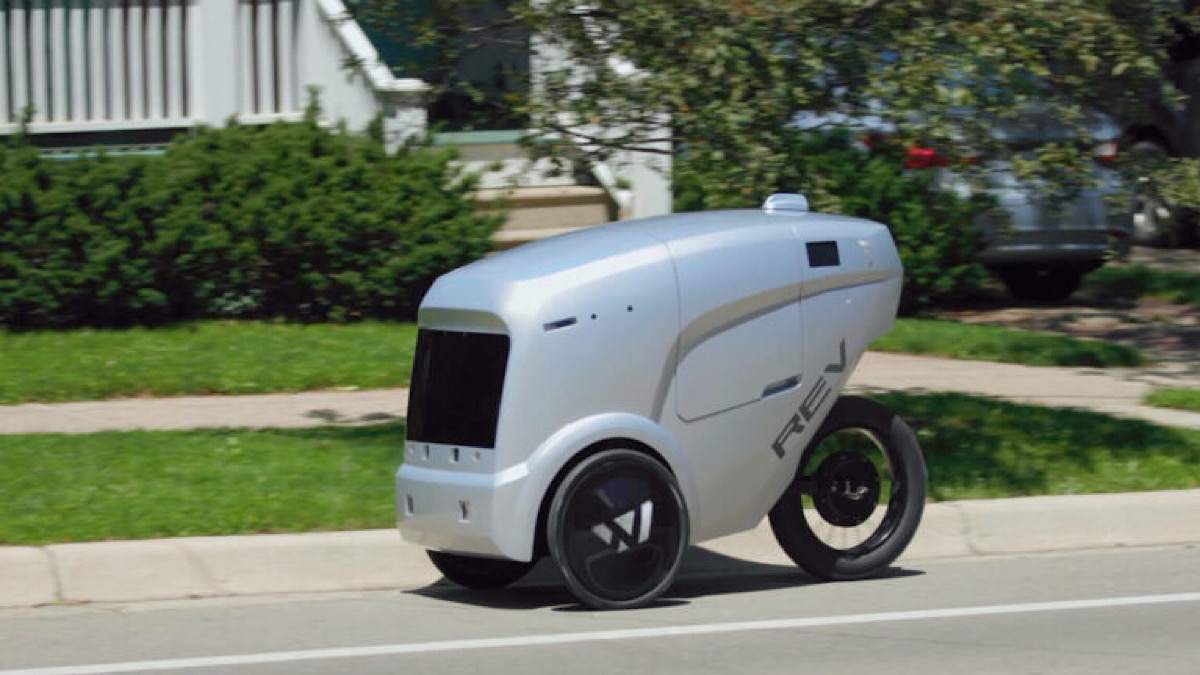
Refraction AI entered into the $80 billion robotics market in 2019 with a mission to bring a practical, economical and deployable robot to the last-mile delivery space. 

While working at the University of Michigan’s Robotics Program, co-founders Matthew Johnson-Roberson and Ram Vasudevan noticed a gap in autonomous vehicle (AV) mobility: extreme weather conditions. The pair developed their“Goldilocks of autonomous vehicles,” REV-1, a last-mile delivery robot that could handle the harsh weather a majority of the country experiences.

In developing REV-1, Refraction AI discovered many last-mile AVs used a sensor system known as LiDAR, which was causing bottlenecks in deploying these vehicles into the real world.

LiDAR, an acronym for light detection and ranging, determines ranges with a laser by measuring the time for the reflected light to return to the receiver. These sensors are not able to recognize different human behavior, like a cyclist looking over his or her shoulder before changing lanes. They can find it difficult to register winter weather if not used in tangent with other sensor systems. 

These LiDAR- based sensor systems also can be incredibly expensive, making the investment in AVs challenging for businesses that are looking for last-mile solutions.

Continue reading… “REV-1 robot takes on snow for last-mile delivery”

Agility Robotics ‘Delivery Robot’ Knocks at Door to Bring Package, Avoiding Face-to-Face Interaction

By Isaiah Alonzo

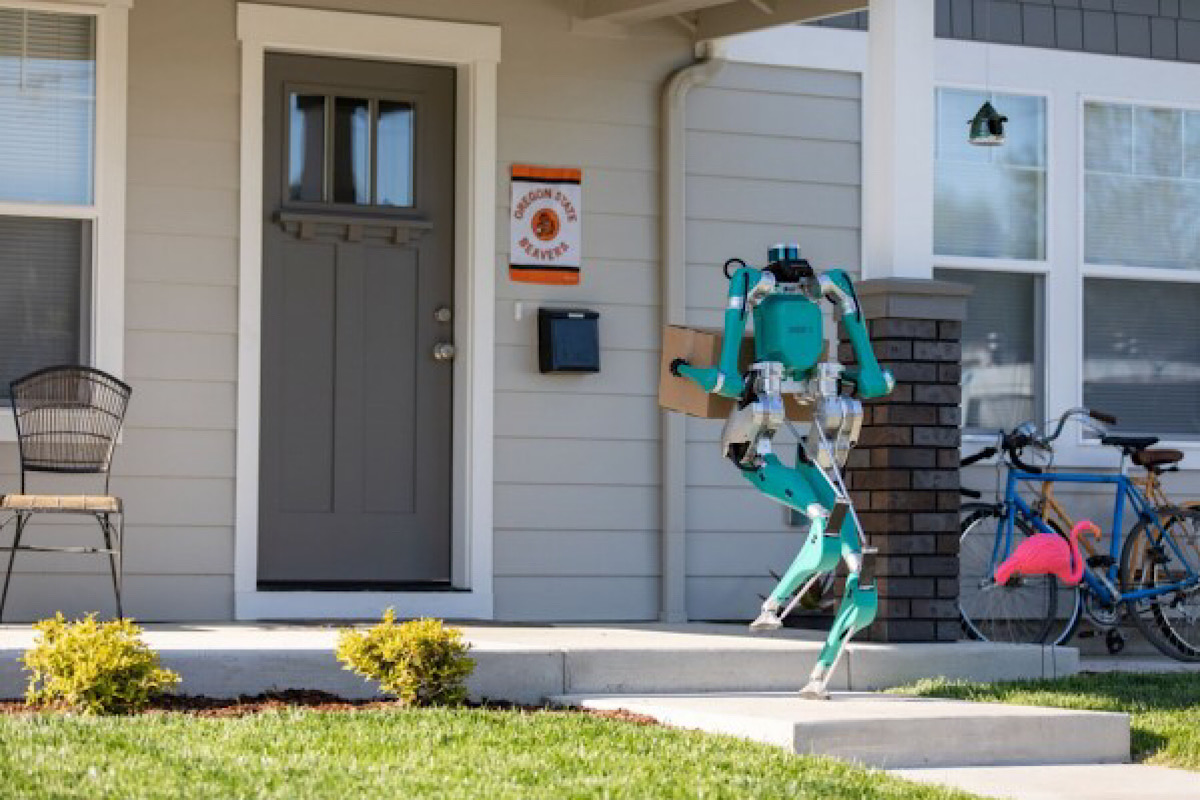
However, that was not the case, and the Albany-based robotics company has only finished its prototypes now and is previewing it to the public, showing a highly-advanced form of robot available to man. Its designs resemble the stereotypical look of a “walking robot” whose purpose is to deliver packages on certain sci-fi films.

Having said this, the “Digit” robot is advanced for this generation, as it features what was initially seen only in fictional movies with the use of CGI, and not an actual prototype that is bulky or massive for its size. The robot’s size is near the fitting of a man that can sit on regular cars, particularly delivery vans, or be stowed with the packages behind.

Continue reading… “Agility Robotics ‘Delivery Robot’ Knocks at Door to Bring Package, Avoiding Face-to-Face Interaction”

Airbus Becomes the Pioneer of the First Satellite Factory in Space

airbus premiered the first satellite factory in space

Airbus has been selected by the European Commission to study spacecraft production in space under the Horizon 2020 Program.

The PERIOD (PERASPERA In-Orbit Demonstration) project focuses on orbit satellite assembly and production. This € 3 million A / B1 phase contract will last two years to continue with a demonstrator in orbit.

The “Orbit Factory” that PERIOD will bring to life will lead the construction of main components such as antenna reflectors, assembly of spacecraft components and direct replacement of satellite payloads in space.

This will lead to the future production of large structures in orbit. Manufacturing in direct orbit will revolutionize how space systems are designed, built and operated. It has significant advantages over the traditional approach where everything is manufactured on Earth and then transported into space, because there will be no restrictions and launch requirements for products built in space. (Launcher mass and volume limitations, structural strength to withstand launch)

Continue reading… “Airbus Becomes the Pioneer of the First Satellite Factory in Space”

This electric ‘urban sled’ is a model for a future of emission-free deliveries

BY ADELE PETERS

Rethinking the form factor of urban e-commerce.

In crowded cities, electric cargo bikes have some obvious advantages over typical delivery vans. They’re small enough to squeeze through traffic jams, so deliveries are faster. When they stop for deliveries, they’re less likely to block lanes and add to congestion. And they don’t add to pollution.

Most cargo bikes (technically, trikes) tested by shipping companies look fairly similar, with a rider in front and a box or two filled with deliveries in the back. But over the last couple of months, engineers at Polestar, the Volvo-owned electric car brand, have been experimenting with an even simpler vehicle for urban deliveries. Instead of a bike, it looks like a giant scooter. It’s made from lightweight aluminum and it can fit in a bike lane, but it can hold as much as 600 pounds.

Continue reading… “This electric ‘urban sled’ is a model for a future of emission-free deliveries”

OpenAI’s Sam Altman: Artificial Intelligence will generate enough wealth to pay each adult $13,500 a year

Guests have their faces scanned at the World Artificial Intelligence Conference in Shanghai in August, 2019.Hector Retamal | AFP | Getty Images

By Catherine Clifford

Artificial intelligence will create so much wealth that every adult in the United States could be paid $13,500 per year from its windfall as soon as 10 years from now.

So says Sam Altman, co-founder and president of San Francisco-headquartered, artificial intelligence-focused nonprofit OpenAI.

“My work at OpenAI reminds me every day about the magnitude of the socioeconomic change that is coming sooner than most people believe,” Altman, who  posted Tuesday. “Software that can think and learn will do more and more of the work that people now do.”

Continue reading… “OpenAI’s Sam Altman: Artificial Intelligence will generate enough wealth to pay each adult $13,500 a year”

Ultrasound Waves Shown to Kill Coronavirus in MIT Experiments

Advanced simulations showed that SARS-CoV-2’s spikes and shells are vulnerable to ultrasound.

By  Chris Young

Shortly after COVID-19 lockdowns started to come into force almost exactly a year ago, a wave of novel engineering methods for breaking down the virus were proposed, including ultraviolet light-emitting robots and drones.

Now, researchers are turning to another approach with the same prefix: an MIT study shows that ultrasound waves at medical imaging frequencies can cause the virus shell and spikes to collapse and rupture in advanced simulations.

The spikes, the virus component that latches onto healthy cells, could be vulnerable to ultrasonic vibrations within the frequency used in medical diagnostic imaging, MIT researchers explain in a press statement.

In their simulations, researchers from the MIT Department of Mechanical Engineering modeled the virus’s mechanical response to vibrations rippling through its structure across a range of ultrasound frequencies.

They found that vibrations between 25 and 100 megahertz triggered the virus shell and spikes to collapse and start to rupture within a fraction of a second. The simulations showed that the virus would rupture in air and water at the same frequencies.

Continue reading… “Ultrasound Waves Shown to Kill Coronavirus in MIT Experiments”

‘Better treatments’: Government to fund psychedelic drugs trials to treat mental illness

Fungi containing psilocybin – otherwise known as magic mushrooms – will be part of government-funded trials into mental health treatments.

By Rob Harris

Clinical trials using magic mushrooms, ecstasy and other psychedelic drugs in potential breakthrough therapies for debilitating mental illnesses will be funded by the federal government as part of global efforts to advance innovative treatments.

There is growing international evidence showing substances such as ketamine, psilocybin and MDMA can successfully treat resistant mental illnesses, including depression and post-traumatic stress disorder, when used in a controlled environment and supported by psychiatric care.

Many standard treatments for illnesses, including addiction and eating disorders, can have varied efficacy and recovery rates and there have been few advances in novel pharmaceutical discoveries in recent years.

The Morrison government will on Wednesday launch a $15 million competitive grant round to kick-start Australian clinical trials of potential breakthrough combination therapies.

Continue reading… “‘Better treatments’: Government to fund psychedelic drugs trials to treat mental illness”
Discover the Hidden Patterns of Tomorrow with Futurist Thomas Frey
Unlock Your Potential, Ignite Your Success.

By delving into the futuring techniques of Futurist Thomas Frey, you’ll embark on an enlightening journey.

Learn More about this exciting program.