A game plan for quantum computing

55D323CE-32E3-4342-9A49-875E2711D767

Pharmaceutical companies have an abiding interest in enzymes. These proteins catalyze all kinds of biochemical interactions, often by targeting a single type of molecule with great precision. Harnessing the power of enzymes may help alleviate the major diseases of our time.

Unfortunately, we don’t know the exact molecular structure of most enzymes. In principle, chemists could use computers to model these molecules in order to identify how the molecules work, but enzymes are such complex structures that most are impossible for classical computers to model.

A sufficiently powerful quantum computer, however, could accurately predict in a matter of hours the properties, structure, and reactivity of such substances—an advance that could revolutionize drug development and usher in a new era in healthcare. Quantum computers have the potential to resolve problems of this complexity and magnitude across many different industries and applications, including finance, transportation, chemicals, and cybersecurity.

Continue reading… “A game plan for quantum computing”

New robot does superior job sampling blood

E9D5C62C-5D6E-45A1-B804-56B5F41B9C5B

A prototype of an automated blood drawing and testing device. Credit: Unnati Chauhan

In the future, robots could take blood samples, benefiting patients and healthcare workers alike.

A Rutgers-led team has created a blood-sampling robot that performed as well or better than people, according to the first human clinical trial of an automated blood drawing and testing device.

The device provides quick results and would allow healthcare professionals to spend more time treating patients in hospitals and other settings.

The results, published in the journal Technology, were comparable to or exceeded clinical standards, with an overall success rate of 87% for the 31 participants whose blood was drawn. For the 25 people whose veins were easy to access, the success rate was 97%.

Continue reading… “New robot does superior job sampling blood”

An algorithm that can spot cause and effect could supercharge medical AI

C32607D8-F3B2-40A4-803E-9387EEB74040

The technique, inspired by quantum cryptography, would allow large medical databases to be tapped for causal links

Understanding how the world works means understanding cause and effect. Why are things like this? What will happen if I do that? Correlations tell you that certain phenomena go together. Only causal links tell you why a system is as it is or how it might evolve. Correlation is not causation, as the slogan goes.

This is a big problem for medicine, where a vast number of variables can be interlinked. Diagnosing diseases depends on knowing which conditions cause what symptoms; treating diseases depends on knowing the effects of different drugs or lifestyle changes. Untangling such knotty questions is typically done via rigorous observational studies or randomized controlled trials.

These create a wealth of medical data, but it is spread across different data sets, which leaves many questions unanswered. If one data set shows a correlation between obesity and heart disease and another shows a correlation between low vitamin D and obesity, what’s the link between low vitamin D and heart disease? Finding out typically requires another clinical trial.

Continue reading… “An algorithm that can spot cause and effect could supercharge medical AI”

The year women became eligible to vote in each country

553F5C0C-68C6-4F2C-859F-8A70D77EB04D

SUFFRAGE HAPPENED in 1920 in the United States, three years behind Russia and Canada but 91 years ahead of Saudi Arabia, as noted by this map depicting the year women became eligible to vote in each country. Countries began joining the fray en masse by the mid-twentieth century, but the leader of the pack comes from far down under — women in New Zealand obtained voting rights in 1893. This map was uploaded to Reddit and shows the year women became eligible to vote in each country.

A quick glance at the map tells only part of the story, however. Pay close attention to the asterisks, as the year noted for some countries signifies only limited suffrage, often only for white women or in conjunction with specific requirements such as homeownership or marriage. Belgium’s 1919 suffrage granted widows and the mothers of servicemen killed in World War I, or widows and mothers of servicemen “shot and killed by the enemy” the vote but didn’t extend the same rights to all women until 1948. Australia granted women excluding Aboriginals the right to vote in 1902. For a more complete list of exclusions, view the notes at the far bottom of the infographic.

Continue reading… “The year women became eligible to vote in each country”

How AI is helping reinvent the world of manufacturing

654F40C4-A154-491B-9459-09A803B021F2

Throughout each industrial era, the companies best able to embrace change have become the most likely to succeed. This dates back to the development of steam and combustion engines through to electricity, microprocessors and now artificial intelligence.

In The Future Computed: AI and Manufacturing, Microsoft Senior Director Greg Shaw explores how AI, automation and the internet of things (IoT) present new challenges and opportunities.

Here are some of the manufacturers already demonstrating how the latest tech advances are changing the way they work.

Continue reading… “How AI is helping reinvent the world of manufacturing”

Company to harvest green hydrogen by igniting oil fires underground

A0E60D48-57BA-49C8-992D-91901BADC17F

Injection wells at the Superb oil field in Canada. To make hydrogen, workers heat the reservoir with steam and feed it air, setting off underground oil fires.

This month, on the frozen plains of Saskatchewan in Canada, workers began to inject steam and air into the Superb field, a layer of sand 700 meters down that holds 200 million barrels of thick, viscous oil. Their goal was not to pump out the oil, but to set it on fire—spurring underground chemical reactions that churn out hydrogen gas, along with carbon dioxide (CO2). Eventually the company conducting the $3 million field test plans to plug its wells with membranes that would allow only the clean-burning hydrogen to reach the surface. The CO2, and all of its power to warm the climate, would remain sequestered deep in the earth.

“We want to launch the idea that you can get energy from petroleum resources and it can be zero carbon emissions,” says Ian Gates, a chemical engineer at the University of Calgary and co-founder of the startup, called Proton Technologies.

Continue reading… “Company to harvest green hydrogen by igniting oil fires underground”

3D Printing humans: A quick review of 3D Bioprinters

69555232-716B-42A8-A8FA-9D2052C7DC5C

It was only a matter of time before the iconic scene from 1997’s The Fifth Element became a reality. In the film Milla Jovovich’s character, Leeloo, is entirely rebuilt using her dead hand as a template. The resurrection is performed by a surgical robot that collects slices of heterogeneous tissue, generated from a yellow bio-ink, and places them rapidly in sequence, followed by the addition of softer tissues via long red fibres.

Continue reading… “3D Printing humans: A quick review of 3D Bioprinters”

New droplet-based electricity generator: A drop of water generates 140V power, lighting up 100 LED bulbs

560375E5-B573-468A-97A6-6581274C9BF6

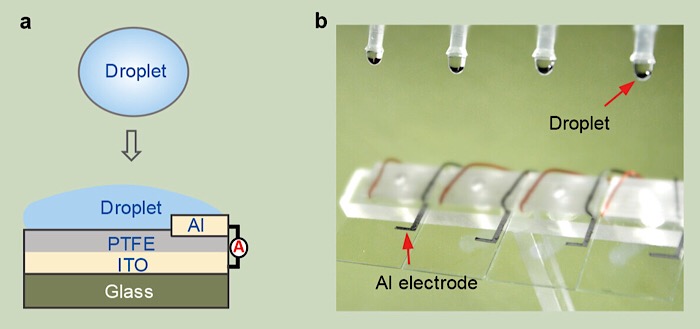
New droplet-based electricity generator: A drop of water generates 140V power, lighting up 100 LED bulbs

A research team led by scientists from the City University of Hong Kong (CityU) has recently developed a droplet-based electricity generator (DEG) with a field-effect transistor (FET)-like structure that allows for high energy conversion efficiency and instantaneous power density thousands of times that of its counterparts without FET technology. This would help to advance scientific research of water energy generation and tackle the energy crisis.

The research was led together by Professor Wang Zuankai from CityU’s Department of Mechanical Engineering, Professor Zeng Xiao Cheng from University of Nebraska-Lincoln, and Professor Wang Zhong Lin, founding director and chief scientist from Beijing Institute of Nanoenergy and Nanosystems of Chinese Academy of Sciences. Their findings were published in Nature in a study titled “A droplet-based electricity generator with high instantaneous power density.”

Continue reading… “New droplet-based electricity generator: A drop of water generates 140V power, lighting up 100 LED bulbs”

Ad blocking takes off on mobile phones, a challenge for publishers

F5A3AC04-99CF-4A6A-BFC4-6BD9D5B9D8F7

 About 15% to 30% of website traffic is from people with ad-blocking software, online ad firm Blockthrough reports.

The number of people using ad-blocking technology on mobile browsers has surged to 527 million, an increase of 64% over the last three years, according to a report published Thursday. Combined with ad blocking on personal computers, that means a total of 763 million devices were running ad blockers in the fourth quarter of 2019, the report said.

That means about 15% to 30% of website traffic is using an ad blocker, said Marty Kratky-Katz, chief executive of Blockthrough, a Toronto-based company that helps publishers try to cope with ad blocking.

Continue reading… “Ad blocking takes off on mobile phones, a challenge for publishers”

The Navy’s surprise unmanned fighter is a glimpse of war’s near future

C9DD0456-87FC-41A0-BECA-C7A141600F41

The Navy converted manned combat jets into unmanned ones. Nobody had any idea they were doing it.

The U.S. Navy announced that it converted EA-18G Growler electronic attack jets into unmanned vehicles.

In a test, a manned Growler controlled two unmanned Growlers.

The previously unknown test could mean that unmanned Navy warplanes are coming sooner than experts thought.

In a surprise announcement, the U.S. Navy revealed on Tuesday that it had successfully flown tests involving unmanned versions of the EA-18G Growler electronic attack fighter. The tests involved a single manned EA-18G controlling two unmanned versions of the same aircraft, opening up the possibility that the U.S. Navy could fly armed unmanned aircraft sooner than originally thought.

Continue reading… “The Navy’s surprise unmanned fighter is a glimpse of war’s near future”

10 disruptive trends for 2020

445D8618-1C83-4AA1-9E70-DEEF6857A336

Disruption is everywhere. Here are 10 trends that will create opportunities – and threats – in 2020.

Twenty years ago, when I started advising startups and Fortune 500 companies on their innovation strategies, a “2020 vision” served as a key staple in most business planning efforts. The future is finally here.

Emerging technologies catalyze disruption. But 2020 promises to be especially extra turbulent. Election year dynamics, coupled with an increase in grassroots business activism, and governments taking action on environmental issues, will infuse even greater chaos into our everyday experiences.

Last year, I described the disruptions facing a variety of industries, including healthcare, packaging, travel and hospitality, software, real estate and construction, retail shopping, and manufacturing.

Here’s my take on the biggest forces transforming business and society in 2020:

Continue reading… “10 disruptive trends for 2020”

MIT’s solid-state battery breakthrough may see phones last for days

7BF0F4FA-05D5-46A1-AE46-C985BF0313DF

A breakthrough in battery architecture could lead to lithium batteries with far greater energy densities than those used today

One of the many ways scientists hope to improve the performance of today’s lithium batteries is by swapping out some of the liquid components for solid ones. Known as solid-state batteries, these experimental devices could greatly extend the life of electric vehicles and mobile devices by significantly upping the energy density packed inside. Scientists at MIT are now reporting an exciting advance toward this future, demonstrating a new type of solid-state battery architecture that overcomes some limitations of current designs.

In a regular lithium battery, a liquid electrolyte serves as the medium through which the lithium ions travel back and forth between the anode and cathode as the battery is charged and discharged. One problem is that this liquid is highly volatile and can sometimes result in battery fires, like those that plagued Samsung’s Galaxy Note 7 smartphone.

Replacing this liquid electrolyte for a solid material wouldn’t just make batteries safer and less prone to fires, it could also open up new possibilities for other key components of the battery. The anode in today’s lithium batteries is made from a mix of copper and graphite, but if it were made of pure lithium instead, it could break the “energy-density bottleneck of current Li-ion chemistry,” according to a recent study published in Trends in Chemistry.

Continue reading… “MIT’s solid-state battery breakthrough may see phones last for days”

Discover the Hidden Patterns of Tomorrow with Futurist Thomas Frey
Unlock Your Potential, Ignite Your Success.

By delving into the futuring techniques of Futurist Thomas Frey, you’ll embark on an enlightening journey.

Learn More about this exciting program.