Water found in samples from the surface of an asteroid

 EB9662DF-E361-4CD2-AE9E-42E7C240009C

The Japanese space probe Hayabusa completed a sample return mission from the asteroid Itokawa.

(CNN) — Scientists have made the first measurements of water in samples collected from the surface of an asteroid, according to a new study.

The Japanese space probe Hayabusa completed a sample return mission from the asteroid Itokawa, retrieving 1,500 particles. Another mission, Hayabusa2, is conducting a sample return mission on the asteroid Ryugu.

A study detailing the analysis of five of the particles from the asteroid samples was published Wednesday in the journal Science Advances. The samples were collected from an area on Itokawa known as the Muses Sea, which is smooth and dusty.

“We found the samples we examined were enriched in water compared to the average for inner solar system objects,” said Ziliang Jin, lead study author and postdoctoral scholar in Arizona State University’s School of Earth and Space Exploration, in a statement.

Continue reading… “Water found in samples from the surface of an asteroid”

Doctors who are kind have healthier patients who heal faster, according to new book

067EEB56-FF75-4C6E-881E-8732CE9F8B98

 Which doctor would you pick: a physician who is kind and warm, or one who is cold but graduated at the top of the class in medical school?

A new book makes a strong argument for the ones who are kind and warm, not just because they’re more pleasant, but because they have better patient outcomes.

“Compassionomics: The Revolutionary Scientific Evidence That Caring Makes a Difference,” written by physician-scientist team Stephen Trzeciak and Anthony Mazzarelli, provides overwhelming evidence for the healing power of compassion.

Continue reading… “Doctors who are kind have healthier patients who heal faster, according to new book”

Data Isn’t ‘Truth’

9B6212A5-B96B-449A-955C-33B8A3B1016C

It has become perhaps the most important guiding principle of today’s world of data science: “data is truth.” The statisticians, programmers and machine learning experts that acquire and analyze the vast oceans of data that power modern society are seen as uncovering undeniable underlying “truths” about human society through the power of unbiased data and unerring algorithms. Unfortunately, data scientists themselves too often conflate their work with the search for truth and fail to ask whether the data they are analyzing can actually answer the questions they ask of it. Why can’t data scientists be more like those of the physical sciences that see not “universal truths” but rather “current consensus understanding?”

Given the sheer density of statisticians in the data sciences, it is remarkable how poorly the field adheres to statistical best practices like normalization and characterizing data before analyzing it. Programmers in the data sciences, too, tend to lack the deep numerical methods and scientific computing backgrounds of their predecessors, making them dangerously unaware of the myriad traps that await numerically-intensive codes.

Most importantly, however, somewhere along the way data science became about pursuing “truth” rather than “evidence.”

Continue reading… “Data Isn’t ‘Truth’”

Radical desalination approach may disrupt the water industry

8A38E9FC-CBF7-40A6-99BB-155E08C50CCAIllustration describing fresh water production from hypersaline brines by temperature swing solvent extraction.

Hypersaline brines—water that contains high concentrations of dissolved salts and whose saline levels are higher than ocean water—are a growing environmental concern around the world. Very challenging and costly to treat, they result from water produced during oil and gas production, inland desalination concentrate, landfill leachate (a major problem for municipal solid waste landfills), flue gas desulfurization wastewater from fossil-fuel power plants, and effluent from industrial processes.

If hypersaline brines are improperly managed, they can pollute both surface and groundwater resources. But if there were a simple, inexpensive way to desalinate the brines, vast quantities of water would be available for all kinds of uses, from agriculture to industrial applications, and possibly even for human consumption.

Continue reading… “Radical desalination approach may disrupt the water industry”

Top 5 Predictions for VR/AR Breakthroughs

FDD98010-832B-4875-9E5B-F4CA45614E4C

Convergence is accelerating disruption… everywhere!

Exponential technologies are colliding into each other, reinventing products, services and industries.

In this third installment of our Convergence Catalyzer series, I’ll be synthesizing key insights from my annual entrepreneurs’ mastermind event, Abundance 360, which takes place every January in Beverly Hills. This five-blog series looks at 3D Printing, Artificial Intelligence, VR/AR, Energy & Transportation, and Blockchain.

Today, let’s dive into Virtual and Augmented Reality…

Continue reading… “Top 5 Predictions for VR/AR Breakthroughs”

The new digital divide is between people who opt out of algorithms and people who don’t

D2A2333B-DF46-4E7A-8381-17F40216FF50

Every aspect of life can be guided by artificial intelligence algorithms—from choosing what route to take for your morning commute, to deciding whom to take on a date, to complex legal and judicial matters such as predictive policing.

Big tech companies like Google and Facebook use AI to obtain insights on their gargantuan trove of detailed customer data. This allows them to monetize users’ collective preferences through practices such as micro-targeting, a strategy used by advertisers to narrowly target specific sets of users.

In parallel, many people now trust platforms and algorithms more than their own governments and civic society. An October 2018 study suggested that people demonstrate “algorithm appreciation,” to the extent that they would rely on advice more when they think it is from an algorithm than from a human.

Continue reading… “The new digital divide is between people who opt out of algorithms and people who don’t”

Oxford philosopher’s newest hypothesis predicts the rise of super villains

0AEC6D66-F7ED-45E4-BD4E-E3AB3A770D7C

 Oxford philosopher and founding director of the Future of Humanity Institute Nick Bostrom‘s latest research paper seems to indicate our species could be on a collision course with a technology-fueled super villain.

Will a deranged lunatic soon have the capabilities to take the entire world hostage? Can our nation’s leaders do anything to stop this inevitable tragedy? Will the caped crusader rescue his sidekick before the Joker’s sinister trap springs?

Continue reading… “Oxford philosopher’s newest hypothesis predicts the rise of super villains”

CRISPR gene editing is coming for the womb


77DC99B8-1437-4B7F-AA6C-CFA32CF16818

When an unborn baby is diagnosed with a life-threatening defect, it can be devastating. So some scientists hope to treat the fetus in the uterus, using gene editing.

WILLIAM PERANTEAU IS the guy parents call when they’ve received the kind of bad news that sinks stomachs and wrenches hearts. Sometimes it’s a shadow on an ultrasound or a few base pairs out of place on a prenatal genetic test, revealing that an unborn child has a life-threatening developmental defect. Pediatric surgeons like Peranteau, who works at Children’s Hospital of Philadelphia, usually can’t try to fix these abnormalities until their patients leave their mother’s bodies behind. And by then it might be too late.

It’s with the memory of the families he couldn’t help in the back of his mind that Peranteau has joined a small group of scientists trying to bring the fast-moving field of gene editing to the womb. Such editing in humans is a long way off, but a spate of recent advances in mouse studies highlight its potential advantages over other methods of using Crispr to snip away diseases. Parents confronted with an in utero diagnosis are often faced with only two options: terminate the pregnancy or prepare to care for a child who may require multiple invasive surgeries over the course of their lifetime just to survive. Prenatal gene editing may offer a third potential path. “What we see as the future is a minimally invasive way of treating these abnormalities at their genetic origin instead,” says Peranteau.

Continue reading… “CRISPR gene editing is coming for the womb”

At these factories, robots are making jobs better for workers

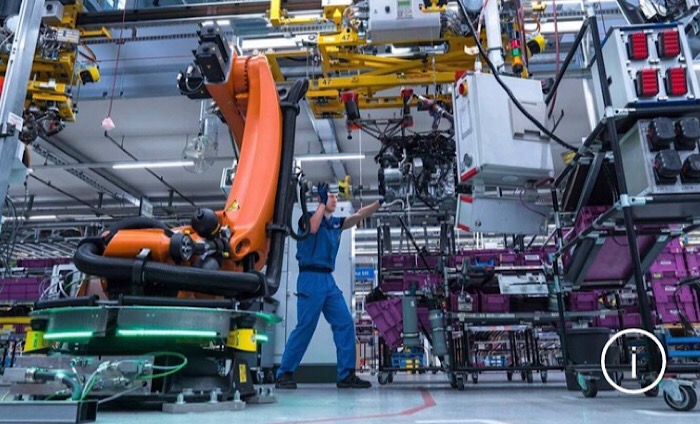
729083BA-5659-46B4-A5A1-E335B843A105A worker leads a large industrial robot at the BMW Group Plant Regensburg, Germany.

Any minute now, some speculate, workers around the world will be asked to make way for robots.

Their arrival may be welcome in some cases. Our latest research suggests that when robots—or automated manufacturing technology—take over jobs that are oriented around repetitive tasks, operators are able to move onto more exciting and productive work.

This was the case at 16 “lighthouses of manufacturing,” which were identified as part of a joint McKinsey and World Economic Forum project presented at Davos.

Continue reading… “At these factories, robots are making jobs better for workers”

AI Ethics: Seven Traps


2018_AI_Banner_Twitter_1000x563px.indd

The question of how to ensure that technological innovation in machine learning and artificial intelligence leads to ethically desirable—or, more minimally, ethically defensible—impacts on society has generated much public debate in recent years. Most of these discussions have been accompanied by a strong sense of urgency: as more and more studies about algorithmic bias have shown, the risk that emerging technologies will not only reflect, but also exacerbate structural injustice in society is significant.

So which ethical principles ought to govern machine learning systems in order to prevent morally and politically objectionable outcomes? In other words: what is AI Ethics? And indeed, “is ethical AI even possible?”, as a recent New York Times article asks?

Continue reading… “AI Ethics: Seven Traps”

CRISPR is now being used on humans in the U.S.

30D186F1-5D03-4606-BC1C-4AEE9016C84E

The gene editing trial has two patients so far.

CRISPR therapies are entering the mainstream.

The first U.S. trial of CRISPR in humans has begun, NPR reported Tuesday. Two patients are currently being treated as part of a University of Pennsylvania study. Per NPR, both have difficult-to-treat forms of cancer and both have relapsed after regular treatments. As part of the trial, researchers are taking immune cells from the patients’ own bodies and editing them with CRISPR before putting them back in. The hope is that these edited cells will be better at identifying and attacking the cancer than their unaltered counterparts. According to the U.S. government clinical trial registry, the researchers are hoping to enroll 18 people in their study. But it’s not certain yet whether they’ll be approved for that many subjects, reports Jon Fingas for Engadget.

Continue reading… “CRISPR is now being used on humans in the U.S.”

Very risky business: the pros and cons of insurance companies embracing artificial intelligence

CE60F742-1393-4BE5-81D6-33BE1845C13B

The enabling technology for insurers to use AI is the ‘ecosystem’ of sensors known as the internet of things.

It’s a new day not very far in the future. You wake up; your wristwatch has recorded how long you’ve slept, and monitored your heartbeat and breathing. You drive to work; car sensors track your speed and braking. You pick up some breakfast on your way, paying electronically; the transaction and the calorie content of your meal are recorded.

Then you have a car accident. You phone your insurance company. Your call is answered immediately. The voice on the other end knows your name and amiably chats to you about your pet cat and how your favourite football team did on the weekend.

You’re talking to a chat-bot. The reason it “knows” so much about you is because the insurance company is using artificial intelligence to scrape information about you from social media. It knows a lot more besides, because you’ve agreed to let it monitor your personal devices in exchange for cheaper insurance premiums.

Continue reading… “Very risky business: the pros and cons of insurance companies embracing artificial intelligence”

Discover the Hidden Patterns of Tomorrow with Futurist Thomas Frey
Unlock Your Potential, Ignite Your Success.

By delving into the futuring techniques of Futurist Thomas Frey, you’ll embark on an enlightening journey.

Learn More about this exciting program.