America’s Power Grid Is Increasingly Unreliable

Behind a rising number of outages are new stresses on the system caused by aging power lines, a changing climate and a power-plant fleet rapidly going green

By Katherine Blunt 

The U.S. electrical system is becoming less dependable. The problem is likely to get worse before it gets better.

Large, sustained outages have occurred with increasing frequency in the U.S. over the past two decades, according to a Wall Street Journal review of federal data. In 2000, there were fewer than two dozen major disruptions, the data shows. In 2020, the number surpassed 180. 

Utility customers on average experienced just over eight hours of power interruptions in 2020, more than double the amount in 2013, when the government began tracking outage lengths. The data doesn’t include 2021, but those numbers are certain to follow the trend after a freak freeze in Texas, a major hurricane in New Orleans, wildfires in California and a heat wave in the Pacific Northwest left millions in the dark for days.

The U.S. power system is faltering just as millions of Americans are becoming more dependent on it—not just to light their homes, but increasingly to work remotely, charge their phones and cars, and cook their food—as more modern conveniences become electrified.

At the same time, the grid is undergoing the largest transformation in its history. In many parts of the U.S., utilities are no longer the dominant producers of electricity following the creation of a patchwork of regional wholesale markets in which suppliers compete to build power plants and sell their output at the lowest price. Within the past decade, natural gas-fired plants began displacing pricier coal-fired and nuclear generators as fracking unlocked cheap gas supplies. Since then, wind and solar technologies have become increasingly cost-competitive and now rival coal, nuclear and, in some places, gas-fired plants. 

Regulators in many parts of the country are attempting to further speed the build-out of renewable energy in response to concerns about climate change. A number of states have enacted mandates to eliminate carbon emissions from the grid in the coming decades, and the Biden administration has set a goal to do so by 2035.

Continue reading… “America’s Power Grid Is Increasingly Unreliable”
Futurati Podcast with Trent Fowler

Listen on Futurati Podcast

Watch Trent’s talk on Youtube.

Trent Fowler is a machine learning engineer, author, and co-host of the Futurati Podcast. As someone who’s worked at several crypto startups, he has years of experience dealing with blockchain data and thinking about the blockchain’s mechanics. This episode is adapted from a talk he recently gave explaining at a high level how this remarkable technology works and what it might mean for the future.

Continue reading… “Futurati Podcast with Trent Fowler”

This Hyperspeed Space Sail Could Take Us to Next-Door Star Systems

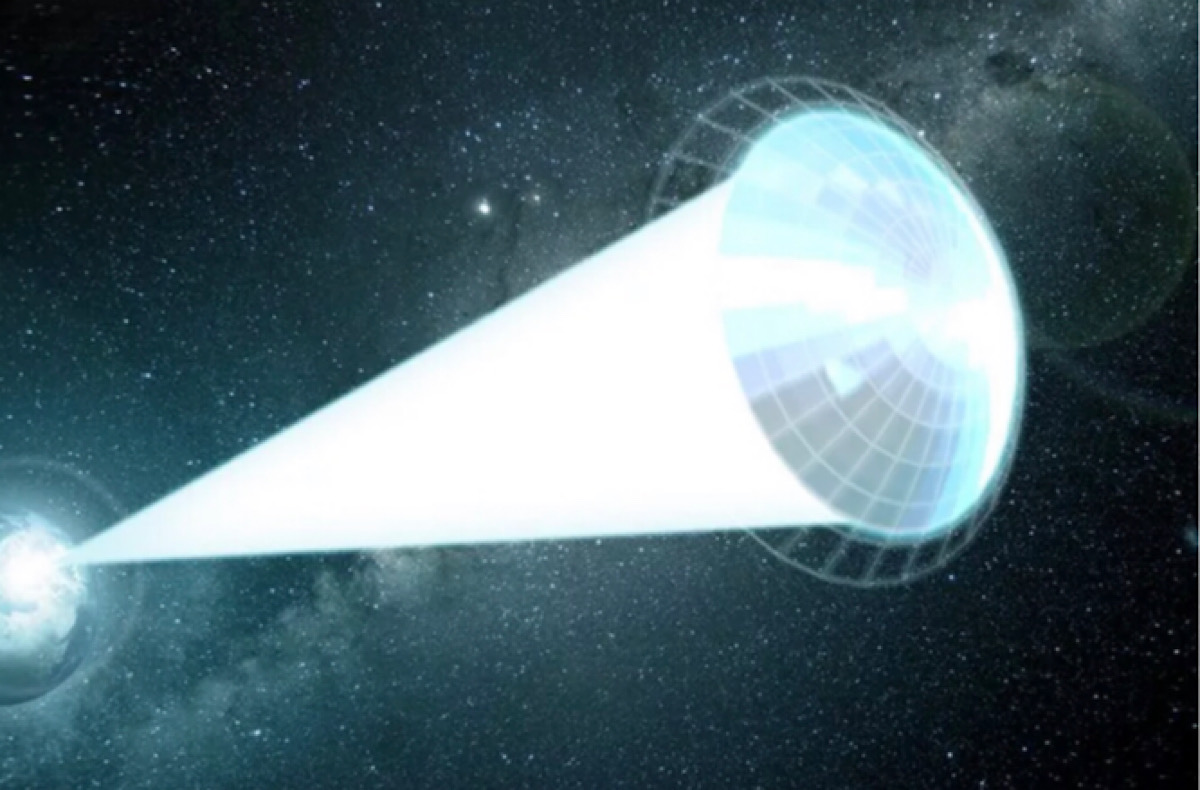
An artist’s conception of the Starshot Lightsail spacecraft during acceleration by a ground-based laser array.

By Monisha Ravisetti

For years, physicists have been trying to perfect a way to catapult space probes at a fifth the speed of light. One team is flagging an important section of the blueprint.

Only about 4 light-years away from our solar system lies Alpha Centauri, another bustling space neighborhood. It’s anchored by three stars with the same job as our sun, holds planets analogous to our eight famous orbs and may even have an Earth twin hanging out in the habitable zone.Almost like an alternate reality, the star system is a tantalizing region for space explorers.

There’s just one, glaring issue. With our present technology, spacecraft sent toward Alpha Centauri wouldn’t arrive until somewhere around the year 82022. That’s why, in 2016, late astrophysicist Stephen Hawking and investor Yuri Milner launched Breakthrough Starshot — an initiative to send microchip-size space probes over to Alpha Centauri at 20% the speed of light, reducing the whopping travel time to a mere 20 years. 

Continue reading… “This Hyperspeed Space Sail Could Take Us to Next-Door Star Systems”

Egyptian researcher develops brainwave-controlled wheelchair for those with paralysis: All you need to know

An electric wheelchair for people with tetraplegia, a condition when patients are unable to move their upper or lower body, was designed by an Egyptian researcher

By Abdelrahman Omran

Egyptian researcher Abdelrahman Omran designed a wheelchair for people with tetraplegia which operates by receiving users’ brainwaves. Reuters

An electric wheelchair for people with tetraplegia, a condition when patients are unable to move their upper or lower body, has been designed by an Egyptian researcher Abdelrahman Omran, reported Reuters.

The device will help those with paralysis by using head movements or brainwaves to operate the chair.

Continue reading… “Egyptian researcher develops brainwave-controlled wheelchair for those with paralysis: All you need to know”

Cryobioprinting could make off-the-shelf tissue-engineered structures a reality

A new cryogenic 3D printing technique could one day enable fabrication of off-the-shelf artificial muscle fibres, according to research published in Advanced Materials.

By Katie Fegan

Printing synthetic tissue that mimics the structure of muscle remains a major challenge in tissue engineering. Muscle fibres are anisotropic, meaning that their physical properties, including the ability to transmit mechanical forces, are direction dependent. Introducing a temperature gradient during the fabrication process, from sub-zero temperatures upwards, is a simple way of creating tissue scaffolds with anisotropic microscale pores. However, the freezing process is harmful to cells encapsulated within the scaffold.

Enter cryobioprinting: an all-in-one fabrication and preservation technique developed by scientists at Brigham and Women’s Hospital and Harvard Medical School. Cryobioprinting combines a customized freezing plate with cryoprotected bioinks to produce cell-laden structures with anisotropic microchannels. The scaffolds can be stored in liquid nitrogen for several months and revived on demand, a feature that would allow pre-made products to be used in a clinical setting.

“Cryobioprinting can give bioprinted tissue an extended shelf life and allows convenient transport of tissue between sites, which is something conventional bioprinting methods do not readily enable,” says senior author Y Shrike Zhang. “[Cryobioprinting] may have broad application in tissue engineering, regenerative medicine, drug discovery and personalized therapeutics.”

Continue reading… “Cryobioprinting could make off-the-shelf tissue-engineered structures a reality”

Solar-powered car that can ‘drive for months without charging’ to hit roads this summer

The five -seater Lightyear One is designed to be an ‘off-the-grid, clean, and convenient mobility solution’(Lightyear)

By Anthony Cuthbertson

Lightyear One costs €150,000 and aims to be on roads by mid-2022.

A solar-powered car has travelled hundreds of kilometres on a single charge, marking a major milestone towards bringing the “world’s most efficient and sustainable” vehicle to the market.

The Lightyear One drove 400km (248 miles) at 130kph before needing to recharge during tests in the Italian town of Aprilia last month. Previous tests carried out at a lower speed saw the electric car travel more than 700km.

Lightyear claims its car will allow customers to “drive for months without charging”, and hopes to deliver the first vehicles to customers by mid 2022.

Reservations for the Lightyear One can already be made through the company’s website, requiring a €150,000 down payment.

“We have achieved an energy consumption of 141-watt hours per kilometre. What this means is that on one charge, you’d be able to drive for over 400km. For example, that ‘s from Amsterdam all the way to Luxembourg,” said Megan Parfitt, vehicle test coordinator at Lightyear.

“Comparing that to other vehicles on the market right now, that’s about one-and-a-half times further than a directly-comparable vehicle can do with the same battery size… It shows we’re well on our way to achieving our target of being the most efficient car on the market, not just in legislative cycles but also in real-world conditions that the customer will experience.”

Continue reading… “Solar-powered car that can ‘drive for months without charging’ to hit roads this summer”

‘Game-changing’ tech can extract 99% of carbon dioxide directly from the air

The fuel cell could be a ‘game changer’, researchers believe.

By Rob Waugh

A new system powered by hydrogen can capture 99% of carbon dioxide (CO2) from air, according to scientists.

Researchers at University of Delaware said the breakthrough, in a device the size of a soft drink can, could be a “significant advance” for CO2 capture.

It could also lead to more efficient fuel cells for use in cars.

Carbon capture and storage (CCS) is one of the new technologies that scientists hope will play an important role in tackling the climate crisis.

It involves the capture of CO2 from the burning of fossil fuels in power generation, which is then stored underground.

The Delaware research team, led by Professor Yushan Yan, reported its method in Nature Energy.

Fuel cells work by converting fuel chemical energy directly into electricity and are used in hybrid or zero-emission vehicles.

Continue reading… “‘Game-changing’ tech can extract 99% of carbon dioxide directly from the air”

Chemicals in everyday plastic items may lead to weight gain

New research explores the effect of chemicals in everyday plastic items on mouse fat cells.

  • Changes in diet and exercise do not fully explain the steep rise in overweight and obesity over recent decades.
  • One theory claims that chemicals in everyday plastic products promote weight gain by changing human metabolism.
  • A new study found that a range of plastic household items contain thousands of chemicals, many of them unknown.
  • One-third of the items contained chemicals that, after extraction, caused the growth and proliferation of mouse fat cells in the lab.

Chemicals in plastic household items such as drinks bottles, yogurt pots, and freezer bags may be contributing to the global epidemicTrusted Source of obesity, a new study suggests.

The chemicals may alter human metabolism by promoting the growth of fat cells, or adipocytes. 

According to the World Health Organization (WHO)Trusted Source, the number of people with obesity has nearly tripled globally since 1975. 

The WHO estimates that in 2016, more than 1.9 billion adults were overweight. Of these individuals, more than 650 million had obesity.

Having excess body weight increases a person’s risk of type 2 diabetes, cardiovascular disease, hypertension, non-alcohol-related fatty liver disease, stroke, and certain types of cancer. 

Research suggests that factors such as changes in diet are insufficient to explain the scale of the obesity epidemic and the speed with which it has spread around the world. 

One possible culprit is the effect of synthetic chemicals in our environment called endocrine disruptors. These influence the endocrine system, which includes the hormones that regulate appetite, metabolism, and weight, among other bodily functions. 

Continue reading… “Chemicals in everyday plastic items may lead to weight gain”

At Last: New Synthetic Tooth Enamel Is Harder and Stronger Than the Real Thing

Delivering what has been so challenging to produce, researchers present an engineered analog of tooth enamel – an ideal model for designing biomimetic materials – designed to closely mimic the composition and structure of biological teeth’s hard mineralized outer layer. It demonstrates exceptional mechanical properties, they say.

Natural tooth enamel – the thin outer layer of our teeth – is the hardest biological material in the human body. It is renowned for its high stiffness, hardness, viscoelasticity, strength, and toughness and exhibits exceptional damage resistance, despite being only several millimeters thick.

Continue reading… “At Last: New Synthetic Tooth Enamel Is Harder and Stronger Than the Real Thing”

Billionaire space barons want to build ‘mixed-use business parks’ in low Earth orbit

Three full-fledged commercial space stations could be in orbit by the end of the decade

By A. Tarantola@terrortola

  • Axiom’s ISS-grown space station
  • Nanoracks’ Starlab
  • Blue Origin’s Orbital Reef
  • Northrop Grumman’s Cygnus-based space station

The Space Race is no longer a competition between the global superpowers of the world — at least not the nation-states that once vied to be first to the Moon. Today, low Earth orbit is the battleground for private conglomerates and the billionaires that helm them. With the Mir Space Station having deorbited in 2001 after 15 years of service and the ISS scheduled for retirement by the end of the decade, tomorrow’s space stations are very likely to be owned and operated by companies, not countries. In fact, the handover has already begun.

“We are not ready for what comes after the International Space Station,” then-NASA-administrator Jim Bridenstine explained at a hearing of the Senate Commerce Committee’s space subcommittee in October. “Building a space station takes a long time, especially when you’re doing it in a way that’s never been done before.”

NASA is on board with this transference, having drafted and published its Plan for Commercial LEO Development (CLD) in 2019, which calls for “a robust low-Earth orbit economy from which NASA can purchase services as one of many customers,” as part of the Human Exploration and Operations Mission Directorate at Johnson Space Center. The CLD plan lays out the agency’s necessary steps towards establishing a commercial space station ecosystem. These start with allowing private corporations “to purchase ISS resources,” i.e. lease space on the station for commercial activities, “allow companies to fly private astronauts to the ISS,” which SpaceX did last April, as well as initiating “a process for developing commercial LEO destinations” and working to “stimulate demand” for those destinations and services.

Continue reading… “Billionaire space barons want to build ‘mixed-use business parks’ in low Earth orbit”

FDA: Blockchain-Based Food Tracking Bound for Widespread Adoption

By VICTORIA CAMPISI

A new rule could boost blockchain-based food tracking.

The rule, expected next November, would require the food industry to maintain records associated with the critical tracking events on the supply chain, according to Frank Yiannas, deputy commissioner for food policy and response at FDA, as reported by The Wall Street Journal (Feb. 1).

Events include growing, receiving, transforming, creating and shipping food products.

The Food Safety Modernization Act Proposed Rule for Food Traceability wouldn’t require companies to maintain electronic records. However, it is believed many would employ digital systems including blockchain to comply, Yiannas explained.

Blockchain is the distributed ledger technology supporting bitcoin and other cryptocurrencies. It is a decentralized technology spread across many computers that manages and records transactions.

Continue reading… “FDA: Blockchain-Based Food Tracking Bound for Widespread Adoption”

DeepMind’s AlphaCode AI writes code at a competitive level

By Devin Coldewey

DeepMind has created an AI capable of writing code to solve arbitrary problems posed to it, as proven by participating in a coding challenge and placing — well, somewhere in the middle. It won’t be taking any software engineers’ jobs just yet, but it’s promising and may help automate basic tasks.

The team at DeepMind, a subsidiary of Alphabet, is aiming to create intelligence in as many forms as it can, and of course these days the task to which many of our great minds are bent is coding. Code is a fusion of language, logic and problem-solving that is both a natural fit for a computer’s capabilities and a tough one to crack.

Of course it isn’t the first to attempt something like this: OpenAI has its own Codex natural-language coding project, and it powers both GitHub Copilot and a test from Microsoft to let GPT-3 finish your lines.

DeepMind’s paper throws a little friendly shade on the competition in describing why it is going after the domain of competitive coding:

Recent large-scale language models have demonstrated an impressive ability to generate code, and are now able to complete simple programming tasks. However, these models still perform poorly when evaluated on more complex, unseen problems that require problem-solving skills beyond simply translating instructions into code.

Continue reading… “DeepMind’s AlphaCode AI writes code at a competitive level”