Tesla Commences Production of Dojo Supercomputer for Autonomous Vehicle Training

In its second-quarter earnings report for 2023, Tesla revealed its ambitious plan to address vehicle autonomy at scale with four key technology pillars: an extensive real-world dataset, neural net training, vehicle hardware, and vehicle software. Notably, the electric vehicle manufacturer asserted its commitment to developing each of these pillars in-house. A significant milestone in this endeavor was announced as Tesla started the production of its custom-built Dojo training computer, a critical component in achieving faster and more cost-effective neural net training.

While Tesla already possesses one of the world’s most potent Nvidia GPU-based supercomputers, the Dojo supercomputer takes a different approach by utilizing chips specifically designed by Tesla. Back in 2019, Tesla CEO Elon Musk christened this project as “Dojo,” envisioning it as an exceptionally powerful training computer. He claimed that Dojo would be capable of performing an exaflop, or one quintillion (10^18) floating-point operations per second, an astounding level of computational power. To put it into perspective, performing one calculation every second on a one exaFLOP computer system would take over 31 billion years, as reported by Network World.

Continue reading… “Tesla Commences Production of Dojo Supercomputer for Autonomous Vehicle Training”

Microsoft Teams Introduces AI-Powered Beauty Filters with Maybelline Collaboration

In the era of video conferencing, many people have felt the urge to disable their webcams on days when they don’t feel their best. Understanding this common concern, Microsoft has unveiled a new AI-powered beauty feature aimed at making video calls more pleasant. Partnering with cosmetics giant Maybelline, Microsoft Teams is introducing a set of “virtual makeup” filters that allow users to enhance their appearance with a variety of unique looks.

The Maybelline Beauty app, integrated into Microsoft Teams, will offer users 12 different makeup looks to choose from. These filters will include various blurring effects and digital makeup color options. Interestingly, each look will provide a detailed breakdown of the real-world Maybelline products and shades used in the filter, empowering users to recreate the makeup look in their daily lives.

Continue reading… “Microsoft Teams Introduces AI-Powered Beauty Filters with Maybelline Collaboration”

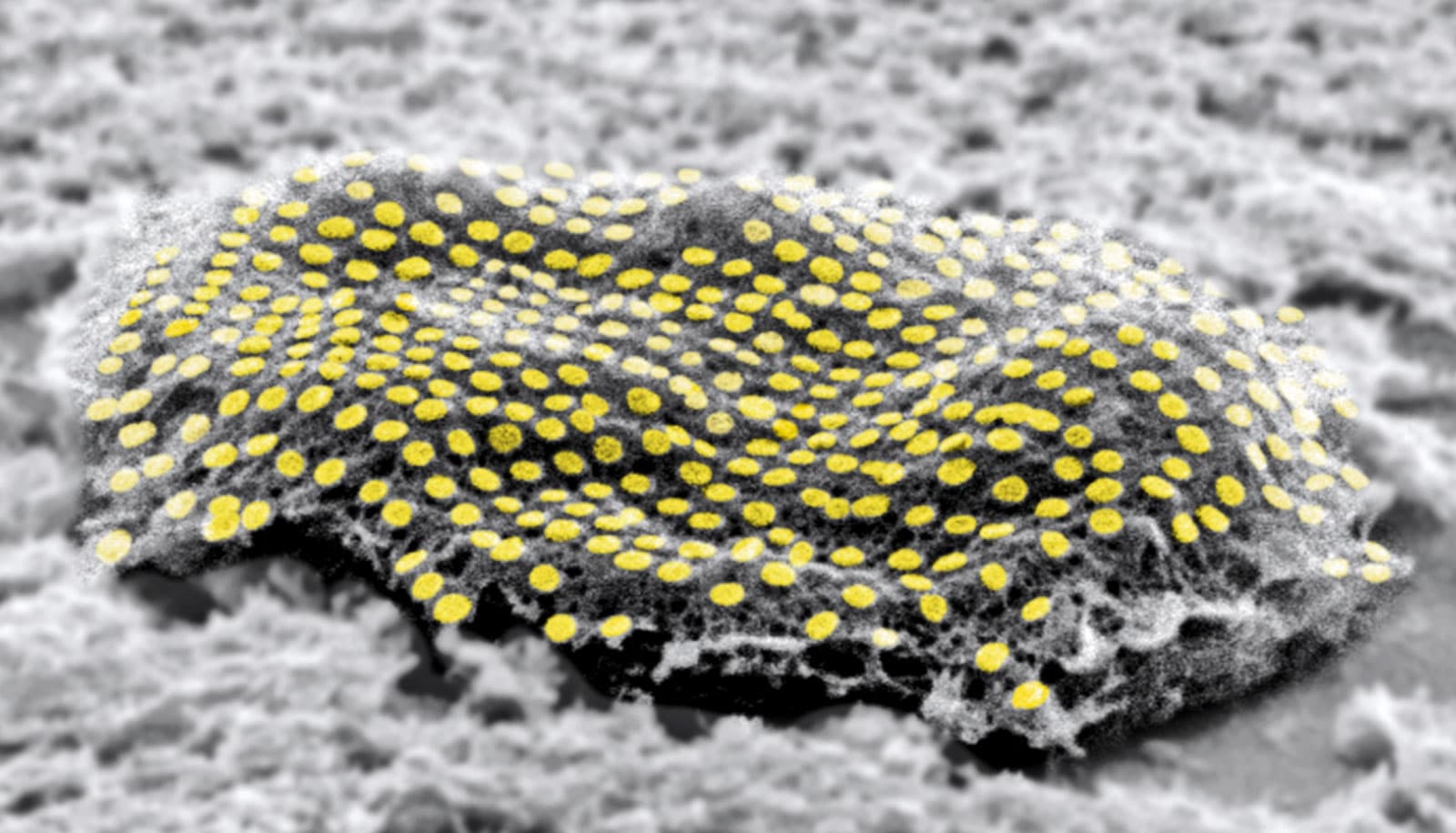
Unveiling Nature’s Microbe Killer: The Cicada Wing’s Antibacterial Secret Unraveled Through Nanoscale Simulations

Over the last decade, collaborative teams of engineers, chemists, and biologists have diligently studied the physical and chemical properties of cicada wings, driven by the quest to unlock the enigmatic ability of these wings to eliminate microbes on contact. The hope is that if science can replicate this natural function, it may lead to the development of products with inherently antibacterial surfaces, surpassing the effectiveness of current chemical treatments.

At Stony Brook University’s Department of Materials Science and Chemical Engineering, researchers made significant progress when they developed a simple technique to replicate the nanostructure of cicada wings. However, they still lacked a crucial piece of information – the exact mechanism by which the nanopillars on the wing’s surface exterminate bacteria. Fortunately, their answer came in the form of assistance from Jan-Michael Carrillo, a researcher at the Center for Nanophase Materials Sciences in the Department of Energy’s Oak Ridge National Laboratory.

Continue reading… “Unveiling Nature’s Microbe Killer: The Cicada Wing’s Antibacterial Secret Unraveled Through Nanoscale Simulations”

Innovative Cryoneurolysis: Regenerating Damaged Nerves for Pain Relief

Exciting new research, to be presented at the Society of Interventional Radiology Annual Scientific Meeting in Boston, reveals a groundbreaking technique called interventional cryoneurolysis, capable of regenerating damaged nerves using a frozen needle under advanced imaging guidance. This cutting-edge method offers hope to patients suffering from persistent pain following traumatic injuries and may provide a non-opioid alternative for pain management.

Conducted by researchers at Emory University, the study focused on treating eight patients with chronic nerve pain resulting from prior traumas. CT-guided interventional cryoneurolysis employs imaging to precisely place a needle and freeze the damaged nerves, leading them to degenerate and lose function. The remarkable part of the process is the potential for regeneration—if the nerve is exposed to the right amount of cold over the correct area and time, it can be replaced with a healthy nerve.

Continue reading… “Innovative Cryoneurolysis: Regenerating Damaged Nerves for Pain Relief”

AI Tool Revolutionizes Brain Lesion Quantification on MRI Scans

Researchers at The University of Texas Health Science Center at San Antonio have developed a groundbreaking artificial intelligence (AI) tool capable of accurately counting brain lesions on MRI scans within seconds. This innovative tool is expected to play a vital role in helping neuroradiologists assess patients’ brain diseases at earlier stages.

Led by researcher Mohamad Habes, PhD, from the Glenn Biggs Institute for Alzheimer’s and Neurodegenerative Diseases, the team demonstrated the AI tool’s effectiveness in identifying and counting enlarged perivascular spaces (ePVS’s). These spaces, filled with cerebrospinal fluid, surround arteries and veins and serve as a marker for cerebral small-vessel disease, which can lead to stroke and dementia. The study involved a follow-up analysis of 1,026 individuals who participated in the Multi-Ethnic Study of Atherosclerosis (MESA).

Continue reading… “AI Tool Revolutionizes Brain Lesion Quantification on MRI Scans”

Soft Robotics: Revolutionizing Minimally Invasive Surgery

A recent paper published in Science delves into the world of medical robots and their application in artificial intelligence (AI). Among the groundbreaking research, Professor Kaspar Althoefer’s work stands out, exploring the potential of flexible and adaptable surgical robots to transform surgical procedures.

Robot-assisted minimally invasive surgery (RAMIS) has made significant strides in recent years, offering improved ergonomics and 3D vision to surgeons operating through small incisions. However, rigid component designs in current RAMIS platforms can pose limitations and increase the risk of tissue injuries, hindering their full potential.

Continue reading… “Soft Robotics: Revolutionizing Minimally Invasive Surgery”

Cixi Unveils Innovative E-Crankset Technology: Paving the Way for Chainless and Beltless Biking

French e-drive innovator Cixi is revolutionizing the biking world with its Pedaling Energy Recovery System (PERS), an electronic crankset system that eliminates messy and noisy bike chains. Partnering with Look Cycle, they showcased this cutting-edge technology in the Rover 45 concept speed pedelec, demonstrating its incredible potential for electric vehicles and ebikes.

The PERS technology utilizes onboard electronics controlled by custom algorithms to set resistance at the pedal. The energy from rider input is then recovered and used to propel the vehicle forward via the hub motor. This system offers various pedal effort levels, with automatic torque adjustment for hill climbs and customizable power output. Regenerative braking is integrated, effectively replenishing the battery while reducing wear on the brake pads.

Continue reading… “Cixi Unveils Innovative E-Crankset Technology: Paving the Way for Chainless and Beltless Biking”

Striking the Right Chord: Embracing the Harmony of Hybrid Work

The pandemic delivered a complex puzzle that transformed the way we work, leading researchers from Stanford University, University of Chicago, and the Instituto Tecnológico Autónomo de México to explore new insights in a white paper. This comprehensive meta-analysis delves into the world of remote and hybrid work, unveiling intriguing findings about productivity, communication, and overall efficiency.

Fully remote work, though convenient for self-motivated individuals, presented some discordant notes. Productivity stumbled, facing an 8% to 19% reduction, and challenges in communication and innovation arose, impacting the quality of output. In the cluttered kitchen of remote work, creativity struggled to shine, and employees occasionally deviated from their tasks—a phenomenon known as “shirking from home.”

Continue reading… “Striking the Right Chord: Embracing the Harmony of Hybrid Work”

Quantum Drum: A Quantum Supersensor Finding Its Way Into Our Devices

Researchers at the University of Copenhagen have developed a groundbreaking “quantum drum,” a thin vibrating membrane capable of measuring various influences with unparalleled precision. Originally requiring extreme cooling with liquid helium, the researchers have now achieved the same accuracy at room temperature, making the quantum drum feasible for practical applications, even potentially in consumer devices like smartphones.

The heart of the quantum drum lies in its ultra-fast vibrations governed by the laws of quantum physics. By reading changes in these vibrations, researchers can detect a wide range of factors, including temperature variations, gas presence, and even the presence of a single virus. Moreover, by adding tiny magnets or pieces of metal to the drum, they can measure electric and magnetic fields with exceptional accuracy.

Continue reading… “Quantum Drum: A Quantum Supersensor Finding Its Way Into Our Devices”

Unraveling the Brain’s Decision-Making with Reinforcement Learning

How does the human brain handle complex situations, like navigating through traffic in busy areas? Psychologists and neuroscientists propose that the brain creates causal models of the world, running mental simulations to plan and execute actions. This idea aligns with the concept of Reinforcement Learning (RL), a system developed by computer scientists to understand human thinking and decision-making.

In a recent study published in Neuron, researchers delved deeper into RL’s neural architecture by employing functional magnetic resonance (fMRI) to compare their algorithmic theory with real-world brain imaging. The goal was to better understand how RL plays out in the brain and potentially improve RL algorithms in artificial intelligence.

Continue reading… “Unraveling the Brain’s Decision-Making with Reinforcement Learning”

Cutting-Edge Surgical Innovation Enhances Control of Bionic Prosthetics for Amputees

Prosthetic limbs have long been the go-to solution for replacing missing limbs, but their limited manageability and reliability pose challenges. To address this, a collaborative effort between surgeons and engineers has led to a groundbreaking solution. By modifying the structure of the residual limb and incorporating sensors and a skeletal implant, the bionic prosthesis can now access a wealth of information, enabling users to command numerous robotic joints with precision.

Professor Max Ortiz Catalan, a leading figure in bionics and prosthesis development, spearheaded the research initiative at the Center for Bionics and Pain Research (CBPR) in Sweden. The team’s success lies in rerouting nerves to alternative muscle targets in a distributed and simultaneous manner, significantly enhancing prosthetic control. This approach, combined with the osseointegration technique, revolutionizes the way prosthetic limbs are attached, offering greater comfort and efficiency.

Continue reading… “Cutting-Edge Surgical Innovation Enhances Control of Bionic Prosthetics for Amputees”

NASA’s Humanoid Robot Valkyrie Embarks on New Mission in Australia

NASA’s humanoid robot, Valkyrie, is embarking on an exciting new mission in Australia. Recently delivered to Western Australia, Valkyrie will be put to the test at Woodside Energy, an Australian energy giant based in Perth. Woodside Energy plans to utilize Valkyrie for remote caretaking of its uncrewed and offshore facilities, enhancing safety for both personnel and the environment.

Shaun Azimi, lead of the dexterous robotics team at NASA Johnson, expressed enthusiasm about the project, stating, “We are pleased to be starting the next phase of development and testing of advanced robotic systems that have the potential to positively impact life on Earth by allowing safer operations in hazardous environments. These demonstrations will evaluate the current potential of advanced robots to extend the reach of humans and help humanity explore and work safely anywhere.”

Continue reading… “NASA’s Humanoid Robot Valkyrie Embarks on New Mission in Australia”
Discover the Hidden Patterns of Tomorrow with Futurist Thomas Frey
Unlock Your Potential, Ignite Your Success.

By delving into the futuring techniques of Futurist Thomas Frey, you’ll embark on an enlightening journey.

Learn More about this exciting program.