NASA Wants to Send Robot Dogs to Roam Mars

.By  Fabienne Lang

NASA-wants-to-send-robot-dogs-to-mars-1
Scientists are working with Spot the robot dog to head to the Red Planet

There will soon be dogs roaming around on Mars. Well, robot dogs.

NASA/JPL Caltech scientists are working on “Mars Dogs,” which are robot dogs set to autonomously navigate the Red Planet’s rough terrain and underground caves, as was first reported by Live Science.

The team presented its plan virtually on December 14 at the annual American Geophysical Union (AGU). 

These Mars Dogs will operate much in the same way as the rovers Spirit, Opportunity, Curiosity, and Perseverance, but will be able to do much more.

These new four-legged robots will be more agile and will come equipped with sensors informing them when obstacles come in the way, will be able to select specific paths, and create virtual maps of underground tunnels and caves, said the scientists.

These robotic dogs will be able to get back up if they fall down on Mars’ tricky terrain — something current rovers aren’t able to do. 

Looks like dogs will still be man’s best friend on a different planet. 

Continue reading… “NASA Wants to Send Robot Dogs to Roam Mars”

EV startup Canoo unveiled 2 futuristic electric delivery vehicles to take on vans coming from Rivian, Ford, and Mercedes

Tim Levin 

ev-startup-canoo-futuristic-electri-delivery-vehicles-1
Canoo MPDV. 
  • Electric-vehicle startup Canoo unveiled two delivery vans Thursday and announced that a third, larger version is in the works. 
  • The futuristic-looking MPDV1 and MPDV2 will offer up to 500 cubic feet of cargo room and get an EPA-estimated range of up to 230 miles. 
  • Canoo offers customizations like storage lockers and shelving, and said large customers can develop a fleet of custom vans. 
  • Limited availability starts in 2022, with full-scale production beginning the following year. 

Tesla may have a lineup of electric luxury cars and a battery-powered semi on the way, but it doesn’t offer any smaller work vehicles for last-mile deliveries and small businesses. EV startup Canoo is targeting that exact space with a new lineup of futuristic electric delivery vans it announced Thursday. 

Canoo unveiled two multi-purpose delivery vehicles — a small MPDV1 and a medium-sized MPDV2 — and announced that a third, larger MPDV3 is in the works as well. The customizable vans can be tailored for use with many different types of businesses, Canoo said. 

Legacy automakers and startups alike have announced plans for battery-powered work vans, with RivianFord, Mercedes-Benz and Bollinger all making inroads into the space in the last couple of years. 

EVs are well-suited for commercial use, because range often poses less of a problem, commercial vehicles tend to follow predictable routes, and EVs are cheaper to run and maintain than gas-powered vehicles. 

Learn more about Canoo’s delivery vehicles — which the company says will hit streets in 2022 — below.

Continue reading… “EV startup Canoo unveiled 2 futuristic electric delivery vehicles to take on vans coming from Rivian, Ford, and Mercedes”

17 things you’ve already forgotten happened in 2020

By Jeva Lange

17-things-you've-already-forgotten-happened-2020

At long, long, long last, this weird and horrible year is ending. But however much it might feel like it, a pandemic was not the only thing to happen in 2020.

Here are 17 of the biggest, bizarrest, space-aliens-exist-est moments of the year that you’ve already forgotten happened.

Continue reading… “17 things you’ve already forgotten happened in 2020”

E-bikes and e-scooters will transform our cities in 2021

By LUCY YU

e-bikes-e-scooters-will-transform-cities

The startup world likes to celebrate exciting new technologies, such as AI and autonomous vehicles. But these are newcomers to the party compared to the electric motor, whose precursor technology celebrates its 200th birthday in 2021. Yet today, mobility overwhelmingly runs on fossil fuels. Electric-powered vehicles have been confined to the wealthy, the geeky and the green – not sufficiently affordable, accessible or practical for everyone else. In 2021, startups and industry disruptors will proliferate, heralding a new era of e-mobility for all of us. 

The driver for this is, of course, climate change. Over 77 countries and more than 100 of the world’s biggest cities have committed to achieving net-zero emissions. Globally, transport is one of the largest sources of CO2 and other greenhouse-gas emissions. Governments have imposed future bans on the sale of petrol and diesel-powered vehicles, incentivising more electric-vehicle purchases and taxing the most polluting vehicles, but investors are also keen to accelerate the global shift from pump to plug.

In January 2020, London-based startup Arrival became an electric-first unicorn, attracting sizeable funding from established automakers. Its light commercial vehicles, including buses, vans and delivery robots, will be assembled by a planned network of 1,000 global “microfactories”. In July, Tesla overtook Toyota to become the world’s most valuable carmaker, and Chinese electric-vehicle startup Li Auto raised over $1bn from its IPO.

Continue reading… “E-bikes and e-scooters will transform our cities in 2021”

Sparc sets up graphene sensor project to detect human and animal diseases

By Deepak Sharma

Sparc is engaged in developing innovative technology solutions using graphene.

The project intends to use graphene-based bio-medical sensors in integration with existing diagnostic tools or other portable electronic devices such as smartphones to enable real-time and portable disease detection.

Sparc Technologies Ltd (ASX:SPN) has established a new graphene bio-medical division aimed at developing non-invasive graphene-based breath sensing devices for detection of diseases in humans and animals.

Sparc will advance the project together with cornerstone shareholder, strategic partner and leading graphene research centre the University of Adelaide (UA) in order to seek to establish and develop non-invasive sensing devices for human and veterinarian applications.

The focus of the project will be research into graphene-based sensing devices for the detection of a selection of volatile organic compounds (VOCs) present in exhaled breath that are understood to be indicators of disease.

Continue reading… “Sparc sets up graphene sensor project to detect human and animal diseases”

A New Satellite Can Peer Inside Some Buildings, Day or Night

DAN ROBITZSKI

new-satellite-can-peer-inside-buildings-1

But don’t worry — the company says it can’t see inside your home.

A few months ago, a company called Capella Space launched a satellite capable of taking clear radar images of anywhere in the world, with incredible resolution. It can even see inside some buildings, including spotting airplanes inside hangars — though only in the case of lightweight structures, the company clarified, and not dense ones like high rises or residential homes.

And unlike most of the huge array of surveillance and observational satellites orbiting the Earth, its satellite Capella 2 can snap a clear picture during night or day, rain or shine.

“It turns out that half of the world is in nighttime, and half of the world, on average, is cloudy,” CEO Payam Banazadeh, a former system engineer at the NASA Jet Propulsion Laboratory, told Futurism. “When you combine those two together, about 75 percent of Earth, at any given time, is going to be cloudy, nighttime, or it’s going to be both. It’s invisible to you, and that portion is moving around.”

On Wednesday, Capella launched a platform allowing governmental or private customers to request images of anything in the world — a capability that will only get more powerful with the deployment of six additional satellites next year. Is that creepy from a privacy point of view? Sure. But Banazadeh says that it also plugs numerous holes in the ways scientists and government agencies are currently able to monitor the planet.

Continue reading… “A New Satellite Can Peer Inside Some Buildings, Day or Night”

Russian tycoon aims to revolutionize auto making one micro-plant at a time

russian-tychoon-revolutionize-auto-making-1
The Arrival’s bus
  • Owner of Arrival Ltd., Denis Sverdlov believes that micro-factories will help reduce production costs compared to huge plants.
  • His company aims to start producing electric buses and vans next year.

Russian-born entrepreneur Denis Sverdlov wants to revolutionize automaking, replacing Henry Ford’s century-old conveyor-belt assembly lines with tiny factories that cost far less.

While most of the industry aims for big sales numbers that will keep huge plants busy, his Arrival Ltd., which will start producing electric buses and vans next year, is betting that doing just the opposite will help reduce production costs. Its micro-factories need about $50 million in investment, compared with $1 billion for conventional ones, and 10 of of them could make as many vehicles as a traditional outlet for half the capital expenditures and in a 10th of the space, it says.

“Arrival has spent the last five years developing our unique model and proprietary technology and is now laser-focused on delivery,” Sverdlov, who’s founder and chief executive officer, said in a Zoom interview. “We are not using metal stamping, welding and paint shops. Instead, we are using aluminum for chassis, proprietary composites for bodies and structural adhesive.”

Continue reading… “Russian tycoon aims to revolutionize auto making one micro-plant at a time”

ARTIFICIAL INTELLIGENCE A&R TOOLS KEEP FINDING NEW HIT ARTISTS. THIS ONE ACTUALLY ‘LISTENS’ TO MUSIC.

BY DAVE ROBERTS

artificial-intelligence-A&R-tools-finding-new-hit-artists

To illustrate the importance and potential of AI-based A&R, Musiio co-founder and CEO Hazel Savage refers to the origin story of one of the biggest breakthrough UK artists in recent years, Lewis Capaldi.

Her point isn’t that the self-effacing Scottish superstar was discovered via data, because he wasn’t. Her point is, What if? She refers to him as the one who got through, as opposed to the thousands who got away.

She says: “With millions of creators posting new music to UGC sites around the world, the job of listening to it all has become impossible.

“Lewis Capaldi was discovered by manager Ryan Walter, who famously spent six months listening to every new artist on SoundCloud he could find. He would listen for seven hours a day, with up to 500 tabs open at a time, listening to 10 seconds of each track.

“Capaldi’s rise to fame is a fantastic tale, one which dreams are made of, but the truth is 99.99% of the work that goes into finding artists is never seen or recognized. It can be a brutal process and if Capaldi’s story teaches us anything, it’s that there is talent out there that could quite easily go unnoticed and not listened to.”

To try and help fix that undoubted problem, Musiio has created a new piece of technology that it calls a Hit Potential Algorithm, which it claims will not only be able to classify and categorize new music, but also accurately measure hit potential, and isolate those tracks most likely to properly blow-up – no matter where or who they are from.

Here, Savage tells MBW about the new technology’s secret sauce and how it could radically streamline the A&R process…

Continue reading… “ARTIFICIAL INTELLIGENCE A&R TOOLS KEEP FINDING NEW HIT ARTISTS. THIS ONE ACTUALLY ‘LISTENS’ TO MUSIC.”

Volvo begins deliveries of its electric construction machinery

Fred Lambert 

Volvo-begins-deliveries-electric-construction-machinery

Volvo Group’s construction equipment division announced that it began deliveries of its first electric construction machinery to customers.

It’s an important step toward electrifying construction machinery.

It’s not just passenger vehicles that are getting electrified. Many other industries are also looking at advancements in batteries and electric powertrains and starting to see how it could benefit them.

Wouldn’t it be nice to reduce emissions and noise pollution and cut down on fuel costs at construction sites? Electric machinery can do that.

Volvo Construction Equipment (Volvo CE) has been early in pushing for the electrification of construction equipment.

In 2018, we reported on the company unveiling several new electric prototypes for an all-electric quarry project.

Last year, they announced that they will stop development of diesel engine-based compact wheel loaders and compact excavators in order to sell electric versions instead.

Today, they are announcing that they started deliveries of their electric construction equipment to actual customers.

Continue reading… “Volvo begins deliveries of its electric construction machinery”

Scientists breed new rice variety with ion beam technology


by Zhang Nannan , Chinese Academy of Sciences

scientists-breed-new-rice-variety-ion-beam
The new rice variety Zhongkejing No. 5.

A research team led by Prof. WU Yuejin from the Institute of Intelligent Machines of the Hefei Institutes of Physical Science (HFIPS) bred a rice variety with ion beam breeding technology.

The variety Zhongkejing No. 5, in which “Zhongke” means the Chinese Academy of Science in Chinese, was tailor-made for the advantageous production areas of glutinous ricein Anhui province. Characterized by early maturity, strong resistance, and high nitrogen fertilizer utilization efficiency, it has passed the regional appraisal test in Anhui province and received support from the local government.

Continue reading… “Scientists breed new rice variety with ion beam technology”

Researchers develop novel nanoparticle that efficiently and selectively kills cancer cells

by Ludwig Maximilian University of Munich

researchers-develop-novel-nanoparticle-kills-cancer
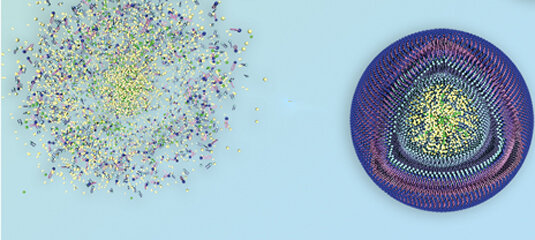
The amorphous nanoparticles dissolve very efficiently in the cell. Credit: von Schirnding et al., Chem 2020

Many chemotherapeutic agents used to treat cancers are associated with side-effects of varying severity, because they are toxic to normal cells as well as malignant tumors. This has motivated the search for effective alternatives to the synthetic pharmaceuticals with which most cancers are currently treated. The use of calcium phosphate and citrate for this purpose has been under discussion for some years now, since they lead to cell death when delivered directly into cells, while their presence in the circulation has little or no toxic effect. The problem consists in finding ways to overcome the mechanisms that control the uptake of these compounds into cells, and ensuring that the compounds act selectively on the cells one wishes to eliminate. Researchers in the Department of Chemistry at LMU, led by Dr. Constantin von Schirnding, Dr. Hanna Engelke and Prof. Thomas Bein, now report the development of a class of novel amorphous nanoparticles made up of calcium and citrate, which are capable of breaching the barriers to uptake, and killing tumor cells in a targeted fashion.

Continue reading… “Researchers develop novel nanoparticle that efficiently and selectively kills cancer cells”

Japan’s space agency finds ample soil, gas from asteroid

by Mari Yamaguchi

Japan's-space-agency-find-soil-asteroid-Hayabusa2-1
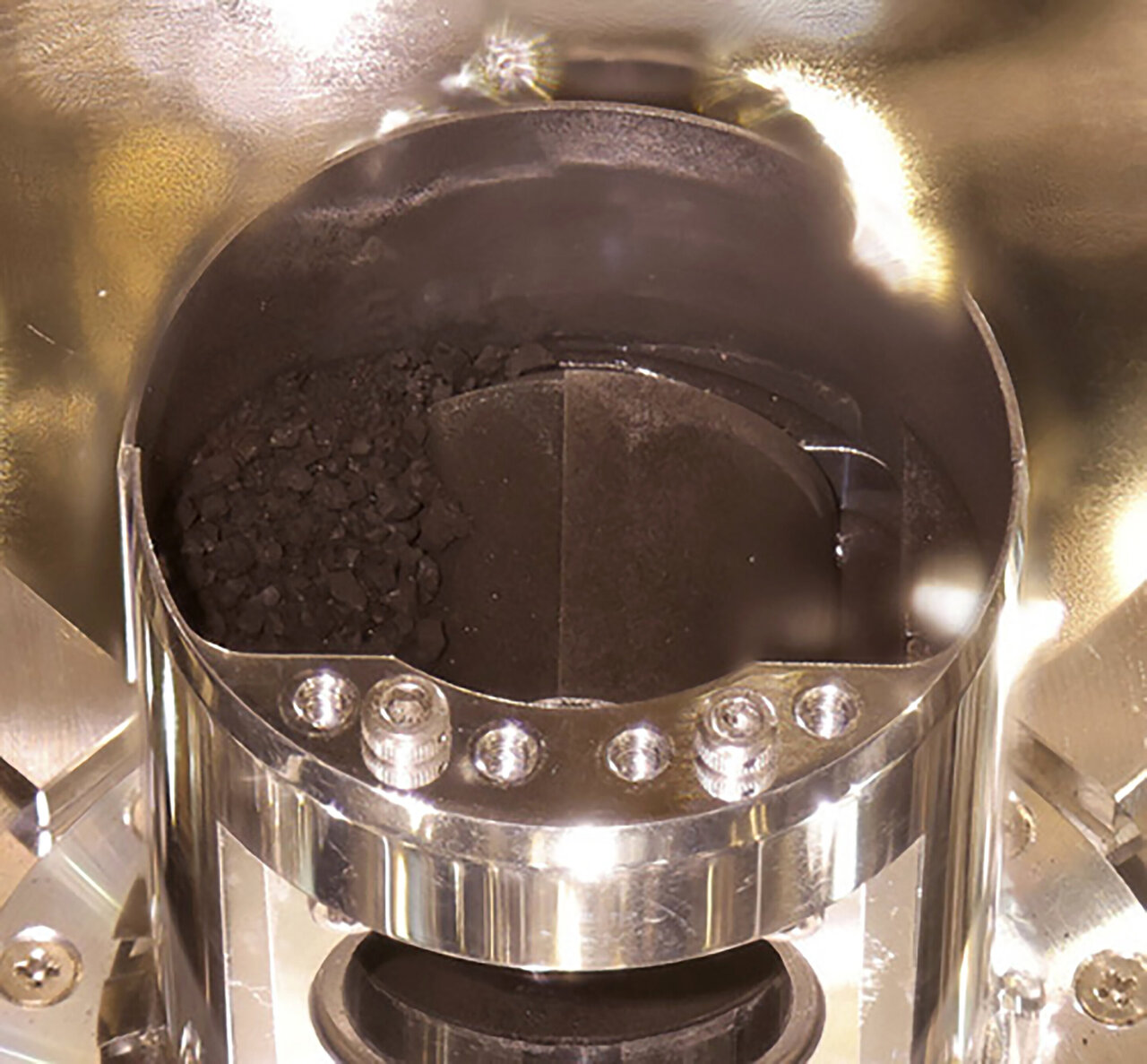
This photo provided by the Japan Aerospace Exploration Agency (JAXA), shows soil samples, seen inside a container of the re-entry capsule brought back by Hayabusa2, in Sagamihara, near Tokyo,Tuesday, Dec. 15, 2020. Officials from Japan’s space agency said Tuesday they have found more than the anticipated amount of soil and gases inside a small capsule the country’s Hayabusa2 spacecraft brought back from a distant asteroid this month, a sample-return mission they praised as a milestone for planetary research.(JAXA via AP)

Officials from Japan’s space agency said Tuesday they have found more than the anticipated amount of soil and gases inside a small capsule the country’s Hayabusa2 spacecraft brought back from a distant asteroid this month, a mission they praised as a milestone in planetary research.

The Japan Aerospace Exploration Agency said its staff initially spotted some black particles sitting on the bottom of the capsule’s sample catcher when they pulled out the container on Monday. By Tuesday, scientists found more of the soil and gas samples in a compartment that stored those from the first of Hayabusa’s two touchdowns on the asteroid last year.

“We have confirmed a good amount of sand apparently collected from the asteroid Ryugu, along with gases,” JAXA Hayabusa2 project manager Yuichi Tsuda said in a video message during an online news conference. “The samples from outside of our planet, which we have long dreamed of, are now in our hands.”

Continue reading… “Japan’s space agency finds ample soil, gas from asteroid”
Discover the Hidden Patterns of Tomorrow with Futurist Thomas Frey
Unlock Your Potential, Ignite Your Success.

By delving into the futuring techniques of Futurist Thomas Frey, you’ll embark on an enlightening journey.

Learn More about this exciting program.