The Coming Age of Predictive Medicine: AI That Sees Disease Before It Happens

What if your doctor could look five years into your future and tell you exactly which diseases your body is trending toward? Not vague risk factors or general warnings, but a precise, personalized forecast—your medical future, predicted with the same confidence as a weather report.

That’s no longer science fiction. Scientists across Europe have just unveiled Delphi-2M, an artificial intelligence model that can forecast the likelihood of over 1,000 diseases—sometimes years in advance.

Built on the same transformer architecture that powers today’s large language models, Delphi-2M doesn’t just process text. It processes the grammar of your medical life. Every blood test, MRI, prescription, and diagnosis forms part of a sentence that tells a larger story. And this AI is learning to read that story better than any physician ever could.

Continue reading… “The Coming Age of Predictive Medicine: AI That Sees Disease Before It Happens”



The Future of Off-Grid Housing: A 2035 Solution to High-Priced Homes

by Futurist Thomas Frey

The Crisis That Sparked Change

By the mid-2020s, the housing crisis had become unbearable. In major cities across the globe, the cost of owning or renting a home far outpaced wage growth. Utilities—electricity, water, waste—were draining family budgets as grids aged and struggled to keep up with demand. Younger generations gave up on the dream of home ownership, while developing nations watched populations pour into cities faster than infrastructure could be built.

History tells us that when pressures mount, innovation follows. Out of this crisis came an idea once dismissed as fringe or utopian: off-grid housing.

Continue reading… “The Future of Off-Grid Housing: A 2035 Solution to High-Priced Homes”

Reinventing Humanity by Reinventing Time

by Futurist Thomas Frey

Time is the invisible operating system of civilization. It ticks quietly in the background, setting the rhythm of our days, the order of our industries, and the boundaries of our social contracts. Yet like fish in water, we rarely question the very system that shapes our existence. The numbers on the clock dictate when we wake, eat, work, and rest, as though ancient human choices—made centuries ago—should still define how billions of people live today.

But what if those choices were wrong? Or at least outdated? What if the way we measure, segment, and live by time is holding us back from achieving our full potential?

We now stand at the edge of a revolution in time itself.

Continue reading… “Reinventing Humanity by Reinventing Time”

The Power of Unanswerable Questions in Shaping the Future

By Futurist Thomas Frey

For centuries, humanity has been propelled forward not just by the answers we’ve uncovered, but by the questions we dared to ask. Some of those questions seemed unthinkable at the time: Can we fly? Can we split the atom? Can machines think? Each one opened a door to a reality that was once unimaginable. And yet, lurking beyond the questions we’ve answered lies a far more provocative realm—the unanswerable ones.

Over the past two decades, I’ve dedicated a significant part of my work to exploring what I call unanswerable questions. These aren’t simply puzzles waiting for a clever scientist to crack or problems requiring more data. They are the questions that probe the limits of human understanding, stretching across science, philosophy, technology, and even the meaning of existence itself.

Continue reading… “The Power of Unanswerable Questions in Shaping the Future”

Light Is the New Silicon: The Dawn of Optical AI Chips

Artificial intelligence has become the engine of our digital age. Every face unlocked by a phone, every chatbot response, every streaming recommendation runs on algorithms that demand enormous amounts of computation. Yet behind the glamour of AI lies a hidden cost: energy consumption. Training and running advanced AI models can devour as much electricity as entire towns. The question is no longer whether AI can scale, but whether our chips can keep up without burning out the grid.

Researchers at the University of Florida may have just rewritten the script. Their prototype chip doesn’t just shuffle electrons—it harnesses light itself to compute. By embedding optical components directly into silicon, they have built a light-powered processor capable of running AI tasks up to 100 times faster while consuming only a fraction of the energy.

Continue reading… “Light Is the New Silicon: The Dawn of Optical AI Chips”

Drinking Water from Thin Air: How 3D Printing Could Solve Humanity’s Thirst

More than two billion people across the globe still lack reliable access to clean drinking water. We tend to think of water as a resource found in rivers, lakes, or deep underground, but the atmosphere itself holds more water than all the rivers on Earth combined. What if the very air around us could be tapped like an invisible reservoir?

That’s exactly what two students at Münster University of Applied Sciences have set out to do. Their project, Water from Air, takes a futuristic approach to one of humanity’s oldest problems—using 3D printing and advanced materials to harvest water directly from the atmosphere.

Continue reading… “Drinking Water from Thin Air: How 3D Printing Could Solve Humanity’s Thirst”

The Billion-Person Problem: How the Next Fortune Will Be Built

The road to the next trillion-dollar industry won’t be paved by niche apps, luxury products, or one-off unicorns. It will be built by solving what futurist Peter Diamandis calls “billion-person problems.” The idea is simple but radical: the greatest wealth is created when you provide massive value to massive numbers of people. In other words, if you want to make a billion dollars, solve a problem that touches a billion lives.

This isn’t theory—it’s already happened. Think about Google organizing the world’s information, Facebook connecting billions of people, or Tesla pushing mass adoption of electric mobility. Each tackled inefficiencies or unmet needs that were global in scale. The new frontier? Problems bigger than social media or search engines. Problems that affect humanity at its core.

Continue reading… “The Billion-Person Problem: How the Next Fortune Will Be Built”

The Democracy Upgrade We Desperately Need: How Rated Voting Could Save American Politics

By Futurist Thomas Frey

American democracy is broken. Not gradually deteriorating or showing signs of wear—utterly, systemically broken in ways that threaten the foundation of our republic. We’re trapped in a political system that forces 330 million diverse Americans into two rigid camps, rewards extremism over pragmatism, and makes governing nearly impossible. But there’s a solution hiding in plain sight, one so elegantly simple yet revolutionary that it could transform American politics overnight: rated voting.

Imagine an electoral system where you could support your favorite candidate without “wasting” your vote. Where politicians built coalitions instead of bases. Where compromise became a virtue rather than betrayal. Where governing majorities emerged from actual consensus rather than barely-winning pluralities. This isn’t utopian fantasy—it’s the proven reality of rated voting systems already working in cities across America.

Continue reading… “The Democracy Upgrade We Desperately Need: How Rated Voting Could Save American Politics”

How Age Reversal Could Solve the Global Underpopulation Crisis

For decades, headlines warned us about overpopulation. From Paul Ehrlich’s dire Population Bomb predictions in the 1960s to endless talk of resource exhaustion, the narrative has been one of too many people crowding into a finite world. But here’s the plot twist: the real threat isn’t overpopulation—it’s underpopulation.

New data is rewriting the story. The United Nations once projected global population to peak at 10.9 billion by 2100. But The Lancet recently published a study showing the peak will likely come earlier—9.7 billion by 2064—before dropping back down to 8.8 billion by the end of the century. That means billions fewer people and a global demographic implosion decades sooner than expected.

Continue reading… “How Age Reversal Could Solve the Global Underpopulation Crisis”

The Year of Superintelligence?

Every era has its defining question. Ours may be this: What happens when intelligence itself becomes a resource that outpaces us—by orders of magnitude we can barely imagine?

Elon Musk recently put it bluntly: “I think we’re quite close to digital superintelligence. It may happen this year, maybe it doesn’t happen this year—next year for sure.” Whether you take his timeline literally or not, the very fact that leading voices in AI and quantum research are openly discussing artificial superintelligence (ASI) means the world is entering a point of no return.

Continue reading… “The Year of Superintelligence?”

The Dawn of Light-Powered Computing: Microsoft’s Optical Leap Beyond Silicon

For half a century, computing has been chained to silicon. Chips packed with billions of transistors have carried us from room-sized mainframes to smartphones in our pockets, but Moore’s Law is running out of runway. The next frontier may not be smaller circuits at all—but light itself.

At Microsoft’s Cambridge Research Lab in the U.K., scientists have built a prototype analog optical computer (AOC) that doesn’t rely on electrons but beams of light to perform computations. This radical shift could accelerate artificial intelligence, financial modeling, and medical diagnostics by as much as 100 times, while consuming just a fraction of the energy required by today’s processors.

Continue reading… “The Dawn of Light-Powered Computing: Microsoft’s Optical Leap Beyond Silicon”

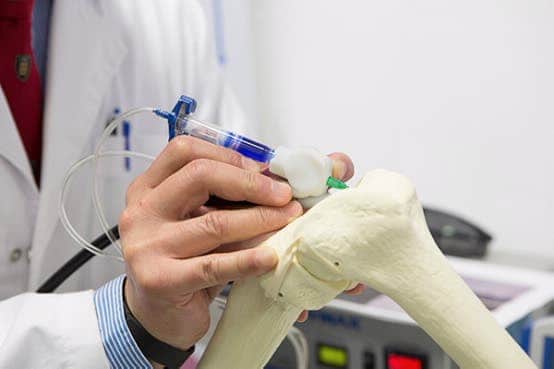
Printing Bones in Real Time: The Handheld Device That Could Redefine Surgery

Imagine a surgeon standing over a complex fracture, not with a tray of pre-made implants but with something that looks like a glue gun—only instead of glue, it prints living scaffolds that function like bone. With a squeeze of the trigger, the surgeon literally rebuilds the skeleton in real time, layer by layer, tailored perfectly to the patient’s unique injury. What sounds like medical science fiction is now a very real possibility, thanks to a new handheld 3D printing device developed by a collaboration of researchers in Korea, the U.S., and top institutions like MIT and Harvard.

Continue reading… “Printing Bones in Real Time: The Handheld Device That Could Redefine Surgery”
Discover the Hidden Patterns of Tomorrow with Futurist Thomas Frey
Unlock Your Potential, Ignite Your Success.

By delving into the futuring techniques of Futurist Thomas Frey, you’ll embark on an enlightening journey.

Learn More about this exciting program.