Sun-Forged Cities: China’s Plan to 3D-Print the Moon into Habitable Worlds

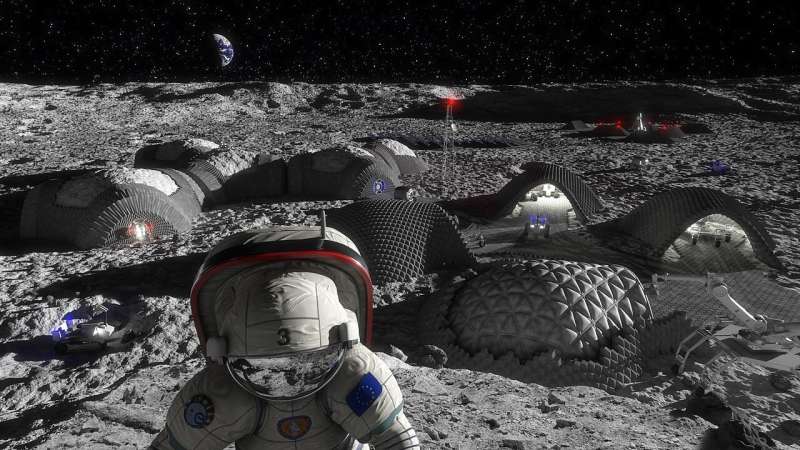
It sounds like something straight out of a sci-fi novel—colonists on the Moon building cities from nothing but sunlight and lunar dirt. But in a laboratory in Hefei, China, engineers have turned this fantasy into working hardware.

The Deep Space Exploration Laboratory has developed a 3D-printing-style machine that takes lunar regolith—the powdery soil covering the Moon—and uses concentrated sunlight to melt it into tough, functional bricks. No glue. No additives. No supply rockets hauling cement from Earth. Just heat, dust, and ingenuity.

Continue reading… “Sun-Forged Cities: China’s Plan to 3D-Print the Moon into Habitable Worlds”
The Chevy Silverado EV Just Shattered the World Range Record —1,059 miles on a single charge

GM didn’t just build an electric pickup truck. They built a road-going endurance machine that just rewrote the record books.

In a feat that will make every gas-guzzling truck feel ancient, the 2026 Chevrolet Silverado EV Max Range Work Truck has officially gone 1,059 miles on a single charge — crushing the previous world record of 749 miles set by the Lucid Air Grand Touring earlier this year.

The Silverado EV already launched in 2024 with a best-in-class standard range and a 10,000-pound towing capacity. But for this test, GM engineers took a production Max Range WT — no hardware or software changes, just tweaks allowed in the owner’s manual — and turned it into a rolling endurance legend.

Continue reading… “The Chevy Silverado EV Just Shattered the World Range Record —1,059 miles on a single charge”

China’s Maglev ‘Silencer’ Could Rewrite the Rules of Ultra-Fast Travel

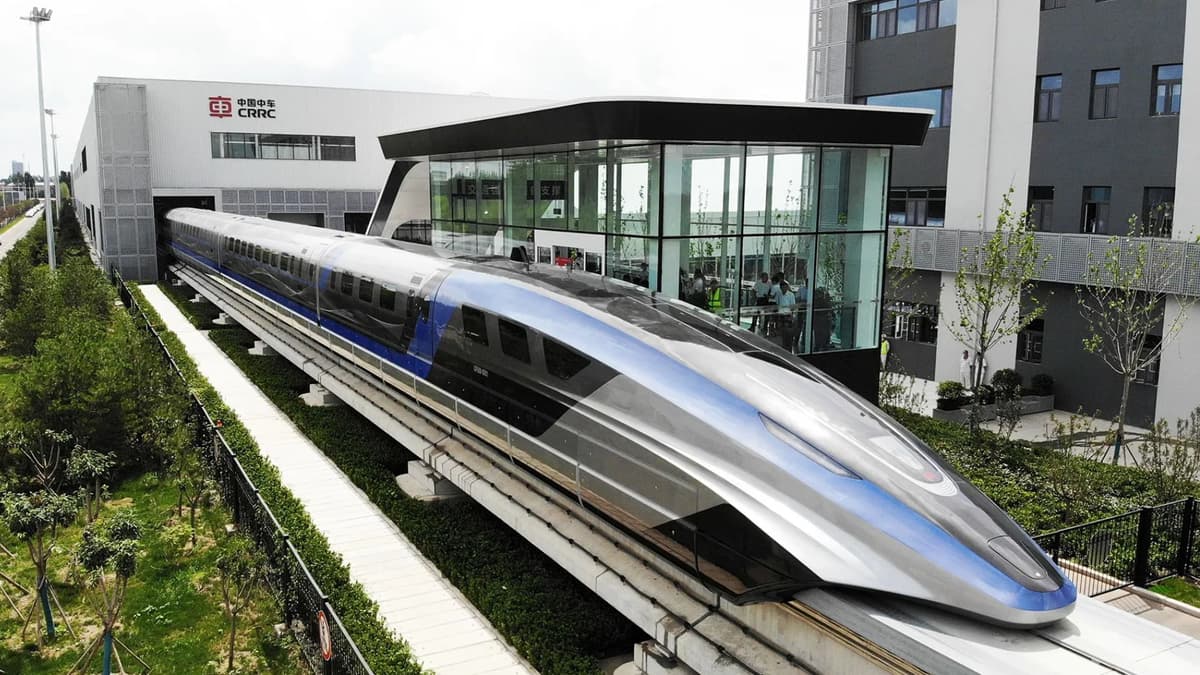
For decades, high-speed rail engineers have been wrestling with an invisible troublemaker—compressed air. When a train explodes out of a tunnel at blistering speed, it unleashes a low-frequency “tunnel boom” that can rattle windows, startle wildlife, and irritate entire neighborhoods. The faster the train, the louder the boom. At the extreme speeds planned for next-generation magnetic levitation trains, the problem threatened to derail progress.

Now, China’s railway engineers claim they’ve cracked the code. Their solution? A 328-foot (100-meter) sound-absorbing buffer at the tunnel mouth, acting like a silencer for the world’s fastest trains. Made from lightweight, porous material with a matching porous coating along the tunnel’s interior, this barrier lets compressed air bleed off gradually rather than explode outward in a sonic punch. Early tests show it slashes pressure fluctuations by up to 96%—nearly eliminating the boom altogether.

Continue reading… “China’s Maglev ‘Silencer’ Could Rewrite the Rules of Ultra-Fast Travel”

When AI Stops Guessing and Starts Discovering: The Machine That Found New Physics

Most AI headlines these days read like cautionary tales—machines pumping out soulless essays, deepfake politicians, and hallucinated “facts” with the confidence of a drunk poker player. But every once in a while, AI steps off the hype treadmill and does something so extraordinary, it reminds us why we started building these systems in the first place.

That’s exactly what happened at Emory University, where a machine-learning model didn’t just crunch numbers or speed up experiments—it discovered an entirely new phenomenon in plasma physics that scientists had only theorized about before. And it did it without the usual hand-holding from human experts.

The subject was dusty plasma—a charged gas filled with tiny, electrically charged dust particles, found everywhere from deep space to wildfire smoke. While physicists had studied dusty plasmas for decades, one key mystery remained unsolved: the strange “non-reciprocal forces” acting between particles, where one particle attracts another but doesn’t get the same force in return.

Continue reading… “When AI Stops Guessing and Starts Discovering: The Machine That Found New Physics”

AI Roadside Guardians: How Australia’s LAARMA Tech Could End the Era of Roadkill

Every year, highways become killing fields—not just for humans, but for the animals whose habitats those highways slice apart. Fences can block some crossings, but they’re expensive, high-maintenance, and often just push the problem elsewhere. Now, Australian researchers believe they’ve found a smarter, faster, and more adaptable answer: AI that sees animals before you do—and warns you in real time.

Meet LAARMA—the Large Animal Activated Roadside Monitoring and Alert system. It’s an open-source, self-learning AI platform that uses sensors to detect large animals up to 200 meters away, in any weather, day or night. When a detection is made, roadside signs instantly flash a tailored warning to drivers, naming the animal and signaling urgency. The result? In a recent five-month trial in cassowary country, drivers slowed down by as much as 10%, with the system correctly spotting the birds 97% of the time.

Continue reading… “AI Roadside Guardians: How Australia’s LAARMA Tech Could End the Era of Roadkill”

The Brain’s New Window: How Sound is Taking Us Five Times Deeper into the Mind

For years, brain imaging has been like staring through a foggy window—you can make out the surface clearly, but the deeper you try to see, the murkier it gets. Standard light-based microscopes are great for mapping the cortex, but when it comes to peering into deeper, more complex regions like the hippocampus, resolution collapses.

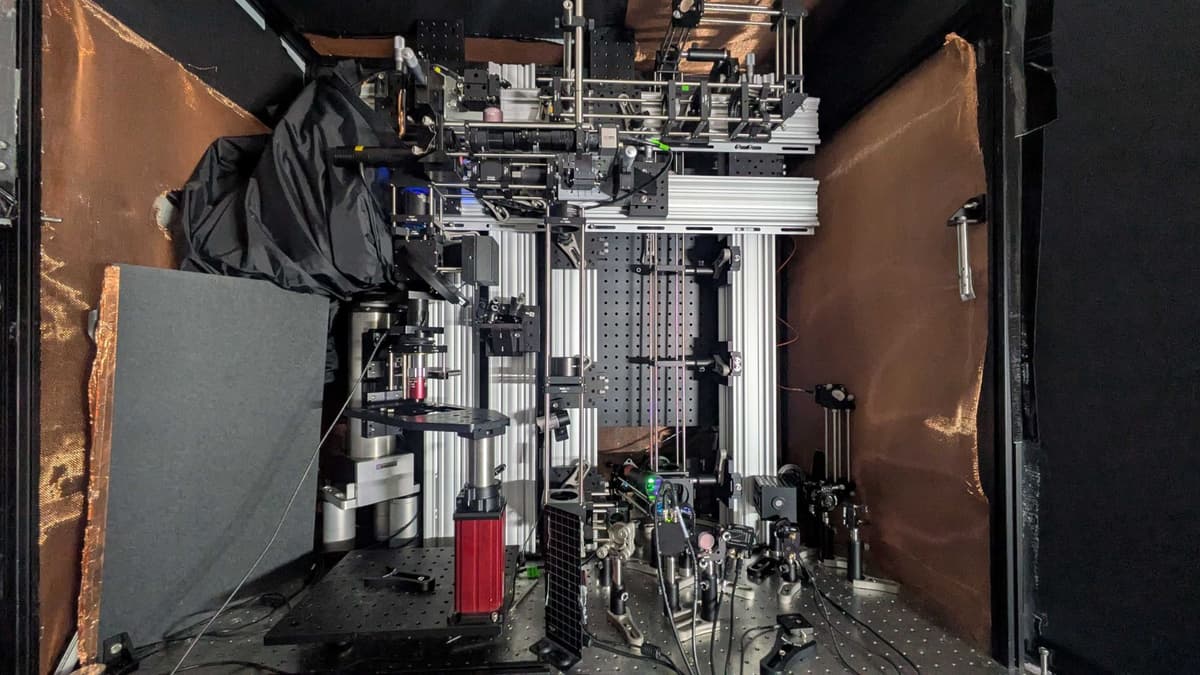
MIT researchers just shattered that barrier with the world’s first sound-powered microscope—a hybrid system that uses ultrafast bursts of light to trigger microscopic sound waves, then “listens” to those waves to build high-resolution images. The result: brain scans at five times the depth of existing methods, with zero dyes, chemicals, or genetic modifications.

Continue reading… “The Brain’s New Window: How Sound is Taking Us Five Times Deeper into the Mind”

Japan’s Machine Learning Breakthrough Could Make Power Cords Obsolete

Imagine a world where your phone, laptop, electric car, and even your kitchen appliances pull power from the air—no cords, no plugs, no hunting for the right charger. A research team at Chiba University believes they’ve just taken a major step toward making that world real.

Led by Professor Hiroo Sekiya, the team has developed a machine learning–driven design for wireless power transfer (WPT) systems that remain stable no matter what you plug—or don’t plug—into them. This “load-independent” operation means devices can receive a consistent stream of power without the efficiency loss and voltage swings that plague conventional wireless systems.

Continue reading… “Japan’s Machine Learning Breakthrough Could Make Power Cords Obsolete”

Meet GR-3: The Humanoid Robot That Doesn’t Just Work—It Feels

If you thought robots were destined to be cold, mechanical helpers, Fourier just proved you wrong. Their newly unveiled GR-3 isn’t another soulless metal servant—it’s a full-size humanoid “Care-bot” designed to live, move, and connect in ways that blur the line between circuitry and empathy.

Standing 165 cm tall with 55 degrees of freedom, GR-3 moves with an ease that feels unsettlingly human. It can squat, bend, and even stroll with a “bouncy walk” or “fatigue mode” depending on the moment. But what really sets it apart is the way it looks at you—literally. Its Full-Perception Multimodal Interaction System integrates sight, sound, and touch into a real-time emotional engine.

Continue reading… “Meet GR-3: The Humanoid Robot That Doesn’t Just Work—It Feels”

Japan’s Rice Fields Just Became Power Plants—Without Sacrificing the Rice

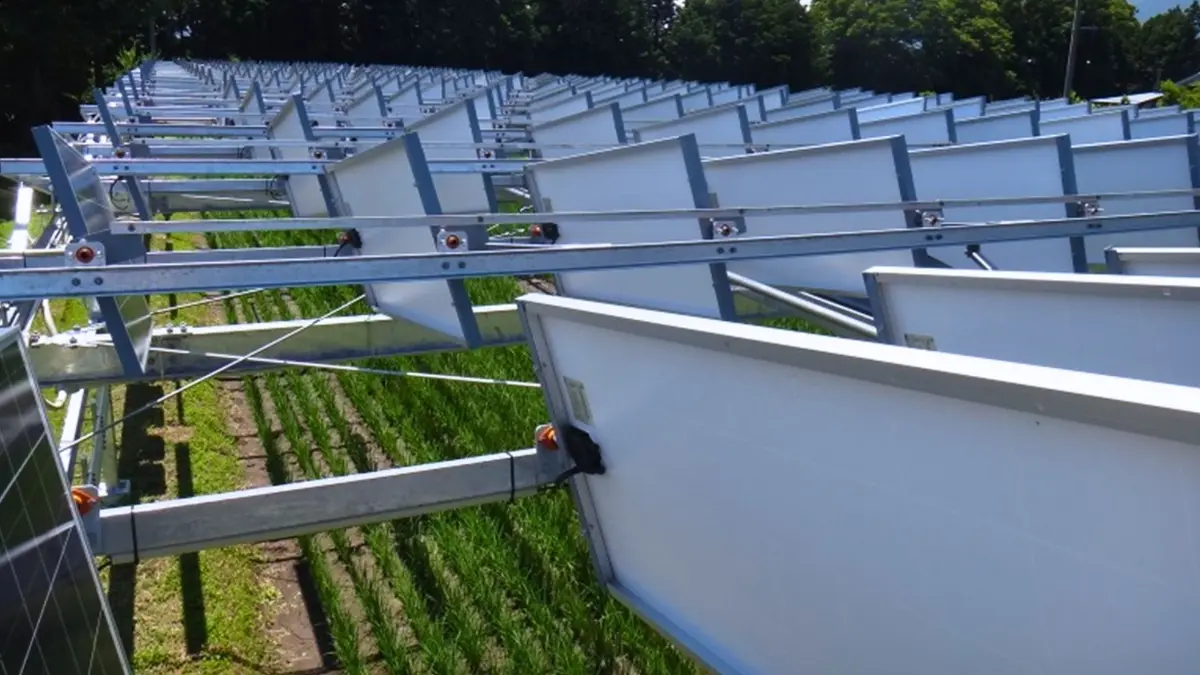
In the mountain valleys of Nagano, a new kind of harvest is taking place. Farmers aren’t just pulling in sacks of rice—they’re also producing enough electricity to power dozens of homes. And they’re doing it on the same plot of land.

Perched three meters above the paddies, a shimmering array of dual-axis solar panels follows the sun’s path across the sky. This isn’t just a fixed frame bolted to a post—these panels tilt and pivot daily, even seasonally, fine-tuning the balance between feeding the plants below and feeding the grid above.

Continue reading… “Japan’s Rice Fields Just Became Power Plants—Without Sacrificing the Rice”

Europe’s First Free-Roaming Driverless Train Is Rolling Through the Countryside—And Watching for Sheep

In a quiet corner of the Czech Republic, a sleek train named Edita is rewriting the rules of rail travel. It’s not running on a closed-off metro line or shuttling between airport terminals. This one glides through open countryside, across level crossings, past farm fields—and it’s doing it without a human at the controls.

Built by Prague-based transport tech firm AZD, Edita is Europe’s first driverless train to operate in an open environment where anything can happen—wandering livestock, unpredictable cars at crossings, even the occasional hare making a dash for the tracks. Unlike autonomous systems confined to sealed infrastructure, this is rail autonomy in the wild.

Continue reading… “Europe’s First Free-Roaming Driverless Train Is Rolling Through the Countryside—And Watching for Sheep”

The Chip That Speaks Two Languages: Bridging Light and Terahertz for the Next Communication Leap

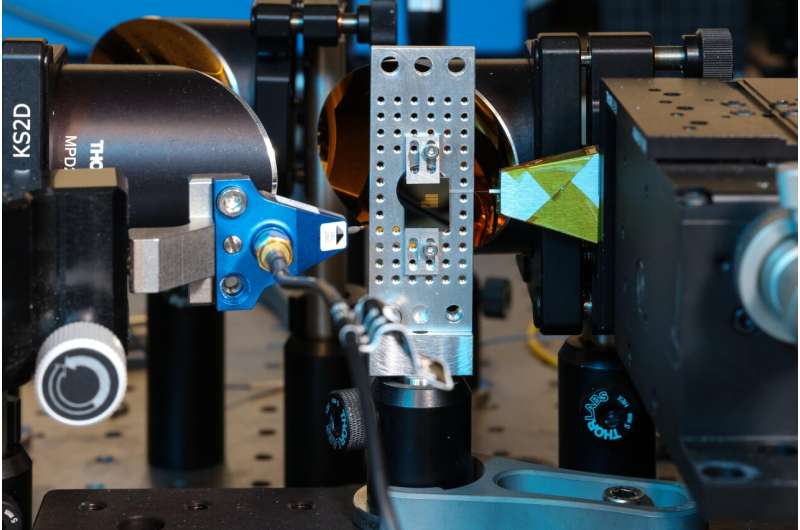
For decades, engineers have dreamed of a single device that could fluently translate between the lightning-fast language of light and the high-bandwidth whisper of terahertz waves. Now, a team at EPFL and Harvard has done exactly that—on a chip so small it could ride on your fingernail.

Terahertz (THz) radiation sits in the electromagnetic no man’s land between microwaves and infrared light—too fast for conventional radio tech, too tricky for optical systems to harness directly. But if you could get THz signals to talk to existing optical networks, you’d open the door to ultra-secure 6G communications, millimeter-precision radar, and data transfer speeds that make today’s fiber optics look like dial-up.

Continue reading… “The Chip That Speaks Two Languages: Bridging Light and Terahertz for the Next Communication Leap”

The Electron Shower That’s Shocking Microchip Manufacturing Into a New Era

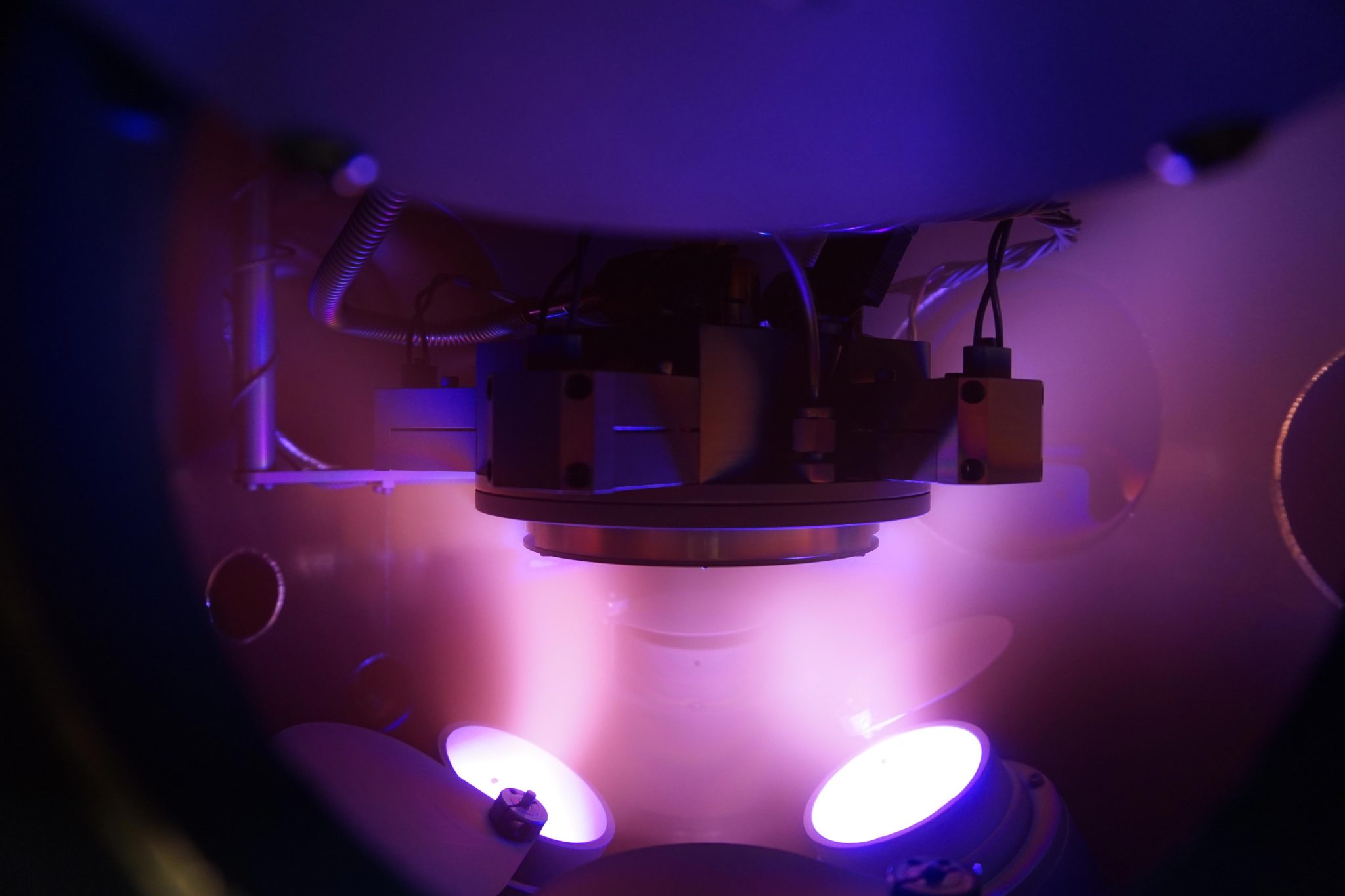
In the clean, silent depths of a vacuum chamber, a storm is raging—one that could tear up the foundations of microchip manufacturing as we know it.

It’s called the “electron shower,” and it’s the secret weapon behind a new technology that’s finally cracked a problem that has held back next-gen electronics for decades: how to build ultra-thin, ultra-precise films on delicate insulating surfaces without frying them—or embedding microscopic landmines in the form of unwanted particles.

Continue reading… “The Electron Shower That’s Shocking Microchip Manufacturing Into a New Era”
Discover the Hidden Patterns of Tomorrow with Futurist Thomas Frey
Unlock Your Potential, Ignite Your Success.

By delving into the futuring techniques of Futurist Thomas Frey, you’ll embark on an enlightening journey.

Learn More about this exciting program.